For cat owners, managing litter box duties is a daily reality. The balance between convenience, hygiene, and household harmony often comes down to one decision: stick with a traditional litter box or invest in an automatic model. While automatic litter boxes promise less hands-on cleaning and better odor control, they come with mechanical noise, higher costs, and occasional reliability concerns. Is the reduction in smell truly worth the hum of motors and sensors running several times a day? This article breaks down the real-world differences, evaluates user experiences, and helps you decide whether upgrading makes sense for your home.
How Odor Builds in Cat Litter Boxes
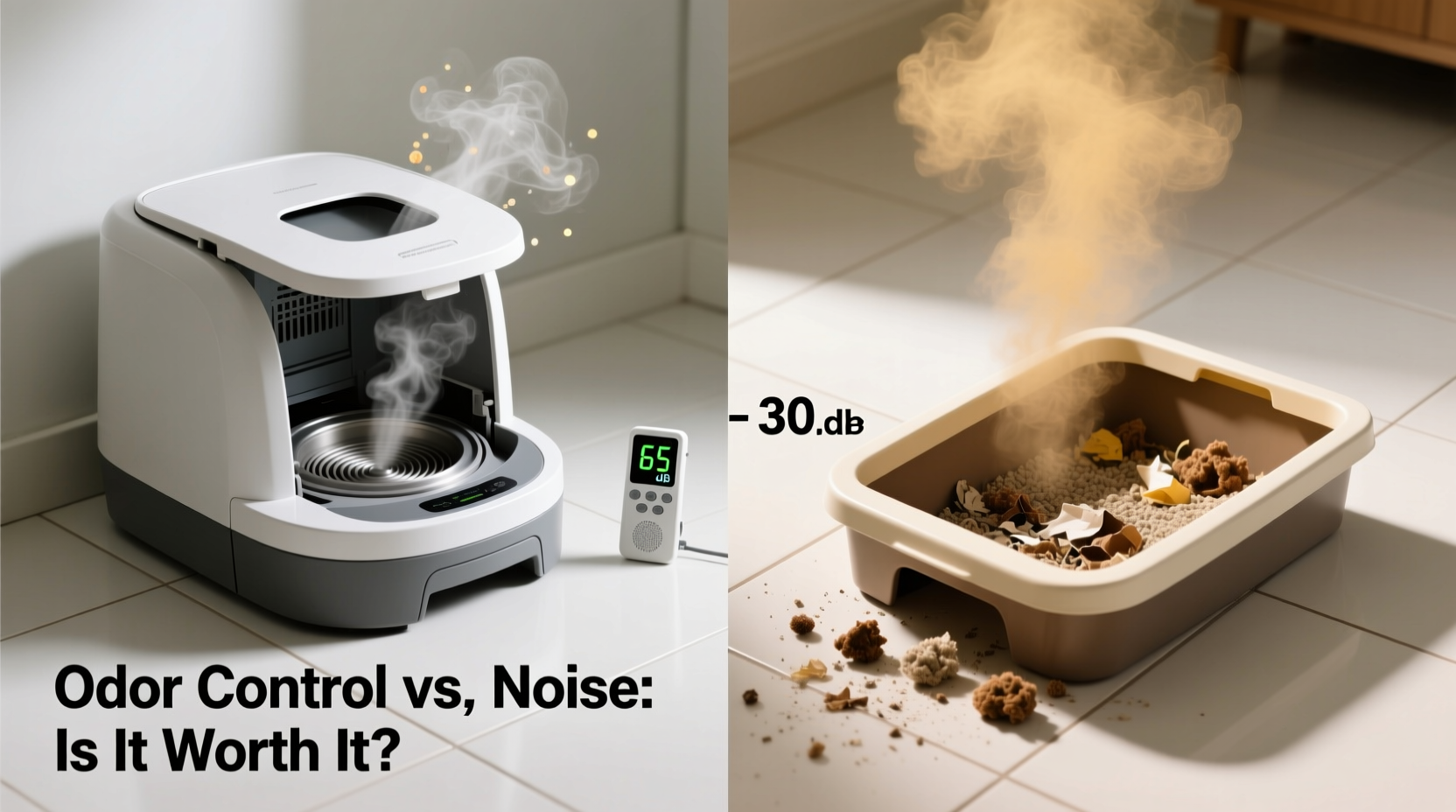
Odor in cat litter primarily stems from the breakdown of urine and feces by bacteria. Ammonia gas is released as urea decomposes, creating that sharp, pungent smell many cat owners dread. Traditional litter boxes rely on clumping clay or plant-based litters to absorb moisture and contain waste until scooping occurs. However, if not cleaned daily, odors accumulate quickly—especially in multi-cat households or small spaces like apartments.
Even high-performance litters with odor-neutralizing additives can only delay the inevitable. Without timely removal of soiled clumps, trapped smells permeate carpets, curtains, and ventilation systems. Some owners resort to placing boxes in basements or garages, but this can discourage cats from using them consistently, leading to inappropriate elimination elsewhere.
Tip: Use unscented, clumping litter with activated charcoal or baking soda for natural odor suppression without overwhelming your cat’s sensitive nose.Automatic Litter Boxes: How They Control Odor
Self-cleaning litter boxes use sensors, rakes, or rotating mechanisms to detect when a cat has used the box and automatically separate waste within minutes. Most models deposit waste into a sealed compartment or bag, isolating it from fresh litter and minimizing bacterial growth. This rapid removal drastically reduces the time waste sits exposed—often cutting odor development by 70–90% compared to manual scooping once per day.
Many units also include carbon filters, covered designs, and deodorizing sprays to further suppress smells. Premium models like the Litter-Robot or PetSafe Scooper offer fully enclosed systems that trap odors inside while venting air through filtration. In controlled environments, these features make a noticeable difference—especially in homes where the litter box resides near living areas or bedrooms.
However, automation doesn’t eliminate all odor. If the waste drawer isn’t emptied regularly (typically every few days), trapped waste begins to decompose inside the unit, releasing concentrated smells when opened. Additionally, some cats may kick out clean litter during use, creating scattered messes that contribute to ambient odor over time.
Noise Levels: What to Expect from Automatic Systems
One of the most common complaints about automatic litter boxes is their operational noise. Most models produce between 50 and 70 decibels during cleaning cycles—comparable to a refrigerator humming or a quiet conversation. While not excessively loud, the sound can be disruptive in quiet homes, especially at night.
The timing of the cycle matters. Units that begin cleaning immediately after a cat exits may activate during early morning hours, waking light sleepers. Some models allow delayed start settings (e.g., wait 7–15 minutes), reducing surprise activation. Others offer app-controlled scheduling, letting users set cleaning windows during daytime hours.
Cats themselves vary in sensitivity. Some are unbothered by the noise; others develop anxiety or avoidance behaviors. A 2022 survey by the American Association of Feline Practitioners found that 18% of cats showed initial hesitation around automated boxes, though most adapted within two weeks. Still, noise remains a legitimate concern for both pets and people.
“While self-cleaning boxes reduce labor and odor, we’ve seen cases where the noise disrupts household routines or causes stress-related elimination issues.” — Dr. Lena Torres, DVM, Feline Behavior Consultant
Comparative Analysis: Features at a Glance
| Feature | Traditional Litter Box | Automatic Litter Box |
|---|---|---|
| Odor Control | Moderate; depends on scooping frequency and litter type | High; waste removed quickly, sealed compartment, filters |
| Daily Maintenance | Scooping required once or twice daily | Waste drawer emptied every 3–7 days; occasional litter top-off |
| Noise Level | Negligible | 50–70 dB; varies by model and cycle timing |
| Initial Cost | $10–$30 | $300–$700 |
| Ongoing Costs | Litter only | Litter + replacement parts (rakes, filters, liners) |
| Space Requirements | Compact; fits in tight spaces | Bulkier; needs clearance for moving parts |
| Cat Adaptability | Generally high | Varies; some cats fear movement or noise |
Real-Life Scenario: A Multi-Cat Apartment Household
Sarah lives in a 700-square-foot city apartment with two adult cats and a roommate who works from home. She previously used two traditional boxes, scooping each once daily. Despite using premium clumping litter with odor blockers, persistent ammonia smells lingered, particularly after work hours. Her roommate complained about the scent spreading into the living area, and one cat began eliminating beside the box—likely due to territorial stress from shared usage.
Sarah invested in a Litter-Robot 4, placing it in a corner of the bathroom. Within a week, odor levels dropped noticeably. The sealed waste drawer and carbon filter prevented smells from escaping, and automatic sifting ensured waste was removed within 15 minutes of use. Her cats adapted quickly, drawn to the larger space and consistent cleanliness.
However, the unit’s nightly cycles occasionally triggered during video calls, causing mild disruption. Sarah adjusted the wait time to 20 minutes and disabled nighttime cycles via the app. Though she now spends $450 upfront plus $5/month on liners and filters, she reports spending less time on litter maintenance and enjoying a significantly fresher-smelling home.
In her case, the odor control benefits outweighed the noise drawbacks—especially after fine-tuning settings for her environment.
Step-by-Step Guide to Evaluating Your Needs
Deciding between automatic and traditional litter boxes should be based on lifestyle, space, budget, and pet behavior. Follow this sequence to make an informed choice:
- Assess your current pain points: Are you struggling with odor, scooping frequency, or litter scatter?
- Evaluate your living situation: Do you live in a small space where smells concentrate? Is noise a concern for roommates or sleepers?
- Observe your cat’s habits: Does your cat prefer privacy? Are they skittish around motion or sound?
- Calculate long-term costs: Factor in litter savings (automatic boxes use slightly more) versus device price and replacement parts.
- Test compatibility: If possible, trial a model or read reviews focused on noise and ease of adaptation.
- Implement gradually: Introduce an automatic box alongside the old one, allowing your cat to transition at their pace.
Common Misconceptions About Automatic Litter Boxes
Despite growing popularity, several myths persist about self-cleaning systems:
- “They’re completely maintenance-free.” False. Waste drawers need emptying, sensors require cleaning, and litter must be refilled regularly.
- “All cats will hate them.” Not necessarily. Many cats prefer the cleanliness and larger size. Success depends on gradual introduction and proper placement.
- “They eliminate all odor.” Overstated. While significantly reduced, odor can return if the waste compartment isn’t emptied or filters aren’t replaced.
- “They’re unreliable.” Early models had issues, but modern versions from reputable brands have improved sensor accuracy and durability.
FAQ: Addressing Key Concerns
Do automatic litter boxes really reduce odor more than daily scooping?
Yes, in most cases. Because waste is removed within minutes rather than hours, bacterial decomposition is minimized. Sealed compartments and carbon filters add another layer of protection. However, if the waste bin isn’t emptied regularly, odor can build up inside the unit and release when opened.
Can I reduce the noise of an automatic litter box?
Partially. Choose models known for quieter operation (e.g., CatGenie or newer Litter-Robot versions). Position the box away from bedrooms or use rugs to dampen vibrations. Delayed-start features can schedule cleaning during daytime hours. Some apps allow you to disable cycles entirely during certain times.
Are automatic litter boxes worth the cost?
For busy professionals, elderly individuals, or those with mobility issues, the time saved and improved hygiene often justify the investment. In multi-cat homes or small spaces where odor is a constant battle, the upgrade can enhance quality of life. However, for single-cat households with flexible schedules, a traditional box with diligent scooping may suffice.
Action Plan: Making the Right Choice for Your Home
The decision between an automatic and traditional litter box ultimately hinges on trade-offs. If persistent odor is affecting your comfort or relationships, and you’re willing to manage moderate noise and higher costs, an automatic system offers measurable benefits. It reduces daily effort, improves consistency in waste removal, and enhances indoor air quality.
But if your household values silence, has limited space, or includes noise-sensitive pets or people, a well-maintained traditional box with high-performance litter might serve you better. Regular scooping, strategic placement, and odor-absorbing materials can keep smells under control without mechanical intervention.
Consider starting with incremental improvements—switching to a covered traditional box with a carbon filter, using odor-locking litter, or adding an air purifier nearby—before committing to a $500+ device. If those steps fall short, then an automatic litter box becomes a logical next step.
“The best litter solution isn’t always the most advanced—it’s the one that aligns with your routine, your cat’s needs, and your home environment.” — Rachel Kim, Certified Feline Care Specialist
Conclusion: Weighing Silence Against Freshness
Automatic litter boxes deliver on their core promise: superior odor control through rapid, consistent waste removal. For many owners, especially in odor-prone environments, that benefit outweighs the mechanical hum of daily cycles. But noise is a real consideration—not just for humans, but for cats attuned to subtle environmental changes.
There’s no universal answer. The value lies in understanding your priorities. If freshness, convenience, and reduced chore load matter more than absolute quiet, an automatic system is likely worth the investment. If peace and simplicity come first, a disciplined traditional approach remains effective and economical.
Ultimately, the goal is a clean, appealing litter experience for your cat and a livable, odor-free space for you. Whether achieved through technology or routine, that balance is what defines success.
🚀 Ready to make a change? Evaluate your current setup, track your biggest frustrations for one week, and use this insight to choose the litter solution that truly fits your life. Share your experience in the comments—your story could help another cat owner find their perfect match.








