
When it comes to feeding pets—especially dogs and cats—owners face a critical decision: how to store and dispense food in a way that maintains freshness, prevents spoilage, and supports long-term health. Two of the most common solutions are automatic feeders and gravity feeders. While both serve the purpose of providing consistent access to food, they differ significantly in design, function, and their impact on food quality. The central question isn’t just about convenience—it’s about preservation. Which system better protects kibble from air, moisture, pests, and oxidation? The answer has direct implications for your pet’s digestion, energy levels, and overall well-being.
How Food Degrades: The Science Behind Freshness
Pet food, particularly dry kibble, begins to degrade the moment it’s exposed to oxygen, humidity, light, and temperature fluctuations. Key components like fats, vitamins, and probiotics are especially vulnerable. Oxidation causes fats to go rancid, diminishing palatability and potentially causing gastrointestinal upset. Moisture absorption leads to clumping and mold growth, while prolonged exposure invites pantry pests such as moths and beetles.
The rate of degradation depends largely on storage conditions. A sealed bag stored in a cool, dark cupboard lasts far longer than one left open in a humid kitchen. But once food enters a feeder—whether automatic or gravity-fed—the clock starts ticking. How quickly that happens depends on the feeder’s ability to limit exposure.
“Oxygen and moisture are the two biggest enemies of dry pet food. The longer kibble sits exposed, the more nutrients degrade and the higher the risk of rancidity.” — Dr. Lydia Chen, Veterinary Nutritionist
Gravity Feeders: Simplicity at a Cost
Gravity feeders operate on a simple principle: a large hopper sits above a bowl, and as the pet eats, gravity pulls more food down to refill the dish. These units are popular for households with multiple pets or free-feeding routines because they require minimal maintenance and can hold several pounds of food.
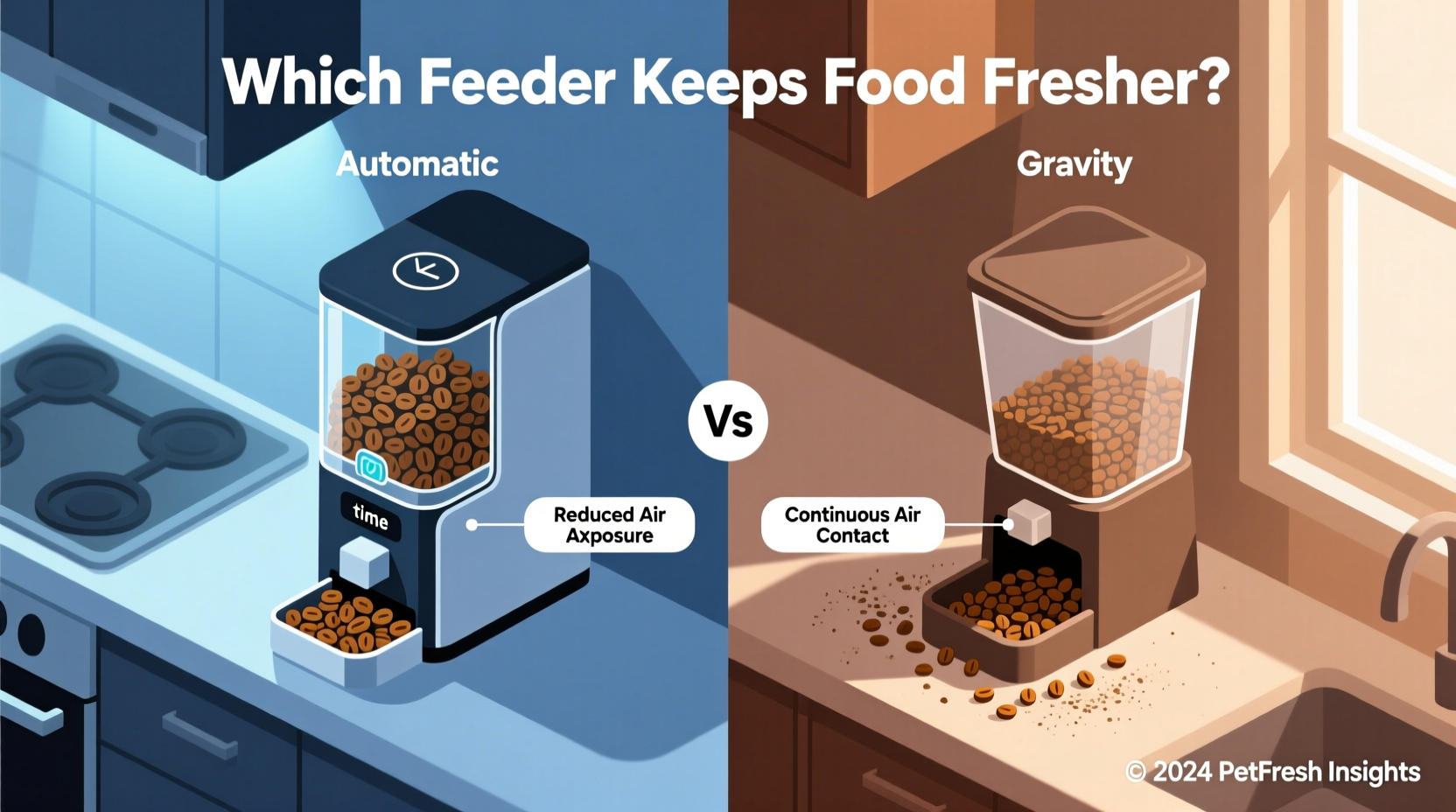
However, this constant accessibility comes with trade-offs. In most gravity feeders, a portion of the kibble remains in the bowl at all times, exposed to air and ambient moisture. Even models with covered hoppers often have wide dispensing openings, allowing continuous airflow. Over time, the top layer of kibble oxidizes, loses crunch, and absorbs odors from the environment.
Additionally, gravity feeders are prone to “bridging,” where kibble clumps together and blocks the flow, leading some owners to shake or tap the unit—a practice that further agitates the food and accelerates degradation. Dust and crumbs also accumulate in the base, creating an inviting environment for insects.
Tip: If using a gravity feeder, clean it thoroughly every 3–4 days and refill with fresh kibble to minimize bacterial buildup and stale food accumulation.Automatic Feeders: Controlled Access for Maximum Freshness
Automatic feeders take a different approach. Instead of offering continuous access, they dispense pre-measured portions at scheduled times. Most models use motorized augers or rotating trays to release food from a sealed chamber into a serving bowl only when triggered by a timer or app command.
This intermittent dispensing drastically reduces exposure. Kibble remains sealed inside an airtight compartment until the exact moment it’s needed. As a result, the majority of the food stays protected from oxygen, light, and moisture for days or even weeks. High-end models feature vacuum-sealed lids, desiccant-lined chambers, and UV-blocking materials to further extend shelf life.
Because food isn’t sitting out indefinitely, automatic feeders also reduce the risk of contamination from flies, ants, and household dust. They’re ideal for pets on strict meal schedules, weight management plans, or those who tend to overeat when given unlimited access.
Key Advantages of Automatic Feeders for Freshness
- Limited air exposure: Only dispensed food contacts the environment.
- Portion control: Prevents leftover kibble from stagnating in a bowl.
- Sealed storage: Internal chambers often mimic resealable bag conditions.
- Timed release: Reduces the window for spoilage between meals.
Comparative Analysis: Side-by-Side Breakdown
| Feature | Gravity Feeder | Automatic Feeder |
|---|---|---|
| Food Exposure to Air | Continuous (bowl always full) | Intermittent (only during meals) |
| Oxidation Risk | High (prolonged exposure) | Low (sealed until dispensed) |
| Moisture Absorption | Moderate to high (depends on climate) | Minimal (protected chamber) |
| Pest Attraction | Higher (open access, crumbs) | Lower (closed system) |
| Nutrient Retention | Declines after 24–48 hours | Preserved up to 2+ weeks |
| Best For | Free-feeding, multi-pet homes | Scheduled feeding, portion control |
Real-World Example: A Cat Owner’s Experience
Sarah M., a cat owner from Portland, used a gravity feeder for her two indoor cats for over a year. She noticed both cats began turning their noses up at food mid-day, despite refilling the hopper weekly. After switching to a programmable automatic feeder with airtight seals, she observed immediate changes. “The kibble smelled fresher, stayed crisp longer, and both cats ate more consistently,” she said. “I hadn’t realized how much the top layer was going stale before they got to it.”
She now runs a side-by-side test: one cat uses a gravity model, the other an automatic. After five days, the kibble in the gravity bowl had softened slightly and developed a faint oily odor—clear signs of early oxidation—while the automatically dispensed portions remained dry and aromatic.
Step-by-Step Guide: Optimizing Freshness Regardless of Feeder Type
No feeder is foolproof. Even the best technology requires proper use. Follow these steps to maximize food freshness in any setup:
- Buy food in smaller batches: Purchase only enough kibble to last 4–6 weeks to ensure rotation and reduce long-term storage needs.
- Store original bags properly: Keep unused food in its original packaging inside a sealed plastic bin in a cool, dark place.
- Clean the feeder weekly: Disassemble and wash all removable parts with warm, soapy water to prevent biofilm and residue buildup.
- Refill strategically: For gravity feeders, avoid topping off—empty and clean before adding fresh food to prevent mixing old and new batches.
- Monitor environmental conditions: Avoid placing feeders near stoves, sinks, or windows where heat and humidity fluctuate.
- Use silica gel packs: Place food-safe desiccants in the hopper (if accessible) to absorb ambient moisture.
Expert Recommendations and Industry Insights
Veterinary nutritionists increasingly recommend automatic feeders—not only for portion control but for their role in preserving food integrity. According to the American Pet Products Association (APPA), nearly 60% of pet owners using automatic feeders report improved appetite and fewer digestive issues compared to free-feeding setups.
Manufacturers are responding with innovations focused on freshness. Models like the PetKit Fresh Element Solo and the SureFeed Microchip Pet Feeder integrate air-tight seals and smart sensors that only open for authorized pets, reducing both waste and exposure.
“From a nutritional standpoint, minimizing the time kibble spends exposed is one of the simplest ways to improve diet quality without changing the food itself.” — Dr. Rajiv Mehta, Board-Certified Veterinary Nutritionist
FAQ: Common Questions About Feeder Freshness
Can I use either feeder for wet food?
No. Gravity and standard automatic feeders are designed for dry kibble only. Wet food spoils rapidly at room temperature and requires refrigeration. Some advanced automatic feeders offer chilled compartments for wet food, but these are specialized units.
Do automatic feeders work during power outages?
Most plug-in models have battery backups (typically 3–5 days). However, if power is lost for extended periods, manual feeding is necessary. Battery-only models avoid this issue but require regular replacements.
Is there a middle ground between the two systems?
Yes. Some hybrid feeders combine timed dispensing with limited gravity-style refills. Others allow you to set a daily fill limit in a gravity hopper, reducing overflow while maintaining simplicity. These can be a good compromise for pets accustomed to free access.
Final Verdict: Which Keeps Food Fresher?
The evidence is clear: **automatic feeders preserve food freshness significantly better than gravity feeders**. By limiting exposure to air, moisture, and contaminants, they maintain the texture, aroma, and nutritional value of kibble over time. While gravity feeders offer convenience and are well-suited for certain lifestyles, they inherently sacrifice freshness for accessibility.
For pet owners prioritizing health, digestion, and long-term food quality, automatic feeders represent a superior choice. They align with modern understanding of pet nutrition—where consistency, timing, and ingredient integrity matter as much as the brand on the bag.
That said, the best system depends on your pet’s needs, your routine, and your willingness to maintain the equipment. With proper practices—even in a gravity setup—freshness can be managed. But if your goal is to keep every bite as close to “bag-fresh” as possible, automation provides a measurable advantage.
Take Action Today for a Healthier Feeding Routine
Your pet’s food shouldn’t begin degrading before it’s eaten. Whether you choose to upgrade to an automatic feeder or optimize your current gravity model, start implementing freshness-focused habits today. Rotate stock diligently, clean regularly, and monitor how your pet responds to changes in food texture and smell. Small adjustments can lead to noticeable improvements in energy, coat condition, and digestive health. Share your experience, ask questions, and help others make informed choices—because when it comes to pet nutrition, every detail matters.
💬 Have you switched from a gravity to an automatic feeder? What changes did you notice in your pet’s eating habits or food quality? Share your story in the comments below!








