
For many cat owners, maintaining a reliable feeding routine is essential—not just for their pet’s health, but also for peace of mind when traveling or managing busy schedules. Cats thrive on consistency, and irregular mealtimes can lead to digestive issues, anxiety, or unwanted behaviors like begging or overeating. With the rise of smart pet technology, two solutions have become increasingly popular: automatic feeders and timed dispensers. While both aim to deliver food at scheduled intervals, they differ significantly in design, functionality, and suitability for different lifestyles. Understanding these differences is key to choosing the right option for your feline companion.
Understanding the Basics: What Are Automatic Feeders and Timed Dispensers?
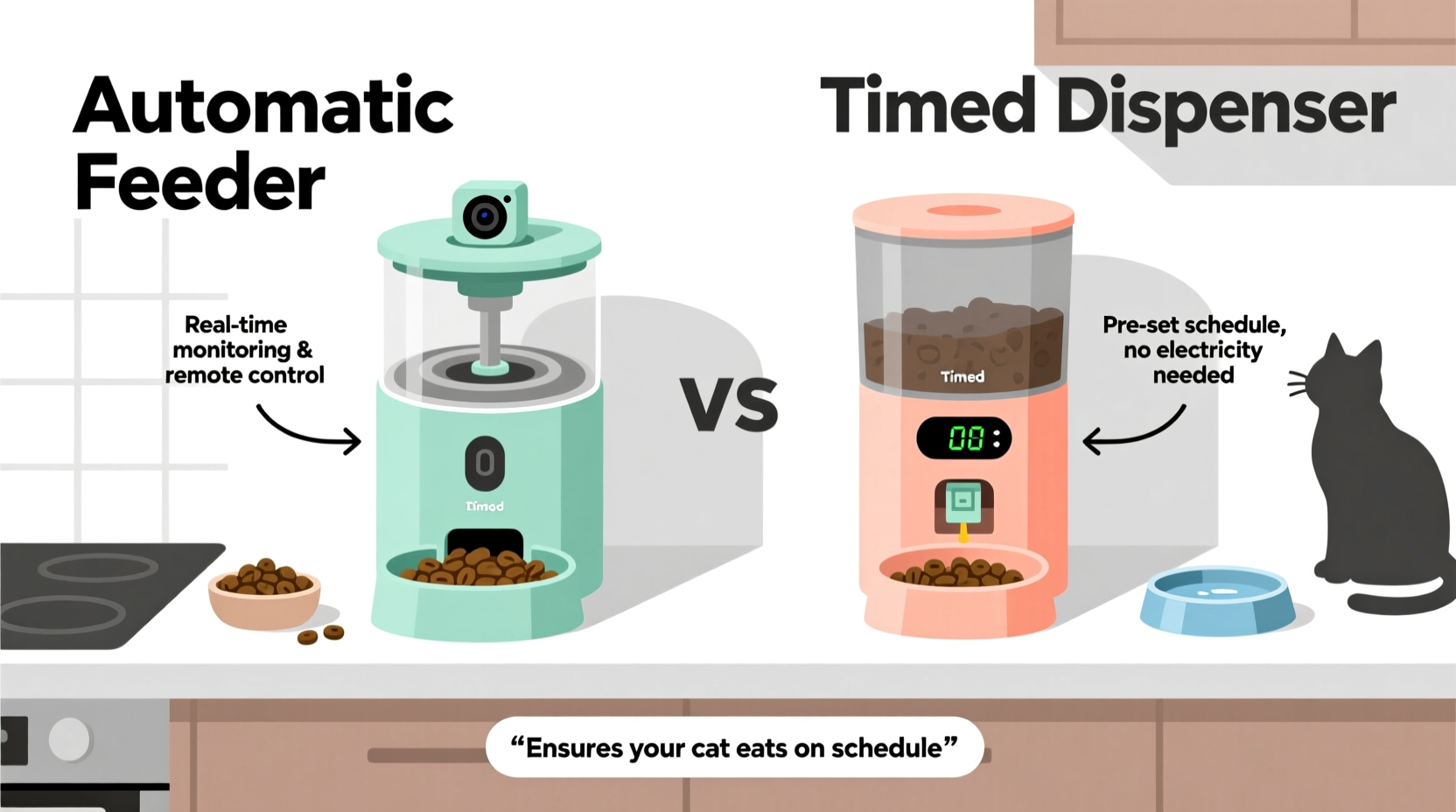
An automatic feeder is a motorized device that dispenses pre-measured portions of dry or wet food at set times. Most models allow users to program multiple meals per day, control portion sizes, and even sync with smartphone apps for remote monitoring and adjustment. These units typically feature sealed compartments to preserve food freshness and prevent pests.
A timed dispenser, on the other hand, operates on a simpler mechanical or electronic timer mechanism. It releases food from one or more trays at predetermined times but often lacks advanced controls like portion customization or app integration. Some basic versions are gravity-fed with a rotating tray system activated by a clockwork mechanism.
While the terms are sometimes used interchangeably, the distinction lies in complexity and capability. An automatic feeder offers greater control and adaptability, while a timed dispenser provides a cost-effective, straightforward solution for basic scheduling needs.
Tip: If your cat has specific dietary requirements or needs portion-controlled meals, opt for an automatic feeder with customizable settings.Key Differences in Functionality and Design
The core difference between these devices lies in how they manage timing, quantity, and user interaction. A detailed comparison helps clarify which system aligns best with your household's needs.
| Feature | Automatic Feeder | Timed Dispenser |
|---|---|---|
| Portion Control | Precise, adjustable servings (e.g., 1/8 to 1 cup) | Limited; often fixed or manually preset trays |
| Meal Frequency | Up to 6–8 meals per day | Typically 1–4 meals |
| Power Source | Battery + AC adapter (some with backup) | Battery-only or manual wind-up |
| Smart Connectivity | Wi-Fi enabled with app control and alerts | Rarely available |
| Food Type Compatibility | Dry kibble, wet food (in select models) | Mostly dry food only |
| Capacity | Large (up to 25+ cups) | Smaller (typically under 15 cups) |
| Price Range | $60–$150+ | $25–$50 |
This table illustrates that automatic feeders offer superior flexibility and precision, making them ideal for households where diet management is critical—such as with overweight cats, diabetic pets, or multi-cat homes requiring individualized feeding plans.
When Simplicity Wins: The Case for Timed Dispensers
Despite their limitations, timed dispensers remain a practical choice for certain scenarios. Their mechanical reliability means fewer points of failure—no need to worry about Wi-Fi outages or software bugs. They’re also quieter than motorized feeders, which may benefit skittish cats sensitive to mechanical noises.
For vacation coverage or short-term use, a well-set timed dispenser can maintain a basic feeding rhythm without requiring technical setup. However, they lack feedback mechanisms; you won’t know if the device jammed, if food spilled, or if your cat skipped a meal.
“Scheduled feeding isn’t just about convenience—it supports metabolic regulation in cats. Consistency matters more than the tool used, but accuracy enhances outcomes.” — Dr. Lena Patel, Feline Nutrition Specialist
Real-World Application: A Case Study in Multi-Cat Households
Sarah Thompson, a veterinary technician from Portland, shares her experience managing three cats with varying dietary needs. One cat requires calorie-restricted meals, another eats prescription food, and the third tends to overeat if left unsupervised. Initially, she tried using two basic timed dispensers—one for each main cat—but found that the free-feeding kitten consistently accessed both trays, disrupting the regimen.
She switched to a dual-compartment automatic feeder with app-based scheduling. Each compartment holds a different type of food, programmed for separate release times. The unit sends notifications when meals are dispensed and logs activity. “It took ten minutes to set up,” Sarah says, “but it eliminated daily stress. Now each cat eats what they need, when they need it.”
Her case highlights a crucial advantage of automatic feeders: targeted nutrition delivery in complex environments. In contrast, timed dispensers struggle in such situations due to limited customization and no behavioral oversight.
Choosing the Right Option: A Step-by-Step Decision Guide
Selecting between an automatic feeder and a timed dispenser should be based on your cat’s needs, your lifestyle, and long-term goals. Follow this step-by-step process to make an informed decision:
- Assess Your Cat’s Dietary Needs: Does your cat require strict portion control, special food, or frequent small meals? If yes, prioritize an automatic feeder.
- Evaluate Your Schedule: Are you gone for extended periods, work irregular hours, or travel frequently? Automation with remote access adds significant value.
- Consider Household Complexity: Do you have multiple pets? Is there competition for food? Devices with multiple compartments or locking mechanisms help prevent conflicts.
- Determine Your Tech Comfort Level: Are you comfortable setting up Wi-Fi-connected devices? If not, a simple timed dispenser might suit you better.
- Set a Budget: Automatic feeders are more expensive upfront but may save money long-term by reducing waste and preventing health issues linked to poor feeding habits.
- Review Safety and Reliability Features: Look for battery backup, anti-jamming designs, and BPA-free materials regardless of model type.
Common Pitfalls and How to Avoid Them
Even the most advanced feeder won't solve problems if misused. Here are common mistakes owners make—and how to avoid them:
- Overfilling the Hopper: Storing food for too long leads to staleness and moisture buildup. Refill every 3–5 days, especially in humid climates.
- Ignoring Maintenance: Food dust and clumping can clog dispensing mechanisms. Clean trays and sensors weekly.
- Not Accounting for Power Outages: Choose a model with battery backup to maintain schedule integrity during electrical interruptions.
- Using Incompatible Food Types: Avoid moist or sticky foods in standard dry-food feeders—they cause jams. Only use wet food in designated models.
- Setting It and Forgetting It: No device replaces observation. Monitor your cat’s weight, appetite, and behavior regularly.
Checklist: Before You Buy a Feeding Device
- ☑ Confirm compatibility with your cat’s food type (dry/wet/prescription)
- ☑ Check capacity against your absence duration (e.g., weekend vs. week-long trip)
- ☑ Ensure ease of cleaning—removable parts are essential
- ☑ Verify power options (AC adapter, battery life, backup support)
- ☑ Read reviews focusing on reliability and customer service
- ☑ Test noise level—some motors startle sensitive cats
- ☑ For automatic models, confirm app stability and connectivity range
Frequently Asked Questions
Can a timed dispenser handle wet food?
Most timed dispensers are designed exclusively for dry kibble. Wet food spoils quickly at room temperature and can clog mechanical parts. Only specialized automatic feeders with refrigerated or insulated chambers safely accommodate wet food, and even then, only for short durations (under 8 hours).
Are automatic feeders safe for kittens or senior cats?
Yes, provided the design considers accessibility. Some feeders have steep openings or fast-moving parts that may intimidate younger or older cats. Look for wide feeding bowls, slow-release mechanisms, and quiet motors. Supervise initial use to ensure comfort and safety.
What happens if the feeder malfunctions?
With any automated system, failure is possible. To mitigate risk, choose a model with low-food alerts and jam detection. Keep a manual backup plan—like a neighbor checking in or a secondary feeder. Never rely solely on automation for long absences without prior testing.
Final Considerations: Long-Term Health and Peace of Mind
At its core, scheduled feeding supports feline wellness by regulating metabolism, preventing obesity, and reducing anxiety around food scarcity or competition. Both automatic feeders and timed dispensers contribute to this goal, but their effectiveness varies widely.
Timed dispensers serve well for single-cat homes with simple routines and budget constraints. They provide a baseline level of consistency and are easier to operate for less tech-savvy users. However, their lack of feedback, limited customization, and vulnerability to mechanical errors reduce long-term reliability.
Automatic feeders represent a smarter investment for those seeking precision, adaptability, and integration into modern pet care practices. Features like portion tracking, mobile alerts, and multi-pet programming enhance both convenience and health outcomes. As veterinary experts increasingly emphasize preventive nutrition, these tools become not just luxuries, but valuable components of responsible ownership.
“The future of pet care lies in proactive systems that support natural rhythms. Scheduled feeding devices, when chosen wisely, do exactly that.” — Dr. Marcus Reed, Veterinary Behaviorist
Conclusion: Take Action for a Healthier, Happier Cat
Whether you choose an automatic feeder or a timed dispenser, the most important factor is consistency. Your cat depends on predictable routines to feel secure and maintain optimal health. By investing time in selecting the right device—and using it correctly—you create a feeding environment that supports longevity, reduces stress, and fits seamlessly into your life.
Start today: evaluate your current feeding method, identify pain points, and match your needs with the appropriate technology. Your cat may not thank you in words, but their energy, coat quality, and calm demeanor will speak volumes.
💬 Have questions about your feeding setup or want to share your experience? Join the conversation below and help fellow cat lovers find the perfect solution!








