
Managing a diabetic pet requires precision, consistency, and close attention to routine. One of the most critical aspects of diabetes care in animals—especially cats and dogs—is maintaining stable blood glucose levels through regular, timed meals. This raises an important question for pet owners: should they rely on an automatic feeder or stick with manual feeding? While both methods have their place, choosing the right one can significantly impact your pet’s health, insulin effectiveness, and long-term well-being.
Unlike healthy pets who can eat on a flexible schedule, diabetic animals thrive on predictability. Meals must align precisely with insulin administration times, typically every 12 hours. Any deviation can lead to dangerous fluctuations in blood sugar, increasing the risk of hypoglycemia or hyperglycemia. With modern technology offering smart feeders capable of portion control and remote scheduling, it's tempting to automate feeding. But automation isn’t always the best fit, especially when medical accuracy is paramount.
Why Meal Timing Matters for Diabetic Pets
For diabetic pets, food intake directly influences insulin requirements. Most veterinarians recommend a twice-daily protocol: insulin injection followed by a meal within 15–30 minutes. The goal is to match the peak action of insulin with the rise in blood glucose from digestion. If a pet eats too early, too late, or skips a meal entirely, the balance collapses.
Inconsistent meal timing can result in:
- Unpredictable blood sugar spikes or drops
- Reduced insulin efficacy
- Increased risk of emergency episodes (e.g., seizures from low blood sugar)
- Poor long-term glycemic control leading to complications like cataracts or neuropathy
This makes the method of feeding—not just the food itself—a cornerstone of effective diabetes management. Whether you choose manual or automatic feeding, the system must support strict adherence to your pet’s prescribed schedule.
Tip: Always monitor your pet during mealtimes to ensure they consume the full portion. Partial eating may require insulin dose adjustments under veterinary guidance.Automatic Feeders: Pros and Cons for Diabetic Pets
Automatic feeders have grown increasingly sophisticated, with features like Wi-Fi connectivity, voice recording, portion control, and mobile app integration. These devices promise convenience, especially for busy pet owners or those managing multiple pets. But how well do they serve diabetic animals?
Advantages of Automatic Feeders:
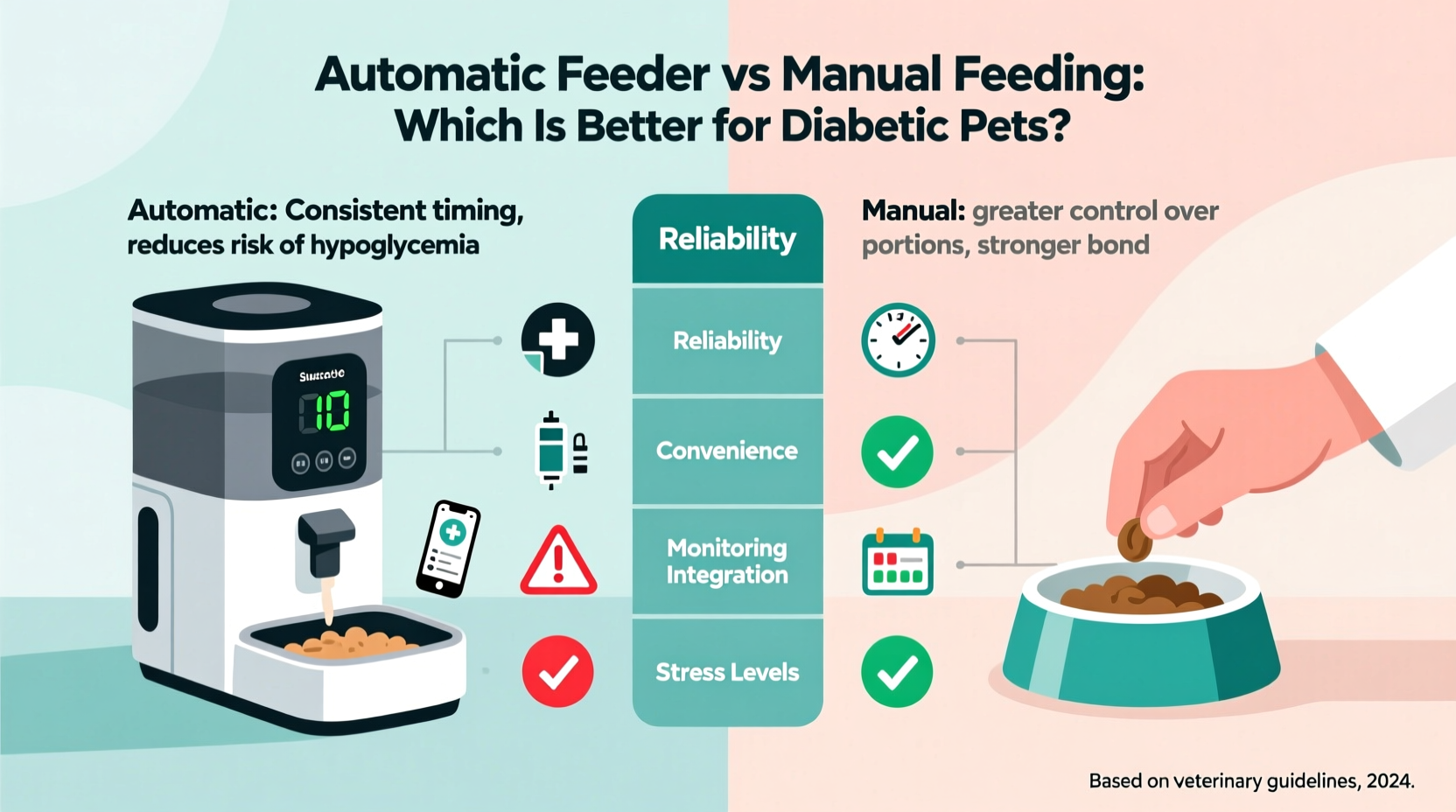
- Consistent timing: Once programmed, feeders dispense food at exact times, reducing human error.
- Remote monitoring: Some models send notifications when food is released or eaten.
- Vacation safety: Provides peace of mind when traveling or working late.
- Portion control: Prevents overfeeding, which is crucial for weight management in diabetic pets.
Drawbacks and Risks:
- Mechanical failure: Jams, power outages, or software glitches can prevent food release.
- No real-time observation: Owners can’t confirm if the pet actually ate the meal.
- Lack of flexibility: Sudden changes in appetite or health require immediate response, which automation can’t provide.
- Delayed insulin coordination: If the feeder malfunctions, injecting insulin without a guaranteed meal becomes hazardous.
“While automatic feeders offer convenience, I advise against relying solely on them for diabetic pets unless there’s a backup plan and daily supervision.” — Dr. Rebecca Lin, DVM, Veterinary Endocrinology Specialist
Manual Feeding: Control, Observation, and Responsiveness
Manual feeding means a caregiver personally measures and serves each meal at the scheduled time. Though it demands more time and commitment, this method remains the gold standard for diabetic pet care in many veterinary circles.
The primary benefit lies in direct interaction. When you hand-feed or serve meals yourself, you observe your pet’s behavior, appetite, and energy levels in real time. A diabetic dog refusing food or a cat showing lethargy after insulin could be early signs of hypoglycemia—something an automatic feeder would never detect.
Manual feeding also allows for immediate adaptation. For example, if your pet only eats half the meal, you can delay or adjust the next insulin dose accordingly (always consult your vet first). You’re present to intervene if needed, offering broth or wet food to encourage eating, or seeking emergency care if symptoms worsen.
However, manual feeding has limitations. It requires a rigid personal schedule. Travel, shift work, or emergencies can disrupt feeding times, putting the pet at risk. In such cases, training a trusted person to follow the routine—or using automation as a supplement—becomes essential.
Comparison Table: Automatic vs Manual Feeding for Diabetic Pets
| Factor | Automatic Feeder | Manual Feeding |
|---|---|---|
| Meal Timing Accuracy | High (if programmed correctly) | Depends on owner reliability |
| Real-Time Observation | None | Full visibility of pet’s condition |
| Response to Appetite Changes | None | Immediate adjustment possible |
| Convenience & Flexibility | High – ideal for travel or irregular schedules | Low – requires consistent presence |
| Risk of Mechanical Failure | Present (jams, power loss) | None |
| Insulin-Food Coordination | Risky if not monitored | Precise and controlled |
| Best For | Stable pets, backup use, supervised settings | New diagnoses, unstable glucose, high-risk cases |
Hybrid Approach: Combining the Best of Both Worlds
Instead of choosing strictly between automatic and manual feeding, many successful diabetic pet owners adopt a hybrid model. This strategy uses technology to support—not replace—human oversight.
For instance, an automatic feeder can be used as a backup during predictable absences, while the primary feeding remains manual. You might set the device to dispense food only if you don’t disable it via app by a certain time—acting as a safety net rather than the main system.
Another option is using a smart feeder with camera integration. These allow live viewing of the pet during mealtime, so you can verify consumption remotely. Some even let you speak to your pet through a built-in speaker, encouraging them to eat.
The key is ensuring that insulin is never administered unless you are confident the meal will be consumed. Automation should never create a situation where insulin is given “on faith” that the feeder worked.
Step-by-Step: Implementing a Safe Hybrid Feeding Plan
- Assess your pet’s stability: Work with your vet to determine if your pet’s diabetes is well-regulated before introducing any automation.
- Choose a reliable feeder: Select a model with positive reviews, battery backup, and portion consistency.
- Test without insulin: Run the feeder for several days without changing your routine to ensure reliability.
- Integrate gradually: Use the feeder for one non-insulin meal first (e.g., a midday snack), then progress to one main meal under supervision.
- Monitor closely: Check blood glucose logs for any new patterns after introducing automation.
- Establish a backup: Have a neighbor, family member, or pet sitter trained to step in if the feeder fails or your pet refuses food.
Real-Life Example: Managing Bella the Diabetic Cat
Bella, a 10-year-old domestic shorthair, was diagnosed with diabetes six months ago. Her owner, Mark, works night shifts, making morning feeding challenging. Initially, he tried an automatic feeder to release food at 7 a.m., right after his insulin injection at 6:45 a.m. However, within two weeks, Bella began losing weight and showing signs of confusion—indicative of low blood sugar.
Upon reviewing video footage, Mark realized the feeder occasionally jammed, and Bella wasn’t eating her full meal. Yet, because insulin had already been administered, she was left vulnerable to hypoglycemia.
After consulting his vet, Mark switched to a hybrid approach. He now gives the evening meal and insulin manually. For mornings, he pre-measures food and asks his neighbor to confirm Bella eats after releasing the food from the feeder. The neighbor texts him a photo of the empty bowl. This small change restored consistency and stabilized Bella’s glucose curves.
Checklist: Choosing the Right Feeding Method for Your Diabetic Pet
- ✅ Has your pet’s diabetes been stable for at least 4 weeks?
- ✅ Can you verify food consumption every time?
- ✅ Is the automatic feeder reliable and tested?
- ✅ Do you have a backup plan for power outages or mechanical issues?
- ✅ Are you able to adjust insulin based on appetite changes?
- ✅ Have you discussed your feeding plan with your veterinarian?
- ✅ Is someone available to supervise meals if you're away?
Frequently Asked Questions
Can I use an automatic feeder if my pet is newly diagnosed with diabetes?
It’s generally not recommended. Newly diagnosed pets often have unstable appetites and fluctuating insulin needs. Manual feeding allows you to closely monitor responses and make timely adjustments under veterinary guidance.
What should I do if the automatic feeder fails and my pet misses a meal?
If insulin has already been given, treat it as a medical emergency. Offer highly palatable food (like warmed canned food or meat baby food) and monitor for signs of hypoglycemia—wobbling, lethargy, seizures. Contact your vet immediately. Never administer insulin if you cannot ensure the meal will be eaten.
Are there specific automatic feeders designed for diabetic pets?
While no feeder is marketed exclusively for diabetic pets, models with precise portion control, dual compartments, battery backup, and app alerts are best suited. Look for brands with strong customer support and reliability records, such as Petnet, SureFeed, or Wopet.
Conclusion: Prioritizing Safety Over Convenience
When it comes to feeding diabetic pets, consistency is non-negotiable. While automatic feeders offer undeniable convenience, they should never compromise the safety and observability that manual feeding provides. For most diabetic animals—especially those still stabilizing—manual feeding remains the safest and most responsive option.
That said, technology can play a supportive role when used wisely. A hybrid approach, grounded in vigilance and backed by veterinary advice, allows pet owners to maintain control while gaining flexibility. The ultimate goal isn’t automation for its own sake, but sustained health through reliable, observable, and adaptive care.
🚀 Take action today: Review your pet’s feeding routine, discuss options with your vet, and implement a plan that puts safety first. Your consistency could be the difference between stable health and a life-threatening crisis.








