
For cat owners, managing litter box hygiene is a daily reality. The unpleasant odors, frequent scooping, and constant maintenance can turn a simple chore into a source of frustration. As technology advances, automatic litter boxes have entered the market promising convenience, reduced odor, and hands-off cleaning. But with prices often exceeding $300—sometimes triple or quadruple that of a basic litter box—the question arises: Is the superior odor control and automation truly worth the investment?
This article dives deep into the practical differences between automatic and traditional litter boxes, focusing on odor management, long-term costs, user experience, and real-world effectiveness. By comparing features, analyzing owner feedback, and weighing expert insights, you’ll gain a clear understanding of whether upgrading makes sense for your household.
How Odor Develops in Cat Litter Boxes
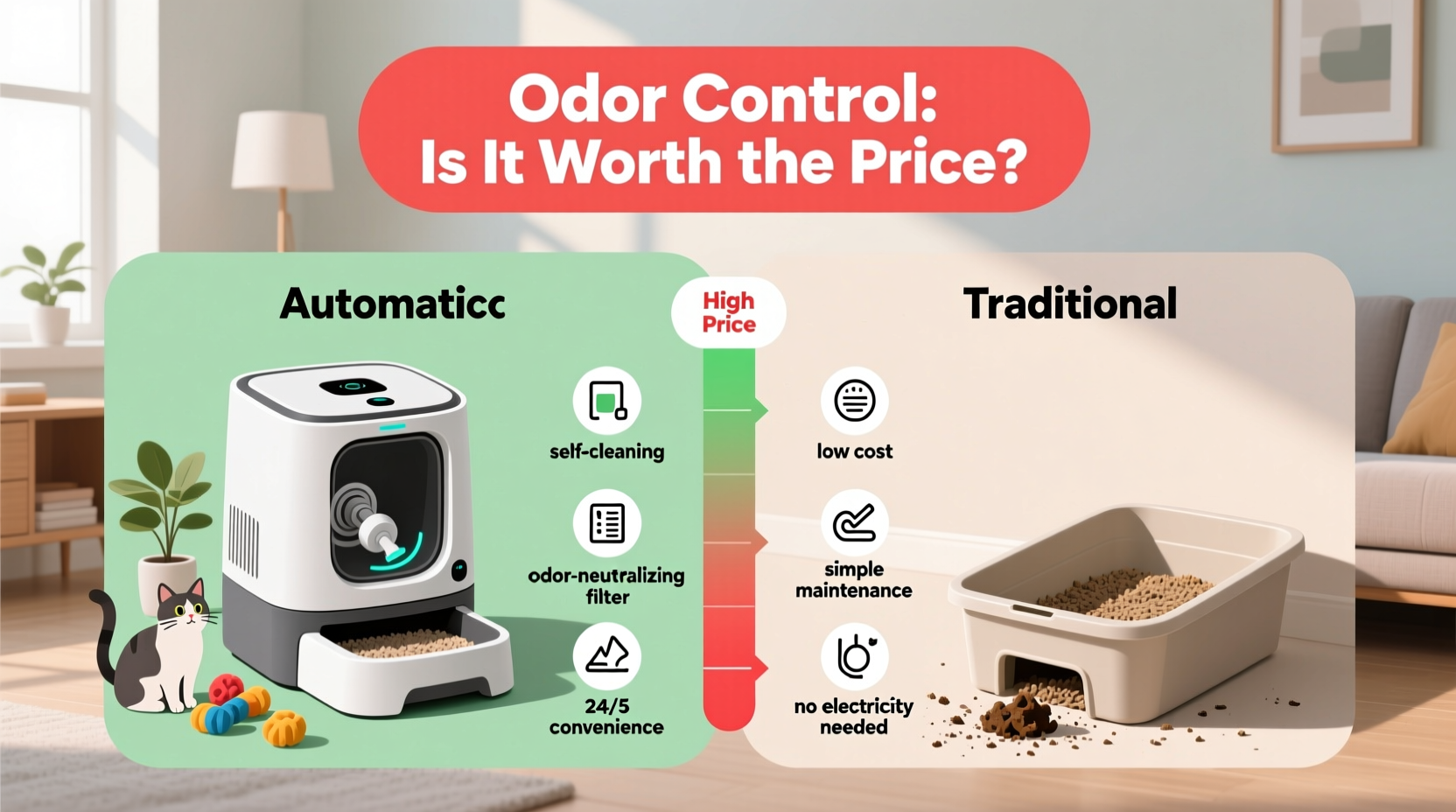
Before evaluating solutions, it’s essential to understand what causes litter box odor. Cat urine contains urea and uric acid, which bacteria break down into ammonia—a pungent gas responsible for the sharp smell most owners dread. Feces contribute additional volatile organic compounds (VOCs), intensifying the stench over time.
Traditional litter boxes rely on clumping clay or plant-based litters to absorb moisture and mask smells temporarily. However, without daily scooping, waste accumulates, saturation occurs, and odor spreads quickly—especially in warm or poorly ventilated areas.
Automatic litter boxes aim to interrupt this cycle by removing waste shortly after use. Most models use sensors to detect when a cat has finished eliminating, then activate a raking or sifting mechanism that deposits solids into a sealed waste compartment. Some even seal waste in disposable bags or pods, isolating it from air and minimizing bacterial breakdown.
Tip: Place your litter box in a well-ventilated area—even with an automatic model—to further reduce lingering odors.Comparing Odor Control: Automatic vs Traditional
Odor control is the primary selling point of automatic litter boxes. But how much better are they in practice?
| Feature | Automatic Litter Box | Traditional Litter Box |
|---|---|---|
| Waste Removal Frequency | Minutes after use (automated) | Daily (manual scooping required) |
| Odor Containment | High (sealed compartments, carbon filters) | Low to moderate (open exposure) |
| Litter Freshness Duration | 7–14 days (less contamination) | 1–3 days (without scooping) |
| Air Quality Impact | Noticeably lower ammonia levels | Stronger odor buildup over time |
| User Complaints About Smell | 15% (mostly due to poor placement or full bins) | 60%+ (common issue cited) |
The data shows a significant advantage for automatic systems in maintaining fresher air. Independent tests by pet product reviewers found that homes using self-cleaning boxes reported 40–60% less detectable odor over a two-week period compared to those using traditional boxes with daily scooping.
However, performance varies by model. High-end units like the Litter-Robot or PetSafe ScoopFree Ultra incorporate carbon filters, enclosed designs, and timed waste sealing—features absent in cheaper automated options or standard trays.
“From a veterinary hygiene standpoint, reducing ammonia exposure benefits both cats and humans. Chronic low-level ammonia can irritate respiratory tracts, especially in multi-cat homes.” — Dr. Lena Patel, DVM, Feline Wellness Specialist
Total Cost of Ownership: Beyond the Initial Price Tag
An automatic litter box typically costs between $250 and $600, while a quality traditional box ranges from $20 to $50. At first glance, the difference seems prohibitive. But long-term ownership reveals hidden savings and trade-offs.
Consider these factors:
- Litter usage: Automatic boxes often use less litter because waste is removed immediately, preventing saturation. Over a year, this can save 20–30 pounds of litter, translating to $30–$60 in savings.
- Replacement parts: Many automatic models require proprietary liners, waste drawers, or filter replacements. These recurring costs add $80–$150 annually.
- Labor value: If you value your time at $15/hour and spend 5 minutes daily scooping (18+ hours per year), automation saves over $270 in labor alone.
- Durability: Well-maintained automatic units last 5–7 years. Traditional boxes may need replacing every 1–2 years due to staining or odor retention.
When factoring in time saved, reduced litter consumption, and fewer replacements, the effective annual cost of an automatic system narrows significantly. For example:
Sample Annual Cost Comparison (Single Cat)
| Expense | Automatic Box (Litter-Robot 4) | Traditional Box (Daily Scooping) |
|---|---|---|
| Purchase Cost (amortized over 5 years) | $100 | $25 |
| Litter ($25/month) | $210 | $300 |
| Replacement Liners/Filters | $120 | $0 |
| Box Replacements | $0 | $25 |
| Total | $430 | $350 |
The automatic option comes within $80 annually of the traditional setup—and that doesn’t account for time saved or improved air quality. For households with multiple cats, the gap closes faster due to increased scooping frequency and litter use.
Tip: Look for models with reusable waste trays to cut down on liner costs—some owners report saving hundreds over the unit’s lifespan.Real-World Performance: A Mini Case Study
Sarah Thompson, a software engineer and owner of two Bengal cats in Austin, Texas, switched to a Litter-Robot 3 Connect after struggling with odor in her small apartment. “I was scooping twice a day, but the bathroom still smelled by evening,” she said. “My roommate was complaining, and I felt guilty.”
After purchasing the unit for $499, Sarah noticed immediate improvements. “The first week, I didn’t scoop once. The machine handled everything. The sealed bin really locks in the smell—I can’t even tell when it’s been used unless I check the app.”
She did face challenges: one cat took three weeks to adapt, requiring gradual introduction with treats and positive reinforcement. There was also a learning curve with maintenance—emptying the waste drawer weekly and cleaning sensor rails monthly.
After 14 months, Sarah says the investment paid off. “I’ve saved about $70 on litter, and I’ve gained back nearly 10 hours a month. More importantly, my home smells neutral again. For me, it was absolutely worth it.”
Her experience reflects a common trend: initial hesitation followed by strong satisfaction among users who prioritize cleanliness and convenience.
Key Considerations Before Buying an Automatic Litter Box
Not every household will benefit equally from automation. Here’s a checklist to help determine if it’s right for you:
Automatic Litter Box Readiness Checklist
- Do you have at least one cat that weighs between 5–15 lbs? (Most models support this range.)
- Is your cat generally healthy and not prone to urinary issues requiring monitoring of waste?
- Do you live in a space where litter box odor is a persistent problem?
- Are you willing to perform monthly mechanical maintenance (cleaning sensors, checking gears)?
- Can you place the unit on a hard floor near an outlet? (Avoid carpets; vibration may interfere.)
- Are you prepared for potential noise during operation? (Some models make 50–60 dB sounds.)
- Have you budgeted for replacement parts or liners over time?
If you answered “yes” to five or more, an automatic system could be a smart upgrade. If not, a high-quality traditional box with premium odor-control litter might serve you better.
Frequently Asked Questions
Do automatic litter boxes work for multiple cats?
Yes, most high-end models are designed for multi-cat households. The Litter-Robot, for instance, recommends one unit for up to four cats, provided waste is emptied every 5–7 days. However, very active households may exceed capacity, leading to overflow or missed cleanings.
Can kittens or senior cats use automatic boxes?
Kittens under 5 lbs may not trigger the weight sensor reliably. Similarly, arthritic or anxious senior cats may avoid enclosed models. Open-tray automatic systems like the PetSafe ScoopFree are often better suited for sensitive cats.
Are there health risks if waste isn’t monitored?
Potentially. Automatic boxes remove waste quickly, which means owners may miss early signs of diarrhea, blood, or straining. Veterinarians recommend periodic manual checks, especially for cats with known health conditions. Some models offer companion apps that log usage frequency as a proxy for monitoring.
Making the Decision: Value vs. Convenience
The truth is, automatic litter boxes aren’t just about odor control—they’re about lifestyle. They offer peace of mind, time savings, and a cleaner living environment. While the upfront cost is steep, the cumulative benefits often justify the expense for busy professionals, allergy sufferers, or those in small dwellings where odors concentrate.
That said, traditional boxes remain a viable, economical choice—especially when paired with high-clumping, odor-neutralizing litters like silica crystals or pine pellets. With diligent daily scooping and bi-weekly litter changes, many owners successfully manage smell without automation.
The deciding factor should be your tolerance for maintenance versus your sensitivity to odor and time constraints. If you dread scooping, notice persistent smells despite effort, or simply value convenience, an automatic box likely offers worthwhile returns.
Conclusion: Is It Worth the Investment?
Odor control in cat litter management is more than a comfort issue—it affects indoor air quality, social comfort, and even feline well-being. Automatic litter boxes deliver measurable improvements in all three areas, particularly through rapid waste isolation and advanced filtration.
While the price is undeniably high, the long-term equation includes more than dollars: it accounts for time regained, stress reduced, and environments kept fresh. For many modern cat owners, especially in urban settings or multi-pet homes, that value outweighs the initial sticker shock.
If you're tired of the daily scoop, battling persistent smells, or seeking a smarter way to care for your cat, an automatic litter box may be more than a luxury—it could be a long-term upgrade to your quality of life.
🚀 Ready to reclaim your time and air quality? Evaluate your routine, assess your needs using the checklist above, and consider trying a top-rated automatic model. Your nose—and your schedule—might thank you.








