For many cat owners, the daily routine of feeding their pets has evolved from a simple scoop of kibble to a high-tech operation involving Wi-Fi connectivity, smartphone apps, and portion-controlled dispensing mechanisms. At the same time, a simpler alternative—the timed bowl—offers basic automation without the digital overhead. As pet tech becomes increasingly sophisticated, a critical question arises: Is all this technology truly necessary for reliable, healthy feeding, or are we over-engineering a fundamental task?
The answer depends on lifestyle, budget, and the specific needs of both owner and cat. While automatic feeders offer undeniable convenience and precision, timed bowls present a minimalist, low-cost solution that may be sufficient for many households. Understanding the differences between these systems—and the real-world implications of each—can help pet owners make informed decisions without falling prey to marketing hype.
Understanding the Core Differences
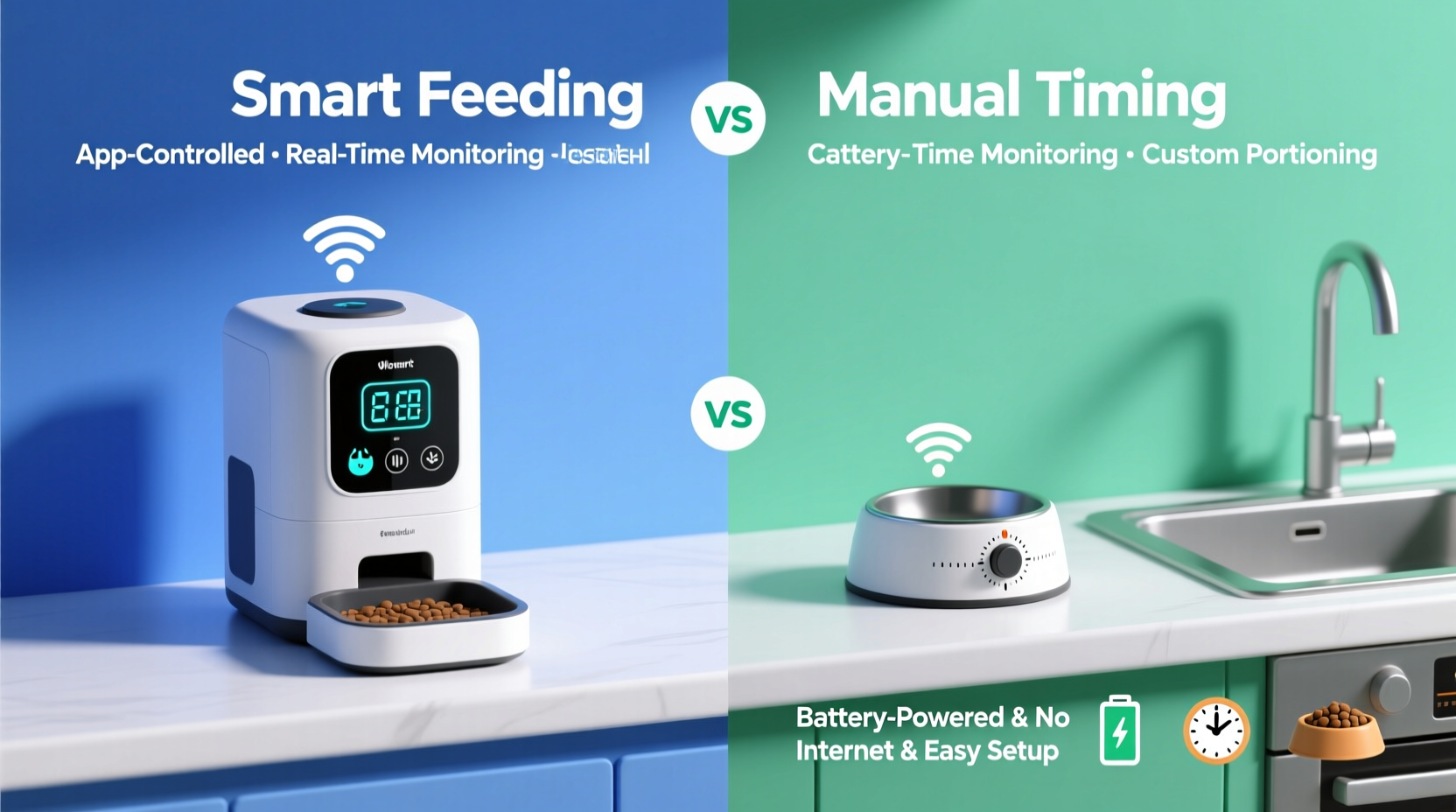
At first glance, both automatic cat feeders and timed bowls serve the same purpose: to deliver food at predetermined intervals. However, their design, functionality, and level of control vary significantly.
An automatic cat feeder typically includes a motorized dispenser, a digital timer (often with multiple settings per day), and increasingly, smart features such as mobile app integration, voice recording, portion customization, and even cameras. These units often require batteries or a power source and can dispense wet or dry food depending on the model.
A timed bowl, by contrast, is usually a passive device—a container with a lid that opens automatically at set times. It doesn’t dispense food but instead reveals pre-placed meals. The owner must manually load food into the bowl in advance, meaning it’s more of a timed access system than an active feeder.
Tip: If your cat eats only dry food and you're home most days, a timed bowl might be all you need—no Wi-Fi required.When Technology Adds Real Value
High-tech automatic feeders aren't just gimmicks; they solve real problems for specific lifestyles. Consider a working professional who travels frequently or someone with an unpredictable schedule. In these cases, knowing your cat will be fed on time—regardless of whether you’re delayed at work or stuck in traffic—provides peace of mind.
Dr. Lena Patel, a veterinary behaviorist based in Portland, notes:
“Consistent feeding schedules support digestive health and reduce anxiety in cats. Devices that ensure timely meals—even when owners are absent—can play a meaningful role in overall wellness.” — Dr. Lena Patel, DVM, Veterinary Behavior Consultant
Smart feeders enhance this benefit further. Some models allow remote activation via smartphone, so you can release a meal early if your cat seems hungry. Others include built-in cameras and two-way audio, letting you check in on your pet and call them to dinner. For multi-cat households, certain feeders use weight sensors or RFID tags to prevent food theft, ensuring each cat gets only their designated portions.
These features become especially valuable during extended absences. A week-long trip no longer requires relying solely on a neighbor or pet sitter for feeding. With proper setup, the feeder handles meals autonomously while sending notifications confirming each successful dispensation.
Cost vs. Functionality: A Practical Breakdown
One of the most significant considerations is cost. Timed bowls are generally inexpensive, retailing between $20 and $40. They have few moving parts, minimal maintenance, and rarely break down. Automatic feeders, especially smart models, range from $60 to over $200. This price difference raises a crucial question: Are you paying for utility—or just bells and whistles?
| Feature | Timed Bowl | Basic Automatic Feeder | Smart Feeder |
|---|---|---|---|
| Price Range | $20–$40 | $50–$90 | $100–$250+ |
| Food Dispensing | No (manual loading) | Yes (dry food) | Yes (dry/wet options) |
| Remote Access | No | Limited | Yes (app control) |
| Multiple Meals Per Day | Yes (up to 2–3) | Yes (up to 6) | Yes (customizable) |
| Power Source | Battery | Battery/AC | AC + Battery Backup |
| Maintenance Needs | Low | Moderate | High (cleaning, updates) |
| Suitable for Wet Food? | No | Rarely | Some models |
As shown, smart feeders offer expanded capabilities, but not all features are essential. For example, if you don’t travel often and your schedule is consistent, remote access may never be used. Similarly, camera integration might seem appealing but adds complexity and potential privacy concerns.
Real-World Example: The Smith Family’s Feeding Dilemma
The Smiths, a family of four in suburban Denver, adopted a rescue cat named Milo. Both parents work full-time, and their teenage son leaves early for school. Initially, they used a basic automatic feeder with two daily meals programmed. It worked well for months—until Milo began pawing at the device, trying to trigger extra servings.
They upgraded to a smart feeder with portion locks and motion alerts. Now, when Milo nudges the unit, they receive a notification and can choose to dispense a small treat remotely. More importantly, the new feeder prevents overfeeding, which helped stabilize Milo’s weight after initial fluctuations.
In contrast, their neighbors, the Garcias, use a timed bowl for their senior cat, Luna. Since Luna eats once in the morning and once at night, and someone is usually home to refill the bowl, the simpler system works perfectly. “We tried a smart feeder,” Mrs. Garcia admitted, “but it broke after six months, and the replacement part cost half as much as a new timed bowl. We switched back and haven’t looked back.”
This contrast illustrates a key insight: Technology should serve the pet’s needs—not the owner’s desire for novelty.
Step-by-Step Guide: Choosing the Right System for Your Cat
Selecting between a timed bowl and an automatic feeder shouldn’t be arbitrary. Follow this decision-making process to identify the best fit:
- Assess your schedule. Do you leave the house for long stretches? Travel frequently? If yes, automation becomes more valuable.
- Evaluate your cat’s eating habits. Does your cat graze throughout the day, or eat set meals? Frequent grazing may require multiple dispensing events.
- Consider dietary needs. Cats on wet food diets may need refrigeration between meals—something most feeders can’t handle. Dry food simplifies logistics.
- Determine your technical comfort level. Can you manage app updates, Wi-Fi pairing, and troubleshooting? If not, a simpler device reduces frustration.
- Calculate long-term costs. Include replacement parts, batteries, and potential repairs. A $70 feeder needing a $30 hopper every year adds up.
- Test one option temporarily. Borrow or rent a model before committing. Observe how your cat interacts with it—some cats are intimidated by noise or movement.
Common Pitfalls to Avoid
- Over-relying on technology. Even the most advanced feeder can malfunction. Always have a backup plan—whether it’s a trusted neighbor or a secondary food source.
- Neglecting cleaning. Automatic feeders accumulate dust, clumped kibble, and bacteria. Clean hoppers and dispensers weekly to prevent mold and jams.
- Ignoring behavioral cues. If your cat stops approaching the feeder or shows signs of anxiety, reassess its placement and function.
- Using outdated firmware. Smart devices require updates. Enable notifications or check manufacturer websites periodically.
Frequently Asked Questions
Can a timed bowl work for kittens or medical diets?
Timed bowls can work if food is pre-loaded safely and consumed promptly. However, kittens often need frequent, small meals, making portion-controlled automatic feeders more suitable. For cats on prescription diets requiring precise timing, active dispensers offer better control.
Are automatic feeders safe for long-term use?
Yes, provided they are maintained properly. Choose models with safety certifications (like UL listing), avoid cheap motors that may jam, and monitor your cat’s interaction with the device. Never rely solely on automation without periodic human checks.
Do cats prefer one type over another?
Cats don’t inherently prefer technology—they respond to consistency and predictability. Some may be startled by the sound of a motorized dispenser initially, but most adapt within days. The key is minimizing disruption to their routine during transition.
Final Checklist Before You Buy
- ✅ Does my cat need multiple meals per day?
- ✅ Am I away from home long enough to justify automation?
- ✅ Will I actually use the smart features, or are they just appealing in theory?
- ✅ Is the device easy to clean and refill?
- ✅ Does it have positive reviews focused on reliability, not just features?
- ✅ Have I considered a backup feeding method in case of failure?
Conclusion: Simplicity Often Wins
Technology has transformed pet care in meaningful ways, but not every innovation is a necessity. When it comes to feeding cats, the choice between an automatic feeder and a timed bowl isn’t about superiority—it’s about alignment with your life and your pet’s needs.
For busy professionals, frequent travelers, or those managing complex feeding regimens, a smart automatic feeder can be a worthwhile investment. But for many others, a well-placed timed bowl offers reliable, low-maintenance service without the risk of software glitches or expensive replacements.
The goal isn’t to adopt the most advanced gadget, but to ensure your cat is fed consistently, safely, and with care. Whether that happens through Wi-Fi-enabled precision or a simple mechanical timer, what matters most is the outcome: a healthy, contented cat.
🚀 Ready to make a decision? Start by observing your current feeding routine for a week. Note gaps, challenges, and opportunities. Then choose the tool—not the trend—that fills the real need.








