Cat obesity has become a growing concern among pet owners and veterinarians alike. According to the Association for Pet Obesity Prevention, over 60% of domestic cats in the U.S. are overweight or obese. Excess weight increases the risk of diabetes, arthritis, heart disease, and shortened lifespans. One of the most impactful factors in managing a cat’s weight is feeding method. Two common options—automatic feeders and gravity feeders—offer vastly different approaches to meal delivery. While both have their place, they differ significantly in how effectively they prevent obesity. Understanding these differences is essential for any cat owner aiming to support long-term health through proper nutrition.
Understanding Cat Obesity and Its Causes
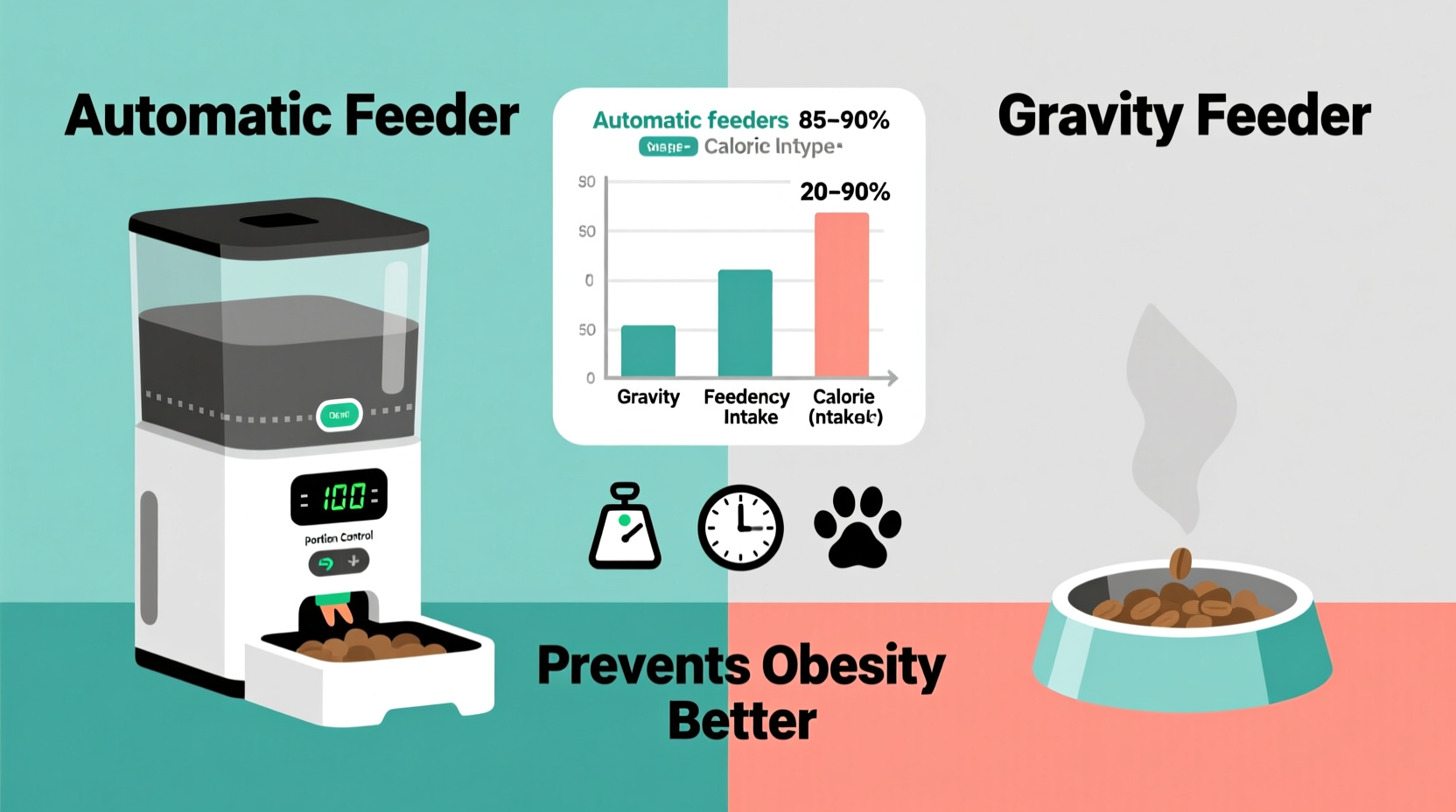
Obesity in cats results from a prolonged imbalance between calorie intake and energy expenditure. Unlike wild felines, domestic cats often live sedentary lifestyles with minimal hunting or physical activity. When combined with unrestricted access to food, this sets the stage for weight gain. The feeding method used at home plays a pivotal role in either reinforcing or disrupting this cycle.
Free-feeding—allowing cats to eat whenever they want—is one of the leading contributors to overeating. Gravity feeders enable free-feeding by constantly refilling the bowl as it empties. In contrast, automatic feeders dispense meals at scheduled times, offering precise portion control. This structural difference makes automatic feeders inherently more effective at regulating caloric intake.
“Portion-controlled feeding is one of the most reliable strategies for preventing obesity in indoor cats.” — Dr. Laura Greensmith, DVM, Feline Nutrition Specialist
How Automatic Feeders Support Weight Management
Automatic cat feeders are electronic devices that release a pre-measured amount of dry or wet food at set intervals. Most models allow owners to program multiple meals per day, customize portion sizes, and even lock the device to prevent manual overrides. These features make them powerful tools in the fight against obesity.
The primary advantage lies in consistency. By delivering measured meals on a fixed schedule, automatic feeders mimic natural feeding patterns more closely than constant access systems. Cats in the wild consume several small meals throughout the day, typically after short bursts of activity. An automatic feeder can replicate this rhythm, helping regulate metabolism and reduce mindless snacking.
Additionally, many advanced models include mobile app integration, allowing remote monitoring and adjustments. Some even feature cameras and voice recording, enabling owners to interact with their pets during mealtimes. This level of engagement supports behavioral health, reducing stress-related eating.
Tip: Set your automatic feeder to dispense three to four small meals daily rather than one or two large portions to better align with your cat’s natural digestion.The Pitfalls of Gravity Feeders for Weight Control
Gravity feeders operate on a simple principle: as the cat eats from the bowl, more food flows down from a connected hopper. They require no electricity or programming and are often praised for convenience, especially in multi-cat households where competition might be low.
However, their design encourages ad libitum (free-choice) feeding—a practice strongly linked to overconsumption. Without portion limits or time constraints, cats may graze continuously, particularly if bored or stressed. Studies show that cats with unrestricted access to dry food consume up to 30% more calories per day than those on scheduled feeding plans.
Dry kibble, commonly used in gravity feeders, is often high in carbohydrates—ingredients not naturally present in high amounts in a feline diet. When consumed in excess, these carbs convert to fat storage, accelerating weight gain. Moreover, because gravity feeders lack timers or locks, other household pets or children can accidentally disrupt the system, leading to unpredictable intake levels.
In multi-cat homes, dominant animals may monopolize the feeder, while shy or lower-ranking cats eat less or avoid it altogether. This imbalance can lead to uneven weight distribution across pets, complicating health management.
Comparative Analysis: Key Differences That Impact Obesity Risk
| Feature | Automatic Feeder | Gravity Feeder |
|---|---|---|
| Portion Control | Yes – programmable serving sizes | No – continuous refill |
| Meal Timing | Precise scheduling (e.g., 6 AM, 6 PM) | Unlimited access |
| Calorie Regulation | High – limits total daily intake | Low – prone to overeating |
| Suitability for Obese Cats | Excellent – ideal for weight loss plans | Poor – increases obesity risk |
| Maintenance Effort | Moderate – requires setup and cleaning | Low – minimal upkeep |
| Battery/Power Dependent | Yes – needs power source | No – mechanical flow only |
| Best For | Weight management, routine, travel | Healthy, active cats with self-control |
This comparison highlights why automatic feeders are superior when obesity prevention is the goal. Their ability to enforce structure directly addresses the root causes of overeating.
Real-World Example: A Case Study in Feeding Method Change
Sophie, a 4-year-old domestic shorthair, lived in a two-person apartment with a busy work schedule. Her owners used a gravity feeder filled with dry kibble, believing it was convenient and sufficient. Over 18 months, Sophie gained 3 pounds, reaching 14.5 lbs—well above the healthy range for her frame. During a routine checkup, her veterinarian diagnosed mild obesity and recommended switching to portion-controlled feeding.
The owners replaced the gravity feeder with a Wi-Fi-enabled automatic feeder programmed for four 1/4-cup meals per day. They also transitioned Sophie to a higher-protein, lower-carb diet. Within six weeks, her begging behavior decreased, and she began showing interest in interactive toys. After three months, Sophie lost 1.8 pounds and stabilized at a healthier 12.7 lbs. Bloodwork showed improved glucose metabolism, and her coat became shinier and less greasy—a sign of better internal health.
This case illustrates how changing feeding equipment, combined with dietary adjustments, can produce measurable improvements in body condition and overall wellness.
Step-by-Step Guide to Transitioning from Gravity to Automatic Feeding
Switching feeding methods should be done gradually to avoid digestive upset or resistance from your cat. Follow this timeline for a smooth transition:
- Week 1: Dual Setup – Place the automatic feeder beside the gravity feeder. Fill the automatic feeder but leave it off. Let your cat explore it without pressure.
- Week 2: Introduce Scheduled Meals – Program the automatic feeder for one daily meal (e.g., breakfast). Remove the gravity feeder during that time. Return it afterward.
- Week 3: Expand Meal Coverage – Use the automatic feeder for breakfast and dinner. Keep the gravity feeder available only during midday hours.
- Week 4: Full Transition – Discontinue use of the gravity feeder. Rely solely on the automatic feeder for all meals. Monitor appetite and litter box output for signs of stress or refusal.
- Ongoing: Adjust Portions Based on Weight – Weigh your cat every two weeks. If weight loss is too rapid or stalled, adjust portion size by 10–15% accordingly.
If your cat hesitates to eat from the new device, try placing a small amount of food near it first, then gradually move it inside the dish area. Warming dry food slightly or adding a sprinkle of freeze-dried chicken can increase appeal.
Actionable Checklist for Preventing Feline Obesity
- ✅ Assess your cat’s current body condition score (BCS) using a vet-approved chart.
- ✅ Calculate daily caloric needs based on weight and activity level (typically 20–30 kcal per pound).
- ✅ Choose a high-protein, low-carbohydrate diet appropriate for weight maintenance.
- ✅ Replace free-feeding with scheduled meals using an automatic feeder.
- ✅ Limit treats to no more than 10% of daily calories.
- ✅ Incorporate 10–15 minutes of playtime daily to boost activity.
- ✅ Schedule biannual veterinary weigh-ins to track progress.
Frequently Asked Questions
Can I use a gravity feeder if my cat isn’t overweight?
It depends. Some lean, highly active cats can maintain a healthy weight with a gravity feeder, especially if fed a species-appropriate, low-calorie diet. However, even normal-weight cats benefit from structured feeding, which supports metabolic regulation and reduces the risk of future weight gain.
Are automatic feeders safe for long-term use?
Yes, provided they are cleaned regularly and functioning properly. Mechanical jams or power failures can disrupt feeding schedules, so choose a model with battery backup and clean the dispenser weekly to prevent mold or clumping.
What if I have multiple cats? Won’t an automatic feeder cause conflict?
In multi-cat homes, use multiple automatic feeders placed in separate locations to reduce competition. Alternatively, opt for models with RFID or microchip recognition that only open for specific cats. This ensures each pet receives the correct portion without interference.
Final Thoughts: Choosing the Right Tool for Long-Term Health
When comparing automatic feeders versus gravity feeders in the context of obesity prevention, the evidence strongly favors automated, portion-controlled systems. While gravity feeders offer simplicity, they promote behaviors that align poorly with modern indoor cat physiology. Unrestricted access to calorie-dense dry food leads to passive overconsumption—a silent driver of weight gain.
Automatic feeders, though requiring more initial effort, provide the structure necessary for sustainable weight management. They empower owners to take proactive control of their cat’s diet, support veterinary-recommended feeding plans, and adapt to changing health needs over time.
Ultimately, preventing obesity isn't just about what your cat eats—it's about how, when, and how much they consume. Upgrading from a gravity feeder to an automatic system is one of the most impactful changes you can make for your cat’s long-term vitality.
💬 Have experience with automatic or gravity feeders? Share your story or tips in the comments—your insight could help another cat owner make a healthier choice today.








