Overfeeding is one of the most common causes of obesity in domestic cats. With nearly 60% of cats in the U.S. classified as overweight or obese, according to the Association for Pet Obesity Prevention, managing portion control has never been more critical. Two popular feeding solutions—automatic and gravity feeders—are often used to simplify mealtime. But when it comes to preventing overeating, they function very differently. Understanding their mechanisms, advantages, and limitations can help you make an informed decision that supports your cat’s long-term health.
How Cats Eat: The Natural Behavior Behind Overeating
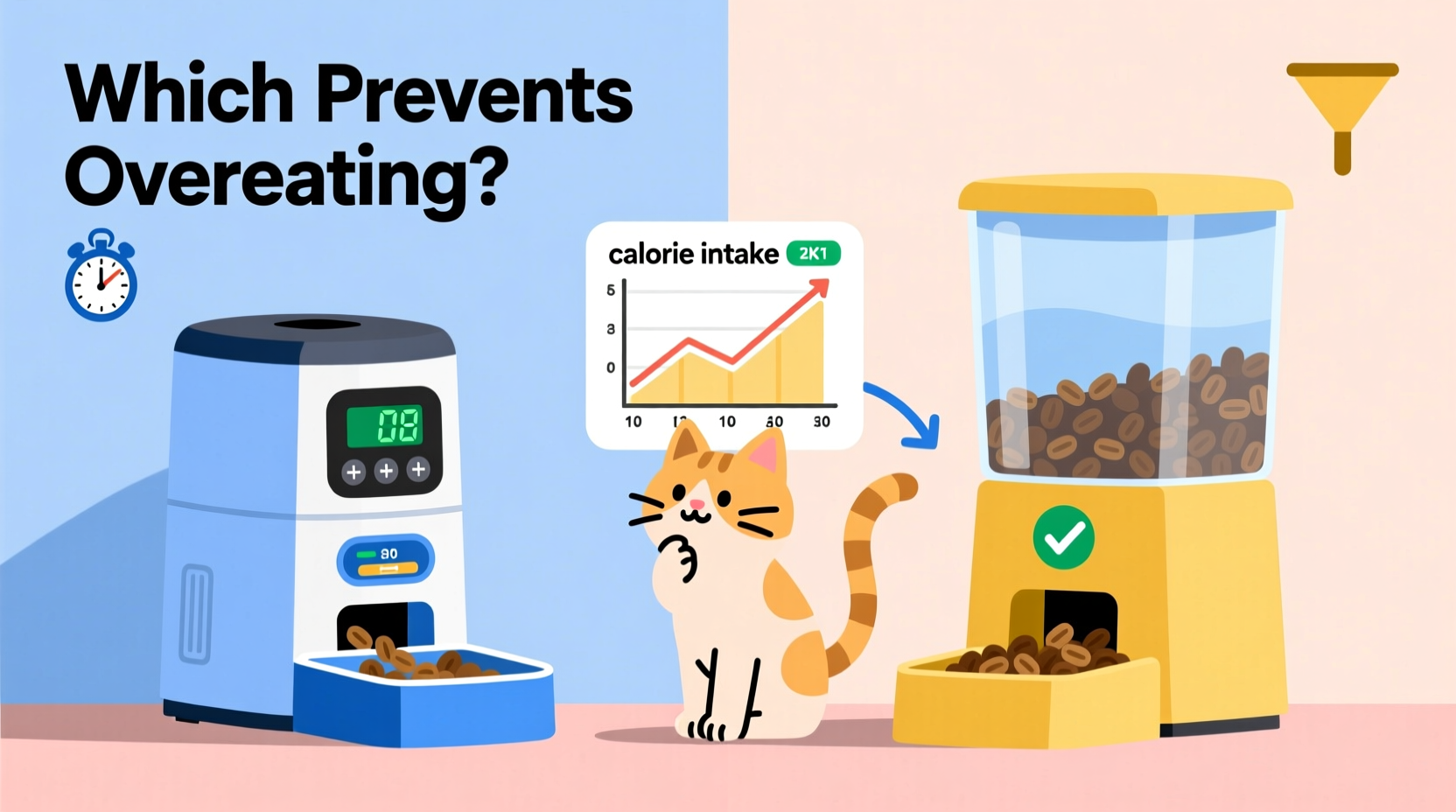
Cats are natural grazers. In the wild, they eat multiple small meals throughout the day—sometimes up to 15 times—hunting small prey. This behavior is hardwired into their instincts. When food is constantly available, such as in a gravity feeder, many cats will continue to nibble even when not hungry, leading to excess calorie intake.
Domestication has altered this pattern. Free-feeding, while convenient, removes the natural stop signals that would occur after catching prey. Without portion control or scheduled mealtimes, cats may consume 30–50% more than their daily caloric needs, especially if they are indoor-only, less active, or genetically predisposed to weight gain.
“Cats don’t self-regulate calories like humans assume they do. Just because food is available doesn’t mean they’ll stop when full.” — Dr. Sarah Thompson, DVM, Feline Nutrition Specialist
This tendency makes the choice of feeder crucial. While both automatic and gravity feeders aim to reduce owner workload, only one provides built-in safeguards against overconsumption.
Understanding Gravity Feeders: Convenience vs. Risk
Gravity feeders operate on a simple principle: as the cat eats from the bowl, more food flows down from a connected hopper due to gravity. These feeders are typically inexpensive, easy to use, and require no batteries or programming. They’re ideal for multi-cat households where constant access seems beneficial.
However, the continuous availability of food is precisely what makes gravity feeders problematic for portion control. There’s no mechanism to limit how much a cat consumes in a sitting or over 24 hours. For cats with high food motivation—or those who eat out of boredom—the risk of overeating increases significantly.
Tip: If using a gravity feeder, choose one with a smaller hopper capacity to naturally limit total food volume available at once.Additionally, kibble left exposed for hours can absorb moisture, become stale, or attract pests. Dust and debris may also accumulate, reducing food quality. While some gravity feeders include dome covers or anti-spill designs, none address the core issue: lack of meal timing and portion regulation.
How Automatic Feeders Promote Portion Control
Automatic cat feeders are programmable devices that dispense a set amount of food at scheduled times. Most models use battery-powered motors to release kibble through a rotating tray or auger system. Owners input meal times and portion sizes via digital controls or smartphone apps.
This structure aligns better with a cat’s natural grazing pattern when programmed correctly. Instead of unrestricted access, the cat receives several measured meals per day—mimicking the frequency (if not the method) of hunting. Because food is only dispensed at specific intervals, the cat learns to eat within a window rather than snack continuously.
Advanced models offer additional safeguards:
- Portion calibration down to 1/8 cup increments
- Multiple meal scheduling (up to 6 meals/day)
- Wi-Fi connectivity for remote monitoring and manual dispensing
- Lockable lids to prevent dominant cats from accessing others’ food
- Voice recording features to call cats to meals
These features allow owners to tailor feeding to individual cats, especially important in multi-cat homes where one animal may monopolize food. By controlling both timing and quantity, automatic feeders directly combat overeating.
Comparative Analysis: Key Differences That Matter
| Feature | Automatic Feeder | Gravity Feeder |
|---|---|---|
| Portion Control | Yes – precise, programmable servings | No – continuous flow based on bowl level |
| Meal Scheduling | Yes – customizable times | No – free-feeding only |
| Overeating Prevention | High – limits total daily intake | Low – encourages constant snacking |
| Battery/Power Dependent | Yes – requires power source | No – mechanical design |
| Ideal For | Weight management, structured feeding, travel | Low-maintenance households, non-obese cats |
| Risk of Malfunction | Moderate – jams, power failure | Low – few moving parts |
The data clearly shows that automatic feeders provide superior control over food intake. However, they aren't foolproof. Misprogramming—such as setting portions too large or too frequent—can still lead to overfeeding. Likewise, cats may learn to manipulate certain models by pawing at the tray or waiting for scheduled drops.
Real-World Example: Managing Weight in a Multi-Cat Home
Samantha, a pet owner in Portland, noticed her two cats had gained weight over six months. She was using a large gravity feeder to accommodate both animals, assuming they’d eat only what they needed. One cat, Luna, was calm and ate moderately. The other, Milo, was highly food-motivated and would stand at the feeder for minutes at a time, eating intermittently throughout the day.
After a vet visit revealed Milo was 20% above his ideal weight, Samantha switched to a dual-compartment automatic feeder. She programmed four 1/4-cup meals per day for each cat, staggering them slightly to avoid competition. Within eight weeks, Milo lost 0.8 pounds—nearly 10% of his body weight—while maintaining energy levels. Luna maintained her weight without overeating.
“I didn’t realize how much Milo was grazing until we removed the constant food supply,” Samantha said. “The automatic feeder taught him there’s a time to eat and a time to stop.”
Step-by-Step Guide to Choosing the Right Feeder
Selecting between an automatic and gravity feeder should be based on your cat’s health, behavior, and lifestyle. Follow this sequence to make the best decision:
- Evaluate your cat’s current weight and activity level. Consult your vet to determine if your cat is overweight or at risk.
- Observe feeding behavior. Does your cat eat quickly and walk away, or linger and graze? Frequent nibbling suggests a need for portion control.
- Assess household dynamics. In multi-cat homes, dominant eaters may benefit from scheduled, isolated meals.
- Determine your availability. If you're often away during mealtimes, automation adds consistency.
- Test and adjust. Start with conservative portion sizes and monitor weight weekly. Adjust as needed.
When a Gravity Feeder Might Be Acceptable
While automatic feeders are generally superior for preventing overeating, gravity feeders aren’t inherently bad. They can work safely under specific conditions:
- The cat maintains a healthy weight with no history of obesity
- Food intake is monitored regularly (e.g., measuring daily kibble added)
- The feeder is cleaned and refilled daily to ensure freshness
- Owners are present to observe eating patterns and intervene if overconsumption occurs
In low-risk scenarios, a gravity feeder offers simplicity. But it should never be a \"set it and forget it\" solution for cats prone to weight gain.
Expert Recommendations and Common Pitfalls
“The biggest mistake owners make is assuming all feeders are equal. A gravity feeder feeds convenience, but an automatic feeder feeds health—when used correctly.” — Dr. Alan Perez, Board-Certified Veterinary Nutritionist
Common pitfalls include:
- Using oversized portions in automatic feeders, negating portion control benefits
- Failing to clean feeders regularly, leading to mold or bacterial growth
- Introducing new feeders without acclimation, causing stress or refusal to eat
- Ignoring manufacturer instructions, resulting in jams or malfunctions
To avoid these issues, start slow. Let your cat get used to the sound and sight of the automatic feeder by running it empty for a day. Use treats during initial dispenses to create positive associations. Clean internal mechanisms every 1–2 weeks to prevent clogs.
FAQ: Your Top Questions Answered
Can cats starve if an automatic feeder stops working?
It’s unlikely in the short term, but malfunctions can cause stress or missed meals. Always have a backup plan—like a neighbor checking in—and consider models with battery backups or low-food alerts. Never rely solely on technology without oversight.
Do gravity feeders cause bloat or digestive issues?
There’s no direct link between gravity feeders and bloat in cats (unlike dogs), but constant eating can disrupt normal digestion rhythms. Cats evolved to process food in discrete meals, so irregular intake may contribute to mild gastrointestinal upset over time.
Are automatic feeders worth the cost?
For cats needing weight management, yes. Prices range from $40 to $150, but the investment can prevent costly vet bills related to obesity—diabetes, arthritis, hepatic lipidosis. The long-term health benefits often outweigh the upfront expense.
Final Checklist Before You Decide
- ✅ Has your cat been weighed recently by a vet?
- ✅ Do you know your cat’s daily caloric needs?
- ✅ Are you prepared to clean and maintain the feeder weekly?
- ✅ Can you commit to monitoring food intake and adjusting portions?
- ✅ Is the feeder suitable for your home layout and cat behavior?
Conclusion: Prioritizing Health Over Convenience
When it comes to preventing overeating, automatic cat feeders are the clear winner. They introduce structure, enforce portion control, and support healthier eating patterns—especially for cats already struggling with weight. Gravity feeders, while convenient, remove essential boundaries that help cats maintain balance.
Choosing the right feeder isn’t just about saving time; it’s about investing in your cat’s longevity. Obesity shortens feline lifespans by an average of 2–3 years and increases the risk of chronic disease. By switching to a controlled feeding system, you take a proactive step toward a healthier, more vibrant life for your pet.
🚀 Ready to make a change? Evaluate your current feeding setup today. Even small adjustments—like switching to scheduled meals—can have lasting impacts on your cat’s health. Share your experience or questions in the comments to help other cat owners make informed choices.








