
Birdwatching is more than a pastime—it's a window into the natural rhythms of your local ecosystem. A key factor in attracting diverse birdlife to your yard is the type of feeder you use. With automatic and manual bird feeders both widely available, many homeowners wonder: which one actually brings in more species? The answer isn’t as simple as choosing the latest gadget over tradition. It depends on consistency, placement, food quality, and how well the feeder supports natural bird behavior.
This article compares automatic and manual bird feeders from multiple angles—functionality, reliability, maintenance, cost, and most importantly, their impact on avian diversity. We’ll also explore real-world observations, expert insights, and actionable strategies to help you create a yard that welcomes not just common visitors, but rare and seasonal species too.
How Bird Feeders Influence Species Diversity
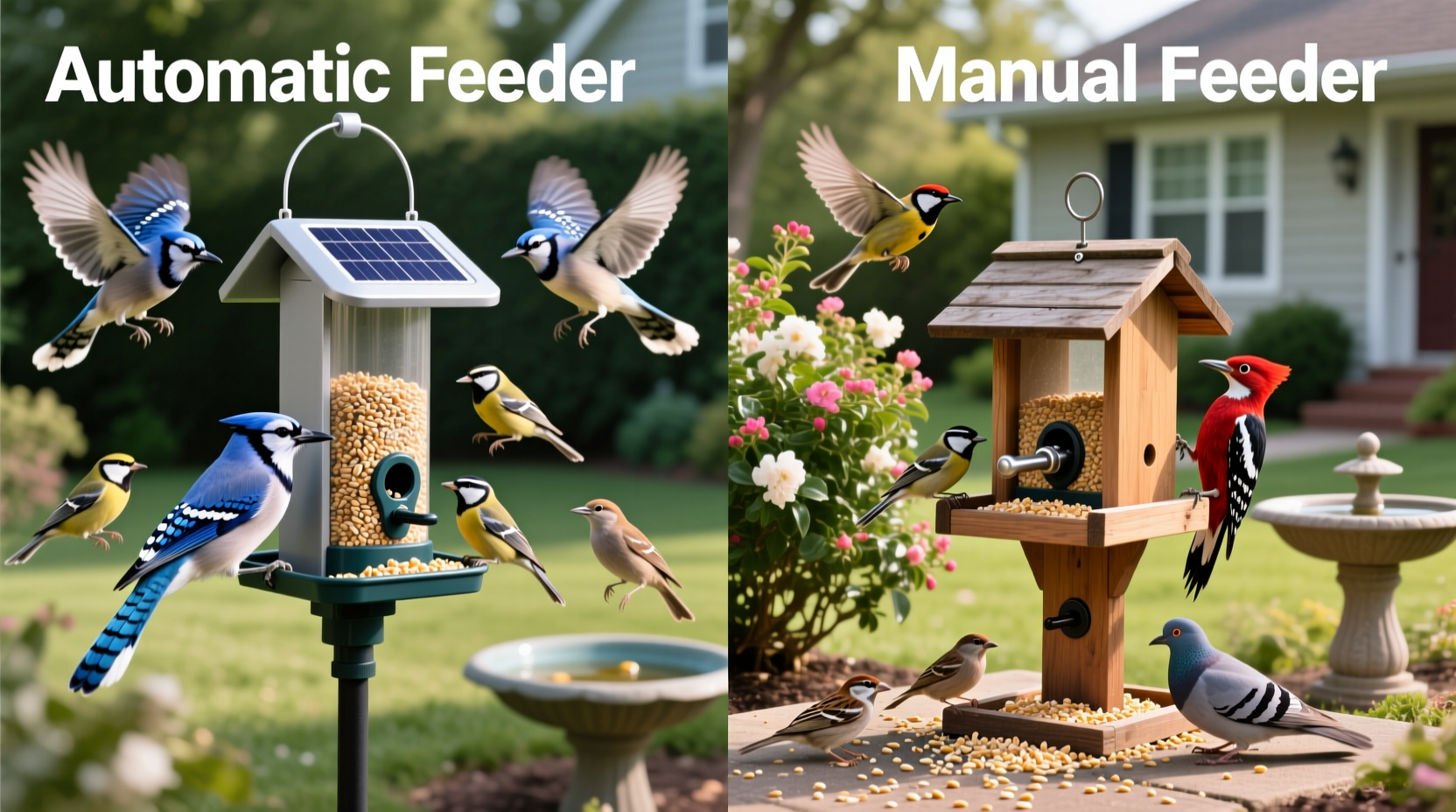
The number and variety of birds visiting your yard depend on several ecological factors. Food availability is primary, but so are safety from predators, proximity to water and shelter, and the consistency of feeding. Birds are creatures of habit; they return to reliable food sources day after day, especially during migration or winter months when energy demands are high.
A feeder’s design influences not only how much food is available but also who can access it. Some species prefer ground feeding, others cling to vertical surfaces, and some avoid crowded or noisy environments. This means that the mechanism behind food delivery—whether automated or manually refilled—can subtly shape which birds feel welcome.
For example, an automatic feeder might provide consistent seed levels, reducing competition and stress among smaller birds. In contrast, a well-placed manual feeder allows for daily observation and quick adaptation to changing bird activity patterns.
Automatic Bird Feeders: Pros and Cons
Automatic bird feeders use timers, motion sensors, or gravity-fed systems to dispense food at set intervals or when triggered by movement. These devices promise convenience and reduced refill frequency, often holding several pounds of seed.
Advantages
- Consistent food supply: Reduces gaps between refills, making your yard a dependable stopover.
- Reduced human interference: Less frequent visits mean fewer disturbances that scare off shy species.
- Pest deterrent features: Many models include weight-sensitive perches or baffles to keep squirrels and larger birds out.
- Weather resistance: Sealed designs protect seed from moisture, reducing mold and waste.
Drawbacks
- Higher initial cost: Quality automatic feeders range from $70 to over $200.
- Mechanical failure risk: Jams, sensor errors, or power issues (in solar/electric models) can halt feeding unexpectedly.
- Less adaptability: Once programmed, they may not respond quickly to sudden changes in bird traffic or weather.
- Limited food types: Most are designed for dry seeds; suet, nectar, or wet foods aren’t compatible.
“Technology can support bird feeding, but it shouldn’t replace ecological awareness. The best feeders mimic natural foraging patterns.” — Dr. Alan Prescott, Ornithologist, Cornell Lab of OrnithologyTip: If using an automatic feeder, check its dispensing mechanism weekly—even if seed levels appear adequate.
Manual Bird Feeders: Simplicity with Strategic Benefits
Manual feeders require regular human intervention to refill and clean. They come in countless designs—tube, hopper, platform, window-mounted—and offer flexibility in food choice and placement.
Despite requiring more effort, manual feeders often lead to higher species counts in long-term studies. Why? Because attentive caretakers notice patterns, adjust offerings seasonally, and respond to flock dynamics in real time.
Key Strengths
- Immediate responsiveness: You can add sunflower seeds when goldfinches arrive or switch to nyjer during finch season.
- Greater food variety: Offer mealworms, fruit slices, or peanut butter blends that automated systems can’t handle.
- Easier cleaning: Simple designs allow thorough scrubbing, reducing disease transmission.
- Lower upfront cost: Quality manual feeders start under $20.
Common Pitfalls
- Inconsistent refilling: Skipping refills even once can cause birds to relocate to more reliable yards.
- Increased disturbance: Frequent human presence may deter skittish species like towhees or juncos.
- Exposure to elements: Open trays can get rained on, spoiling seed faster.
Mini Case Study: The Suburban Backyard Experiment
In 2022, a homeowner in Portland, Oregon conducted a six-month comparison. She installed two identical tube feeders 50 feet apart—one automatic (motion-triggered), one manual. Both were filled with black oil sunflower seeds and cleaned weekly.
Over the study period, she recorded 18 species total. The manual feeder attracted 15 species, including hermit thrushes and fox sparrows—shy ground-foragers that avoided the occasional noise from the automatic unit’s motor. The automatic feeder saw heavier use from house finches and chickadees but missed seven less common visitors.
The difference? She refilled the manual feeder every morning at dawn, creating a predictable routine. The automatic unit worked flawlessly—but dispensed food randomly, disrupting natural visitation rhythms.
Comparison Table: Automatic vs Manual Feeders
| Feature | Automatic Feeder | Manual Feeder |
|---|---|---|
| Initial Cost | $70–$200+ | $10–$50 |
| Maintenance Frequency | Every 2–3 weeks (if sealed) | Weekly (refill + clean) |
| Food Variety Supported | Limited (dry seeds only) | High (seeds, suet, fruit, nectar) |
| Species Attraction Potential | Moderate to high (common species) | High (including shy/rare species) |
| Reliability | Dependent on tech function | Dependent on user consistency |
| Impact of Weather | Low (sealed units) | Medium to high (open designs) |
| User Effort | Low after setup | Moderate to high |
Maximizing Species Diversity: A Step-by-Step Guide
If your goal is to attract the widest possible range of birds—not just the boldest or most common—follow this proven approach regardless of feeder type.
- Assess Your Yard’s Habitat (Week 1): Note tree cover, shrub density, water sources, and predator risks. Birds need cover to feel safe while feeding.
- Start with Two Manual Feeders (Week 2): Place one near shrubs (for ground-feeding species) and one in open space (for finches and cardinals). Use black oil sunflower seeds initially.
- Observe and Record (Ongoing): Keep a log of species, times of visit, and behaviors. Do jays dominate? Are small birds waiting in trees?
- Introduce Specialized Foods (Week 4): Add a suet cage for woodpeckers and nuthatches. Try a nyjer sock for goldfinches. Rotate offerings monthly.
- Consider Supplemental Automation (Optional, Week 6+): Install an automatic feeder only if manual upkeep becomes unsustainable. Use it as a backup, not the primary source.
- Rotate Feeder Locations Monthly: Prevent soil contamination and reduce disease spread by moving feeders every few weeks.
- Add Water and Shelter: A shallow birdbath or brush pile increases habitat value far beyond what any feeder alone can achieve.
Checklist: Building a High-Diversity Feeding Station
- ☑️ Provide at least three feeder types (tube, platform, suet)
- ☑️ Offer four or more food types seasonally
- ☑️ Position feeders within 10 feet of cover (bushes/trees) but not so close that cats can ambush
- ☑️ Maintain a clean, debris-free area beneath feeders
- ☑️ Include a fresh water source (birdbath with shallow edges)
- ☑️ Monitor for signs of illness (ruffled feathers, eye crusting)
- ☑️ Keep records of species and visit frequency
- ☑️ Avoid chemical pesticides in nearby landscaping
Frequently Asked Questions
Does an automatic feeder attract more birds overall?
Not necessarily. While automatic feeders maintain consistent seed levels, they don’t inherently attract more species. In fact, their mechanical nature and inflexible programming may deter cautious or rare birds. Total bird numbers may be similar, but species richness tends to be higher with attentive manual feeding.
Can I combine automatic and manual feeders?
Yes—and doing so can be highly effective. Use the automatic feeder as a base-level food source during vacations or busy weeks, while maintaining one or two manual feeders for targeted offerings and active monitoring. Just ensure they’re spaced apart to prevent overcrowding.
What’s the biggest mistake people make with bird feeders?
Neglecting hygiene. Moldy seed and droppings buildup spread diseases like trichomoniasis and avian pox. Even the most advanced automatic feeder becomes a hazard if not cleaned regularly. Equally damaging is offering low-quality \"filler\" seed mixes containing milo or wheat—most birds ignore these and scatter them, inviting rodents.
“The yard that wins in biodiversity isn’t the one with the fanciest feeder, but the one where the caretaker pays attention.” — Sarah Lin, Urban Wildlife Ecologist
Final Thoughts: It’s Not About the Feeder—It’s About the Habit
The debate between automatic and manual bird feeders ultimately misses the point. What matters most isn’t the mechanism of delivery, but the consistency, care, and ecological mindfulness behind it. Birds are drawn to reliability, safety, and variety—all of which stem from human behavior, not technology.
Automatic feeders can be useful tools, especially for those with mobility challenges or unpredictable schedules. But they are no substitute for observation, adaptation, and engagement with your local environment. The most species-rich yards belong to people who treat feeding not as a chore, but as a practice—one that evolves with the seasons, the migrations, and the subtle cues birds provide every day.
If you're aiming for diversity, start simple. Use manual feeders, learn your visitors, and build routines that support both birds and your own connection to nature. Upgrade to automation only when necessary, and always prioritize habitat quality over gadgetry.
💬 Have you noticed a difference in bird species since switching feeder types? Share your experience in the comments—your observations could help others create more welcoming spaces for wildlife.








