For pet owners, the battle against fur-covered floors is constant. Whether it's a long-haired cat shedding in clumps or a double-coated dog leaving tumbleweeds of hair behind, traditional vacuuming often feels like a never-ending chore. Enter the robot vacuum: a sleek, automated solution promising hands-free cleaning with minimal effort. But when it comes to managing pet hair—especially on a daily basis—do these devices truly live up to their claims?
The short answer is yes—but with important caveats. While modern robot vacuums have made significant strides in navigation, suction power, and brush design, not all models are equally equipped to handle the unique challenges posed by pet hair. Success depends on a combination of hardware capabilities, software intelligence, and realistic expectations.
Why Pet Hair Is a Unique Challenge
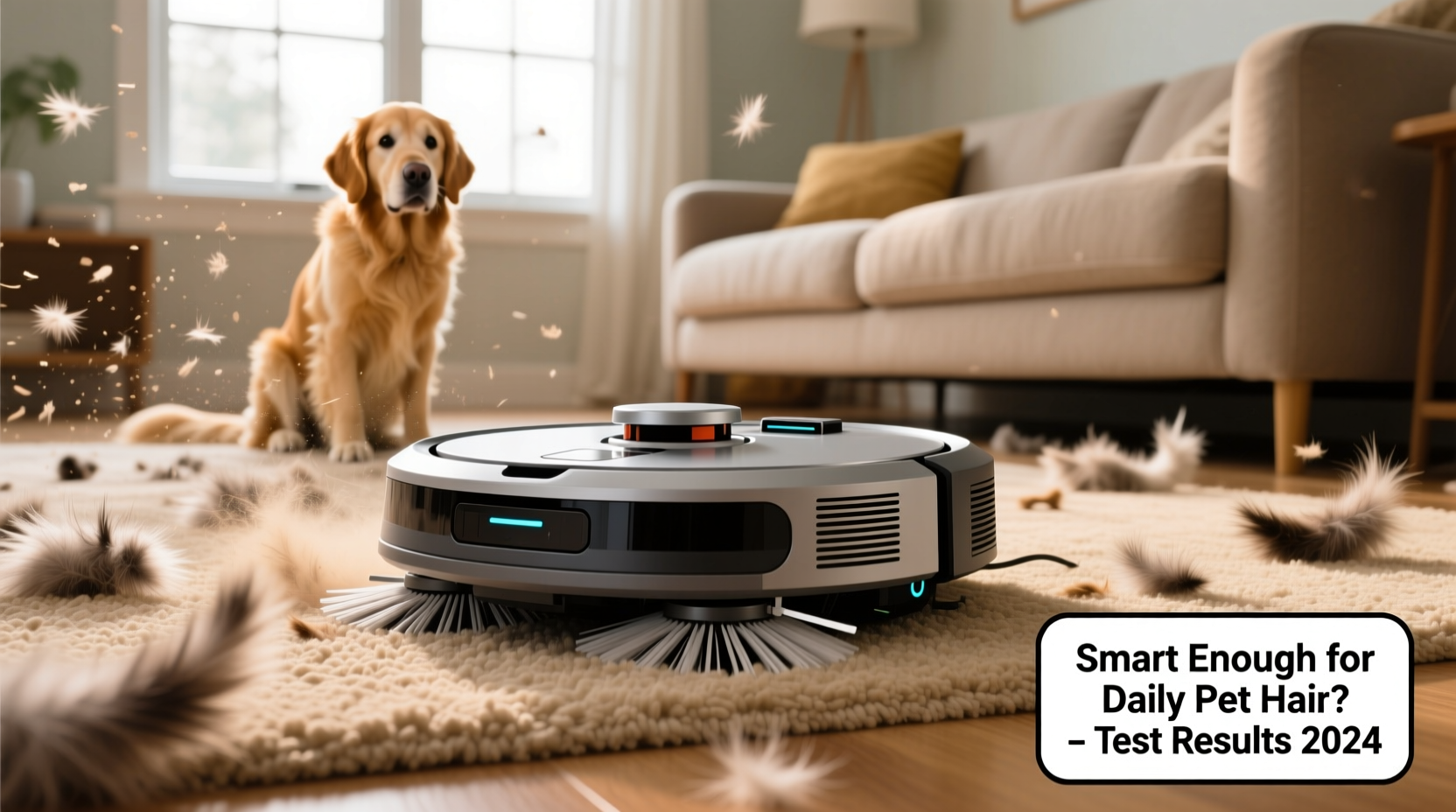
Pet hair isn’t just dirt or dust. It’s fibrous, clingy, and prone to tangling. Unlike fine particles that can be easily sucked into a dustbin, pet hair wraps around brushes, clogs filters, and accumulates in corners where airflow is weakest. Over time, this leads to reduced suction efficiency, frequent maintenance, and even motor strain if left unchecked.
Daily cleaning introduces another layer of complexity. A robot vacuum running every day must consistently navigate obstacles, avoid getting stuck, empty its bin (or know when to stop), and return to recharge—all while maintaining strong performance across multiple surfaces. For pet owners, reliability over time matters more than a single impressive clean.
“Pet hair demands both mechanical strength and intelligent operation. The best robot vacuums combine powerful motors with tangle-resistant brushrolls and adaptive navigation.” — Dr. Lena Patel, Robotics Engineer at HomeTech Labs
Key Features That Make a Robot Vacuum Effective Against Pet Hair
Not all robot vacuums are created equal. When evaluating whether a model can handle daily pet hair cleanup, focus on these critical components:
- Suction Power (measured in Pa or Air Watts): Higher suction (2000+ Pa) lifts embedded hair from carpets and rugs.
- Tangle-Free Brushroll Design: Rubber extractors or dual-brush systems resist wrapping and improve debris pickup.
- Filtration System: HEPA filters capture microscopic allergens released by pets, crucial for allergy sufferers.
- Navigational Intelligence: LiDAR or vSLAM mapping allows precise room-by-room cleaning and obstacle avoidance.
- Daily Scheduling & Auto-Empty Dock: Models with self-emptying bins reduce user intervention and maintain consistent operation.
- Battery Life & Recharge-and-Resume: Essential for larger homes; ensures full coverage without manual restarts.
Performance Comparison: Top Robot Vacuums for Pet Hair
| Model | Suction Power | Brush Type | HEPA Filter | Auto-Empty | Daily Suitability |
|---|---|---|---|---|---|
| iRobot Roomba j9+ | 4000 Pa | Rubber Extractors | Yes | Yes | Excellent – avoids obstacles, high pickup rate |
| Roborock Q5+ Max | 3000 Pa | Combination Brush | Yes | Yes | Very Good – strong navigation, occasional hair wrap |
| Eufy RoboVac G30 Edge | 2000 Pa | Standard Bristle Roll | No | No | Fair – budget option, requires frequent maintenance |
| Shark AI Ultra 7500 IQ | 3500 Pa | Anti-Hair Wrap Dual Brush | Yes | Yes | Excellent – excellent carpet penetration |
| Neato D10 | 2700 Pa | Ultra Performance Brush | Yes | Yes | Good – superior edge cleaning, slower on thick rugs |
As shown above, higher-end models like the Roomba j9+ and Shark AI Ultra lead in both raw performance and smart features. They adapt to floor types, detect high-traffic zones, and prioritize areas near pet beds or feeding stations. Mid-tier options offer value but may require weekly brush cleaning. Budget models often struggle with consistency under daily use.
Real-World Example: Living With Two Dogs and a Robot Vacuum
Sarah Thompson, a dog trainer in Portland, Oregon, adopted two Siberian Huskies—known for their heavy shedding. She runs her Roomba j9+ twice daily: once in the morning after walks and again at night before bed. Her home includes hardwood, area rugs, and stairs (blocked off with virtual walls).
Initially skeptical, she noticed immediate improvements in air quality and surface cleanliness. Within a week, she stopped manually vacuuming entirely. “It picks up clumps I didn’t even see,” she said. “The only thing I do now is empty the base every three weeks and wipe the sensors monthly.”
She did encounter one issue early on: the robot occasionally got stuck under a low coffee table. After adjusting the height clearance using the app’s obstacle avoidance settings, the problem disappeared. Today, she credits the device with reducing her weekly cleaning time by nearly 80%.
This case illustrates that success isn’t just about hardware—it’s also about proper setup, environment optimization, and choosing a model that aligns with your lifestyle.
Step-by-Step Guide to Optimizing Your Robot Vacuum for Daily Pet Hair Cleaning
To get the most out of your robot vacuum, follow this practical sequence:
- Map Your Home: Run the first few cycles in learning mode so the robot creates an accurate floor plan. Avoid moving furniture during this phase.
- Set Up No-Go Zones: Use the companion app to block off cluttered areas, cords, or pet bowls where the robot might get tangled or track food. <3> Schedule Cleanings Strategically: Program sessions for midday and evening when pets are less active, reducing interference and maximizing coverage.
- Maintain the Brushroll Weekly: Remove trapped hair from the rollers—even tangle-free designs benefit from monthly deep checks.
- Replace Filters Every 2–3 Months: Clogged filters reduce suction and strain the motor, especially in high-hair environments.
- Monitor Dustbin Levels: If your model lacks auto-empty, check the bin daily during peak shedding seasons.
- Update Firmware Regularly: Manufacturers release navigation and performance improvements; keeping software current enhances long-term reliability.
Common Pitfalls and How to Avoid Them
Even advanced robot vacuums can fail if misused. Here are frequent mistakes pet owners make—and how to fix them:
- Overloading the Floor with Obstacles: Toys, shoes, and cords increase the chance of getting stuck. Create clear pathways or schedule cleanings when floors are tidy.
- Ignoring Maintenance: A neglected filter or clogged side brush reduces efficiency. Treat your robot like any appliance—routine care extends lifespan.
- Expecting Perfect Results Overnight: Mapping takes time. Allow 3–5 full cycles for optimal route planning and zone recognition.
- Using on High-Pile Rugs Without Checking Specs: Some models struggle with shaggy textures. Verify compatibility before purchase.
- Skipping Virtual Walls or Barriers: These tools prevent accidents and protect sensitive areas. Use them liberally until you trust the robot’s judgment.
Checklist: Is Your Robot Vacuum Ready for Daily Pet Hair Duty?
Before committing to daily automated cleaning, confirm the following:
- ✅ Suction power exceeds 2000 Pa
- ✅ Equipped with rubber or anti-tangle brushroll
- ✅ Has HEPA-grade filtration
- ✅ Supports room-specific scheduling
- ✅ Includes recharge-and-resume functionality
- ✅ Operates quietly enough for daytime use
- ✅ Integrates with voice assistants (optional but convenient)
- ✅ Comes with a reliable customer support network
If most boxes are checked, your robot vacuum is likely capable of handling daily pet hair—with proper setup and maintenance.
Frequently Asked Questions
Can robot vacuums pick up wet messes from pets?
No. Most robot vacuums are designed for dry debris only. Attempting to clean up urine, vomit, or spilled water can damage internal components. For wet messes, spot-clean manually or consider a dedicated robotic mop (used separately).
Do robot vacuums scare pets?
Some animals react initially, but most acclimate within a few days. Start with shorter runs when pets aren’t present, then gradually introduce operation during calm moments. Many robots have quiet modes ideal for minimizing stress.
How often should I replace parts on my robot vacuum?
Brushrolls: every 6–12 months depending on usage. Filters: every 2–3 months. Side brushes: annually. Batteries typically last 2–3 years with regular charging habits. Always refer to manufacturer guidelines for specific timelines.
Conclusion: Smart Enough, But Not Magic
Today’s robot vacuums are remarkably capable of handling daily pet hair cleanup—provided they’re chosen wisely and maintained diligently. Advanced models leverage AI-driven navigation, powerful suction, and thoughtful engineering to tackle one of the toughest household cleaning challenges. However, they are tools, not miracles. Their effectiveness hinges on correct configuration, environmental readiness, and ongoing care.
For pet owners seeking relief from endless lint rollers and weekend vacuum marathons, investing in a high-quality, pet-optimized robot vacuum can deliver meaningful time savings and cleaner living spaces. The technology has matured to a point where \"set it and forget it\" is no longer marketing hype—it’s a realistic expectation.
🚀 Ready to reclaim your floors? Evaluate your current routine, assess your robot’s capabilities, and take control of pet hair—one automated pass at a time. Share your experience or ask questions below—we’d love to hear how your robot is coping with furry family members!








