Walking a large dog should be a peaceful experience—time for bonding, exercise, and mental stimulation. But choosing the right leash can dramatically affect that experience, especially when it comes to retractable models. While popular for their convenience and extended range, retractable leashes are often debated in the world of canine safety and training. For owners of large dogs—such as German Shepherds, Labradors, or Boxers—the stakes are even higher. A sudden pull, lunge, or spook can turn a simple walk into a dangerous situation if the wrong equipment is used. This article examines whether retractable leashes are truly safe for large dogs by breaking down their advantages, risks, and alternatives with input from veterinary experts and real-life experiences.
The Mechanics of Retractable Leashes
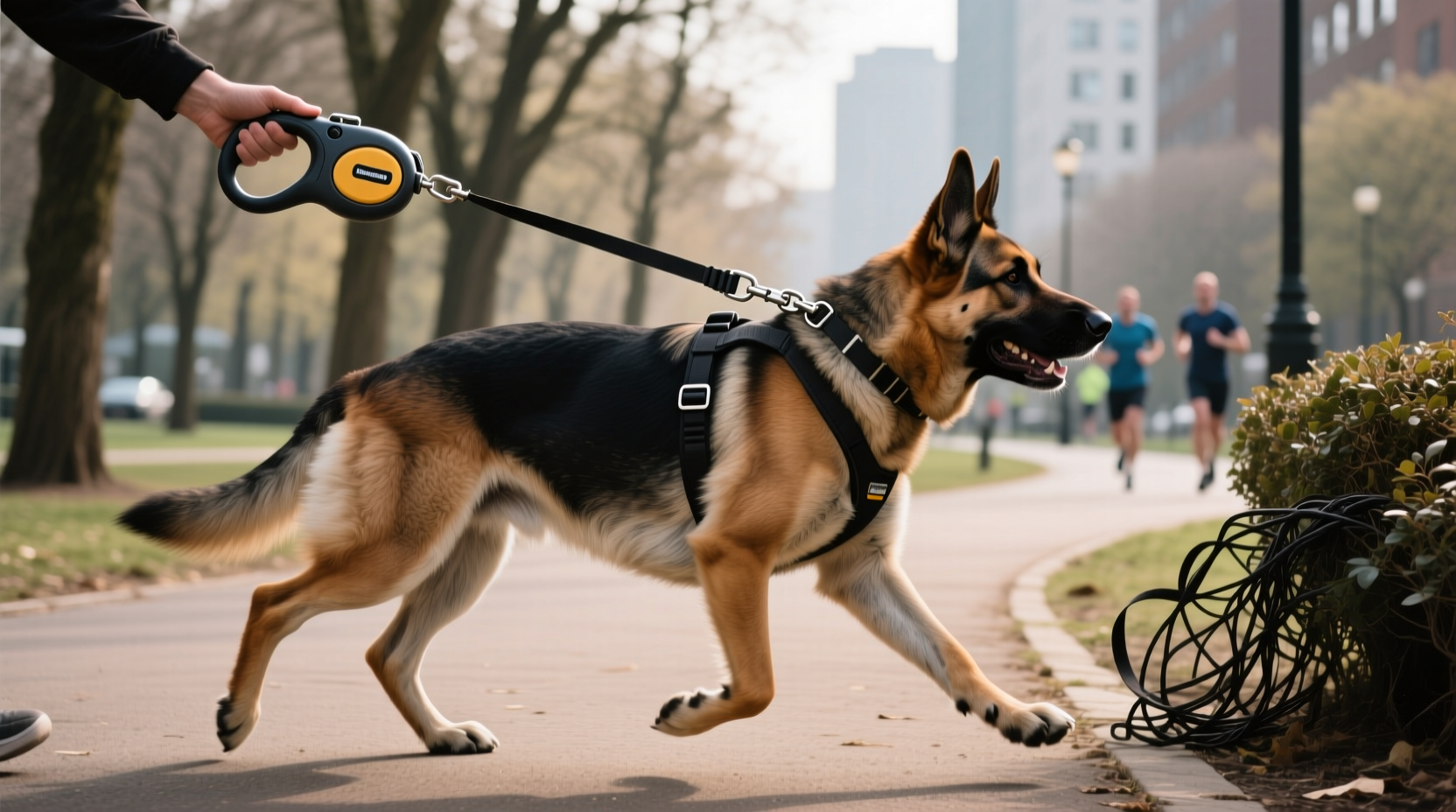
Retractable leashes consist of a thin cord or tape housed in a plastic handle with a spring-loaded mechanism that allows the dog to move forward while the leash extends up to 16 or 26 feet. A lock button lets the owner stop the extension at any point. The appeal lies in the freedom it gives dogs to explore, sniff, and roam within limits without constant tugging on a short leash.
However, this design introduces several mechanical vulnerabilities, particularly under high tension. The cord is typically made of nylon-coated steel wire or flat webbing, both of which can fray, snap, or cause injury if mishandled. The internal spring system can fail over time, especially with heavier loads. For a 70-pound dog lunging after a squirrel, the force generated can exceed what these mechanisms are safely designed to handle.
Tip: Never allow children to handle retractable leashes, especially with medium or large dogs—the risk of losing control is too high.Pros of Using Retractable Leashes for Large Dogs
Despite the controversy, many dog owners continue to use retractable leashes, and some benefits do exist when used appropriately:
- Extended Exploration Range: Allows dogs more freedom to investigate their surroundings, which can improve mental engagement during walks.
- Convenience in Open Areas: In wide, low-traffic parks or trails, the long reach reduces constant pulling and gives the dog autonomy.
- Automatic Rewinding: The self-retracting feature eliminates tangled lines and makes storage easier.
- Less Strain on Owner: When properly managed, the gradual resistance of the mechanism may reduce abrupt jerks compared to fixed leashes.
- Versatility: Can function like a standard leash when locked at a shorter length.
For calm, well-trained large dogs in controlled environments, a retractable leash might seem like a reasonable option. However, these advantages quickly diminish in unpredictable settings or with strong-willed breeds.
Cons and Safety Risks for Large Dogs
The drawbacks of retractable leashes become especially concerning when applied to larger, stronger dogs. Several factors contribute to their potential danger:
- Limited Control: With up to 26 feet of slack, owners lose immediate responsiveness. If a dog suddenly charges toward traffic or another animal, there's not enough time to react before the dog reaches the end of the line.
- Increased Injury Risk: Sudden stops at full extension can cause whiplash injuries to both dog and handler. The thin cord can also burn or cut skin if it slips from the hand—a common occurrence known as “retractable leash burn.”
- Cord Failure: Under stress, the internal cord can snap, leaving the dog unrestrained. This poses a serious escape and public safety hazard.
- Tangling Hazards: The cord can wrap around legs, trees, or other dogs, leading to falls or entanglement injuries.
- Encourages Pulling Behavior: Because dogs learn they can move farther by pulling, retractable leashes may reinforce undesirable walking habits rather than correct them.
“Retractable leashes are among the most common causes of leash-related injuries we see in clinics. For dogs over 50 pounds, I strongly advise against them.” — Dr. Laura Simmons, DVM, Canine Behavior Specialist
Real-World Scenario: When Freedom Turns Dangerous
Consider Mark, who owns a 90-pound Labrador named Max. On a quiet morning walk through a suburban neighborhood, Max spotted a rabbit dart across the yard. Without warning, he lunged forward at full speed. The retractable leash extended instantly, but when it reached its limit, the sudden jolt caused the plastic housing to crack. The cord snapped, sending Max running into the street. Fortunately, a neighbor caught him before he was hit by a car, but the incident left Mark shaken—and Max with a minor neck injury from the abrupt stop.
This case illustrates how quickly things can go wrong. Even a normally obedient dog can react instinctively to stimuli, and the mechanics of a retractable leash simply aren’t built to handle such forces reliably. In this scenario, a standard 6-foot leash with a secure harness would have given Mark better control and reduced the risk of breakage.
Expert Recommendations and Alternatives
Veterinarians and professional dog trainers overwhelmingly recommend avoiding retractable leashes for large dogs. Instead, they advocate for tools that prioritize safety, communication, and behavioral training.
Better Leash Options for Large Dogs
| Leash Type | Best For | Safety Level | Training Benefit |
|---|---|---|---|
| Standard 6-Foot Nylon Leash | Daily walks, urban areas | High | Moderate – encourages close proximity and focus |
| Double-Handle Leather Leash | Strong pullers, obedience training | Very High | High – allows multiple grip positions for control |
| Hands-Free Waist Leash | Runners, hikers with well-behaved dogs | Moderate to High | Low – less direct feedback |
| Front-Clip Harness + Fixed Leash | Dogs that pull excessively | Very High | High – redirects dog’s movement naturally |
| Long Line (15–30 ft) | Off-leash training in secure areas | High (when supervised) | Very High – builds recall and boundary awareness |
Unlike retractable leashes, these options provide predictable tension, durable materials, and consistent feedback. A front-clip harness paired with a standard leash, for example, gently steers a dog back toward the owner when they pull—turning each walk into a training opportunity.
Step-by-Step Guide to Transitioning Away from Retractable Leashes
If you’ve been using a retractable leash and want to switch to a safer alternative, follow this structured approach:
- Assess Your Dog’s Behavior: Note how your dog walks—do they pull, lunge, or stay close? This helps determine the best replacement gear.
- Choose the Right Equipment: Select a 6-foot nylon or leather leash and a no-pull harness if needed. Avoid cheap materials.
- Practice in a Low-Distraction Area: Start in your backyard or empty parking lot. Use treats to reward walking beside you.
- Introduce Loose-Leash Walking: Stop moving when your dog pulls. Wait for slack, then praise and continue. Consistency is key.
- Gradually Increase Difficulty: Move to sidewalks, then busier areas as your dog improves.
- Phase Out the Retractable Leash: Use it only for comparison until fully replaced. Store it out of sight to avoid temptation.
FAQ: Common Questions About Retractable Leashes and Large Dogs
Can I ever use a retractable leash safely with my large dog?
In very rare cases—such as in a completely enclosed, distraction-free field with a highly trained dog—you might use one cautiously. However, even then, the risks often outweigh the benefits. Most experts recommend avoiding them entirely for dogs over 40–50 pounds.
What injuries are commonly linked to retractable leashes?
Handlers often suffer rope burns, finger fractures, or falls from being pulled off balance. Dogs can sustain neck trauma, tracheal damage, or cuts from the cord. There are also documented cases of severed fingers when hands get tangled in the mechanism during a sudden retraction.
Are there any retractable leashes designed for large dogs?
Some brands market \"heavy-duty\" retractable leashes with thicker cords and reinforced handles. While slightly more durable, they still suffer from the same fundamental flaws: delayed response time, tangling risk, and poor behavior reinforcement. They are not considered a safe long-term solution by animal professionals.
Checklist: Is Your Leash Safe for a Large Dog?
Before every walk, ask yourself the following:
- ✅ Does the leash give me immediate control if my dog lunges?
- ✅ Is the material strong enough to handle sudden force (e.g., nylon or leather, not thin cord)?
- ✅ Am I using a proper harness or collar that won’t injure my dog’s neck?
- ✅ Is the environment crowded, busy, or unpredictable?
- ✅ Would I feel confident if my dog saw a squirrel, cyclist, or another dog right now?
If you answered “no” to any of these, it’s time to reconsider your leash choice.
Conclusion: Prioritizing Safety Over Convenience
While retractable leashes offer the illusion of freedom and ease, they compromise the safety and training progress essential for responsible large dog ownership. The risks—loss of control, equipment failure, physical injury—are too significant to ignore. Real freedom for your dog doesn’t come from a long cord; it comes from trust, discipline, and reliable off-leash behavior developed through consistent training.
Choosing a sturdy, fixed-length leash and investing time in positive reinforcement techniques will pay off in safer walks, better behavior, and a stronger bond. Your dog deserves equipment that protects them, not puts them—or others—at risk.
💬 Have you switched from a retractable leash? What worked for you? Share your story in the comments to help fellow dog owners make safer choices.








