Reptiles are ectothermic—meaning they rely on external sources to regulate their body temperature. Unlike mammals, they cannot generate internal heat to stay warm. This fundamental biological trait shapes every aspect of their care, especially when it comes to environmental temperature. Many new reptile owners wonder: if my home is comfortably warm, isn’t that enough? Can I skip the heat lamp and save energy or reduce equipment clutter? The short answer is no—not if you want your reptile to thrive.
While ambient room temperature might seem adequate to human perception, it rarely meets the precise thermal requirements of most reptile species. Relying solely on room temperature risks creating a suboptimal or even dangerous environment. Understanding why dedicated heating solutions like reptile heat lamps are essential—and when exceptions might apply—is critical to responsible pet ownership.
The Science Behind Reptile Thermoregulation
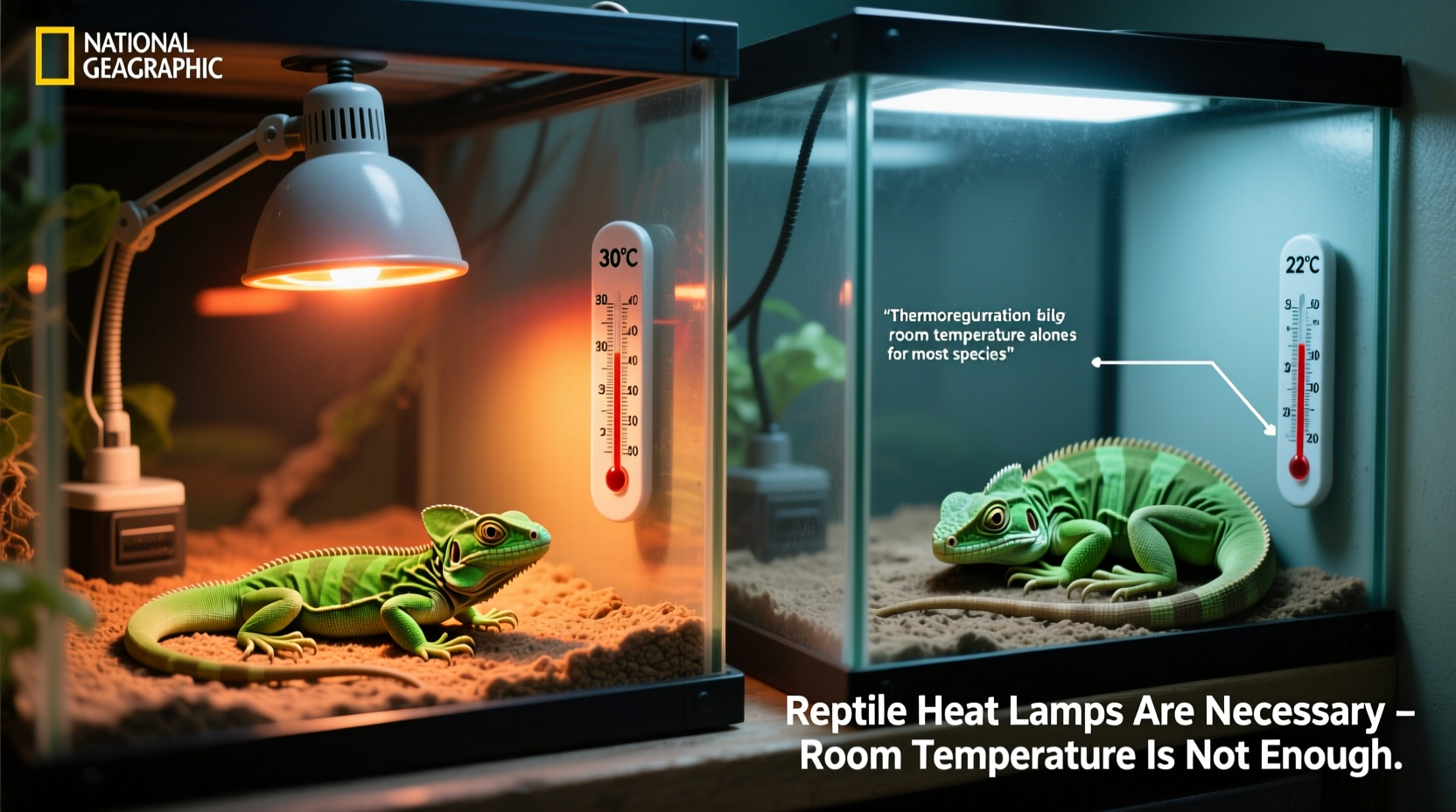
Reptiles evolved in climates where sunlight provides predictable daily warming cycles. In captivity, replicating this natural rhythm requires intentional design. Their metabolism, digestion, immune function, and activity levels are all directly tied to body temperature, which in turn depends on the surrounding environment.
A reptile that is too cold slows down metabolically. Food may remain undigested in its gut, leading to impaction or bacterial overgrowth. Immune responses weaken, making the animal more susceptible to respiratory infections and parasites. On the other hand, excessive heat can cause dehydration, stress, and thermal burns.
To maintain health, reptiles need a thermal gradient—a range of temperatures within their enclosure that allows them to move between warmer and cooler zones as needed. This mimics natural basking behavior. For example, a bearded dragon might bask under a heat lamp at 95–105°F (35–40°C) while retreating to a cooler zone around 75–80°F (24–27°C). Room temperature alone, typically 68–72°F (20–22°C), fails to provide either end of this spectrum.
“Thermal gradients aren't optional—they're physiological necessities. Without proper heat, reptiles cannot digest food, fight disease, or behave naturally.” — Dr. Susan Brown, Exotic Animal Veterinarian and Herpetological Consultant
When Room Temperature Falls Short
Even in heated homes, standard indoor temperatures are insufficient for most reptile species. Consider these common household scenarios:
- Winter months: Indoor thermostats often drop at night or during unoccupied hours, falling below safe minimums for tropical reptiles.
- Geographic location: Homes in cooler climates may never reach the upper end of a reptile’s preferred temperature range without supplemental heating.
- Enclosure placement: A tank near a drafty window or air vent can create microclimates significantly colder than the rest of the room.
- Species-specific needs: A leopard gecko requires a basking spot of 88–92°F, while a green iguana needs daytime highs of 90–95°F with high humidity—conditions impossible to achieve through ambient room heat alone.
Moreover, room temperature does not offer directional heat. In nature, reptiles absorb radiant warmth from above—the sun. Heat lamps simulate this by providing overhead infrared radiation, allowing animals to warm their bodies efficiently. Ambient air heat, such as from a space heater, warms the environment but doesn’t replicate the focused basking experience reptiles instinctively seek.
Tip: Always use a digital thermometer with a probe to measure surface and air temperatures in multiple zones of the enclosure. Guessing leads to poor outcomes.Do Any Reptiles Thrive on Room Temperature Alone?
A few species can tolerate or even prefer lower temperatures, particularly those adapted to temperate climates. These include:
- Some European house geckos (Tarentola spp.) – Adapted to Mediterranean environments with mild seasonal variation.
- Certain skinks and snakes from temperate zones – Such as garter snakes or some blue-tongued skink subspecies, which may do well with minimal heating in warmer rooms.
- Hibernating species during brumation – When properly supervised, some reptiles require cooler temps seasonally.
However, even in these cases, \"room temperature\" must be monitored closely. Temperatures should consistently stay within the species’ acceptable range, and a slight gradient should still be offered. For instance, a cool-adapted snake might benefit from a low-wattage heat mat on one side of the enclosure to allow thermoregulation.
Crucially, “room temperature” varies widely. A basement reptile setup in winter may dip to 60°F (15.5°C)—too cold for almost any reptile. Conversely, a south-facing room in summer might exceed 80°F (27°C), potentially overheating species that need cooler conditions.
Choosing the Right Heating Solution
If room temperature isn’t sufficient, what alternatives exist? The best approach combines safety, efficiency, and species-specific needs. Here’s a comparison of common heating methods:
| Heating Method | Best For | Pros | Cons |
|---|---|---|---|
| Incandescent Heat Lamps | Basking reptiles (bearded dragons, uromastyx, iguanas) | Provides strong radiant heat and visible light; easy to position | Can dry out enclosures; risk of burns if unshielded |
| Ceramic Heat Emitters (CHE) | Nocturnal species or supplemental nighttime heat | Produces heat without light; long lifespan | Requires compatible fixture; can overheat if not regulated |
| Under-Tank Heaters (UTH) | Snakes, geckos, terrestrial lizards | Warms substrate and belly; low profile | Potential for uneven heating; risk of thermal burns if misused |
| Deep Heat Projectors | Larger reptiles needing penetrating warmth | Mimics natural infrared; heats deeper tissue layers | Higher cost; requires careful mounting |
| Heat Panels | Wall-mounted enclosures or bioactive setups | Even heat distribution; safe contact surface | Less effective in large enclosures; installation complexity |
Regardless of method, always pair heating devices with a thermostat. This prevents overheating and maintains stable conditions. A thermostat acts like a cruise control system—turning the heat source on and off to maintain a set temperature. Using a lamp or mat without one is risky and unreliable.
Real-World Example: The Case of a Stressed Leopard Gecko
A first-time owner adopted a young leopard gecko, housing it in a 20-gallon terrarium in a bedroom kept at 70°F (21°C). Believing this was warm enough, they used no supplemental heat. Within weeks, the gecko stopped eating, became lethargic, and developed loose stools. A veterinary exam revealed undigested food in the stomach and early signs of a respiratory infection.
After installing a low-wattage ceramic heat emitter controlled by a thermostat, creating a basking zone of 88°F (31°C) on one side, the gecko began eating again within three days. Over the next two weeks, its activity level returned to normal, and fecal consistency improved. This case illustrates how easily inadequate heat compromises health—even in a seemingly “warm” room.
Step-by-Step Guide to Setting Up Proper Heating
Follow this sequence to ensure your reptile receives appropriate thermal support:
- Research your species’ thermal needs: Identify ideal basking temperature, cool zone range, and whether day/night cycling is required.
- Measure your room’s baseline temperature: Use a digital thermometer to check both day and night temps where the enclosure will sit.
- Select an appropriate heat source: Match the device to your reptile’s size, behavior, and habitat type (arboreal, terrestrial, etc.).
- Install the heater safely: Mount lamps securely outside the enclosure; place mats on only one side of the tank.
- Add a thermostat and thermometer: Connect the heat source to a reliable thermostat and monitor temperatures with a separate digital gauge.
- Create a gradient: Ensure one side is warm (basking area), the other remains cooler, allowing movement.
- Test and adjust: Run the system for 24 hours before introducing the animal, making sure temps stabilize as expected.
- Maintain routine checks: Inspect equipment weekly and replace bulbs every 6–12 months, as output diminishes over time.
Frequently Asked Questions
Can I use a regular household lamp instead of a reptile heat lamp?
You can, but with caution. Standard incandescent bulbs emit heat and visible light, similar to reptile lamps. However, they lack UVB output (important for diurnal species) and may not provide consistent wattage or durability. Always ensure the bulb fits a ceramic socket rated for high heat, and never use dimmable switches unless specifically designed for reptile use.
Is it safe to leave a heat lamp on overnight?
For most reptiles, no—especially if the lamp emits light. Constant illumination disrupts circadian rhythms and causes stress. Nocturnal species or those needing nighttime warmth should use ceramic heat emitters or deep heat projectors, which produce heat without light. Always pair with a thermostat for safety.
What happens if my power goes out and the heat shuts off?
Short-term drops (a few hours) are usually tolerable for healthy adults, provided temperatures don’t fall below 65°F (18°C). For longer outages, consider backup options like battery-powered heat packs, insulated enclosures, or moving the animal to a warmer part of the home temporarily. Avoid sudden temperature swings.
Final Thoughts and Action Plan
Room temperature alone is rarely sufficient for maintaining a healthy reptile. While convenient, relying on ambient warmth ignores the complex thermal biology of these animals. Heat lamps and other targeted heating solutions are not luxuries—they are essential tools for supporting digestion, immunity, and natural behavior.
Every reptile keeper has a responsibility to provide species-appropriate conditions. That starts with understanding thermal needs and investing in reliable, well-regulated heating systems. Whether you own a desert-dwelling lizard or a forest-dwelling snake, accurate temperature control is non-negotiable.
🚀 Take action today: Audit your reptile’s enclosure temperatures, install a thermostat if you haven’t already, and share your setup with a herp community for feedback. Your pet’s health depends on the choices you make now.








