For many dog owners, the mystery of a mixed-breed dog’s heritage is both intriguing and emotionally compelling. Was that stubborn streak inherited from a terrier? Does the gentle gaze come from a spaniel? Pet DNA tests promise answers—offering breed identification, health screening, and even behavioral insights. But how accurate are these results, especially for dogs with complex genetic backgrounds? And at price points ranging from $60 to over $150, do they deliver enough value to justify the expense?
The rise of at-home pet DNA kits has transformed casual curiosity into a booming industry. Companies like Embark, Wisdom Panel, and DNA My Dog market their products as tools for better pet care, not just novelty. Yet behind the sleek packaging and colorful ancestry reports lies a complex web of genetic science, statistical modeling, and commercial interests. Understanding what these tests can—and cannot—do is essential for making an informed decision.
How Pet DNA Tests Work: The Science Behind the Swab
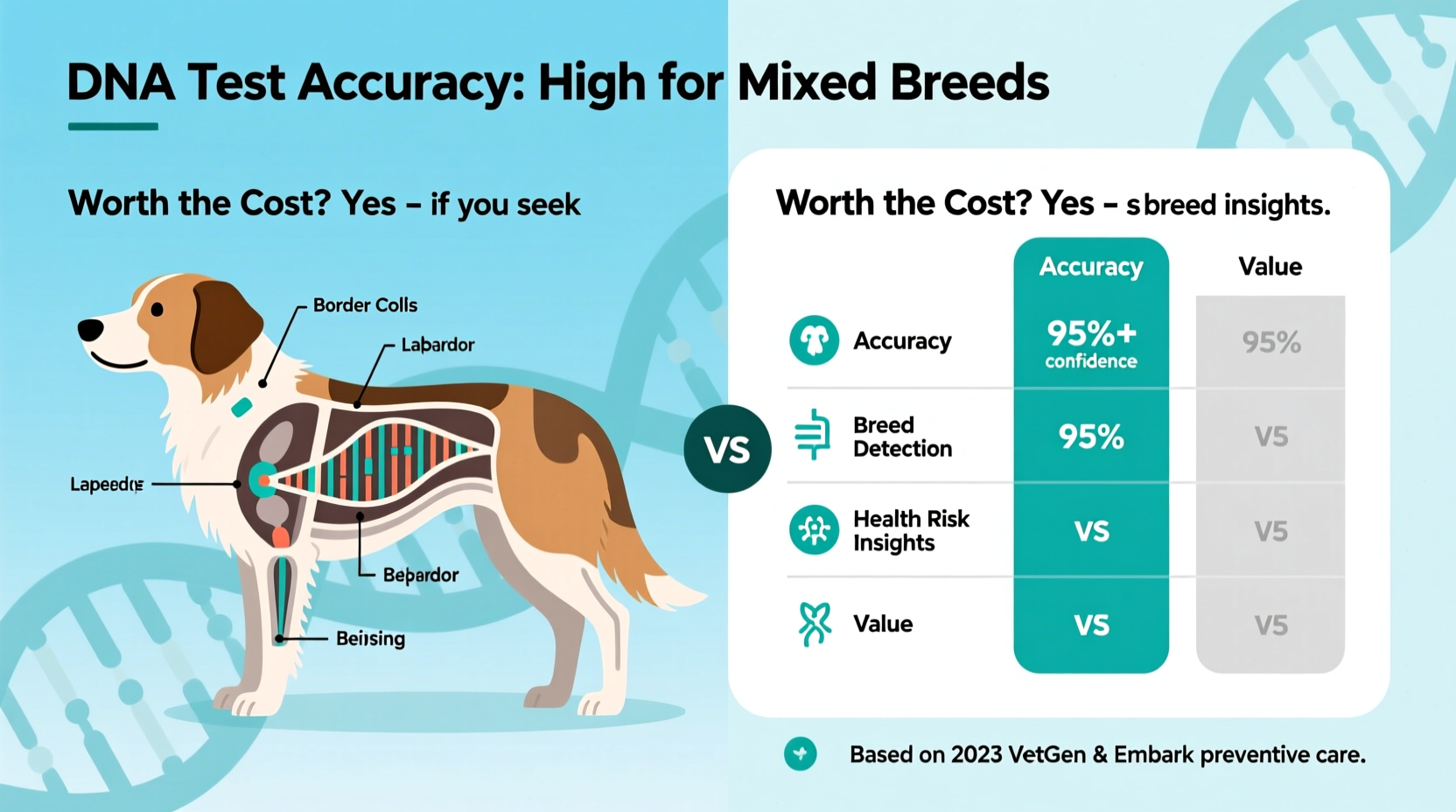
Pet DNA tests analyze specific regions of a dog’s genome using a cheek swab or blood sample. These regions contain genetic markers known to vary between breeds. By comparing a dog’s markers to a reference database of purebred profiles, companies estimate which breeds are present in the dog’s ancestry.
The process typically involves:
- Sample Collection: Owners swab the inside of their dog’s cheek and mail it to a lab.
- DNA Extraction: Scientists isolate DNA from the cells collected on the swab.
- Genotyping: Machines scan thousands of known genetic markers across the genome.
- Database Comparison: Algorithms compare the dog’s markers to those of recognized breeds in the company’s database.
- Report Generation: A breakdown of breed percentages, potential health risks, and trait information is compiled.
While this sounds precise, accuracy hinges on two critical factors: the quality and size of the reference database, and the complexity of interpreting mixed-breed genetics.
Tip: Choose a company with a large, well-documented breed database—this increases the likelihood of accurate matches.Accuracy: What You’re Really Getting
Studies suggest that major brands like Embark and Wisdom Panel achieve high concordance rates when testing purebred dogs—often above 95%. However, accuracy drops significantly with mixed-breed dogs, particularly those with multiple ancestral lines or rare breeds not well-represented in databases.
A 2020 study published in *PLOS ONE* evaluated several commercial dog DNA tests and found that while breed predictions were generally consistent for dominant breeds (e.g., Labrador Retriever at 40% or higher), minor contributions (under 10%) were frequently inconsistent across platforms. One test might report 12% Siberian Husky, while another showed none at all.
This variability stems from:
- Limited reference data: Many global or regional breeds aren’t included in U.S.-based databases.
- Statistical estimation: Results are probabilities, not definitive truths. Small percentages may reflect algorithmic noise rather than actual lineage.
- Generational distance: Beyond two generations, breed signals become diluted and harder to detect reliably.
“DNA tests are excellent for identifying major breed components, but claims of 5% this or 3% that should be taken with a grain of salt.” — Dr. Elaine Nguyen, Veterinary Geneticist, UC Davis School of Veterinary Medicine
Health Screening: Where DNA Tests Add Real Value
One area where pet DNA tests consistently deliver value is in health risk detection. Unlike breed percentages, which rely on comparison, health screenings look for specific mutations linked to hereditary conditions such as degenerative myelopathy, MDR1 drug sensitivity, and certain forms of progressive retinal atrophy.
These tests can identify whether a dog is clear, a carrier, or at-risk for over 200 known genetic disorders. For example:
| Condition | Breeds Commonly Affected | Test Reliability |
|---|---|---|
| MDR1 Mutation | Collies, Australian Shepherds, Shetland Sheepdogs | High – single gene test |
| Degenerative Myelopathy (DM) | Boxers, Pembroke Welsh Corgis, German Shepherds | High – well-studied mutation |
| Dilute Coat Color (Color Dilution Alopecia) | Great Danes, Dobermans, Whippets | Moderate – environmental factors also play a role |
| von Willebrand’s Disease | Doberman Pinschers, Poodles, Scottish Terriers | High – multiple variants tested |
Unlike ancestry estimates, these health markers are based on confirmed scientific research. A positive result doesn’t guarantee disease onset, but it alerts owners and veterinarians to monitor for symptoms or avoid certain medications.
Tip: Prioritize DNA tests that include comprehensive health panels, especially if your dog has unknown lineage.Real-World Example: Bella the Rescue Mix
Bella, a 3-year-old rescue dog from rural Georgia, was adopted by Sarah Thompson in Austin, Texas. Estimated to be part pit bull and part shepherd based on appearance, Sarah purchased a premium DNA kit hoping to learn more about Bella’s background and potential health needs.
The results identified 40% American Staffordshire Terrier, 30% German Shepherd, 15% Collie, and 15% “unknown.” More importantly, the test revealed Bella carried one copy of the MDR1 gene mutation, making her sensitive to common drugs like ivermectin. Sarah shared this information with her vet, who adjusted Bella’s parasite prevention plan accordingly.
While the breed breakdown sparked conversation among friends (“She must get her floppy ears from the Collie!”), the health insight had tangible impact. Without the test, Sarah might not have known about the drug risk until a severe reaction occurred.
In Bella’s case, the test was less about ancestry and more about proactive healthcare—a benefit that outweighed the $120 cost.
Cost vs. Value: Are These Tests Worth It?
To determine whether a pet DNA test is worth the investment, consider what you hope to gain. The answer varies depending on your goals:
- Curiosity about breed mix: Fun, but often imprecise. Minor percentages should be viewed as approximations.
- Health risk awareness: Highly valuable, especially for rescues or dogs with no medical history.
- Behavioral predictions: Limited scientific backing. While some traits correlate with breed, environment and training play larger roles.
- Breeding decisions: Essential for identifying carriers of genetic diseases before breeding.
Entry-level tests ($60–$80) typically offer basic breed identification. Mid-range to premium kits ($100–$150) add health screening, trait analysis (like coat type), and relative finder features. For most owners, investing in a mid-tier or premium test makes sense only if health insights are included.
“Knowing your dog carries a mutation for a serious condition allows for early intervention. That’s preventive medicine in action.” — Dr. Marcus Lee, DVM, Canine Genetics Specialist
Checklist: Choosing the Right DNA Test for Your Dog
Before purchasing a kit, ask yourself the following questions:
- Does the test include screening for genetic health conditions relevant to my dog’s breed group?
- Is the company transparent about its reference database size and breed coverage?
- Are results vetted by veterinary geneticists or peer-reviewed institutions?
- Will I receive updates as new health markers are discovered?
- Can I share results with my veterinarian securely?
- Does the company offer customer support or genetic counseling?
- Am I buying primarily for entertainment, or do I need actionable health data?
If most answers lean toward health and transparency, the purchase is more likely to be worthwhile.
Frequently Asked Questions
Can a DNA test tell me exactly what breeds are in my dog?
No test can provide 100% certainty, especially for dogs with multiple or rare breed influences. Major components (over 25%) are usually reliable; smaller percentages are estimates and may vary between companies.
Should I change my dog’s diet or exercise based on DNA results?
Not solely based on breed percentages. While some breeds have predispositions (e.g., Bulldogs and heat intolerance), individual temperament and physical condition matter more. Always consult your vet before making significant lifestyle changes.
Will my dog’s DNA test help my vet treat them better?
Yes, if it includes health markers. Knowing your dog is at risk for certain conditions enables earlier screening and preventive care. Share the full report with your veterinarian for integration into medical records.
Conclusion: Knowledge With Caveats
Pet DNA tests occupy a nuanced space between entertainment and medical utility. For mixed-breed dogs, breed ancestry results should be interpreted as informed guesses—not definitive pedigrees. The real value lies in health screening, where genetic insights can lead to smarter, safer care decisions.
Are these tests worth the cost? For owners seeking peace of mind about hidden health risks, especially in rescue or shelter dogs, the answer is often yes—provided you choose a reputable brand with strong health reporting. If you're only interested in satisfying curiosity about your dog's \"who,\" consider whether $100+ is a fair price for a fun story versus hard science.
Ultimately, DNA doesn’t define a dog. But when used wisely, it can enhance understanding, improve wellbeing, and strengthen the bond between pets and their people.
💬 Have you tried a pet DNA test? Did the results surprise you or change how you care for your dog? Share your experience in the comments—your story could help others decide what’s right for their furry family members.








