If you’ve scrolled through Instagram or TikTok lately, you’ve likely seen flawless, salon-quality nail designs applied in under ten minutes—no drying time, no smudges. Nail stickers (or press-ons with adhesive strips) are surging in popularity, promising convenience, durability, and professional results without the mess. But does that mean they’ve officially dethroned traditional nail polish? Or are we overlooking something fundamental in the shift toward instant glam?
The truth is more nuanced. While nail stickers offer undeniable advantages, especially for beginners or those short on time, they aren’t a one-size-fits-all upgrade. Understanding the full picture—what each option offers, where they fall short, and how they fit into different lifestyles—is key to making an informed choice.
The Rise of Nail Stickers: Why Everyone’s Switching
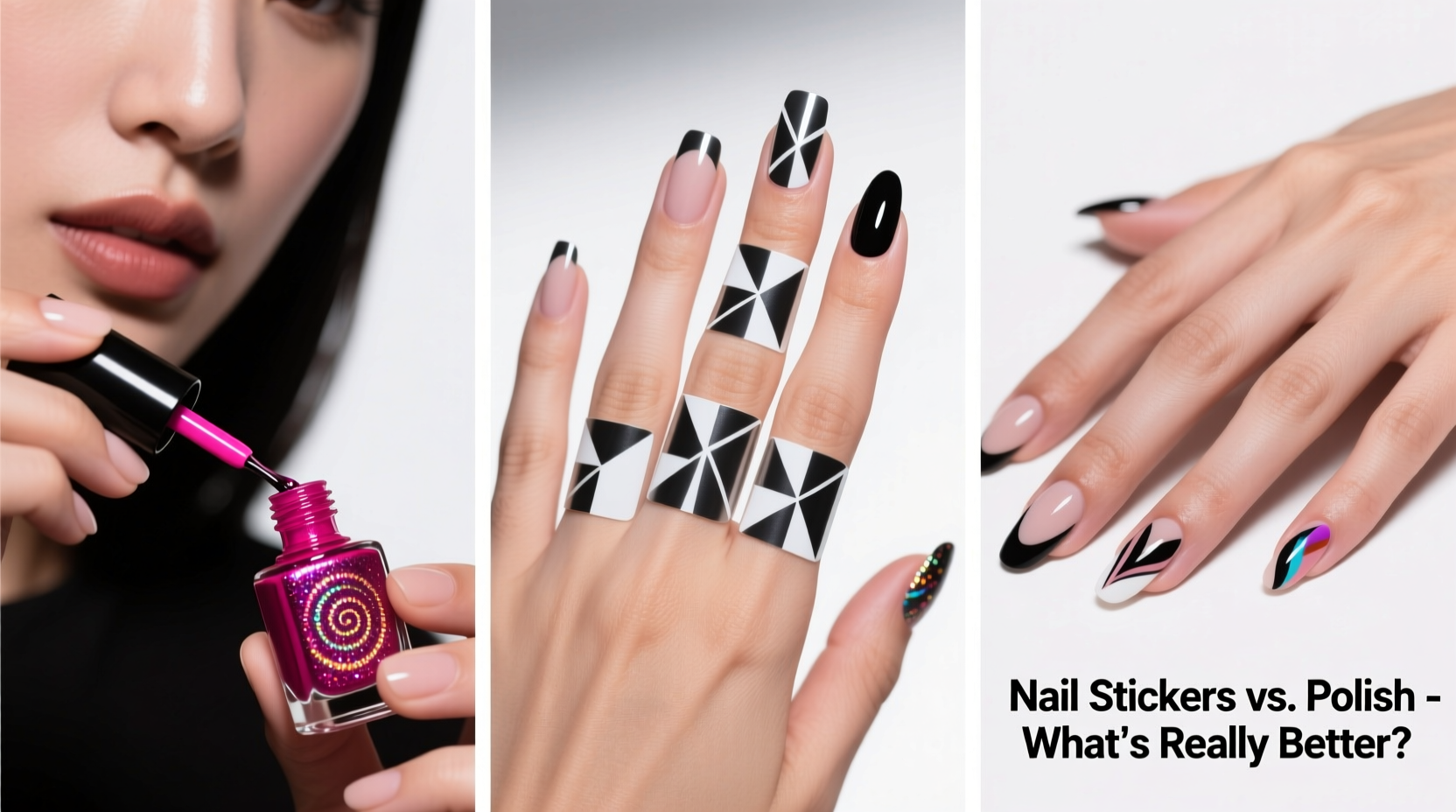
Nail stickers—ranging from simple vinyl wraps to full-cover gel-like press-on sets—have evolved dramatically. No longer limited to flimsy, ill-fitting decals, modern versions use advanced adhesives, flexible materials, and realistic finishes that mimic gel or acrylics. Brands like Manucurist, Nails.INC, and Static Nails have rebranded them as premium at-home solutions rather than cheap novelties.
The appeal lies in speed and precision. Unlike polish, which requires steady hands, multiple coats, and curing time, stickers can be applied in minutes. They’re ideal for intricate patterns—think French tips with micro-thin lines, chrome gradients, or hand-painted florals—that would take even skilled users hours to replicate with a brush.
Tip: For best adhesion, prep your nails with alcohol wipes before applying stickers—this removes oils and ensures longer wear.Polish Isn’t Dead: Where Traditional Nail Polish Still Shines
Despite the hype, traditional nail polish maintains strong advantages. First, customization: with thousands of shades available—from matte nudes to iridescent glitters—you can tailor your look to your mood, outfit, or season. Nail stickers, while improving, still lag in variety and often require ordering ahead.
Second, cost efficiency. A single bottle of polish costs $5–$12 and can last months with proper care. In contrast, high-quality sticker sets range from $15–$30 per use. Over time, that adds up, especially if you change your manicure weekly.
Third, control over thickness and layering. With polish, you decide how sheer or opaque you want the finish. You can build dimension with textured top coats or mix colors freely. Nail stickers offer preset designs, limiting creative flexibility.
“Nail polish allows for personal expression in a way pre-designed stickers simply can’t match. It’s the difference between wearing off-the-rack fashion versus custom tailoring.” — Lila Chen, Professional Nail Artist & Educator
Performance Showdown: Durability, Longevity, and Real-World Wear
Let’s compare how both options perform once applied.
| Feature | Nail Stickers | Traditional Nail Polish |
|---|---|---|
| Application Time | 5–10 minutes | 20–45 minutes (including drying) |
| Drying Required? | No | Yes (5–15 min per coat) |
| Average Wear Time | 7–14 days (with proper prep) | 5–7 days (chips common by day 3–4) |
| Reapplication Ease | Peel off, reapply new set | Remove old polish, start fresh |
| Suitability for Short Nails | Mixed (some sizes don’t fit well) | Excellent (adapts to any length) |
| Eco Impact | Higher (single-use plastics, adhesives) | Lower (reusable bottle, less waste) |
While stickers win on longevity and chip resistance, polish remains more forgiving for irregular nail shapes and lengths. Many users report stickers lifting at the edges, especially on uneven surfaces or with frequent typing. Polish, though prone to chipping, conforms naturally to the nail bed.
What You Might Be Missing: The Hidden Trade-Offs
The convenience of nail stickers comes with subtle but significant trade-offs. One often-overlooked issue is nail health. Frequent application and removal—especially with glue-based systems—can weaken natural nails over time. Some users report thinning or peeling after weeks of continuous use.
Additionally, there’s the environmental angle. Most sticker systems involve plastic trays, non-recyclable films, and chemical adhesives. Even “eco-friendly” brands struggle with sustainable disposal. In contrast, a single glass polish bottle generates far less waste and can be repurposed or recycled more easily.
And then there’s the ritual. For many, painting nails is a form of self-care—a mindful moment of color selection, careful brushing, and patient waiting. Removing that process entirely may improve efficiency, but it sacrifices a small act of daily creativity.
Mini Case Study: Sarah’s Two-Week Experiment
Sarah, a 32-year-old graphic designer, switched from polish to stickers for two weeks to test their real-world performance. She loved the initial ease and Instagram-worthy results. However, by day six, one corner began lifting during a coffee run. Attempts to re-stick it failed, leading to premature removal. She also found removal messy—requiring oil soaks and scraping. After returning to polish, she concluded: “Stickers are great for events, but not my everyday life.”
How to Choose What Works for You: A Practical Checklist
Instead of treating this as an either/or decision, consider your needs. Use this checklist to guide your choice:
- ✅ Need a quick, flawless look for a special event? → Nail stickers
- ✅ Want full creative control over color and design? → Traditional polish
- ✅ Prone to chipped nails within days? → Stickers or gel alternatives
- ✅ Prioritize sustainability and long-term cost? → Polish with quality base/top coats
- ✅ Have weak or short nails? → Polish with strengthening formulas
- ✅ Travel frequently or lack time? → Stickers for convenience
Step-by-Step: Getting the Best Results from Either Option
Whichever you choose, technique matters. Follow these steps for optimal results:
- Clean your nails: Remove old product with acetone-free remover. Wash hands and dry thoroughly.
- Shape and buff: File nails to desired shape. Lightly buff surface for better adhesion (for stickers) or smoothness (for polish).
- Dehydrate the nail: Wipe with rubbing alcohol or nail prep solution to remove oils.
- Apply base (if using polish): Use a strengthening or ridge-filling base coat. Let dry completely.
- Apply product: For polish, use thin, even layers. For stickers, align carefully and press firmly from cuticle to tip.
- Seal the edge: With polish, wrap the tip. With stickers, apply a clear top coat over the edges to prevent lifting.
- Maintain daily: Apply cuticle oil and avoid prolonged water exposure.
Frequently Asked Questions
Can I reuse nail stickers?
Most cannot be reused once removed, as the adhesive degrades. Some premium brands offer replatable adhesives, but effectiveness diminishes after the first use.
Do nail stickers damage natural nails?
When applied and removed properly, they cause minimal damage. However, aggressive peeling or frequent use without breaks can lead to weakening. Always condition nails between uses.
Can I mix stickers and polish?
Absolutely. Many people use stickers for accent nails and polish for the rest. Others apply stickers over a base color for added depth. This hybrid approach maximizes both creativity and convenience.
Conclusion: Better Doesn’t Mean Best for Everyone
Nail stickers aren’t inherently “better” than nail polish—they’re different tools serving different needs. They excel in speed, precision, and durability, making them ideal for busy schedules or complex designs. But polish remains unmatched in affordability, versatility, and personal expression.
The real question isn’t which product wins, but which one serves your lifestyle, values, and aesthetic goals. The most polished look isn’t about the product—it’s about intention. Whether you’re layering lacquer with care or pressing on a perfect set in minutes, your nails can reflect your personality when chosen mindfully.
💬 Have you tried both? What worked for you? Share your experience and help others navigate the evolving world of at-home manicures.








