
Acne is one of the most common skin concerns worldwide, affecting millions regardless of age. As traditional treatments like topical creams and oral medications come with side effects or inconsistent results, consumers are turning to alternative solutions—among them, LED face masks. Marketed as non-invasive, painless, and suitable for all skin types, these devices promise clearer skin using colored light. But behind the sleek designs and celebrity endorsements, a critical question remains: Are LED face masks genuinely effective for acne treatment, or are they simply another fleeting beauty trend?
To answer this, we need to look beyond marketing claims and examine the science of photobiomodulation—the process by which specific wavelengths of light interact with skin cells. While some dermatologists endorse at-home LED therapy as a complementary tool, others caution against overestimating its power. This article breaks down the evidence, compares clinical versus at-home use, and helps you determine whether investing in an LED mask makes sense for your skincare routine.
How LED Light Therapy Works on Acne
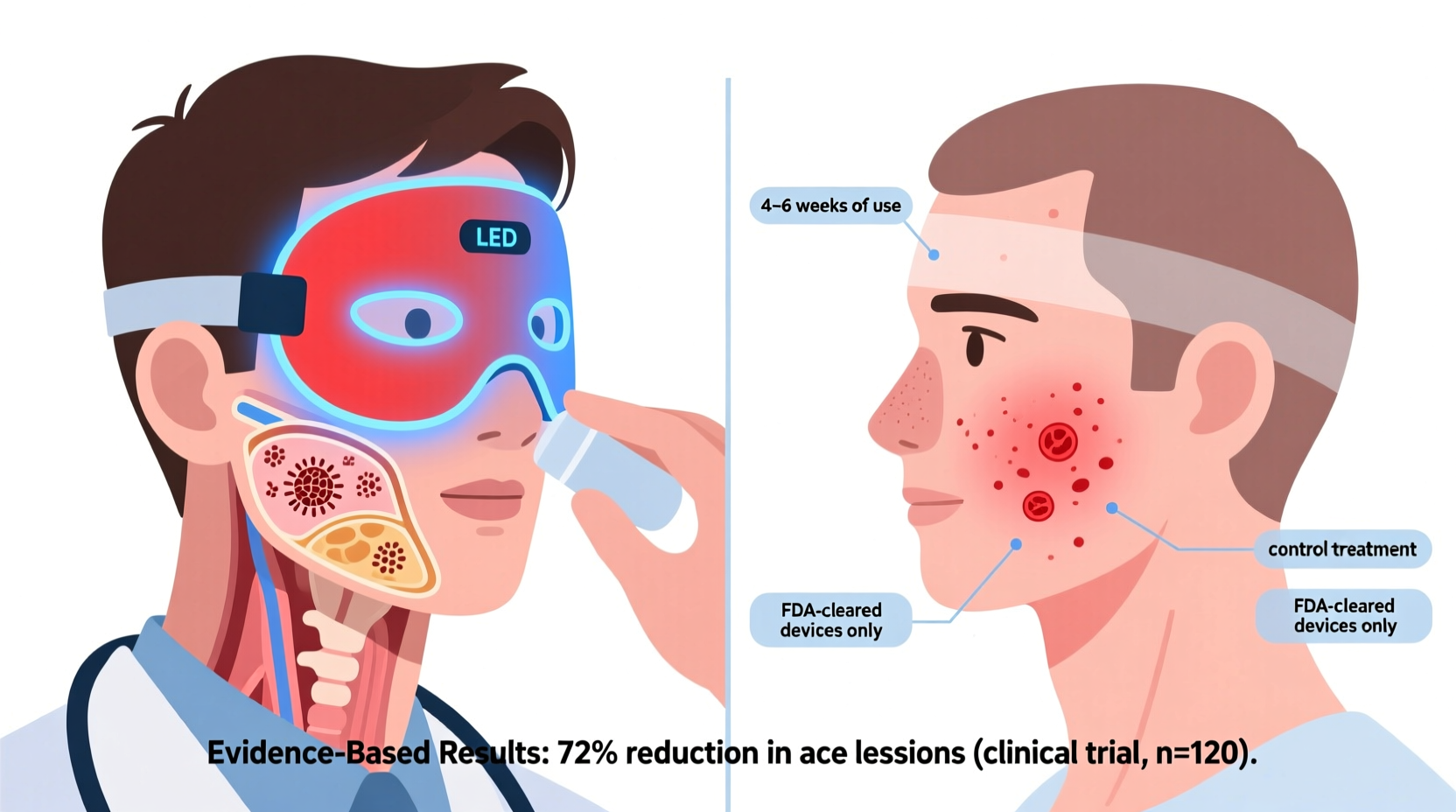
LED (light-emitting diode) therapy uses different wavelengths of light to target various skin conditions. For acne, two colors dominate: blue and red. Each works through distinct biological mechanisms.
Blue light (405–420 nm) targets *Propionibacterium acnes* (now known as *Cutibacterium acnes*), the bacteria responsible for inflammatory acne. When blue light penetrates the skin, it excites porphyrins—molecules naturally produced by the bacteria—which then generate reactive oxygen species that destroy the bacterial cell walls. This antibacterial effect reduces pustules and papules without antibiotics.
Red light (630–700 nm) doesn’t kill bacteria but instead modulates inflammation and stimulates cellular repair. It enhances mitochondrial function in skin cells, boosting ATP (adenosine triphosphate) production. This accelerates tissue healing, reduces redness, and may help prevent post-inflammatory hyperpigmentation after breakouts.
Some devices also incorporate near-infrared light (800–900 nm), which penetrates deeper into dermal layers to further support collagen synthesis and reduce overall inflammation.
Tip: Look for FDA-cleared devices that specify exact wavelengths; not all \"blue light\" masks emit the clinically effective 415 nm range.Clinical Evidence vs. At-Home Results
The efficacy of LED therapy isn't purely theoretical. Multiple peer-reviewed studies support its use in controlled settings. A 2007 study published in *The Journal of Cosmetic and Laser Therapy* found that participants who received blue and red light treatments three times per week for four weeks experienced a 64% reduction in inflammatory lesions compared to baseline.
Another randomized, double-blind trial from 2013 in *Lasers in Surgery and Medicine* showed that patients using combined blue-red light twice weekly for five weeks had significantly fewer acne lesions than the placebo group. Importantly, improvements were sustained over time with minimal side effects.
However, there’s a crucial distinction between professional-grade equipment used in clinics and consumer devices sold online. In-office treatments typically use higher irradiance (light intensity) and longer exposure times, delivering more energy per session. At-home masks, while safer and more convenient, often operate at lower power levels due to safety regulations.
This means results may take longer and be less dramatic. One 2020 review in *Dermatologic Surgery* concluded that while at-home LED devices show “modest improvement” in mild-to-moderate acne, they are unlikely to replace conventional therapies for severe cases.
“Light therapy can be a valuable adjunct in acne management, especially for patients seeking non-pharmacological options. But expectations must be realistic—it’s not a miracle cure.” — Dr. Rachel Kim, Board-Certified Dermatologist
Comparing Treatment Options: LED vs. Traditional Acne Therapies
| Treatment Type | Mechanism | Effectiveness (Mild Acne) | Side Effects | Time to See Results |
|---|---|---|---|---|
| Blue/Red LED Masks | Bacteria reduction + anti-inflammation | Moderate (40–60% improvement) | Minimal (rarely dryness or irritation) | 4–8 weeks |
| Topical Retinoids | Exfoliation + pore unclogging | High (60–80%) | Dryness, peeling, sun sensitivity | 6–12 weeks |
| Benzoyl Peroxide | Kills bacteria + exfoliates | High (especially inflammatory acne) | Irritation, bleaching fabrics | 3–6 weeks |
| Oral Antibiotics | Systemic anti-inflammatory/bacterial | High (short-term) | Gut microbiome disruption, photosensitivity | 2–4 weeks |
| Isotretinoin (Accutane) | Sebum suppression + cellular regulation | Very high (up to 90%) | Dry skin, mood changes, teratogenicity | 4+ weeks |
As shown, LED therapy ranks favorably in safety but lags slightly in potency compared to pharmaceutical options. Its niche lies in long-term maintenance, sensitive skin compatibility, and reducing reliance on antibiotics.
Real-World Use: A Mini Case Study
Samantha, a 28-year-old graphic designer, struggled with hormonal acne along her jawline for years. She tried retinoids, spironolactone, and benzoyl peroxide washes, but each caused either irritation or disrupted her skin barrier. After reading about LED therapy, she invested in an FDA-cleared at-home mask with both red and blue lights.
She followed the manufacturer’s protocol: 10-minute sessions every other day, consistently for eight weeks. She paired the treatment with a gentle moisturizer and daily sunscreen but made no other changes to her routine.
By week six, Samantha noticed fewer new breakouts and faster healing of existing ones. Her skin felt calmer, with reduced redness. While not completely clear, her acne improved enough that she stopped dreading mirror checks. She continues using the mask once or twice a week for maintenance.
Her experience reflects a common outcome: gradual improvement rather than overnight transformation. The key was consistency and managing expectations.
What to Look for in an Effective LED Mask
Not all LED masks are created equal. With hundreds of models on the market, many lacking clinical validation, choosing the right one requires attention to technical details.
- FDA clearance: Indicates the device meets safety and performance standards. Look for Class II medical device designation.
- Wavelength specificity: Blue light should be around 415 nm; red light near 633 nm or 660 nm for optimal penetration.
- Irradiance level: Measured in mW/cm². Higher irradiance delivers more energy per minute, potentially shortening treatment time.
- Coverage area: Full-face coverage ensures even exposure. Some cheaper models only cover cheeks or forehead.
- Third-party testing: Brands that publish clinical results (even small-scale) demonstrate greater transparency.
Step-by-Step Guide to Using an LED Mask Effectively
Using an LED mask correctly maximizes results and minimizes wasted time. Follow this sequence:
- Cleanse your face thoroughly. Remove makeup, oil, and debris so light can penetrate evenly. Do not apply photosensitizing products like AHAs or retinoids beforehand.
- Dry skin completely. Moisture can scatter light and reduce efficacy.
- Position the mask securely. Ensure LEDs align with acne-prone zones—forehead, nose, chin, jawline.
- Start with blue light (if available). Use for 10–15 minutes to target active breakouts.
- Follow with red light. Apply for another 10–15 minutes to calm inflammation and promote healing.
- Repeat every other day. Most protocols recommend 3–5 sessions per week for 4–8 weeks.
- Moisturize afterward. Lock in hydration, but avoid heavy occlusives immediately post-treatment.
- Track progress weekly. Take photos under consistent lighting to objectively assess improvement.
Patience is essential. Unlike spot treatments that dry out pimples overnight, LED therapy works cumulatively. Skipping sessions or quitting early undermines potential benefits.
Common Myths About LED Face Masks
Despite growing popularity, misconceptions persist:
- Myth: LED masks work instantly. Reality: Visible changes usually appear after 4–6 weeks of consistent use.
- Myth: Any colored light helps acne. Reality: Only specific wavelengths (blue ~415 nm, red ~630–660 nm) have proven effects.
- Myth: More light = better results. Reality: Overuse can stress skin cells. Stick to recommended durations.
- Myth: They replace all other acne treatments. Reality: Best used as a complement to good skincare, not a standalone solution.
Frequently Asked Questions
Can LED masks make acne worse?
It’s rare, but possible if the device causes overheating or is used excessively. True LED masks emit non-thermal light, so burns are uncommon with reputable brands. However, combining LED with aggressive actives (like strong acids) may irritate sensitive skin. Introduce gradually and monitor reactions.
Are LED masks safe for dark skin tones?
Yes. Unlike lasers, LED therapy does not target melanin, making it safe for all skin types, including Fitzpatrick V–VI. In fact, because it reduces inflammation without exfoliation, it may help prevent post-inflammatory pigmentation in melanin-rich skin.
How long do results last after stopping use?
Results are not permanent. Like exercise or diet, benefits diminish if treatment stops. Many users transition to a maintenance schedule—once or twice weekly—to sustain improvements.
Checklist: Is an LED Mask Right for You?
Before purchasing, ask yourself:
- ☑ Do I have mild to moderate inflammatory acne?
- ☑ Am I looking for a drug-free, low-risk option?
- ☑ Can I commit to using it 3–5 times per week for at least 6 weeks?
- ☑ Have I consulted a dermatologist if my acne is severe or cystic?
- ☑ Am I willing to pair it with sun protection and a simple skincare routine?
If you answered yes to most, an LED mask could be a worthwhile addition. If you’re dealing with deep nodules or scarring, prioritize medical treatments first.
Final Verdict: Science-Backed Tool, Not Just a Trend
After reviewing clinical data, user experiences, and expert opinions, the conclusion is clear: LED face masks are not merely a beauty fad. They represent a legitimate, scientifically grounded approach to managing acne—particularly when used appropriately.
They won’t replace isotretinoin for severe cystic acne, nor will they deliver instant perfection. But for individuals seeking a gentle, sustainable way to reduce breakouts, calm inflammation, and support skin healing, LED therapy offers measurable benefits with minimal risk.
The rise in at-home devices has democratized access to light-based treatments once limited to dermatology offices. While results vary, consistent use combined with sound skincare habits can lead to meaningful improvement—especially for those frustrated by traditional treatments’ side effects.
“The future of acne care is multimodal. LED therapy fits well within that framework—not as a magic bullet, but as a safe, supportive player.” — Dr. Marcus Lin, Clinical Researcher in Photomedicine💬 Have you tried an LED face mask for acne? Share your experience, challenges, or questions in the comments below. Your insights could help others decide whether this technology deserves a place in their routine.









