
Holographic stickers have surged in popularity across industries—from branding and packaging to personal expression on laptops and water bottles. Their eye-catching, rainbow-like shimmer catches light in mesmerizing ways, making them a favorite for designers and consumers alike. But when used outdoors, a critical question arises: can these dazzling stickers withstand prolonged sun exposure, or will their brilliance vanish under ultraviolet (UV) radiation?
The answer isn’t as simple as “yes” or “no.” While many holographic stickers are engineered with protective layers, not all are created equal. The longevity of their visual effect depends on materials, adhesive quality, coatings, and environmental conditions. Understanding the science behind UV resistance and degradation is essential for anyone using holographic stickers in outdoor applications.
Understanding Holographic Sticker Construction
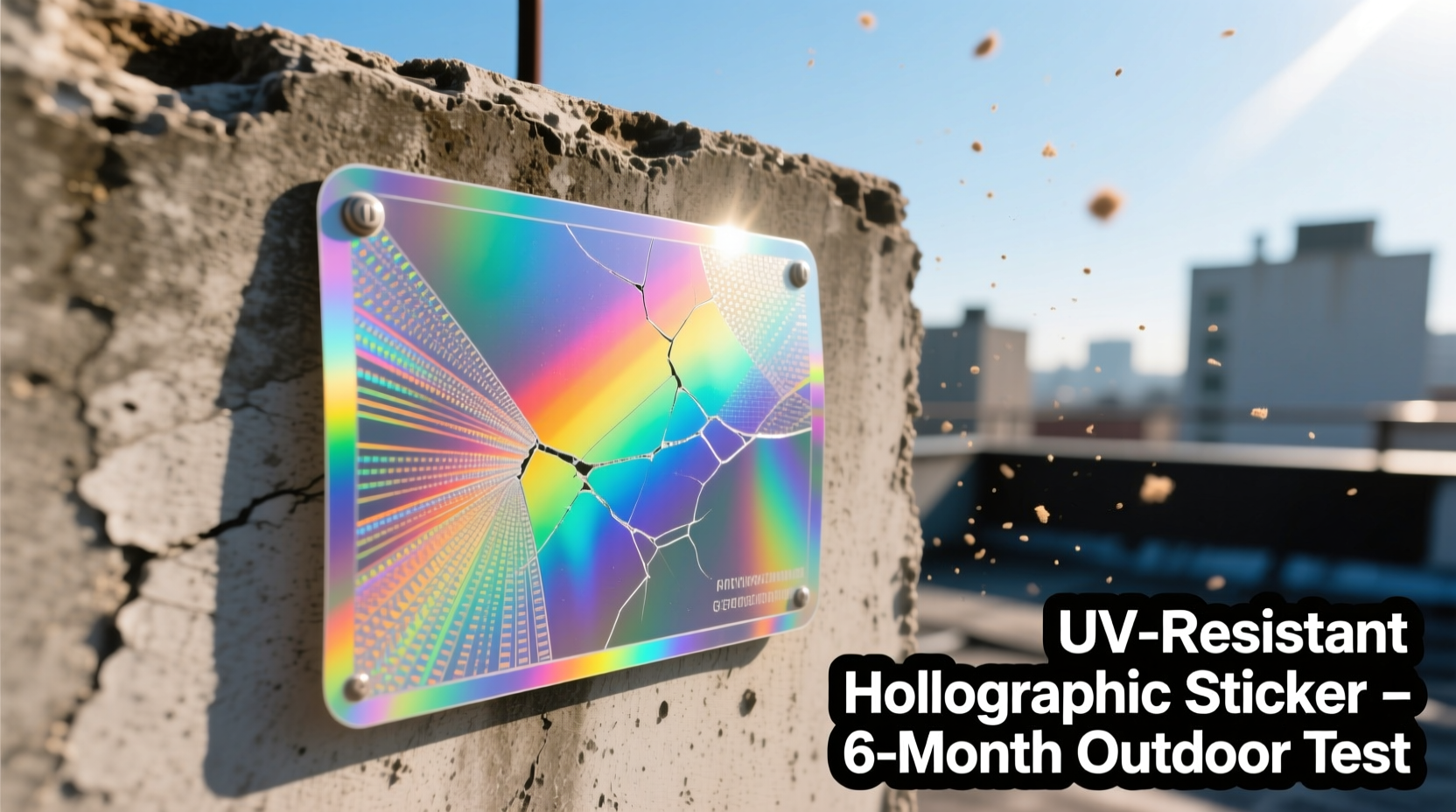
To assess UV resistance, it's important to understand what holographic stickers are made of. Most consist of several layered components:
- Polyester Film Base (PET): This thin, durable plastic layer holds the holographic pattern. It’s typically metallized with aluminum or another reflective coating to create the signature iridescent effect.
- Holographic Embossing: A microscopic diffraction grating is pressed into the film during manufacturing, splitting light into spectral colors.
- Top Coating: A clear laminate—often acrylic or UV-curable resin—that protects the surface from scratches, moisture, and UV rays.
- Adhesive Layer: Usually pressure-sensitive, this bonds the sticker to surfaces. Its stability under heat and sunlight affects overall performance.
- Release Liner: A backing paper removed before application.
The key to UV resistance lies primarily in the top coating and the base film’s ability to resist photodegradation. Without proper protection, UV photons break down chemical bonds in plastics, leading to brittleness, yellowing, and loss of luster.
Tip: Always check if your holographic sticker includes a UV-protective laminate—this single feature can extend outdoor life by months or even years.Do Holographic Stickers Fade in Sunlight?
In short: yes, most will eventually degrade when exposed to direct sunlight—but the timeline varies dramatically based on quality.
Low-cost holographic stickers often use minimal or no UV inhibitors. These may begin to dull within weeks of outdoor exposure. The metallic layer can oxidize, the embossed pattern may flatten due to thermal expansion, and the film itself may become cloudy or crack.
Higher-end versions, especially those marketed for vehicle decals or outdoor signage, incorporate UV-stabilized polymers and scratch-resistant over-laminates. These can retain vibrancy for 6–12 months or longer, depending on climate and placement.
“Even premium holographic films aren’t immune to UV damage—they’re just slower to show it. Long-term outdoor use requires strategic design choices.” — Dr. Lena Torres, Materials Scientist at PolyShield Innovations
How UV Light Degrades Holographic Films
Ultraviolet radiation, particularly UV-A (315–400 nm), penetrates deep into plastic layers. Over time, it causes:
- Photo-oxidation: Oxygen reacts with polymer chains weakened by UV energy, leading to discoloration and embrittlement.
- Metallic Layer Breakdown: Thin aluminum coatings can oxidize or delaminate, reducing reflectivity.
- Microstructure Erosion: The precision-engineered diffraction grating that creates the holographic effect can degrade, diminishing the rainbow shimmer.
Humidity, temperature swings, and pollutants like ozone accelerate these processes. A sticker on a south-facing car bumper in Arizona will degrade far faster than one on a shaded bike frame in Vancouver.
Comparing Holographic Sticker Durability: What Holds Up Outdoors?
Not all holographic materials perform equally. Below is a comparison of common types used in sticker production:
| Material Type | UV Resistance | Expected Outdoor Life | Best Use Cases |
|---|---|---|---|
| Standard PET Holographic Film | Low | 2–6 weeks | Indoor labels, temporary promotions |
| UV-Coated Holographic Vinyl | High | 6–12 months | Vehicle wraps, outdoor decals |
| BOPP Holographic (with laminate) | Moderate | 3–5 months | Packaging, reusable containers |
| Polyester-Based Security Holograms | Very High | 1–2 years | ID badges, tamper-proof seals |
| Metallized CPP Foil (cheap alternatives) | Very Low | 1–3 weeks | Disposable items, short-term events |
This table illustrates that material selection directly impacts lifespan. For any outdoor application, UV-coated vinyl or polyester-based holographics are strongly recommended.
Protecting Holographic Stickers from UV Damage
You don’t need to abandon holographic aesthetics for outdoor projects. With the right precautions, you can significantly extend sticker life and maintain visual impact.
Step-by-Step Guide to Maximizing Outdoor Longevity
- Choose UV-Resistant Materials: Specify holographic vinyl or polyester films labeled as “outdoor-grade” or “UV-stabilized.” Ask suppliers for accelerated weathering test data (e.g., ASTM G154).
- Add a Protective Over-Laminate: Apply a clear, UV-blocking laminate film over the sticker after placement. These laminates act as sacrificial shields, absorbing UV radiation before it reaches the holographic layer.
- Install in Shaded Areas: Position stickers where they receive indirect sunlight. Even partial shade can reduce UV exposure by up to 70%.
- Use Sealants for Non-Flat Surfaces: On porous or uneven substrates, apply a waterproof sealant around the edges to prevent moisture ingress, which accelerates delamination.
- Monitor and Replace Proactively: Inspect outdoor stickers every 60–90 days for signs of fading, bubbling, or peeling. Early replacement avoids complete failure.
Real-World Example: Bike Brand Uses Holographic Decals for Visibility
A boutique electric bike company in Portland wanted to enhance brand visibility while promoting safety. They applied holographic decals along the frame and fenders of their urban commuter models, relying on the reflective properties to catch drivers’ attention in low-light conditions.
Initially, they used standard holographic PET stickers. Within two months, customers reported fading and peeling, especially on bikes parked outdoors during summer. After consulting with a materials supplier, the company switched to a high-durability, UV-laminated holographic vinyl designed for traffic signs.
The new decals retained 90% of their original shine after nine months of continuous outdoor exposure, even in direct sunlight. Customer satisfaction improved, and the brand leveraged the upgrade in marketing, emphasizing “engineered to last” as part of their quality promise.
This case highlights that while holographic effects are inherently vulnerable to UV, smart material choices transform them from temporary novelties into durable design elements.
Checklist: Selecting UV-Resistant Holographic Stickers
Before purchasing or applying holographic stickers outdoors, verify the following:
- ☑ Material is labeled “UV-resistant” or “outdoor-durable”
- ☑ Includes a protective topcoat or over-laminate
- ☑ Adhesive is rated for outdoor use (e.g., acrylic-based)
- ☑ Supplier provides warranty or lifespan estimates
- ☑ Sample has been tested under real-world conditions
- ☑ Applied to a clean, dry, non-porous surface
Skipping any of these steps increases the risk of premature failure.
Frequently Asked Questions
Can I make a regular holographic sticker last longer outdoors with spray sealant?
Yes, but with limitations. Clear UV-protective sprays (like those used for automotive trim) can add a few weeks of protection. However, they may alter the holographic effect, cause cloudiness, or peel unevenly. For best results, use factory-laminated stickers instead of DIY sealing.
Do holographic stickers lose their color or just their shine?
They primarily lose structural integrity rather than pigment. Since the effect comes from light diffraction, not dyes, the “color” fades because the micro-grooves degrade or the reflective layer dulls—not because of ink bleaching. The sticker may turn silvery-gray or translucent over time.
Are there truly permanent holographic stickers?
No sticker is truly permanent outdoors, but some security-grade holograms used on government IDs or high-end electronics can last 5+ years due to advanced coatings and stable substrates. These are expensive and typically not available for consumer use.
Final Recommendations for Long-Term Use
If your goal is long-lasting outdoor performance, avoid generic holographic stickers sold for crafts or short-term promotions. Instead, invest in industrial-grade materials designed for exterior environments. Look for brands that specify compliance with ISO 4892 (plastic weathering tests) or offer warranties against fading.
Also consider hybrid designs: use holographic elements as accents rather than full coverage. Pair them with matte or gloss finishes that are more UV-stable, preserving visual interest without sacrificing durability.
Finally, document your results. If you're using holographic stickers commercially, track performance across seasons and locations. This data helps refine future designs and strengthens credibility with clients or customers who value both aesthetics and reliability.
“The future of decorative films lies in balancing beauty with resilience. Holographics aren’t going away—but only the UV-protected ones will survive outdoors.” — Mark Chen, Product Development Lead at NexaFilm Technologies
Conclusion: Shine Smart, Not Just Bright
Holographic stickers can dazzle outdoors—but only if chosen and cared for wisely. While basic versions fade quickly under UV exposure, upgraded materials with proper coatings can endure months of sunlight without losing their magic. The difference lies in informed decisions: knowing what to ask for, how to test, and where to apply.
Whether you're branding a product, designing promotional gear, or personalizing outdoor equipment, don’t let fleeting shine undermine your message. Prioritize UV resistance, demand quality from suppliers, and protect your investment with smart installation practices.
🚀 Ready to upgrade your holographic game? Start by requesting UV-stabilized samples today—and put them to the sun test. Share your findings with others looking to blend brilliance with durability!








