
Glitter nail polish remains a favorite among fashion-forward individuals who love bold, eye-catching manicures. Whether it’s a subtle shimmer or a full-on sparkle explosion, glitter finishes add dimension and flair that flat or cream polishes simply can’t match. But behind the dazzle lies a common complaint: they’re notoriously difficult to remove. Many users report spending extra time, using more acetone, or even damaging their nails in the process. So, is this just perception, or are glitter nail polishes genuinely harder to take off than standard formulas? The answer is yes — and here's why.
The Science Behind Glitter Polish Formulation
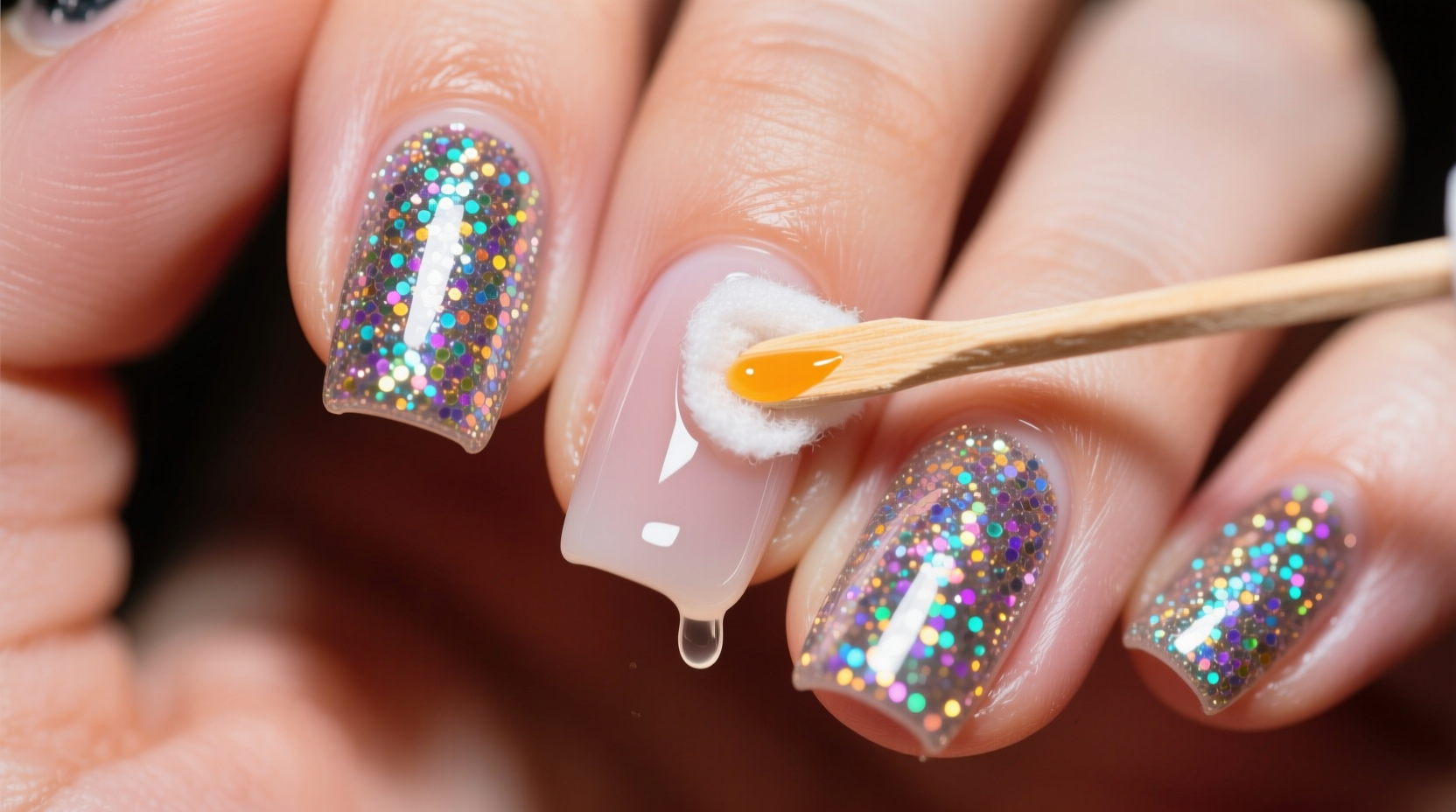
Unlike traditional nail polishes, which primarily consist of nitrocellulose dissolved in solvents along with pigments and plasticizers, glitter polishes contain additional components that significantly alter their physical properties. Most notably, they include solid particulate matter—tiny pieces of polyester film, mica, aluminum, or biodegradable glitter—suspended in a thicker base.
This suspension system requires a higher viscosity formula to prevent the glitter from settling at the bottom of the bottle. As a result, manufacturers often increase the concentration of film-forming agents and resins. These modifications make the polish adhere more strongly to the nail plate, creating a durable finish that resists chipping—but also making it more resistant to breakdown during removal.
Additionally, many glitter polishes use a “chunky” or layered application technique. Instead of one even coat, users often apply multiple layers to achieve full coverage, especially with sparse or large-particle glitters. Each layer bonds with the one beneath it, forming a composite film that acts almost like lightweight armor on the nail surface.
“Glitter polishes are engineered for longevity and visual impact, not easy removal. Their structural complexity means they don’t dissolve as readily as standard lacquers.” — Dr. Lena Torres, Cosmetic Chemist & Nail Product Formulator
Why Glitter Polish Sticks Around Longer
There are several key reasons why removing glitter polish feels like a chore compared to classic creme or sheer formulas:
- Higher resin content: Enhances adhesion but slows solvent penetration.
- Insoluble particles: Glitter fragments do not dissolve in acetone, requiring mechanical action (rubbing) to lift them.
- Thicker film build: Multiple layers create a dense barrier that resists quick breakdown.
- Poor solvent access: As acetone evaporates from the surface, it struggles to penetrate deep into layered glitter films.
Regular nail polishes typically break down within 10–15 seconds of cotton pad contact. In contrast, glitter polishes may require up to two minutes per nail if removed improperly—and even longer if the polish has been worn for over a week.
Tip: Always use 100% pure acetone for glitter polish removal—it’s far more effective than non-acetone alternatives.Effective Removal Techniques That Work
While glitter polish is inherently tougher to remove, the right method can reduce effort, minimize nail trauma, and prevent dryness. Here’s a step-by-step guide proven to work efficiently:
Step-by-Step Guide: Removing Glitter Nail Polish Without Damage
- Gather Supplies: Cotton pads or balls, aluminum foil, 100% acetone, cuticle oil, and a wooden stick (optional).
- Cut Foil Strips: Tear ten small strips of aluminum foil—enough to wrap each fingertip.
- Saturate Cotton: Place a cotton ball over each nail, fully soaked in acetone (not dripping, but thoroughly wet).
- Wrap Each Finger: Fold the foil around the cotton-covered nail to hold it in place and prevent evaporation.
- Wait 7–10 Minutes: Let the acetone work its way through all layers. Do not rush.
- Gently Wipe Away: Unwrap one finger at a time and wipe gently. Most polish should slide off easily.
- Use a Stick if Needed: For stubborn residue, lightly push back with a wooden orange stick—never scrape aggressively.
- Moisturize Immediately: Apply cuticle oil and hand cream to restore hydration lost during acetone exposure.
This method leverages controlled acetone exposure and heat retention (from the foil) to soften the entire polish structure uniformly. It dramatically reduces friction and prevents peeling or thinning of the natural nail plate.
Alternative: Peel-Off Base Coats
A growing number of brands now offer peel-off glitter polishes that eliminate the need for acetone altogether. These rely on a flexible polymer base (often PVA-based) that dries into a removable film. While convenient, they come with trade-offs:
- Limited color range and glitter size options.
- Less durability—can chip or peel prematurely.
- May not be suitable for weak or brittle nails due to pulling sensation.
They’re ideal for short-term wear or special events, but not recommended as a daily replacement for traditional glitter polishes.
Comparison: Glitter vs. Regular Polish Removal
| Factor | Glitter Nail Polish | Regular Nail Polish |
|---|---|---|
| Acetone Exposure Time | 7–10 minutes (with wraps), 2+ minutes per nail (direct wipe) | 30–60 seconds per nail |
| Required Tools | Acetone, cotton, foil, cuticle oil | Cotton pad, nail polish remover |
| Nail Stress Level | Moderate to high (if rubbed aggressively) | Low |
| Solvent Efficiency | Requires pure acetone for best results | Works with acetone or non-acetone removers |
| Residue Left Behind | Fine glitter particles often remain near cuticle | Rarely leaves visible residue |
| Hydration Impact | High drying effect due to prolonged acetone use | Mild drying, easily counteracted |
The data clearly shows that glitter polishes demand more time, stronger chemicals, and careful handling. However, with proper technique, the risks to nail health can be minimized.
Real-World Example: A Busy Professional’s Manicure Routine
Sarah, a 34-year-old marketing executive, loves rotating her nail colors weekly. She recently tried a holographic silver glitter polish for a client presentation. Excited by the compliments, she wore it for eight days straight. When she finally decided to remove it, she used a standard cotton pad and drugstore remover labeled “gentle, no acetone.” After five minutes of vigorous rubbing, only half the polish came off, and her nails felt rough and dehydrated.
She switched tactics the next day: purchased 100% acetone, used the foil-wrap method, and waited ten minutes. The polish lifted cleanly with minimal wiping. She followed up with jojoba oil and noticed no dryness or peeling. This experience taught her that product choice and method matter far more than effort alone.
Sarah now keeps a dedicated glitter removal kit in her vanity and schedules extra time when transitioning from sparkly to neutral shades.
Tip: Never reuse cotton pads between fingers—each should be fresh to avoid redepositing glitter particles.Do’s and Don’ts of Glitter Polish Removal
| Do’s | Don’ts |
|---|---|
| Use 100% acetone for faster, more complete removal | Use non-acetone removers—they won’t penetrate glitter layers effectively |
| Apply foil wraps to seal in moisture and boost efficiency | Rub aggressively; this damages nail keratin and causes thinning |
| Moisturize immediately after removal | Leave old polish residue trapped under cuticles |
| Use lint-free pads to reduce fiber sticking to nails | Soak hands excessively—prolonged acetone exposure weakens nails |
| Push off leftover bits gently with a cuticle stick | Peel off polish manually—it can rip layers of your nail with it |
Frequently Asked Questions
Can I remove glitter polish without acetone?
It’s extremely difficult. Non-acetone removers lack the solvent strength to break down the resins in glitter polish. Some peel-off systems exist, but traditional glitter polishes will not come off safely without acetone or an alternative strong solvent like ethyl acetate—both of which carry similar drying effects.
Why does glitter polish leave residue near my cuticles?
During removal, tiny glitter particles can migrate toward the cuticle as you wipe. Because these particles aren’t soluble, they cling to skin and oils in that area. To clean them, dampen a pointed cotton swab with acetone and gently roll it along the edge. Avoid digging into the cuticle bed.
Does wearing glitter polish damage my nails?
The polish itself doesn’t inherently damage nails, but improper removal can. Excessive rubbing, scraping, or prolonged soaking weakens the nail structure over time. Combine glitter manicures with nourishing base coats and post-removal oil treatments to maintain nail integrity.
Expert-Recommended Care Checklist
To enjoy glitter polish safely and extend the life of your natural nails, follow this checklist every time:
- ✅ Use 100% acetone in a well-ventilated area
- ✅ Prepare foil wraps before starting
- ✅ Limit soak time to 10 minutes max
- ✅ Gently wipe—don’t scrub—after soaking
- ✅ Cleanse cuticle area to remove stray glitter
- ✅ Apply cuticle oil and massage into nails
- ✅ Wait at least 6–8 hours before reapplying polish
- ✅ Take breaks between glitter manicures to allow nails to recover
“Balance aesthetics with nail health. If you love glitter, commit to proper removal rituals. Healthy nails are the best canvas for any polish.” — Naomi Reed, Licensed Nail Technician & Educator
Conclusion: Shine Smart, Remove Smarter
Yes, glitter nail polishes are objectively harder to remove than regular formulas. Their complex composition, layered application, and durable binders resist quick breakdown. But difficulty doesn’t have to mean damage. With the right tools, technique, and awareness, you can remove glitter polish efficiently and safely—without sacrificing your nail health.
Understanding the chemistry behind the sparkle empowers better choices. From selecting acetone over gentle removers to adopting the foil-wrap method, small adjustments yield significant improvements in both results and nail condition. Whether you're prepping for a weekend out or maintaining a long-term glam look, treat removal as an essential part of your beauty routine—not an afterthought.
🚀 Ready to master your manicure game? Try the foil-wrap removal method next time you take off glitter polish and notice the difference. Share your tips or ask questions in the comments—let’s build a smarter, shinier nail community together.








