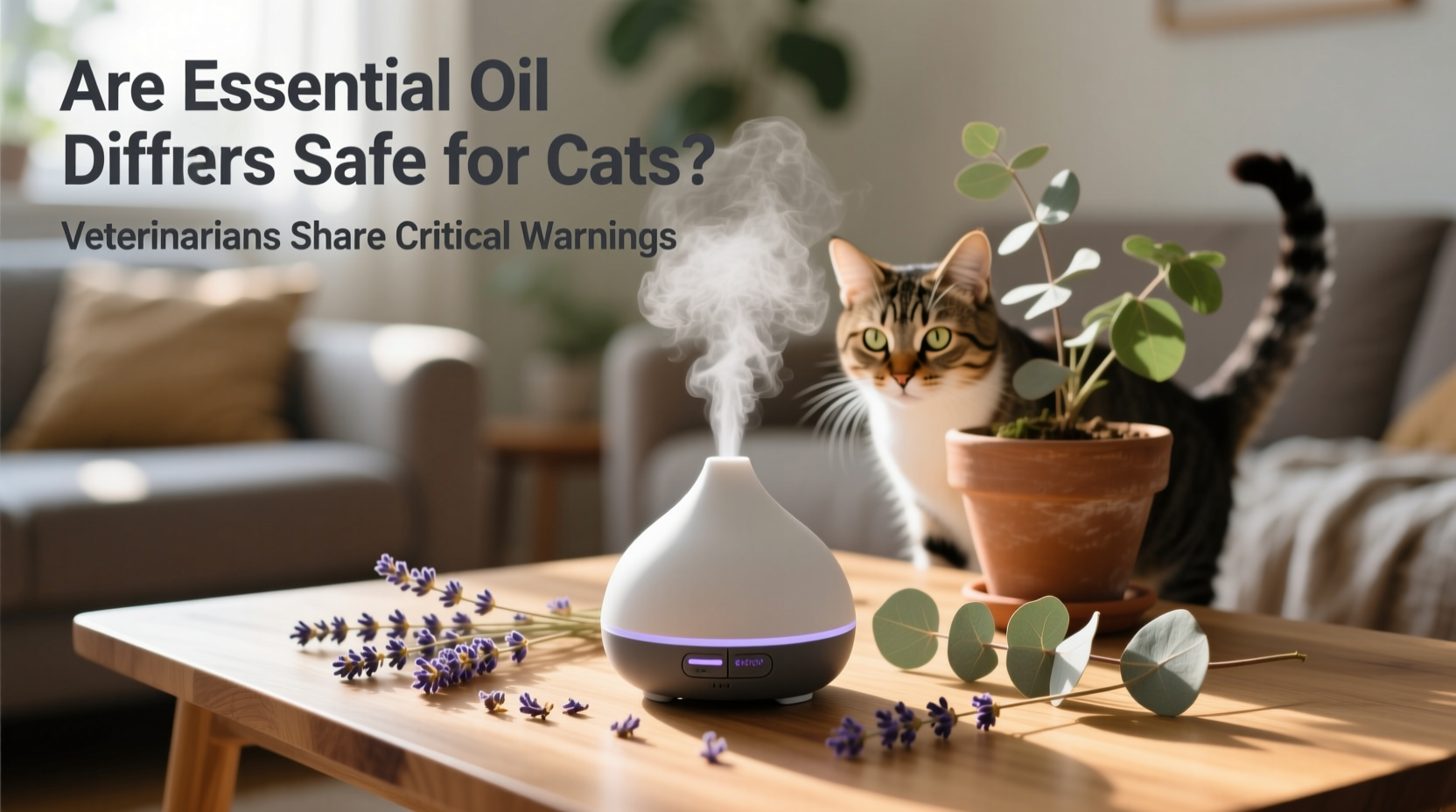
Essential oil diffusers have surged in popularity for their calming scents and natural air-purifying claims. Many pet owners enjoy lavender in the bedroom or citrus in the kitchen without a second thought. But when cats are part of the household, that pleasant mist may carry hidden risks. Veterinarians across the country are sounding the alarm: many essential oils are toxic to cats, and even low-level exposure from diffusers can lead to serious health issues—or worse.
Cats are uniquely vulnerable due to their biology. Their livers lack certain enzymes needed to break down compounds found in common essential oils like tea tree, eucalyptus, and citrus. When these substances are inhaled or absorbed through the skin, they can accumulate to dangerous levels. The American Society for the Prevention of Cruelty to Animals (ASPCA) lists dozens of essential oils as toxic to felines, and recent case studies show an uptick in poisoning incidents linked to home diffusers.
This article examines the science behind why essential oils pose a threat, highlights specific oils to avoid, and offers practical guidance from veterinary experts on how to maintain a healthy home environment—for both humans and pets.
Why Cats Are Especially Sensitive to Essential Oils
The root of the problem lies in feline metabolism. Unlike humans and even dogs, cats lack sufficient glucuronyl transferase enzymes in their livers—specifically UDP-glucuronosyltransferase (UGT). This enzyme is crucial for processing phenols and terpenes, two chemical components prevalent in most essential oils.
When a cat inhales diffused oil particles, these compounds enter the bloodstream via the lungs. Without efficient detoxification pathways, the liver struggles to eliminate them, leading to toxin buildup. Symptoms of toxicity can appear within hours and include drooling, vomiting, lethargy, respiratory distress, and in severe cases, liver failure or death.
Dr. Sarah Wooten, DVM, a veterinary consultant and animal health educator, explains: “Cats groom themselves constantly. If oil particles settle on their fur, they’ll ingest it during grooming. That’s a direct route to internal exposure—and one that many owners don’t consider.”
“Even oils considered ‘safe’ for humans can be deadly for cats. Diffusing isn’t passive—it’s active chemical dispersal into a shared space.” — Dr. Elizabeth Colleran, DVM, Past President of the American Association of Feline Practitioners
Oils That Are Dangerous—and Some That Aren’t Much Safer
Not all essential oils are created equal in terms of toxicity, but few are truly safe around cats. The following table summarizes common essential oils, their risk level, and potential symptoms of exposure.
| Essential Oil | Toxicity Level | Common Symptoms |
|---|---|---|
| Tea Tree (Melaleuca) | High | Tremors, weakness, low body temperature, coma |
| Eucalyptus | High | Salivation, vomiting, seizures |
| Peppermint | Moderate-High | Respiratory irritation, gastrointestinal upset |
| Lavender | Moderate | Vomiting, reduced appetite, ataxia (wobbliness) |
| Citrus (Lemon, Orange, Grapefruit) | Moderate-High | Photosensitivity, drooling, liver damage |
| Rosemary | Moderate | Seizures in sensitive individuals |
| Chamomile | Low-Moderate | Allergic reactions, mild GI upset |
It's important to note that \"low\" toxicity doesn't mean \"safe.\" Individual sensitivity varies widely among cats. A breed like the Siamese may react more severely than a domestic shorthair, and kittens or elderly cats are at higher risk due to underdeveloped or declining organ function.
Tip: Never assume an oil is safe because it’s labeled \"natural\" or used in human aromatherapy. In cats, natural does not mean harmless.A Real-Life Case: How a Lavender Diffuser Nearly Killed a Cat
In Boulder, Colorado, a 3-year-old domestic shorthair named Milo began acting strangely after his owner started using a lavender essential oil diffuser nightly. Over three days, Milo became increasingly lethargic, refused food, and developed muscle tremors. His owner rushed him to an emergency vet clinic.
Blood work revealed elevated liver enzymes and signs of hepatic stress. The veterinarian immediately suspected essential oil toxicity. Upon learning about the diffuser, the diagnosis was confirmed. Though lavender is often perceived as gentle, its linalool content is metabolically challenging for cats. Milo required 48 hours of IV fluids and supportive care before stabilizing.
\"We didn’t think a little lavender could hurt,\" said the owner. \"We’d used candles and lotions with it before. But the diffuser spreads the oil much more intensely—and continuously.\"
This case underscores a critical point: chronic, low-dose exposure can be just as dangerous as acute overdose. Cats don’t need to ingest oil directly to be poisoned. Inhalation alone is enough.
Safe Practices for Homes with Cats
Eliminating essential oils entirely may not be realistic for every household. However, if you choose to use a diffuser, strict precautions are necessary. The goal is to minimize exposure while protecting your cat’s health.
Step-by-Step Guide to Safer Use
- Choose location carefully: Only diffuse in rooms your cat cannot access. Close doors and ensure no airflow carries mist into adjacent spaces.
- Limited duration: Run the diffuser for no more than 15–30 minutes at a time, and never overnight.
- Use low concentration: Opt for diffusers that disperse minimal oil. Avoid nebulizing or ultrasonic models that create fine, inhalable mists.
- Observe your cat: Watch for signs of discomfort—sneezing, coughing, hiding, or excessive grooming—after diffusing.
- Ventilate thoroughly: Open windows and use fans to clear the air completely after each session.
- Never apply topically: Do not put essential oils on your cat’s fur, collar, or skin, even in diluted form.
- Store securely: Keep oils locked away. Spills or broken bottles can lead to direct exposure.
“The safest approach? Don’t diffuse around cats at all. If you must, treat it like handling a hazardous chemical—because that’s exactly what it is in this context.” — Dr. Susan Little, DVM, Board-Certified Feline Specialist
Alternatives to Essential Oil Diffusers
You don’t have to sacrifice ambiance or air quality to keep your cat safe. Consider these veterinarian-approved alternatives:
- Passive scent diffusers: Reed diffusers without essential oils, or those using plant-based fragrances specifically formulated for pet homes.
- Houseplants: Spider plants, Boston ferns, or cat-safe herbs like catnip and lemongrass can freshen air naturally.
- Activated charcoal or baking soda air purifiers: Chemical-free options that absorb odors without releasing volatile compounds.
- HEPA air purifiers: These remove allergens and pollutants without adding anything to the air.
- Regular cleaning: Vacuuming, dusting, and washing bedding reduce indoor pollutants more effectively than scent masking.
Feline pheromone products like Feliway offer another option for reducing stress in cats. Unlike essential oils, Feliway uses synthetic analogs of natural cat facial pheromones and has been extensively tested for safety. It can help with anxiety, spraying, or multi-cat tension—without the risks associated with botanical oils.
Tip: If your cat seems anxious, consult your vet before turning to aromatherapy. Behavioral therapy or prescription medication may be safer and more effective.Checklist: Is Your Home Safe for Cats If You Use Essential Oils?
Use this checklist to evaluate your current practices:
- ☐ I do not use essential oil diffusers in rooms my cat frequents.
- ☐ My diffuser runs for less than 30 minutes per session.
- ☐ I ventilate the room immediately after use.
- ☐ I store all essential oils out of reach in a closed cabinet.
- ☐ I avoid oils listed as toxic by the ASPCA.
- ☐ I monitor my cat for signs of respiratory or neurological distress.
- ☐ I have contacted my vet or Pet Poison Helpline (800-213-6680) on speed dial.
Frequently Asked Questions
Can I ever use essential oils around my cat?
It’s strongly discouraged. Even oils marketed as “pet-safe” can cause harm when diffused. Topical application or ingestion is especially dangerous. If you choose to use them, do so only in cat-free zones with extreme caution.
What should I do if my cat is exposed to essential oils?
Remove the cat from the area immediately. Do not induce vomiting unless directed by a professional. Contact your veterinarian or the ASPCA Animal Poison Control Center (888-426-4435) right away. Have the oil bottle available for ingredient information.
Are diffusers safer than sprays or candles?
No. All methods release volatile organic compounds into the air. Diffusers may be riskier because they operate longer and disperse finer particles that linger in the air and settle on surfaces—including your cat’s fur.
Conclusion: Prioritize Safety Over Scent
The desire for a pleasant-smelling home is understandable, but not at the cost of your cat’s well-being. Essential oil diffusers, despite their natural branding, introduce potent chemicals into environments shared with animals who are biologically unequipped to handle them. Veterinary evidence is clear: many commonly used oils pose real and preventable dangers.
By choosing safer alternatives, limiting exposure, and staying informed, you can create a peaceful atmosphere without compromising your pet’s health. If you’ve used diffusers around your cat without incident so far, consider yourself lucky—not safe. Toxicity can be cumulative, and symptoms may not appear until irreversible damage has occurred.
🚀 Take action today: Unplug your diffuser, review the oils in your home, and talk to your vet about safer ways to manage odors and stress. Share this information with fellow pet owners—your awareness could save a life.