
Glitter has long been a symbol of celebration—adorning makeup, crafts, festival wear, and holiday decorations. But as awareness grows about microplastic pollution, traditional plastic-based glitter has come under scrutiny. In response, “biodegradable” glitter has emerged as a popular alternative, marketed as an eco-conscious solution. Yet beneath the sparkle lies a complex reality: not all biodegradable glitters are created equal, and their environmental safety depends on specific conditions, materials, and disposal methods.
This article examines whether biodegradable glitter is genuinely safer for the planet than conventional glitter. We’ll explore how it’s made, what \"biodegradable\" really means, where and how it breaks down, and what consumers should look for to make responsible choices.
Understanding the Problem with Traditional Glitter
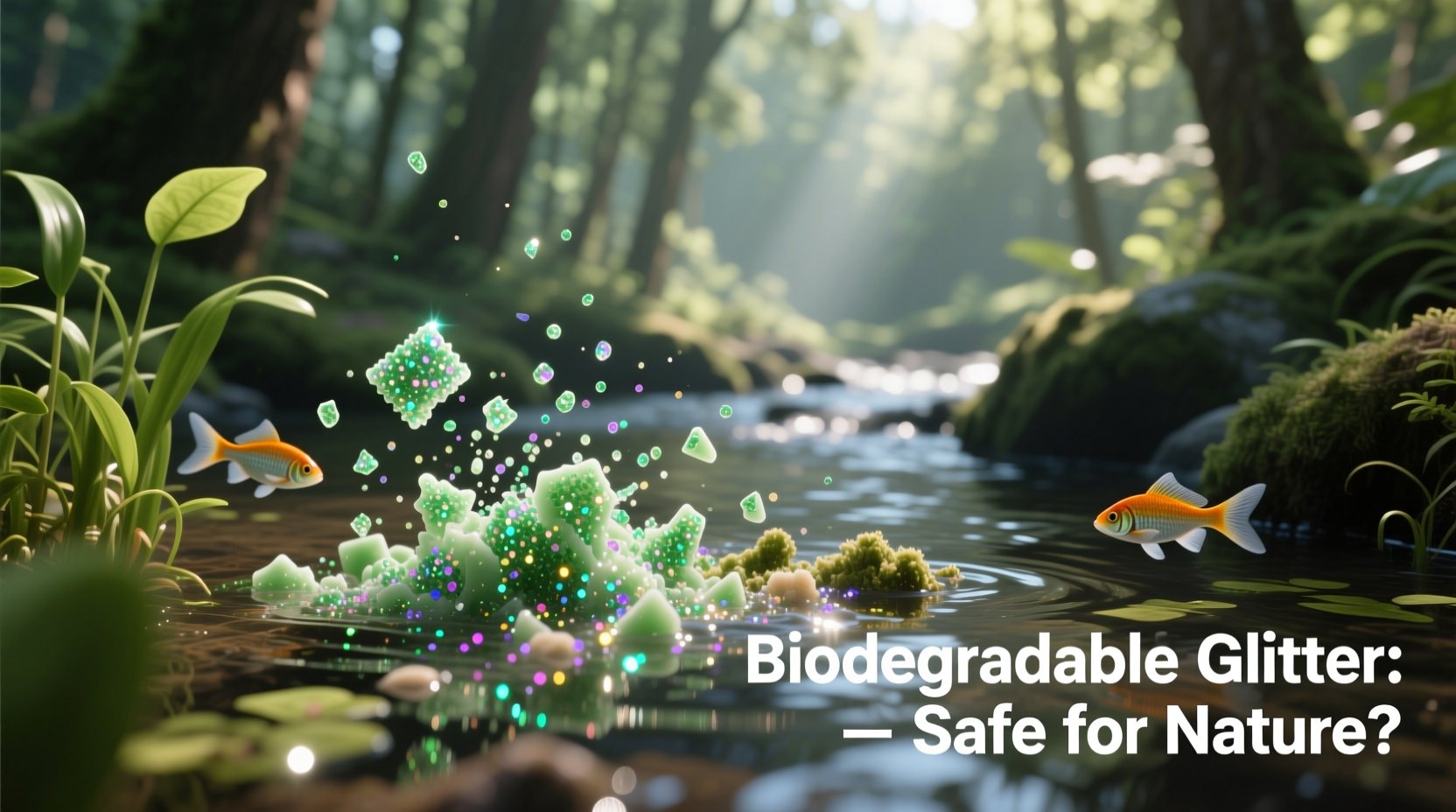
Standard glitter is typically made from polyethylene terephthalate (PET), aluminum, or other synthetic plastics coated with reflective layers. These tiny particles—often less than 5 millimeters in diameter—are essentially microplastics. Once released into the environment, they do not degrade. Instead, they persist for decades, accumulating in waterways, soil, and marine life.
Microplastics have been found in oceans, rivers, Arctic ice, and even human blood. Because glitter particles are lightweight and easily washed down drains, they bypass most wastewater treatment systems and enter aquatic ecosystems. There, they’re ingested by plankton, fish, and birds, entering the food chain with potentially harmful consequences.
Given this impact, the demand for sustainable alternatives has surged. Biodegradable glitter promises to offer the same shimmer without the lasting harm. But does it deliver?
What Makes Glitter \"Biodegradable\"? Materials and Mechanisms
True biodegradable glitter is made from plant-based cellulose, often derived from eucalyptus or other sustainably sourced wood pulp. Unlike plastic glitter, which resists microbial breakdown, cellulose-based glitter is designed to be consumed by microorganisms under the right conditions.
The key difference lies in the material structure:
- Traditional glitter: Synthetic polymers that resist natural decomposition.
- Biodegradable glitter: Cellulose film metallized with non-toxic, reflective coatings (e.g., titanium dioxide) that can fragment and mineralize when exposed to microbes.
However, biodegradability isn’t automatic. It requires specific environmental conditions such as moisture, heat, oxygen, and the presence of certain bacteria—conditions commonly found in industrial composting facilities but not necessarily in oceans, home compost bins, or landfills.
“Just because something is labeled ‘biodegradable’ doesn’t mean it will break down in any environment. The term needs context.” — Dr. Sarah Harper, Marine Microplastics Researcher, University of Plymouth
Conditions Required for Degradation
For biodegradable glitter to fully decompose, it must meet internationally recognized standards such as EN 13432 (Europe) or ASTM D6400 (USA). These standards require that materials:
- Disintegrate within 12 weeks in a controlled composting environment.
- Biodegrade by at least 90% within six months.
- Leave no toxic residues.
- Not contain heavy metals above permissible levels.
In practice, most biodegradable glitter brands rely on certification from organizations like Vincotte or BPI (Biodegradable Products Institute). However, many products fail to clarify that degradation occurs only in industrial composting settings—not in natural environments.
Tip: Always check if your biodegradable glitter is certified for home composting. If not, it likely won’t break down in soil or water.Comparing Real-World Performance: Lab vs. Nature
A 2022 study published in *Environmental Science & Technology* tested several commercial biodegradable glitters in simulated marine and freshwater environments. The results were concerning: while some samples showed partial fragmentation after three months, none achieved full biodegradation within a year. In contrast, the same glitters broke down completely within 12 weeks in industrial compost simulations.
This highlights a critical gap between marketing claims and environmental reality. Many consumers assume that “biodegradable” means safe for rivers, lakes, or beaches—especially when used in outdoor festivals or body art. But unless the glitter ends up in a proper composting facility, it may behave much like conventional glitter in nature.
Common Misconceptions About Biodegradable Glitter
| Misconception | Reality |
|---|---|
| \"If it's biodegradable, it's safe to wash down the drain.\" | No. Wastewater systems aren't composting facilities. Most biodegradable glitter won't break down in sewers. |
| \"It dissolves in water.\" | Some may fragment, but true dissolution requires microbial action over time in compost. |
| \"All plant-based glitter is eco-friendly.\" | Not necessarily. Some use non-recyclable metallization or unsustainable sourcing. |
| \"Home composting works the same as industrial.\" | Home compost is cooler and slower; most biodegradable glitter needs higher temperatures. |
How to Choose Truly Sustainable Glitter: A Buyer’s Checklist
To ensure your glitter choice aligns with environmental values, follow this practical checklist before purchasing:
- ✅ Look for third-party certifications: BPI, OK Compost INDUSTRIAL, or Vincotte.
- ✅ Verify the base material: Should be cellulose from sustainably managed forests (FSC-certified).
- ✅ Avoid “oxo-degradable” or “bio-based plastic” labels—they are not truly biodegradable.
- ✅ Check if it’s suitable for home composting (rare, but available).
- ✅ Prefer chunkier sizes: Larger particles are less likely to become microplastic pollutants.
- ✅ Confirm non-toxic coatings: Should use safe pigments like iron oxides or mica (responsibly sourced).
- ✅ Consider reusability: Glitter applied to crafts or decor can be collected and reused instead of washed away.
Case Study: Glastonbury Festival’s Glitter Policy Shift
In 2019, the Glastonbury Festival in the UK banned all glitter from its site due to growing concerns about microplastic contamination in nearby rivers. Organizers encouraged attendees to use biodegradable alternatives but later discovered a loophole: many so-called “eco-glitters” weren’t breaking down in the local environment.
By 2022, the festival partnered with scientists from the University of the West of England to test several biodegradable glitter brands. Only one product—certified for industrial composting and clearly labeled as unsuitable for aquatic release—met acceptable standards. As a result, Glastonbury now promotes reusable metallic face stickers and temporary tattoos as truly low-impact alternatives.
This case illustrates how even well-intentioned sustainability efforts can fall short without rigorous verification. It also underscores the importance of consumer education and transparent labeling.
Proper Disposal: Closing the Loop Responsibly
Even the most responsibly produced biodegradable glitter must be disposed of correctly to avoid environmental harm. Here’s a step-by-step guide to minimizing impact:
- Collect excess glitter: After craft projects or makeup application, wipe or brush leftover glitter into a container for reuse.
- Avoid rinsing down sinks: Never wash glitter off skin or tools directly into drains.
- Use a filter: If you must clean glitter-laden items, do so over a fine mesh sieve to catch particles.
- Dispose in organic waste: If you live in an area with industrial compost collection, add used biodegradable glitter to compost bins—only if the product explicitly allows it.
- When in doubt, landfill: Sending biodegradable glitter to landfill is better than releasing it into waterways, even though degradation will be minimal.
Unfortunately, most municipal waste systems lack the infrastructure to process compostable films effectively. Until this changes, the safest approach is to limit glitter use altogether or opt for reusable decorative alternatives.
Frequently Asked Questions
Can I use biodegradable glitter in my garden or compost bin?
Only if the product is certified for home composting (e.g., OK Compost HOME). Most biodegradable glitters require industrial composting conditions (high heat, consistent moisture, microbial activity) not present in backyard bins. When in doubt, avoid adding it to soil or compost.
Is mica a sustainable alternative to glitter?
Mica offers natural shimmer but comes with ethical concerns. Much of the world’s mica is mined in regions with poor labor practices, including child labor. If choosing mica, look for brands that provide traceability and third-party audits (e.g., Responsible Mica Initiative certification). Even then, fine mica powder can contribute to particulate pollution if washed into water.
Are there truly zero-waste glitter options?
Currently, no glitter is entirely waste-free. However, reusable options like metallic vinyl stickers, sequins on fabric, or LED body art offer sparkle without dispersion. For temporary decoration, consider wash-off metallic paints made from mineral pigments that bind to surfaces and can be captured during cleaning.
Conclusion: Rethinking Sparkle in the Age of Sustainability
Biodegradable glitter represents progress—but not a perfect solution. While it is undeniably less harmful than conventional plastic glitter when managed properly, its environmental safety hinges on correct disposal and realistic expectations. In natural ecosystems, especially aquatic ones, most biodegradable glitters do not break down quickly enough to prevent ecological risk.
The shift toward sustainable sparkle requires more than swapping materials—it demands changes in behavior, infrastructure, and design. Consumers must read labels critically, avoid rinsing glitter into drains, and prioritize reusable alternatives. Brands must improve transparency, support composting innovation, and phase out misleading claims.
Ultimately, the most environmentally sound choice may be to use less glitter overall and celebrate mindfully. True beauty lies not just in shimmer, but in stewardship.
🚀 Ready to make a difference? Start by auditing your glitter use, switching to certified biodegradable options, and sharing accurate information with others. Small choices spark big change.








