For many cat owners, the daily rhythm of feeding time is more than a routine—it’s a moment of connection. The soft meow at dawn, the eager eyes as kibble hits the bowl, the gentle head bump in thanks—these small rituals build trust and strengthen the bond between human and feline. But with the rise of smart home technology, automatic cat feeders have become increasingly popular. They promise convenience, consistency, and peace of mind, especially for busy professionals, frequent travelers, or those managing multiple pets. Yet a growing concern lingers: Are these devices undermining the emotional connection we share with our cats?
The answer isn’t a simple yes or no. Automatic feeders aren’t inherently harmful to bonding—but how they’re used can make all the difference. When thoughtfully integrated into a cat’s life, they can support well-being without replacing meaningful interaction. Misused, however, they risk turning caregiving into a transactional, hands-off process. The real question isn’t whether automatic feeders are good or bad, but how we can use them in ways that honor both our responsibilities and our relationships.
The Role of Feeding in Cat-Human Bonding
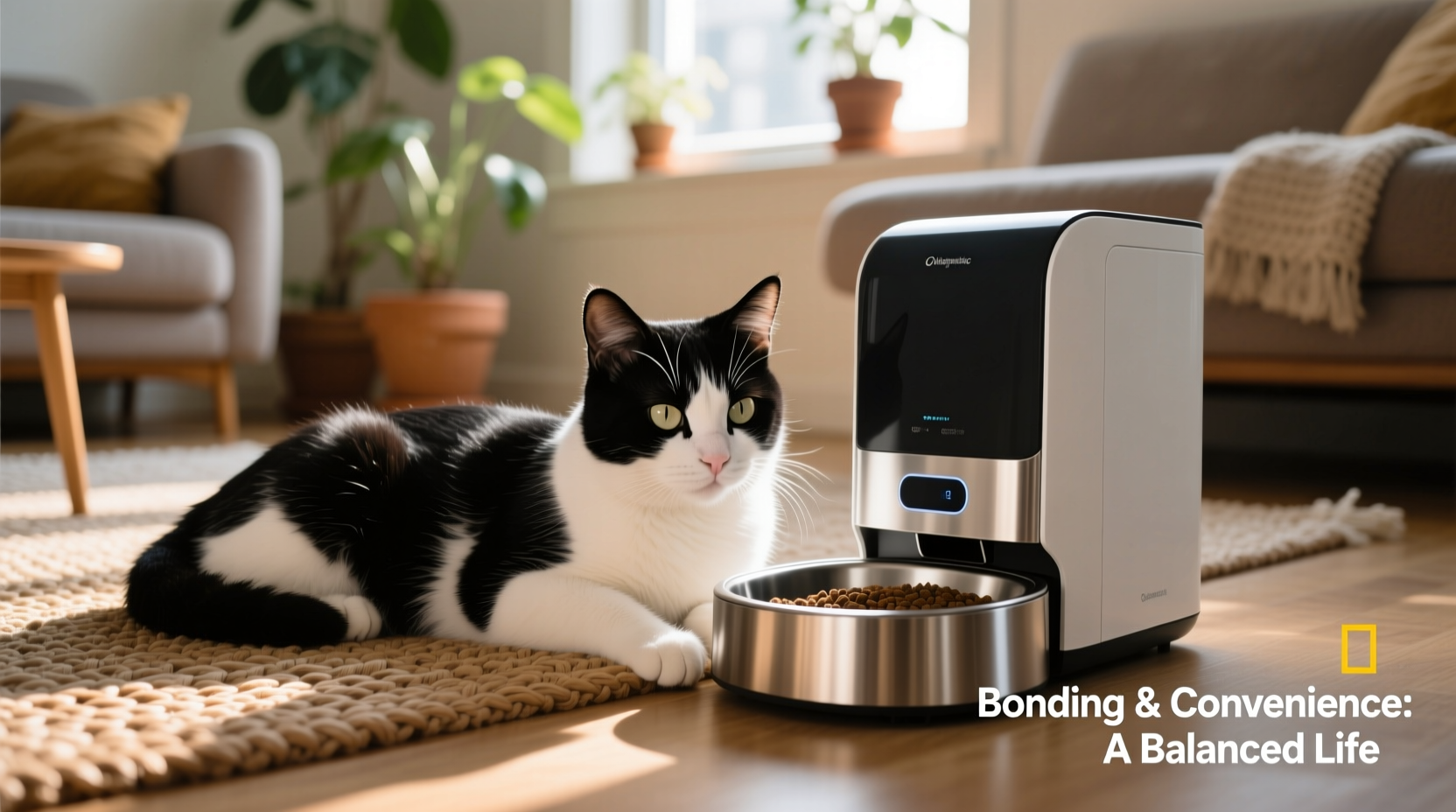
Feeding is one of the most primal forms of social interaction between cats and humans. In the wild, cats are solitary hunters, but domestication has reshaped their behavior. Over generations, cats have learned to associate humans not just with safety, but with nourishment and comfort. This creates a psychological link where food becomes a symbol of care.
When you hand-feed your cat—even if it's just a few treats—or sit nearby during mealtime, you reinforce trust. Your presence signals predictability and security. Cats are observant; they notice tone, movement, and timing. A consistent feeding schedule delivered with attention strengthens attachment. Behavioral studies suggest that cats form secure attachments to caregivers, much like dogs and even human infants, especially when care is responsive and predictable.
However, this doesn’t mean every meal must be a ceremonial event. Cats also value independence. Unlike dogs, they don’t require constant engagement. The key is balance: ensuring that feeding remains part of a broader ecosystem of care that includes play, grooming, and physical affection.
Tip: Even if using an automatic feeder, stand nearby during meals for the first few minutes. Your presence reinforces your role as caregiver.Benefits of Automatic Feeders: Beyond Convenience
Automatic cat feeders offer tangible advantages, particularly in specific living situations. For many owners, they’re not a luxury—they’re a necessity.
- Consistency: Cats thrive on routine. Irregular feeding times due to work shifts or travel can cause stress, leading to digestive issues or behavioral changes like excessive vocalization.
- Portion control: Obesity is a growing issue among indoor cats. Programmable feeders help prevent overfeeding by dispensing precise amounts at set intervals.
- Medication integration: Some models allow owners to schedule meals with medication, ensuring treatment adherence without force-feeding.
- Peace of mind: For pet sitters or short trips, feeders eliminate reliance on others for daily feeding, reducing anxiety for both owner and cat.
- Multi-cat households: Smart feeders with microchip or RFID recognition ensure each cat eats only their designated food, preventing competition or dietary conflicts.
In homes where schedules are unpredictable, automatic feeders can actually improve a cat’s quality of life by providing stability. As Dr. Sarah Thompson, a veterinary behaviorist at the Feline Wellness Institute, explains:
“Predictability reduces stress in cats. An automatic feeder that delivers meals at the same time every day can create a sense of security—especially when the human caregiver’s schedule is erratic.” — Dr. Sarah Thompson, DVM, Veterinary Behaviorist
When Convenience Comes at a Cost: Risks to Watch For
The danger arises not from the device itself, but from disengagement. Technology should augment care, not replace it. If an owner installs a feeder and then minimizes all other interactions, the cat may begin to see humans as irrelevant to their needs.
Some common pitfalls include:
- Reduced interaction: Skipping mealtime means missing opportunities for eye contact, voice engagement, and tactile bonding.
- Mechanical failure: Jams, power outages, or Wi-Fi disruptions can lead to missed meals, causing hunger and anxiety.
- Lack of observation: Owners who don’t monitor eating habits may miss early signs of illness, such as reduced appetite or changes in water intake.
- Over-reliance: Using the feeder as a substitute for all feeding—even treats or interactive play sessions—can dull the relational aspect of care.
A 2022 survey by the American Pet Products Association found that 38% of automatic feeder users reported spending less time near their cat during meals. While not all experienced behavioral issues, a subset noted increased clinginess at odd hours or food-related begging, suggesting the cat was seeking alternative forms of engagement.
Real-Life Example: The Case of Luna and Mark
Mark, a software engineer working long hours, installed an automatic feeder for his 3-year-old tabby, Luna. Initially, it solved his problem: she was fed on time every day. But within weeks, he noticed she began waking him at 3 a.m., pacing and meowing. She also started rubbing against the empty feeder repeatedly.
After consulting a feline behavior consultant, Mark realized that while Luna was physically fed, she was emotionally deprived of her evening ritual—the 15 minutes when Mark would come home, call her name, and sit with her during dinner. The feeder had removed that connection.
He adjusted his approach: he kept the feeder for mornings but returned to hand-feeding her in the evening. He also added a timed treat release during his lunch break, paired with a recorded voice message saying, “Hi Luna, almost time for your snack!” Within two weeks, her nighttime activity decreased, and their bond visibly strengthened.
Using Automatic Feeders Without Sacrificing Connection
The goal isn’t to reject technology, but to integrate it wisely. Here’s how to maintain—and even enhance—bonding while using an automatic feeder.
Step-by-Step Guide: Building a Balanced Feeding Routine
- Assess your cat’s needs: Is your cat anxious, dominant in a multi-cat home, or on a special diet? Choose a feeder that addresses these concerns (e.g., portion control, RFID recognition).
- Retain at least one interactive feeding per day: Even if mornings are automated, commit to feeding your cat by hand in the evening. Use this time to talk, pet, or offer a treat.
- Pair feeding with play: Engage your cat in a 5-minute toy session before meals. This mimics hunting and satisfies natural instincts, making the post-meal calm more satisfying.
- Monitor eating behavior: Check the feeder logs (if available) or observe your cat during meals. Sudden changes in appetite may signal health issues.
- Use audio features thoughtfully: Some feeders allow voice recording. A kind greeting before mealtime can reinforce your presence, even when you’re not home.
- Schedule maintenance checks: Clean the feeder weekly and test functionality regularly to avoid malfunctions that could stress your cat.
Checklist: Healthy Use of Automatic Feeders
- ✅ I use the feeder to supplement—not replace—interactive feeding.
- ✅ At least one meal per day involves my direct presence.
- ✅ I clean the feeder weekly to prevent mold or jamming.
- ✅ I observe my cat during meals to monitor health and behavior.
- ✅ I combine feeding with play or affection when possible.
- ✅ I have a backup plan (manual feeding or trusted person) for emergencies.
Comparison: Manual vs. Automatic Feeding
| Aspect | Manual Feeding | Automatic Feeding |
|---|---|---|
| Bonding Opportunities | High – direct interaction, voice, touch | Low to moderate – depends on user habits |
| Schedule Flexibility | Low – requires consistent presence | High – ideal for irregular routines |
| Portion Accuracy | Variable – prone to overfeeding | High – programmable precision |
| Stress Reduction | Depends on consistency | High – if used reliably |
| Risk of Malfunction | Negligible | Moderate – mechanical or power issues |
| Best For | Owners home frequently, strong bonding focus | Busy schedules, multi-cat homes, medical diets |
Frequently Asked Questions
Can automatic feeders cause separation anxiety?
Not directly. However, if the feeder replaces all human interaction around feeding, cats may feel disconnected. Anxiety often stems from unpredictability or lack of engagement, not the device itself. Maintaining regular bonding activities outside feeding can prevent this.
Do cats prefer feeding from humans over machines?
Most cats value consistency over the source of food. That said, they do form positive associations with people who provide care. A cat may eat from a machine but still seek affection from their owner. The feeder doesn’t diminish attachment unless it isolates the cat socially.
Are there feeders that promote interaction?
Yes. Some advanced models include cameras, treat-dispensing on command, or two-way audio. These allow owners to check in, talk to their cat, or reward behavior remotely—turning automation into a tool for engagement rather than detachment.
Conclusion: Convenience and Connection Can Coexist
Automatic cat feeders are neither villains nor miracles. They are tools—like any other piece of pet care equipment. Their impact on bonding depends entirely on how they’re used. When treated as a supplement to attentive care, they can enhance a cat’s well-being by providing reliable nutrition and reducing household stress. When used as a substitute for presence and engagement, they risk weakening the very relationship they’re meant to support.
The heart of cat ownership isn’t found in the act of pouring food, but in the sum of small, consistent gestures of care. An automatic feeder can handle the logistics, but only you can provide the warmth, attention, and companionship that build true trust.
If you're considering a feeder, do so with intention. Choose one that fits your lifestyle, but commit to preserving moments of connection. Let technology serve your bond—not silence it.
🚀 Ready to optimize your cat’s feeding routine? Share your experience with automatic feeders below—what works, what doesn’t, and how you keep the bond strong. Your insights could help another cat owner find the right balance.








