
Choosing a low-maintenance pet often leads people toward self-contained ecosystems like aquariums and terrariums. Both offer visual appeal, educational value, and a calming presence in homes or offices. However, they differ significantly in setup, upkeep, cost, and long-term commitment. For someone seeking a living display that doesn’t demand daily intensive care, understanding the nuances between an aquarium and a terrarium is essential. This guide compares both options across multiple practical dimensions to help you decide which is truly lower maintenance—and which suits your lifestyle best.
Understanding the Basics: What Is an Aquarium?
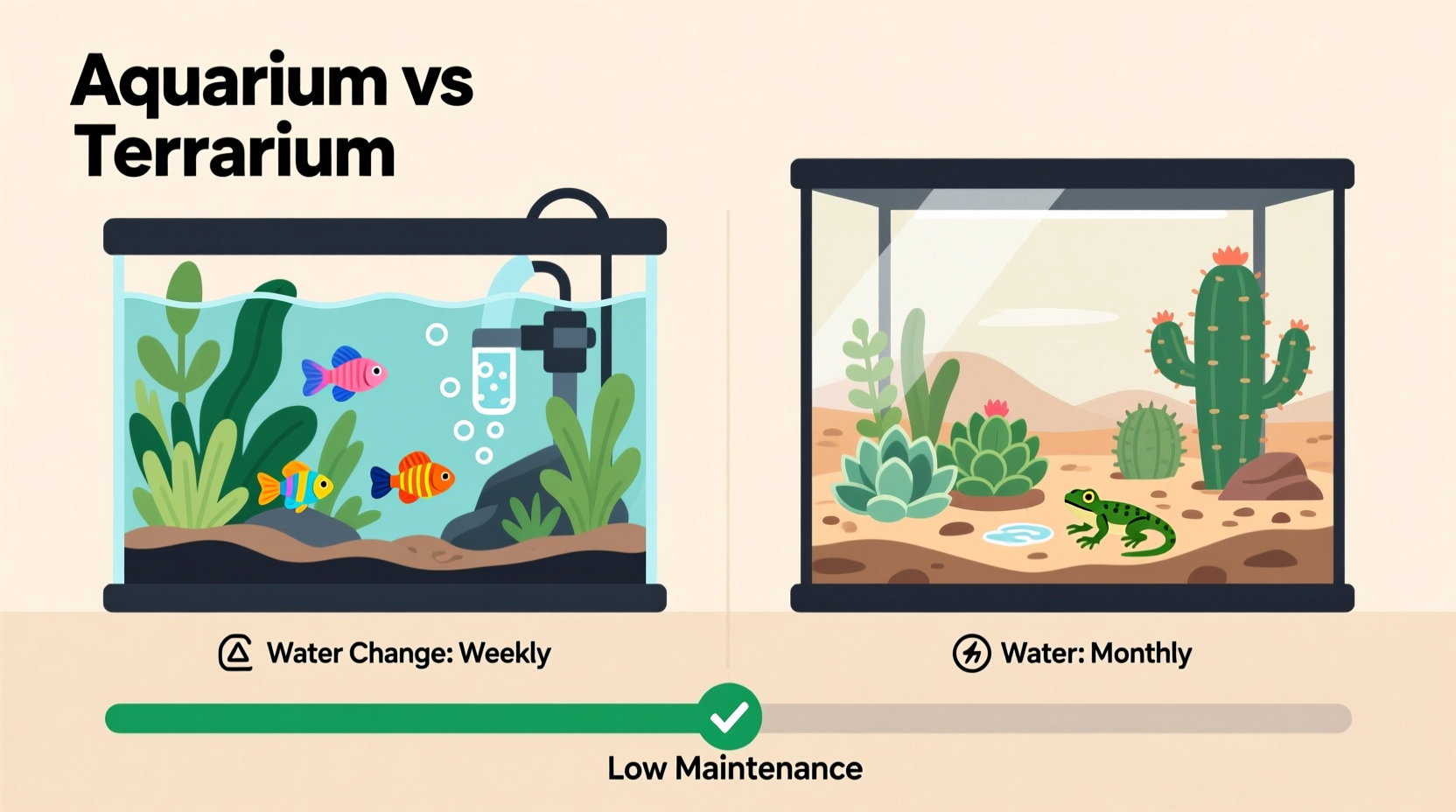
An aquarium is a sealed or open container designed to house aquatic life—typically fish, plants, snails, shrimp, or amphibians. It relies on water as the primary environment and requires filtration, temperature control (in many cases), lighting, and chemical balance to sustain life. Aquariums range from small desktop bowls to large custom-built tanks holding hundreds of gallons.
The most common types include freshwater setups, which are generally easier for beginners, and saltwater systems, which demand more expertise and equipment. A balanced aquarium mimics a natural aquatic ecosystem where plants produce oxygen, beneficial bacteria break down waste, and inhabitants coexist in relative harmony.
Tip: Start with a 10- to 20-gallon freshwater tank if you're new—it's easier to stabilize than smaller or saltwater systems.What Defines a Terrarium?
A terrarium is a closed or open glass container that houses land-based plants and sometimes small animals like frogs, insects, or reptiles. Unlike aquariums, terrariums focus on soil, humidity, and air circulation rather than water. They function as miniature greenhouses, especially when sealed, recycling moisture through condensation and evaporation.
Terrariums are categorized into two main types: closed (humid environments ideal for tropical plants like ferns and mosses) and open (better for succulents and cacti that prefer drier conditions). Some advanced setups, known as \"vivariums,\" are specifically designed to support live animals such as dart frogs or geckos and require precise environmental controls.
“Terrariums are nature’s way of fitting a forest into a jar—but only if you respect their microclimate.” — Dr. Lena Reyes, Botanical Ecologist
Comparing Maintenance Requirements
Maintenance is the core factor when choosing between these two options. While both promise relatively low effort compared to traditional pets, their demands vary significantly over time.
Aquarium Upkeep: The Hidden Work Beneath the Surface
Aquariums may appear serene, but they require consistent monitoring. Water quality is paramount. Ammonia, nitrite, and nitrate levels must be checked regularly using test kits. Even minor imbalances can lead to fish stress or death. Weekly partial water changes (10–25%) are standard practice to remove toxins and replenish minerals.
Filtration systems need monthly cleaning, and lights, heaters, and pumps should be inspected for proper function. Algae growth on glass and decorations is common and requires manual scraping. Overfeeding is a frequent mistake that accelerates waste buildup.
In contrast, planted freshwater tanks with algae-eating species (like nerite snails or otocinclus catfish) can reduce maintenance by creating a more balanced ecosystem. However, this balance takes weeks or months to establish and still requires oversight.
Terrarium Care: Simplicity Through Stability
Terrariums, particularly closed plant-only versions, often require less frequent intervention. Once properly assembled with the right soil layers, drainage, and plant selection, they can go weeks without watering. The sealed environment recycles moisture, minimizing external input.
Open terrariums with succulents need even less water—sometimes only once every two to three weeks—but require bright, indirect light and good airflow to prevent rot. Pruning may be needed occasionally to manage plant growth.
If animals are added—such as a tree frog or isopods—the maintenance increases substantially. These setups become vivariums, requiring daily misting, feeding schedules, UVB lighting, and temperature regulation. Thus, the “low-maintenance” advantage applies primarily to plant-only terrariums.
Cost Comparison: Initial Investment and Ongoing Expenses
Both systems have startup and recurring costs, but their financial profiles differ.
| Item | Aquarium (Freshwater) | Terrarium (Closed, Plant-Only) |
|---|---|---|
| Initial Setup Cost | $150–$300 (tank, filter, heater, substrate, decor) | $50–$120 (glass container, charcoal, soil, plants) |
| Monthly Operating Cost | $20–$40 (electricity, water conditioner, food, test kits) | $2–$10 (occasional fertilizer, replacement plants) |
| Lifespan of Equipment | 3–7 years (filters, heaters degrade) | Indefinite (no mechanical parts) |
| Replacement Frequency | Regular (fish mortality, plant decay, filter media) | Rare (plants live for years if healthy) |
As shown, terrariums generally cost less upfront and over time. They consume no electricity unless supplemented with grow lights, and there are no recurring expenses for animal food or water treatments. Aquariums, while beautiful, accumulate hidden costs that add up over months and years.
Tip: Use secondhand aquarium gear from local hobbyist groups—it can cut startup costs by 40% or more.Real-Life Example: Sarah’s Low-Maintenance Journey
Sarah, a busy software developer in Portland, wanted a calming presence in her apartment without adding chores. She first tried a 10-gallon betta aquarium. Despite following instructions, she struggled with cloudy water and sudden fish deaths. Testing revealed inconsistent ammonia spikes due to irregular water changes caused by her unpredictable schedule.
After six months, she switched to a closed terrarium with fittonia, moss, and ferns in a repurposed glass cloche. She watered it once every three weeks and placed it near a north-facing window. Two years later, the terrarium thrives with minimal attention. “It feels alive,” she says, “but I don’t have to worry about it dying overnight because I forgot a water change.”
Sarah’s experience reflects a broader trend: individuals with limited time or inconsistent routines often find greater success with passive, plant-based systems.
Step-by-Step Guide to Setting Up a Low-Maintenance System
Whether you choose an aquarium or terrarium, proper setup determines long-term ease. Follow this timeline to minimize future work.
- Week 1: Research and Planning
Select species or plants compatible with your space and schedule. Avoid high-demand animals or finicky plants. - Week 2: Assemble Materials
Purchase all necessary components. For aquariums: tank, filter, dechlorinator, test kit. For terrariums: container, drainage layer (gravel/charcoal), potting mix, plants. - Week 3: Build the Ecosystem
Set up the tank or container. In aquariums, cycle the nitrogen system for 4–6 weeks before adding fish. In terrariums, layer materials and plant carefully to avoid compaction. - Week 7: Introduce Life Gradually
Add hardy plants or animals slowly. Do not overcrowd. Monitor for signs of imbalance. - Ongoing: Establish a Minimal Routine
For aquariums: weekly 15-minute water checks and partial changes. For terrariums: monthly inspection and occasional watering.
“The key to low maintenance isn’t doing less—it’s designing systems that do more on their own.” — Mark Tran, Sustainable Habitat Designer
Which Is Truly Lower Maintenance?
The answer depends on what you mean by “pet.” If you’re referring strictly to living displays with minimal human input, a **plant-only closed terrarium** wins hands-down. It requires no feeding, produces no waste, uses no electricity, and can survive neglect far better than any aquarium.
However, if you want actual animals—something with movement, personality, and interaction—an aquarium with hardy fish (like white cloud mountain minnows or zebra danios) in a well-cycled tank may fulfill that desire more than a static plant display. Just recognize that animal life inherently increases responsibility.
Consider this: a neglected aquarium can become toxic within days, killing its inhabitants. A neglected terrarium might grow mold or stretch toward light, but it rarely collapses catastrophically. Plants are more forgiving than fish.
Checklist: Choosing Your Ideal Low-Maintenance Setup
- ✅ Decide whether you want animals or just plants
- ✅ Assess available space and lighting in your home
- ✅ Determine how much time per week you can dedicate
- ✅ Set a realistic budget for initial and ongoing costs
- ✅ Research beginner-friendly species or plants
- ✅ Choose between open (dry) or closed (humid) environment
- ✅ Commit to a simple, consistent care routine
Frequently Asked Questions
Can I keep animals in a terrarium without high maintenance?
Only certain small invertebrates like isopods (roly-polies) or springtails can thrive in a low-maintenance terrarium. They help clean debris and don’t require feeding beyond what the ecosystem provides. Larger animals like frogs or reptiles turn the setup into a vivarium, which demands daily care.
Do aquariums really need to be cycled before adding fish?
Yes. Cycling establishes beneficial bacteria that convert harmful ammonia into safer compounds. Skipping this step risks “new tank syndrome,” which kills fish quickly. The process takes 4–6 weeks but prevents long-term problems.
How long can a closed terrarium go without attention?
A well-balanced closed terrarium can last 3–6 months without watering, depending on size and plant type. Occasional pruning and wiping condensation off the glass may still be needed, but it’s among the most self-sustaining indoor ecosystems available.
Final Verdict: Which Should You Choose?
If your goal is genuine low maintenance—minimal time, money, and effort—a **closed plant terrarium** is superior. It’s quieter, cheaper, safer, and more resilient than even the simplest aquarium. It brings nature indoors without demanding constant attention.
An aquarium offers dynamic life and motion, which many find mesmerizing. But that beauty comes at a price: vigilance, routine, and emotional investment. If you’re drawn to fish and willing to learn basic water chemistry, a small freshwater tank can be rewarding. Just don’t expect it to be “set and forget.”
Ultimately, the best low-maintenance pet isn’t one that does tricks or responds to affection—it’s one that thrives quietly in the background, enhancing your space without draining your energy.
🚀 Ready to start your own low-maintenance ecosystem? Begin with a simple terrarium using a recycled jar and some moss—observe how little it needs to flourish. Share your journey or ask questions in the comments below!








