
For new aquarium enthusiasts, choosing between live aquatic plants and Marimo moss balls often comes down to one pressing question: which is more likely to survive under inexperienced care? Both options bring natural beauty, oxygenation, and water filtration benefits to a tank, but their resilience and maintenance needs differ significantly. While moss balls are frequently marketed as \"indestructible,\" and live plants sometimes carry a reputation for being finicky, the reality lies somewhere in between. Understanding the biological nature, environmental requirements, and common pitfalls of each can help beginners make an informed decision—and avoid early disappointments.
Understanding Marimo Moss Balls: Nature’s Low-Maintenance Wonder
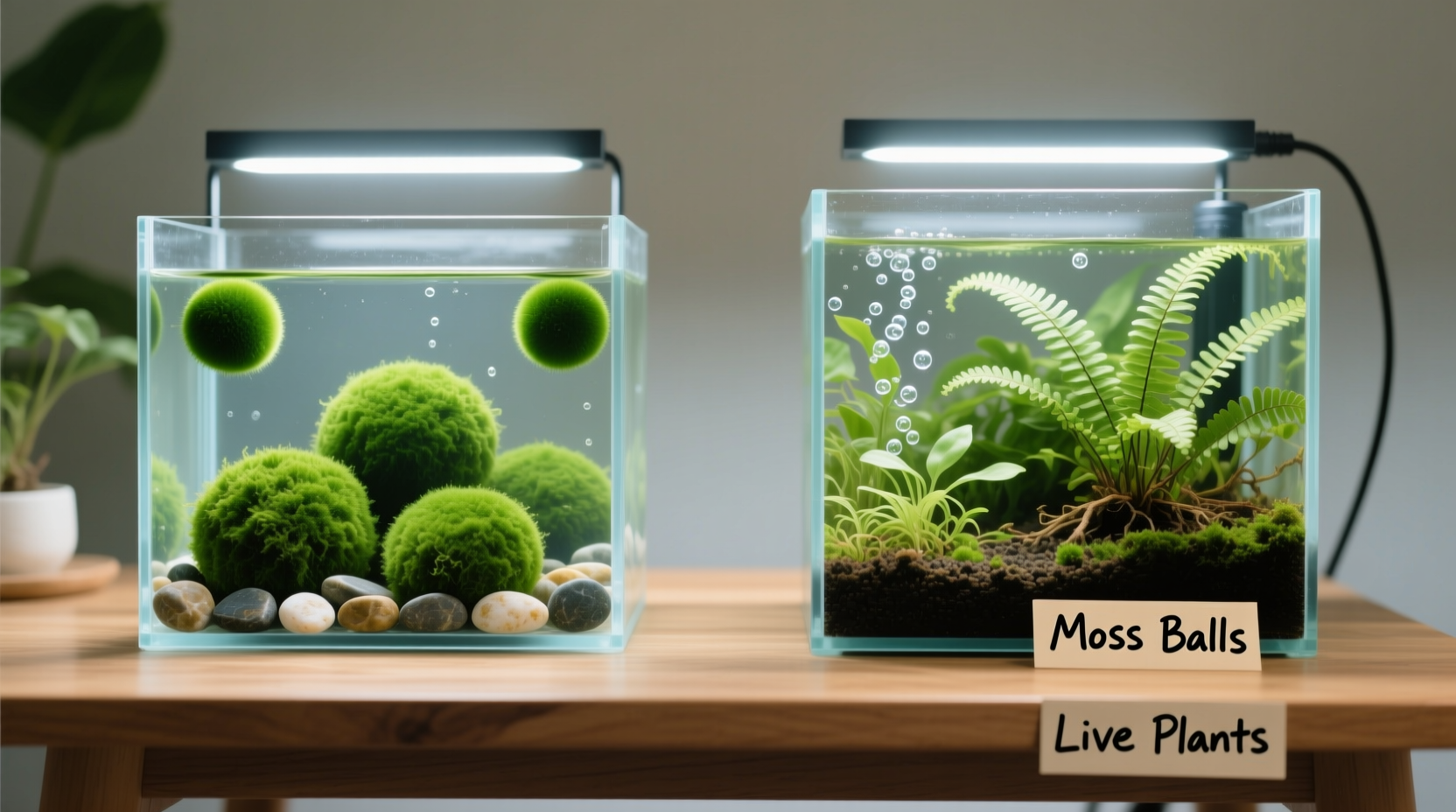
Despite their name, Marimo moss balls (Cladophora aegagropila) aren’t actually moss or plants—they’re a rare form of filamentous green algae that naturally forms into dense, spherical shapes in specific lake environments, primarily in Japan and Iceland. Their unique structure allows them to roll with gentle water currents, ensuring even light exposure and preventing dead spots.
In home aquariums, moss balls thrive in low to moderate lighting and do not require substrate planting. They float freely or rest on the bottom, absorbing nutrients directly from the water column. Because they grow slowly and don’t demand CO₂ injection or specialized fertilizers, they’re often considered ideal for beginners.
Tip: Gently squeeze your moss ball every few weeks during water changes to expel trapped debris and maintain its shape.One of the biggest advantages of moss balls is their ability to tolerate fluctuating water conditions better than most rooted plants. They absorb nitrates and phosphates, helping reduce algae blooms, and provide shelter for beneficial bacteria and microfauna like baby shrimp.
Common Live Plants for Beginner Tanks
Live aquatic plants come in many varieties, but certain species are consistently recommended for novice aquarists due to their hardiness and adaptability. These include:
- Anubias – Slow-growing, thrives in low light, attaches to driftwood or rocks.
- Cryptocoryne wendtii – Tolerant of a wide range of water parameters, excellent for midground planting.
- Vallisneria – Fast-growing, adaptable, spreads via runners.
- Hornwort – Can be free-floating or anchored, grows rapidly and helps control algae.
- Jungle Val (Vallisneria americana) – Hardy, undemanding, great oxygenator.
Unlike moss balls, these plants perform photosynthesis more actively and typically require anchoring in substrate unless floating. They also benefit—sometimes depend—from access to essential nutrients like iron, potassium, and trace elements, especially if grown under LED lighting.
“Many beginners fail not because the plants are inherently difficult, but because they misunderstand the balance between light, nutrients, and stability.” — Dr. Lena Peterson, Aquatic Botanist, University of Florida
The key challenge with live plants is the initial adjustment period. Cryptocorynes, for example, are notorious for “melting” when moved to a new environment—a stress response where leaves deteriorate before new growth emerges. This often leads new keepers to believe the plant is dying, when in fact it’s adapting.
Comparative Care Requirements: A Practical Breakdown
To determine which option is truly harder to kill, let’s compare critical factors side by side.
| Factor | Marimo Moss Ball | Typical Beginner Live Plant |
|---|---|---|
| Light Needs | Low to moderate; direct sunlight can cause browning | Varies: Anubias (low), Vallisneria (moderate), Hornwort (moderate-high) |
| Substrate Required? | No | Yes (except floating species) |
| Fertilization | Rarely needed; absorbs waste nutrients | Beneficial, sometimes necessary for sustained growth |
| CO₂ Supplementation | Not required | Not required for hardy species, but helps growth |
| Growth Rate | Very slow (~1 inch per year) | Moderate to fast (e.g., Hornwort can grow several inches per week) |
| Sensitivity to Water Changes | Low; tolerates fluctuations well | Moderate to high; sudden shifts can trigger melt or stunting |
| Pest/Algae Risk | Low, but surface can collect detritus | Moderate; leaves may host algae if lighting/nutrients are unbalanced |
Based on this comparison, moss balls clearly have fewer demands. However, “fewer demands” doesn’t always equate to “impossible to kill.” Misconceptions about their invincibility lead some owners to neglect basic care, such as keeping them in complete darkness or exposing them to excessive heat.
Real-World Scenarios: Who Survives Better?
Consider two beginner aquarists setting up 10-gallon freshwater tanks.
Case Study: Emma’s First Tank
Emma purchased a pre-planted kit with Anubias, Java Fern, and a small cluster of hornwort. She set up standard LED lighting (8 hours/day), used gravel substrate, and performed weekly 25% water changes. Within three weeks, the hornwort grew vigorously, but the Anubias began yellowing. Believing it was dying, she removed it. In reality, the Anubias was adjusting to new water chemistry. The remaining plants stabilized after six weeks and now thrive.
Case Study: James’s Low-Tech Setup
James added two moss balls to his 5-gallon betta tank, placed near a bright window. After two months, the balls developed brown patches. He didn’t realize direct sunlight was overheating the tank and promoting algal overgrowth on the moss surface. Once moved away from the sun and gently cleaned, the moss balls recovered over several weeks.
Both cases show that while moss balls are resilient, they still require thoughtful placement. Meanwhile, live plants can withstand stress if given time to acclimate. Neither is immune to poor husbandry.
Step-by-Step Guide to Keeping Either Option Alive
Follow this universal checklist to maximize survival chances for either moss balls or beginner plants.
- Acclimate slowly: Float sealed bags in the tank for 15–20 minutes to equalize temperature before introducing any organism.
- Avoid direct sunlight: Place the tank away from windows to prevent temperature spikes and algae overgrowth.
- Perform regular water changes: 20–30% weekly prevents toxin buildup and replenishes trace elements.
- Monitor water parameters: Aim for stable pH (6.5–7.8), ammonia = 0 ppm, nitrites = 0 ppm, nitrates < 40 ppm.
- Check for debris: Remove uneaten food and decaying matter promptly to avoid fouling water.
- Handle with clean hands: Especially important when touching moss balls to avoid transferring oils or chemicals.
- Trim as needed: For plants, remove yellowing leaves to encourage new growth. For moss balls, separate clumps if they start dividing.
FAQ: Common Questions Answered
Can I keep moss balls and live plants together?
Absolutely. In fact, combining both creates a balanced ecosystem. Moss balls help absorb excess nutrients that might otherwise fuel algae on plant leaves, while plants provide oxygen and shelter. Just ensure lighting meets the needs of the most demanding species present.
Why is my moss ball turning brown?
Browning usually indicates too much light, particularly direct sunlight, or insufficient water circulation. Clean the ball gently by squeezing it in dechlorinated water and relocate it to a shadier part of the tank. If only small areas are affected, it should recover within a few weeks.
Do live plants really help with algae control?
Yes, when established. Healthy plants outcompete nuisance algae for nutrients like nitrates and phosphates. Fast-growing species like hornwort or duckweed are especially effective at nutrient uptake. However, imbalances—such as too much light without enough nutrients—can backfire and promote algae despite plant presence.
Final Verdict: Which Is Harder to Kill?
When judged purely by survival rate under typical beginner conditions, **Marimo moss balls edge out most live plants** as slightly easier to keep alive. Their biological simplicity, lack of need for substrate or fertilization, and tolerance for inconsistent care give them a distinct advantage. They won’t outgrow their space, rarely suffer from disease, and don’t require pruning or replanting.
However, calling them “un-killable” is misleading. Neglect still takes a toll. A moss ball left in a stagnant bowl without water changes, exposed to heat or pollutants, will eventually degrade. Similarly, while some live plants demand more attention initially, species like Anubias or Java Fern, once acclimated, prove remarkably durable—often lasting years with minimal intervention.
The real difference lies in expectations. Moss balls offer immediate gratification with little effort. Live plants involve a learning curve but reward patience with dynamic growth, improved water quality, and a more natural aquascape. For someone seeking zero-maintenance greenery, moss balls win. For those willing to learn and engage, live plants offer deeper satisfaction and greater long-term benefits.
“The best choice isn’t the one that’s hardest to kill—it’s the one that inspires consistent care.” — Rafael Mendez, Aquarium Educator & Founder of Freshwater Academy
Conclusion: Start Simple, But Don’t Stop Learning
If you're just starting out, there's no shame in beginning with moss balls. They’re forgiving, attractive, and functional. But don’t let their ease discourage you from exploring live plants later. Many so-called “hard-to-keep” issues stem from misinformation, not plant fragility. With stable water, proper lighting, and a bit of observation, even delicate-looking species can thrive.
Ultimately, success in aquarium keeping isn’t measured by avoiding failure, but by learning from it. Whether you choose moss balls, live plants, or both, the goal is to create a sustainable, living environment that brings calm and connection. Your first attempt doesn’t need to be perfect—just consistent.
🚀 Ready to take the next step? Try adding one hardy plant to your tank this month—even if you already have moss balls. Observe how it grows, interacts with your fish, and changes your water quality. Share your journey in the comments below!








