For generations, turtle soup has occupied a distinguished place in culinary history—beloved by aristocrats, celebrated in classic American and European cuisine, and revered for its deep umami richness. Once considered a delicacy of the elite, traditional turtle soup was typically built on slow-simmered meat from snapping or terrapin turtles, fortified with sherry, herbs, and aromatic vegetables. Today, while ethical and ecological concerns have shifted sourcing practices, the essence of the dish endures. This article explores a modern reinterpretation: a creamy twist on traditional turtle soup. By enhancing body, texture, and depth through dairy, roux-based thickeners, or pureed root vegetables, this version retains the soul of the original while adapting to contemporary palates and ingredient availability.
This evolution isn’t about abandoning tradition—it’s about honoring it with innovation. Whether you're recreating a vintage recipe from a 19th-century cookbook or experimenting with sustainable substitutes like oxtail or mushrooms, the creamy variation offers balance, elegance, and comfort. Here, we unpack the origins, techniques, and practical methods for crafting a luxurious, velvety turtle soup that stands as both homage and advancement.
Definition & Overview
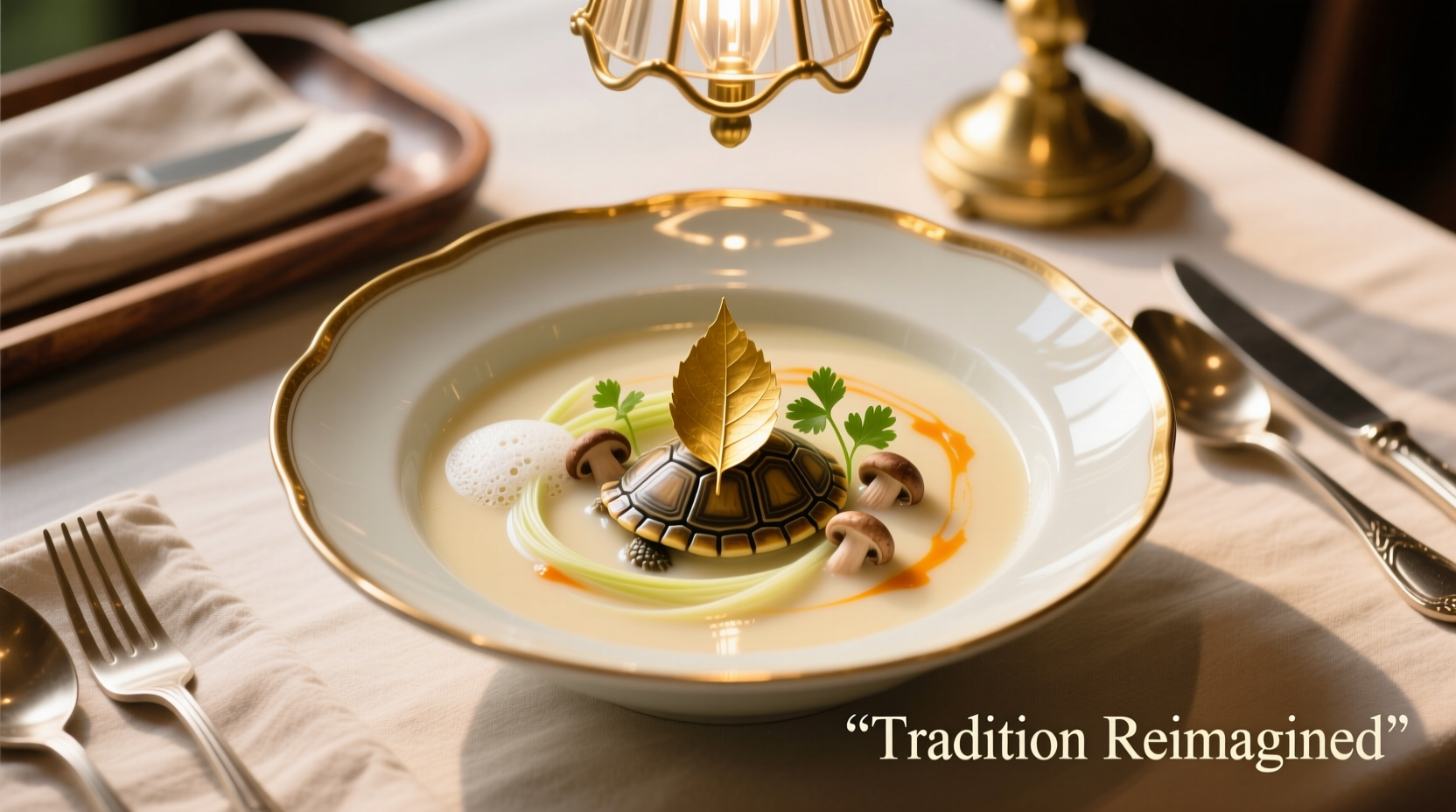
Turtle soup, in its classical form, is a savory, dark-hued broth made from simmering turtle meat—historically freshwater species such as the common snapping turtle or diamondback terrapin—with mirepoix (onions, carrots, celery), bay leaves, peppercorns, and often fortified with Madeira, sherry, or port wine. The result is a deeply flavored, gelatin-rich stew known for its complex umami and slightly gamey notes.
The “creamy twist” diverges from the clear-broth style by introducing thickening agents that lend a smooth, rich mouthfeel. This can be achieved through a roux, cream reduction, puréed vegetables, or egg yolks tempered into the hot liquid. Some versions even incorporate bone marrow or liver pâté for added silkiness and depth. While purists may argue that cream dulls the sharp savor of authentic turtle soup, the creamy rendition appeals to modern preferences for luxurious textures and rounded flavors—particularly in colder months or formal dining settings.
Culinary historians trace turtle soup back to at least the 18th century, where it appeared in British cookbooks and later gained popularity in the American South, especially around Louisiana and the Chesapeake Bay. It became a staple of upscale restaurants and holiday tables, often served with a splash of sherry poured tableside. Over time, canned turtle meat (notably brands like Campbell’s) brought the dish within reach of middle-class households, though quality varied widely.
Today’s creamy adaptation reflects broader shifts in food ethics, sustainability, and technique. With wild turtle populations under pressure and many species protected, most modern recipes use substitute proteins or focus on flavor replication rather than literal authenticity. The creamy element not only enhances indulgence but also helps bridge the gap when using alternative bases, ensuring the dish remains satisfying and cohesive.
Key Characteristics
| Characteristic | Description |
|---|---|
| Flavor Profile | Deeply savory, earthy, slightly metallic (from iron-rich meat), with herbal undertones and optional wine complexity. |
| Aroma | Rich, meaty bouquet enhanced by sautéed onions, thyme, and fortified wine; toasted nuttiness if roux is used. |
| Color/Form | Dark amber to mahogany base; creamy versions appear opaque and luscious due to emulsification. |
| Texture | Velvety and smooth in creamy iterations; traditional versions may include tender chunks of meat and connective tissue. |
| Culinary Function | Starter course, winter comfort food, ceremonial dish (e.g., Christmas, New Year’s Eve). |
| Shelf Life | 3–4 days refrigerated; up to 3 months frozen (cream-based versions may separate slightly upon thawing). |
Practical Usage: How to Make Creamy Turtle Soup
Creating a successful creamy turtle soup hinges on layering flavors, managing texture, and balancing richness. Whether working with real turtle meat (where legally and ethically sourced), oxtail, beef cheek, or a plant-based alternative, follow these steps for optimal results:
- Build a Flavor Base: Sauté diced onions, carrots, and celery in butter or duck fat until softened. Add minced garlic, fresh thyme, and a bay leaf. For deeper color and taste, consider adding tomato paste and cooking it for 2–3 minutes to caramelize slightly.
- Brown the Protein: If using meat, sear pieces thoroughly before adding to the pot. Browning develops fond—the browned bits stuck to the pan—which forms the foundation of flavor when deglazed with stock or wine.
- Simmer Slowly: Cover with water or high-quality beef/vegetable stock. Simmer for 2–4 hours depending on the cut. Oxtail, for example, benefits from low-and-slow cooking to break down collagen into gelatin.
- Strain and Clarify (Optional): For a refined texture, strain the broth and defat carefully. Reserve tender meat pieces for later addition.
- Create the Creamy Element: Choose one of several methods:
- Roux-thickened: Melt equal parts butter and flour over medium heat, cook for 3–5 minutes (blond roux), then whisk in hot broth gradually.
- Cream-enriched: Stir in heavy cream or half-and-half during final simmer. Temper first to prevent curdling.
- Purée method: Blend roasted parsnips, celery root, or potatoes into the broth for natural thickness and subtle sweetness.
- Finish with Wine and Seasoning: Off heat, stir in 1–2 tablespoons of dry sherry or Madeira. Adjust salt, white pepper, and a pinch of cayenne for warmth.
- Incorporate Meat and Serve: Return shredded meat to the soup. Garnish with chopped hard-boiled egg, croutons, or chives.
Pro Tip: To maintain emulsion in cream-based soups, avoid boiling after dairy is added. Keep below 180°F (82°C). If using egg yolks as thickener, temper them slowly with hot broth before reintroducing to the pot.
Variants & Types
The creamy twist on turtle soup manifests in multiple forms, each suited to different occasions, dietary needs, and regional influences:
- Classic Creamed Version: Uses roux and heavy cream, finished with sherry. Common in mid-20th-century American diners and retro cocktail parties.
- Modern Rustic Style: Relies on puréed vegetables instead of dairy for thickness. Ideal for lactose-intolerant diners or those seeking lighter fare without sacrificing body.
- Vegetarian Interpretation: Employs mushrooms (especially shiitake and oyster), smoked paprika, soy sauce, and kombu to mimic the umami depth of turtle meat. Finished with coconut milk or cashew cream for richness.
- Luxury Bone Marrow Infusion: Adds roasted bone marrow during the final stages, lending an opulent silkiness and intense savoriness. Favored in fine-dining adaptations.
- Canned Turtle Adaptation: When using commercially available canned turtle meat (rare but still found in specialty markets), poach gently in stock, then fold into a cream sauce enriched with Madeira.
Choosing the right variant depends on context. For family dinners, a vegetable-purée base ensures accessibility. For entertaining, the roux-and-cream model delivers visual drama and decadence. Vegetarian versions shine in progressive menus, showcasing how plant-based ingredients can emulate complex animal-derived flavors.
Comparison with Similar Ingredients
Turtle soup—especially in creamy form—is sometimes confused with other rich, brown soups. Understanding distinctions helps refine execution and expectations.
| Soup Type | Base Ingredient | Texture | Wine Finish? | Key Difference |
|---|---|---|---|---|
| Creamy Turtle Soup | Turtle, oxtail, or mushroom substitute | Smooth, velvety, full-bodied | Yes (sherry/Madeira) | Distinctive gamey/umami core; historically tied to specific protein |
| Oxtail Soup | Oxtail | Gelatinous, chunky | Rarely | Lacks wine finish and cream integration; more rustic presentation |
| Vichyssoise | Potato, leek | Cold, creamy | No | Served chilled; lacks meatiness and wine complexity |
| French Onion (Gratinéed) | Caramelized onions, beef broth | Brothy with cheesy crust | No | Sweet-savory profile; open texture vs. uniform creaminess |
| Mushroom Velouté | Mushrooms, velouté sauce | Smooth, light cream | Occasionally | Less earthy intensity; no traditional wine flambé element |
The defining hallmark of creamy turtle soup remains its layered umami, derived either from actual turtle meat or skillful substitution, combined with the ritualistic addition of fortified wine at the end. Unlike generic cream soups, it carries historical weight and sensory complexity that elevate it beyond mere sustenance.
Practical Tips & FAQs
Can I make creamy turtle soup without real turtle meat?
Yes. Oxtail, beef cheek, or short ribs are excellent substitutes, offering similar collagen content and deep flavor. Simmer for 3+ hours until fork-tender. For vegetarian versions, use a mix of dried porcini, cremini mushrooms, tamari, liquid smoke (sparingly), and nutritional yeast to build depth.
Is sherry essential?
While not strictly mandatory, sherry—or preferably Madeira—is a signature component. It adds oxidative nuttiness that complements the meat’s richness. Substitute with dry vermouth or a touch of balsamic glaze if unavailable, though the character will shift.
How do I prevent curdling when adding cream?
Always temper cream by slowly whisking in a small amount of hot soup before pouring it back into the main pot. Keep the temperature below simmering. Avoid acidic ingredients until after dairy is incorporated.
Can I freeze creamy turtle soup?
Dairy-based versions may separate upon thawing due to fat destabilization. For best results, freeze the base without cream, then add fresh dairy when reheating. Puréed vegetable versions freeze exceptionally well.
What side dishes pair well?
Given its richness, serve with crisp contrasts: watercress salad with lemon vinaigrette, pickled vegetables, or a simple green garnish. Crusty bread or artisan crackers help cut through the fat. For a full-course meal, follow with roasted poultry or grilled fish.
How can I enhance the “turtle-like” flavor?
Use a combination of ingredients: a small piece of raw beef liver (simmered and removed), dash of fish sauce, or a strip of kombu seaweed during cooking. These contribute iron-rich, oceanic notes reminiscent of turtle meat.
Storage Tip: Cool soup quickly and store in airtight containers. Refrigerate for up to four days. Reheat gently over medium-low heat, stirring frequently. Skim any surface fat before serving if desired.
“The true test of a great turtle soup isn’t in the rarity of the ingredient, but in the persistence of flavor. If it lingers on the palate like memory, you’ve done it right.” — Chef Eleanor Whitmore, former curator, National Culinary Archive
Summary & Key Takeaways
The creamy twist on traditional turtle soup represents a thoughtful evolution of a historic dish—one that respects its roots while embracing modern values and techniques. By focusing on texture, depth, and balance, cooks today can recreate the luxury and intrigue of turtle soup without relying on ecologically sensitive sources.
Key points to remember:
- The essence of turtle soup lies in its deep, gelatinous umami—not necessarily the meat itself.
- Creaminess can be achieved through roux, dairy, or vegetable purées, each offering distinct advantages.
- Fortified wines like Madeira or sherry are nearly non-negotiable for authentic finish.
- Oxtail, mushrooms, and bone marrow are effective substitutes that deliver comparable richness.
- Temperature control is critical when incorporating dairy to prevent curdling.
- Freeze broth-only versions for longer storage; add cream fresh upon reheating.
This dish invites experimentation. Try a smoked almond purée for nutty depth, or finish with a swirl of truffle oil for contemporary flair. However you adapt it, the goal remains: a bowl that warms, satisfies, and tells a story of culinary continuity.
Ready to revive a classic? Start with a batch of homemade stock, choose your protein wisely, and let time do the rest.








