In the early 17th century, as European powers expanded their reach across the Atlantic, England sought to strengthen its colonial presence in North America. Among the most significant of these ventures was the founding of the Maryland colony in 1634. Unlike some colonies driven purely by economic motives or Puritan ideals, Maryland emerged from a complex blend of religious, political, and economic factors. Understanding why the Maryland colony was started requires examining the motivations of its founder, the broader context of English colonialism, and the social conditions of the time. This article explores the key reasons behind Maryland’s establishment, shedding light on how religion, land ownership, and strategic planning shaped one of the original thirteen colonies.
Religious Freedom: A Haven for English Catholics
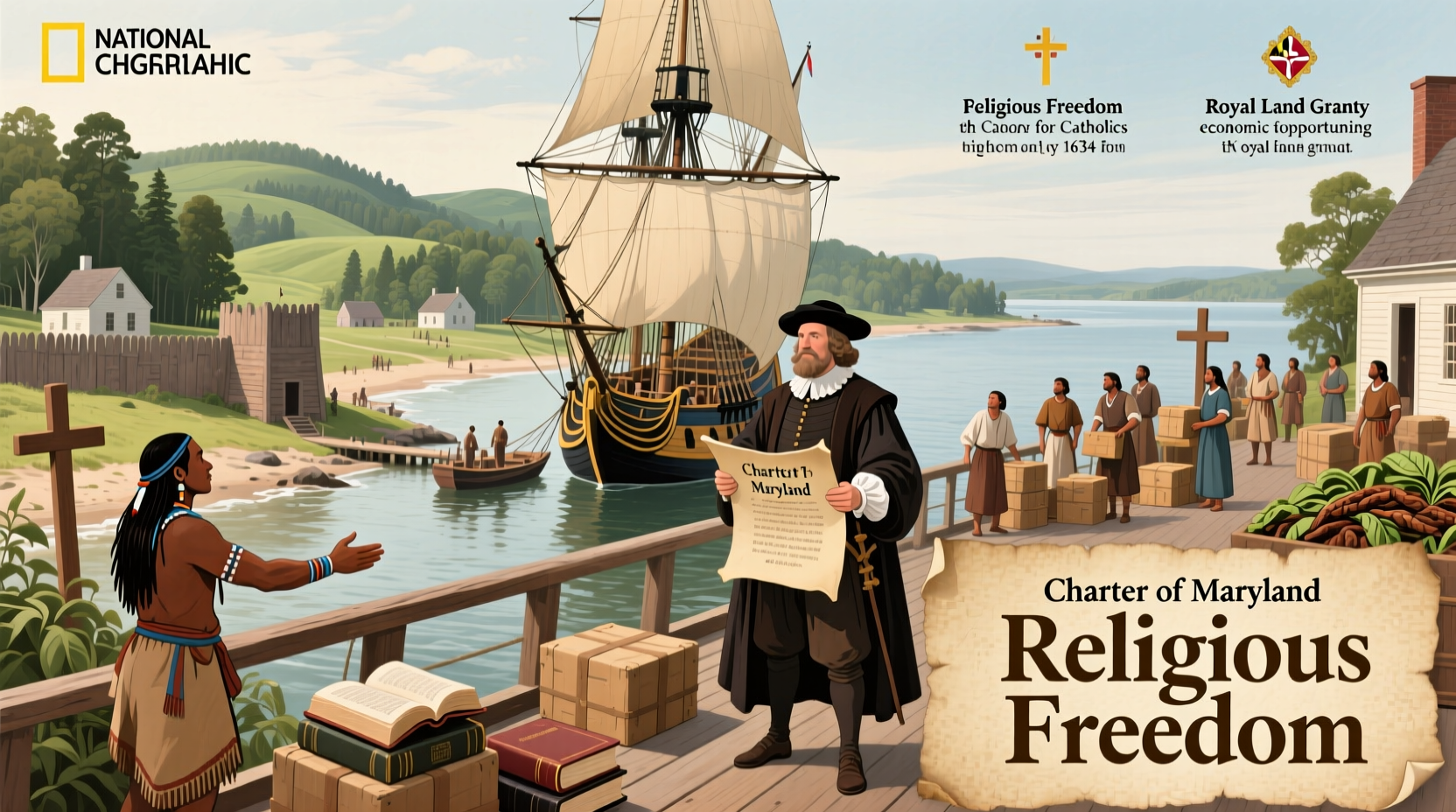
One of the most defining reasons for the founding of Maryland was the pursuit of religious tolerance, particularly for English Catholics. In 17th-century England, Catholics faced severe legal and social restrictions under the Penal Laws, which barred them from holding public office, attending Catholic services, or educating their children in their faith. Despite being loyal subjects, they were often viewed with suspicion due to political tensions with Catholic powers like Spain and France.
George Calvert, the first Lord Baltimore, was a prominent Catholic convert who had served in high positions within the English government. After resigning over his faith, he turned his attention to colonization as a way to create a refuge where Catholics could worship freely without fear of persecution. Although George Calvert died before the colony was established, his son Cecil Calvert inherited the charter and carried out his father’s vision.
Maryland became notable for enacting the Maryland Toleration Act of 1649, which legally protected the right of Trinitarian Christians to practice their religion—a groundbreaking step toward religious liberty in colonial America. While limited in scope (it did not extend to non-Christians or those denying the divinity of Jesus), it laid an early foundation for pluralism in the New World.
“Maryland was conceived not merely as a commercial venture, but as a sanctuary where conscience could be free.” — Dr. Rebecca Holloway, Colonial Religious Historian
Economic Opportunity and Land Expansion
Beyond religious motives, economic incentives played a crucial role in Maryland’s founding. Like other colonies, Maryland offered the promise of fertile land, agricultural prosperity, and access to valuable natural resources. The Chesapeake Bay region provided excellent conditions for growing tobacco, which quickly became the colony’s cash crop and primary export.
The Virginia colony, founded earlier in 1607, had already demonstrated the profitability of tobacco cultivation. However, its population was predominantly Protestant, and opportunities for Catholic landowners were limited. By establishing Maryland, the Calverts aimed to secure large tracts of land under proprietary control, granting them both wealth and influence. As proprietors, the Calverts had near-feudal authority over the colony, collecting rents and distributing land to settlers in exchange for loyalty and labor.
Tobacco farming required extensive labor, leading to the development of indentured servitude and, eventually, the institution of slavery. Over time, Maryland’s economy became deeply intertwined with plantation agriculture, mirroring patterns seen in neighboring Virginia.
Tip: When studying colonial motivations, consider both stated ideals (like religious freedom) and underlying economic interests—they often coexisted.Political Strategy and Proprietary Governance
The establishment of Maryland also reflected England’s evolving approach to colonial administration. Rather than direct crown control, King Charles I granted the colony as a proprietary charter to Cecil Calvert in 1632. This model allowed private individuals or families to govern colonies with considerable autonomy, reducing the financial and administrative burden on the monarchy.
The Calverts’ Catholic background made this arrangement politically delicate. To maintain royal favor and avoid backlash, they carefully balanced Catholic leadership with a majority Protestant population. Early governors were often Protestant, and policies were designed to reassure English authorities that Maryland would remain loyal to the Crown.
This hybrid governance structure enabled stability while advancing Catholic interests discreetly. It also allowed for experimentation in colonial policy, including early attempts at representative government through the Maryland Assembly, which included elected representatives from various counties.
Timeline of Key Events in Maryland’s Founding
- 1625: George Calvert petitions King James I for a colonial charter in North America.
- 1632: King Charles I grants the charter for Maryland to Cecil Calvert after George’s death.
- 1634: The ships Ark and Dove arrive at St. Mary’s City; the first settlement is established.
- 1649: The Maryland Toleration Act is passed, guaranteeing religious freedom for Christians.
- 1654–1658: Religious conflict leads to temporary revocation of Catholic rights during Puritan rule.
- 1692: After the Glorious Revolution, Maryland becomes a royal colony under direct crown control.
Comparison: Motivations Across Early Colonies
| Colonial Region | Primary Motivation | Religious Focus | Economic Base |
|---|---|---|---|
| New England (e.g., Massachusetts) | Religious separatism | Puritan orthodoxy | Fishing, trade, small farms |
| Middle Colonies (e.g., Pennsylvania) | Religious tolerance & commerce | Quaker-led pluralism | Grain, trade, skilled crafts |
| Chesapeake (Virginia & Maryland) | Profit & land expansion | Anglican dominance; Maryland added Catholic refuge | Tobacco plantations |
| Southern (e.g., Carolina) | Plantation economy | Varied, Anglican-leaning | Rice, indigo, slavery-based |
A Real Example: The Settlement of St. Mary’s City
When the first settlers arrived in March 1634 aboard the Ark and Dove, they landed on the western shore of the Chesapeake Bay, near the territory of the Yaocomico people, a subgroup of the Piscataway Confederacy. Instead of immediate conflict, the colonists negotiated a peaceful agreement with local leaders, acquiring land through trade and diplomacy rather than conquest.
This pragmatic approach helped ensure early survival. The settlers built St. Mary’s City—the first capital of Maryland—as a planned community with homes, a church, and communal spaces. Notably, the initial Catholic settlers shared the settlement with Protestant families, reflecting the colony’s commitment—at least in principle—to coexistence.
Despite this cooperation, tensions arose over time. In 1644, during the English Civil War, Puritan factions in the colony challenged Catholic leadership, culminating in armed conflict. By 1650, Catholics were briefly stripped of voting rights. Yet, the Toleration Act of 1649 marked a recovery of sorts, illustrating both the fragility and resilience of religious ideals in colonial governance.
Frequently Asked Questions
Was Maryland founded solely for religious freedom?
No. While religious freedom for Catholics was a central motivation, economic gain, land speculation, and political ambition were equally important. The Calverts sought to build a profitable colony that could sustain their family’s status and provide opportunity for Catholic gentry.
Did Protestants benefit from religious freedom in Maryland?
Yes. Although created with Catholics in mind, the Maryland Toleration Act of 1649 extended protection to all Trinitarian Christians, including Protestants. This made Maryland one of the few colonies to legally recognize diverse Christian denominations during its early years.
Why was the colony named Maryland?
It was named in honor of Henrietta Maria, the wife of King Charles I. The Latin version of \"Mary\" is \"Maria,\" hence \"Terra Mariae\" or \"Land of Mary.\" Naming the colony after the queen was a diplomatic gesture to secure royal approval despite the Calverts' Catholicism.
Action Checklist: Understanding Colonial Motivations
- Identify the primary founder and their personal motivations (e.g., Calvert’s Catholic faith).
- Analyze the political climate in England at the time of founding.
- Examine the economic potential of the region (soil, climate, trade routes).
- Review the type of colonial charter (royal, proprietary, or corporate).
- Assess the religious composition of early settlers and official policies.
- Consider interactions with Indigenous populations and their impact on settlement patterns.
Conclusion: Legacy of Maryland’s Founding Principles
The founding of the Maryland colony was shaped by a convergence of religious aspiration, economic ambition, and political calculation. While often remembered for its role in advancing religious tolerance, Maryland was never a utopia—its history includes periods of conflict, inequality, and exclusion. Nevertheless, its early commitment to religious coexistence set a precedent that influenced later American values.
Today, Maryland stands as a testament to the complexity of colonial beginnings. Its story reminds us that historical events are rarely driven by a single cause. By examining the full spectrum of motivations—personal, spiritual, and economic—we gain a deeper understanding of how early decisions shaped the trajectory of a nation.
💬 What lessons from Maryland’s founding resonate most in today���s discussions about religious freedom and inclusion? Share your thoughts and continue the conversation.