For more than a century, the second Monday in October was widely recognized across the United States as Columbus Day—a federal holiday commemorating Christopher Columbus’s 1492 arrival in the Americas. But in recent decades, that tradition has shifted dramatically. In cities and states from coast to coast, Columbus Day is being replaced or rebranded as Indigenous Peoples’ Day. The change reflects a broader cultural reckoning with history, colonialism, and whose stories are honored in public life.
This transformation isn’t just symbolic. It’s rooted in decades of advocacy by Native American communities, historians, educators, and activists who argue that celebrating Columbus overlooks the devastating consequences of European colonization on Indigenous populations. As awareness grows, so does the momentum to recognize the resilience, cultures, and contributions of Native peoples instead.
The Historical Context of Columbus Day
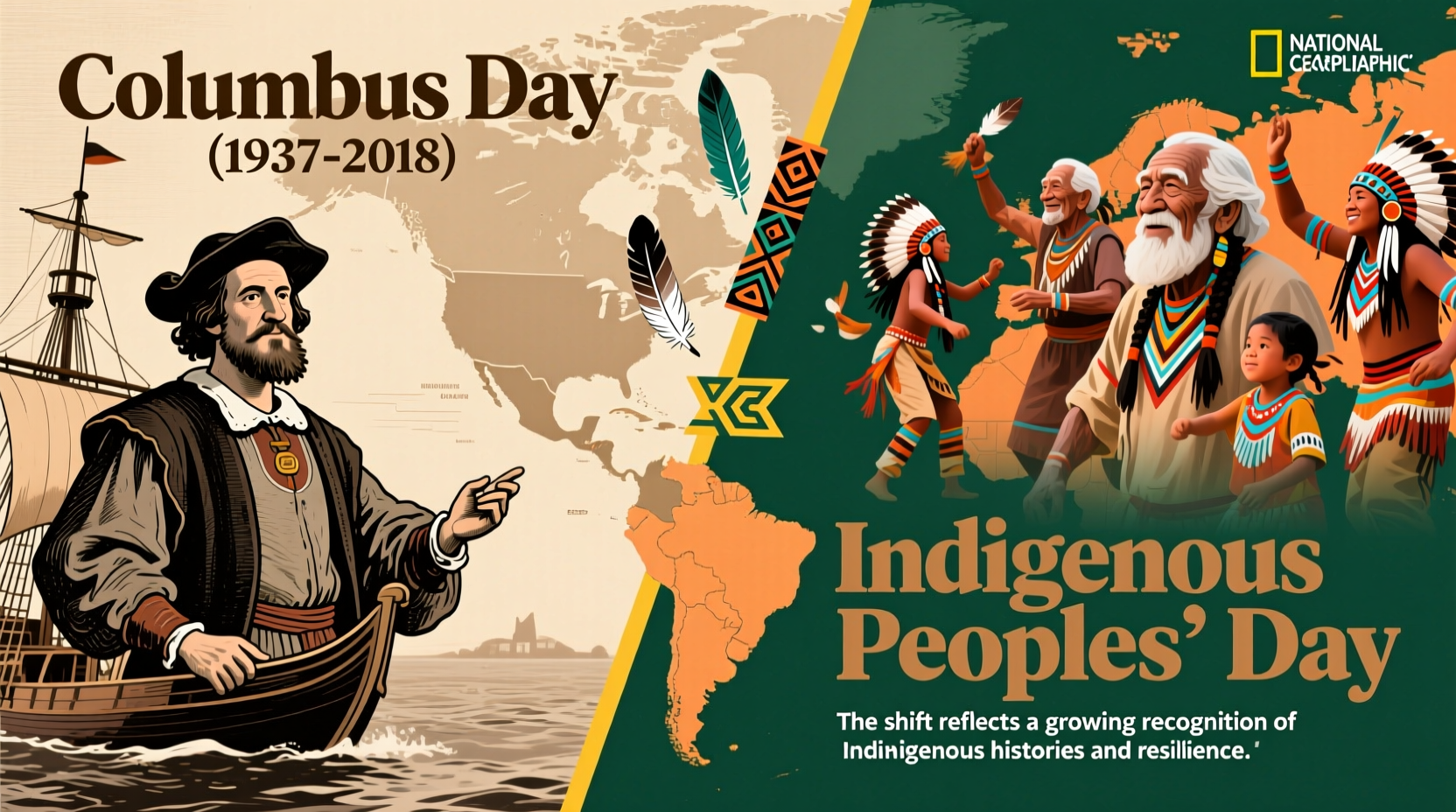
Columbus Day became a national holiday in the U.S. in 1937, largely due to lobbying by Italian-American groups seeking recognition during a time of widespread discrimination. Columbus, though never setting foot in what is now the continental U.S., was embraced as a figure of Italian heritage and exploration.
For many years, the narrative around Columbus focused on discovery, bravery, and the “opening” of the New World. Schoolchildren recited rhymes about the Niña, Pinta, and Santa María. Yet this simplified version ignored critical truths: Columbus’s voyages initiated centuries of forced assimilation, disease, displacement, and violence against Indigenous communities.
Historical records show that under Columbus’s governance in the Caribbean, entire populations were enslaved, tortured, and killed. The Taíno people of Hispaniola, for example, saw their numbers plummet from an estimated 60,000 to near extinction within a few decades of contact.
“Celebrating Columbus means celebrating the beginning of a system of exploitation and erasure. We’re not asking to erase history—we’re asking to tell it fully.” — Dr. Roxanne Dunbar-Ortiz, historian and author of *An Indigenous Peoples’ History of the United States*
The Rise of Indigenous Peoples’ Day
The push to reframe the holiday began in earnest at the 1977 United Nations Conference on Indigenous Rights, where delegates first proposed an international day honoring Native peoples. Decades later, that vision took root locally in the U.S.
In 1990, Berkeley, California, became the first city to officially replace Columbus Day with Indigenous Peoples’ Day. The decision followed protests and educational campaigns led by local tribal leaders and community organizations. Other cities soon followed—Minneapolis, Seattle, Portland, and Austin among them.
By 2021, President Joe Biden issued the first federal proclamation recognizing Indigenous Peoples’ Day, stating: “Today, we honor the invaluable contributions and resilience of Indigenous peoples.” While Columbus Day remains a federal holiday, the presidential acknowledgment marked a turning point in national consciousness.
As of 2024, over a dozen states—including Alaska, Hawaii, New Mexico, and Vermont—and more than 150 cities no longer observe Columbus Day. Instead, they use the day to celebrate Native cultures through events, educational programs, and land acknowledgments.
Why the Shift Matters: Beyond Symbolism
Changing a holiday’s name may seem like a small gesture, but it carries profound cultural weight. Public holidays shape collective memory—they signal what a society values and whom it remembers.
For Indigenous communities, the replacement of Columbus Day is part of a larger movement toward truth-telling and justice. It acknowledges that the arrival of Europeans was not a moment of “discovery” for people who had lived on the continent for tens of thousands of years, with complex societies, governance systems, and spiritual traditions.
Moreover, the shift opens space for education. Schools that once taught a one-dimensional account of Columbus are increasingly incorporating lessons about pre-Columbian civilizations, the impacts of colonization, and contemporary Native issues—from treaty rights to environmental stewardship.
Tip: When discussing this topic, center Native voices. Seek out books, documentaries, and speakers from Indigenous communities to understand the full context.A National Comparison: How Cities and States Are Responding
| Region | Status | Notes |
|---|---|---|
| California | Indigenous Peoples’ Day (statewide) | Officially adopted in 2019; schools emphasize Native history |
| Texas | Columbus Day observed | Some cities like Austin recognize Indigenous Peoples’ Day locally |
| Minnesota | Indigenous Peoples’ Day (state recognizes, not a legal holiday) | Strong advocacy from Dakota and Ojibwe nations |
| New York | Mixed observance | State observes Columbus Day; NYC public schools closed for Indigenous Peoples’ Day |
| Hawaii | Native Hawaiian Day (since 1990) | Never celebrated Columbus; focuses on Kanaka Maoli heritage |
Common Misconceptions and Realities
Some critics argue that replacing Columbus Day erases history or disrespects Italian-American heritage. However, proponents clarify that the goal is not elimination, but expansion.
- Misconception: Indigenous Peoples’ Day erases Columbus from history.
- Reality: It reframes the narrative to include the full scope of history, including Indigenous perspectives.
- Misconception: This change divides communities.
- Reality: Many Italian-American organizations support the shift, emphasizing that heritage can be celebrated without glorifying harmful figures.
“Our ancestors came to America for a better life, not to honor someone who started a chain of oppression. We can celebrate our culture without pretending Columbus was a hero.” — Josephine LaVecchia, Italian-American educator and advocate
How Communities Are Embracing the Change
In Denver, Colorado, the annual Indigenous Peoples’ Day rally features traditional dances, storytelling, and calls for land back initiatives. In Los Angeles, schools host “Truth in History” workshops where students analyze primary sources from both European and Native viewpoints.
One notable case study comes from Maine, which officially adopted Indigenous Peoples’ Day statewide in 2019. The Wabanaki Confederacy worked closely with state officials to design curriculum materials and public ceremonies. Since then, enrollment in Native studies courses has increased by 40% in public high schools.
This collaborative model shows how policy change, when paired with education and community engagement, can foster deeper understanding rather than division.
Step-by-Step: How to Support the Shift in Your Community
- Educate yourself on local Indigenous history and tribes. Learn the names of the original stewards of your area.
- Advocate for change in school boards or city councils. Present research and community testimonials.
- Attend or organize events on Indigenous Peoples’ Day—cultural fairs, speaker panels, or art exhibits.
- Promote accurate media by sharing books, films, and resources created by Native voices.
- Support Native-owned businesses and nonprofits year-round, not just on one day.
Frequently Asked Questions
Is Columbus Day still a federal holiday?
Yes, Columbus Day remains a federally recognized holiday, meaning federal offices and banks are closed. However, federal recognition does not require states or cities to observe it.
Do all Native Americans support changing the holiday?
While there is broad support among tribal nations and Indigenous advocates, opinions vary—as they do in any large community. Some prefer alternative approaches, such as adding Indigenous Peoples’ Day alongside Columbus Day, while others call for complete replacement.
Can Italian-Americans still celebrate their heritage?
Absolutely. Many communities now host separate Italian Heritage festivals in October or November, focusing on food, music, language, and immigration stories without referencing Columbus.
Conclusion: A More Inclusive Future
The evolution from Columbus Day to Indigenous Peoples’ Day is more than a name change—it’s a reflection of a nation growing more honest about its past. It’s a step toward inclusion, healing, and respect for the original inhabitants of this land.
This shift doesn’t diminish the importance of remembering history; it enriches it. By acknowledging both the achievements and the atrocities of the past, we create space for a more truthful, compassionate future.
🚀 Take action today: Learn about the Indigenous tribe(s) on whose land you live, attend a local event on Indigenous Peoples’ Day, or share this story to spread awareness. Change starts with awareness—and you’re now part of the conversation.