Walk into any acclaimed bar in New York, London, Tokyo, or Melbourne, and you’ll likely find a menu featuring the Last Word, the Bee’s Knees, or the Hanky Panky—drinks conceived between 1920 and 1933, when alcohol was banned across the United States. Nearly a century later, these cocktails aren’t museum pieces. They’re ordered nightly, reinterpreted by bartenders, taught in spirits academies, and featured in award-winning bar programs. The Prohibition-era cocktail revival isn’t fading—it’s deepening. Its endurance isn’t accidental. It reflects a convergence of craft values, historical curiosity, sensory intelligence, and a growing public appetite for authenticity over algorithmic novelty.
The Craft Imperative: Precision as Cultural Resistance
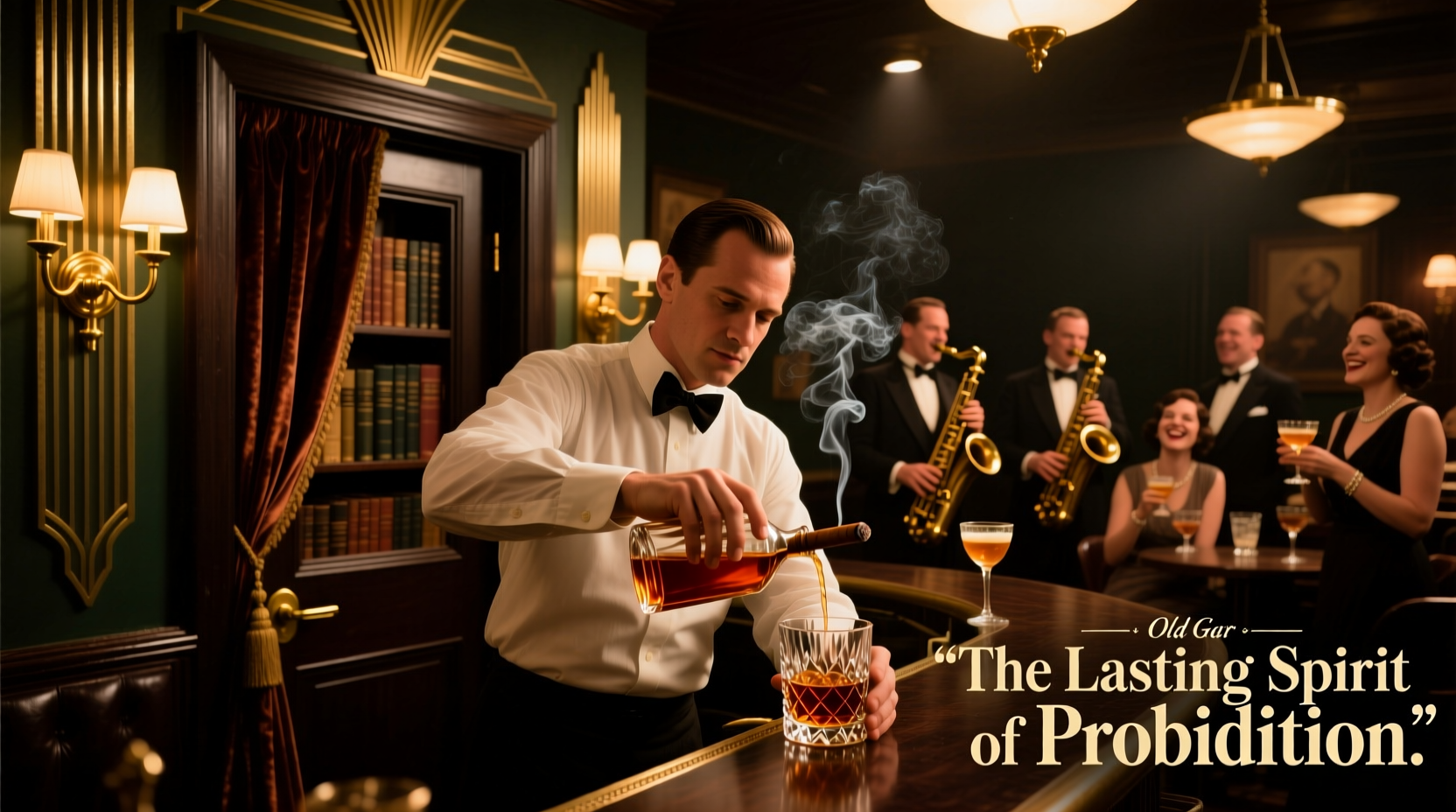
Prohibition didn’t kill cocktail culture—it forced it underground, where survival demanded ingenuity. With poor-quality “bathtub gin,” industrial-grade rye, and scarce citrus, bartenders had to balance harsh spirits with sugar, acid, and herbal modifiers. The result wasn’t compromise—it was refinement under constraint. Drinks like the Aviation (gin, maraschino, crème de violette, lemon) or the Bronx (gin, dry vermouth, sweet vermouth, orange juice) emerged not as whimsical experiments, but as calibrated solutions: acidity to cut ethanol burn, sweetness to mask fusel oils, botanicals to add dimension where base spirits lacked nuance.
Today’s bartenders don’t face bootleg liquor—but they do confront industrialized flavoring, mass-produced syrups, and the pressure to prioritize speed over balance. Revisiting Prohibition-era formulas reintroduces discipline: the exact 2:1:1 ratio of the Daiquiri; the measured ¼ oz of maraschino in the Aviation; the necessity of fresh-squeezed citrus over bottled. This isn’t retro affectation. It’s technical literacy passed down through recipes that function as time-tested equations.
Tip: When making a classic Prohibition-era drink, weigh your ingredients—not just measure by volume. A gram scale reveals how dramatically temperature and viscosity affect pour accuracy, especially with viscous modifiers like gum syrup or crème de violette.Storytelling That Sticks: More Than Just History Lessons
A cocktail menu listing “Old Fashioned” tells one story. A menu noting “The Old Fashioned, as served at Chicago’s Green Mill in 1927—when Al Capone’s men sat two stools down and the bartender stirred each drink for exactly 32 seconds to dilute the high-proof whiskey without losing strength”—that tells a human story. Prohibition-era drinks carry embedded narratives: of speakeasy codes, of immigrant bartenders adapting European techniques to American constraints, of women entering bars as customers (not just performers) for the first time, demanding sophisticated, non-cloying drinks.
This narrative density gives modern bars something rare in an age of fleeting trends: emotional durability. Patrons don’t just order a Martinez—they recall its rumored connection to the birth of the Martini, its use of sweet vermouth and maraschino before dry vermouth dominated, its role as a bridge between 19th-century punches and 20th-century sours. These stories make drinks memorable, shareable, and resistant to trend fatigue.
“The Martinez isn’t a ‘vintage cocktail.’ It’s a document—a chemical record of what bartenders knew about balance, dilution, and botanical synergy in 1884. Every time we stir one correctly, we’re verifying that knowledge.” — David Wondrich, cocktail historian and author of Imbibe!
Ingredient Renaissance: The Real Engine of the Revival
The revival didn’t begin with bartenders—it began with distillers, farmers, and small-batch producers. In the 1990s, few American rye whiskies existed. Today, over 200 rye expressions are commercially available—many explicitly modeled on pre-Prohibition mash bills (95% rye, 5% malted barley). Similarly, once-obscure amari like Cynar and Fernet-Branca saw sales surge as bartenders rediscovered their utility in drinks like the Toronto (rye, Fernet, simple syrup) and the Bamboo (dry sherry, vermouth, orange bitters).
This ingredient renaissance created a feedback loop: better rye made the Sazerac more compelling; revived orange bitters (like Regans’ Orange Bitters No. 6) restored the proper aromatic lift to the Old Fashioned; small-batch maraschino liqueurs from Croatia and Italy brought back the true floral-nutty depth missing from mass-market versions. The Prohibition-era revival didn’t ask consumers to accept substitutes—it empowered them to demand originals.
| Cocktail | Key Prohibition-Era Ingredient | Modern Revival Driver | Impact on Flavor Authenticity |
|---|---|---|---|
| Sazerac | Real absinthe (not pastis) | U.S. absinthe legalization (2007), artisanal distillation in New Orleans & France | Restored anise-forward top note and louche effect critical to aroma and mouthfeel |
| Aviation | Crème de violette | Small-batch U.S. and German producers (e.g., Tempus Fugit, Giffard) | Reintroduced delicate floral complexity—previously replaced with artificial violet syrup or omitted entirely |
| Toronto | Fernet-Branca | Increased import access + bartender education on Italian amaro categories | Enabled accurate bitter-herbal counterpoint to rye’s spice, avoiding medicinal harshness |
| Bee’s Knees | Fresh lemon juice + local honey syrup | Urban beekeeping movements + craft syrup producers (e.g., Small Hand Foods) | Eliminated cloying corn syrup bases; restored bright acidity and nuanced floral sweetness |
A Mini Case Study: The Death & Rebirth of the Southside
In 2010, the Southside (gin, lime, mint, simple syrup) was widely mischaracterized as a “garden-variety mojito knockoff.” Bartenders served it with bruised mint, bottled lime, and excessive sugar—rendering it indistinct and cloying. Then, archival research revealed its true origins: a pre-Prohibition Chicago favorite, likely named after the city’s South Side neighborhood, and historically made with *dry* gin, *freshly squeezed* lime, *hand-muddled* mint (not crushed), and a restrained ½ oz simple syrup.
At The Violet Hour in Chicago, head bartender Jessica T. began serving it stirred—not shaken—to emphasize clarity and spirit-forwardness, then strained into a chilled coupe. She sourced locally foraged mint and used Plymouth Gin for its softer juniper profile. Within six months, orders doubled. Within two years, the Southside appeared on World’s 50 Best Bars lists—not as a novelty, but as a benchmark of balance. Its resurgence wasn’t about “going back.” It was about correcting a decades-long misunderstanding using historical evidence and modern technique.
Why It’s Not Just Nostalgia: The Five-Pillar Framework
Nostalgia fades. What sustains the Prohibition-era revival is structural resilience—built on five interlocking pillars:
- Technical Rigor: Formulas demand precision in ratios, temperature, dilution, and texture—training grounds for foundational bar skills.
- Ingredient Literacy: Each drink acts as a syllabus: the Manhattan teaches vermouth classification; the French 75 teaches effervescence control; the Corpse Reviver No. 2 teaches citrus-oil management.
- Cultural Anchoring: These drinks connect patrons to tangible history—not abstract “the Roaring Twenties,” but specific people, places, and pressures.
- Adaptability: Their frameworks invite iteration: the Last Word inspires herbaceous variations; the Bee’s Knees welcomes seasonal honey infusions; the Sazerac adapts to local ryes and native herbs.
- Ethical Resonance: Reviving forgotten producers (e.g., Luxardo maraschino, Dolin vermouth) supports small-scale, traditional methods—aligning with broader consumer values around sustainability and provenance.
FAQ
Isn’t this revival just elitist? Aren’t these drinks expensive and hard to make at home?
Not inherently. Many Prohibition-era cocktails require only three or four ingredients—and several are notably economical. The Southside uses gin, lime, mint, and sugar. The Jack Rose (applejack, lime, grenadine) relies on affordable, shelf-stable components. What elevates cost is often premium ingredients (e.g., small-batch applejack vs. generic brandy), but substitutions exist: a quality domestic apple brandy works well, and house-made grenadine (pomegranate juice + sugar) costs pennies per ounce. The barrier isn’t expense—it’s awareness of technique. Stirring properly, juicing fresh citrus, and muddling gently are learnable skills, not luxury purchases.
Do these drinks actually taste better than modern ones—or is it just marketing?
They taste *differently*—and that difference is intentional. Modern cocktails often prioritize immediacy: big fruit flavors, heavy sweetness, visual spectacle. Prohibition-era drinks prioritize structure: acid cuts spirit heat, sugar rounds tannins, bitters unify disparate elements. Taste preference is subjective, but these drinks consistently score higher in blind tastings for “balance,” “finish length,” and “drinkability over multiple servings.” Their longevity in professional circles isn’t symbolic—it’s functional.
How can I tell if a bar is authentically engaging with this era—or just slapping “speakeasy” on a generic menu?
Look for evidence of intentionality: Are vermouths listed by brand and style (e.g., “Dolin Dry” vs. “dry vermouth”)? Is there a house-made gum syrup or honey syrup noted? Do they offer a Sazerac with real absinthe rinse—not just “anise-flavored rinse”? Is the Old Fashioned stirred, not muddled? Authentic engagement shows up in specificity, not decor. A velvet rope and dim lighting won’t save a poorly balanced drink—but knowing why the original Toronto used Fernet-Branca instead of Angostura will.
Conclusion: The Revival Isn’t About the Past—It’s About Our Present Standards
The Prohibition-era cocktail revival persists because it answers urgent contemporary needs: for craftsmanship in an age of automation, for transparency in an era of opaque sourcing, for narrative coherence amid fragmented digital experiences, and for sensory honesty when artificial flavors dominate. It’s not a costume party. It’s a masterclass delivered in liquid form—one that teaches patience, respect for ingredients, and the quiet power of restraint. Every properly stirred Sazerac, every precisely balanced Last Word, every thoughtfully garnished Bee’s Knees affirms a belief: that great drinking doesn’t require novelty—it requires attention.
You don’t need a copper mug or a secret password to participate. Start with one drink. Make it twice—once following a modern recipe, once using a 1930s source like Harry Craddock’s The Savoy Cocktail Book. Note the differences in mouthfeel, finish, and how it evolves in the glass. Then adjust one variable: try a different rye, a hand-squeezed lime, a single drop of orange bitters. You’ll taste history—not as something preserved behind glass, but as something alive, evolving, and insistently relevant.
💬 Your turn: Which Prohibition-era cocktail surprised you most when made authentically? Share your experience—or your go-to twist—in the comments. Let’s keep the conversation stirred, not shaken.