
Losing your driver’s license can be a major disruption—whether you rely on driving for work, family responsibilities, or daily errands. A suspension doesn’t always mean permanent loss, but understanding why it happened and what steps to take next is crucial. Across the United States and many other countries, license suspensions are typically administrative actions taken by motor vehicle departments in response to legal, financial, or safety-related violations. This article breaks down the most frequent causes of license suspension, outlines the reinstatement process, and provides practical guidance to help you regain your driving privileges.
Common Reasons for License Suspension
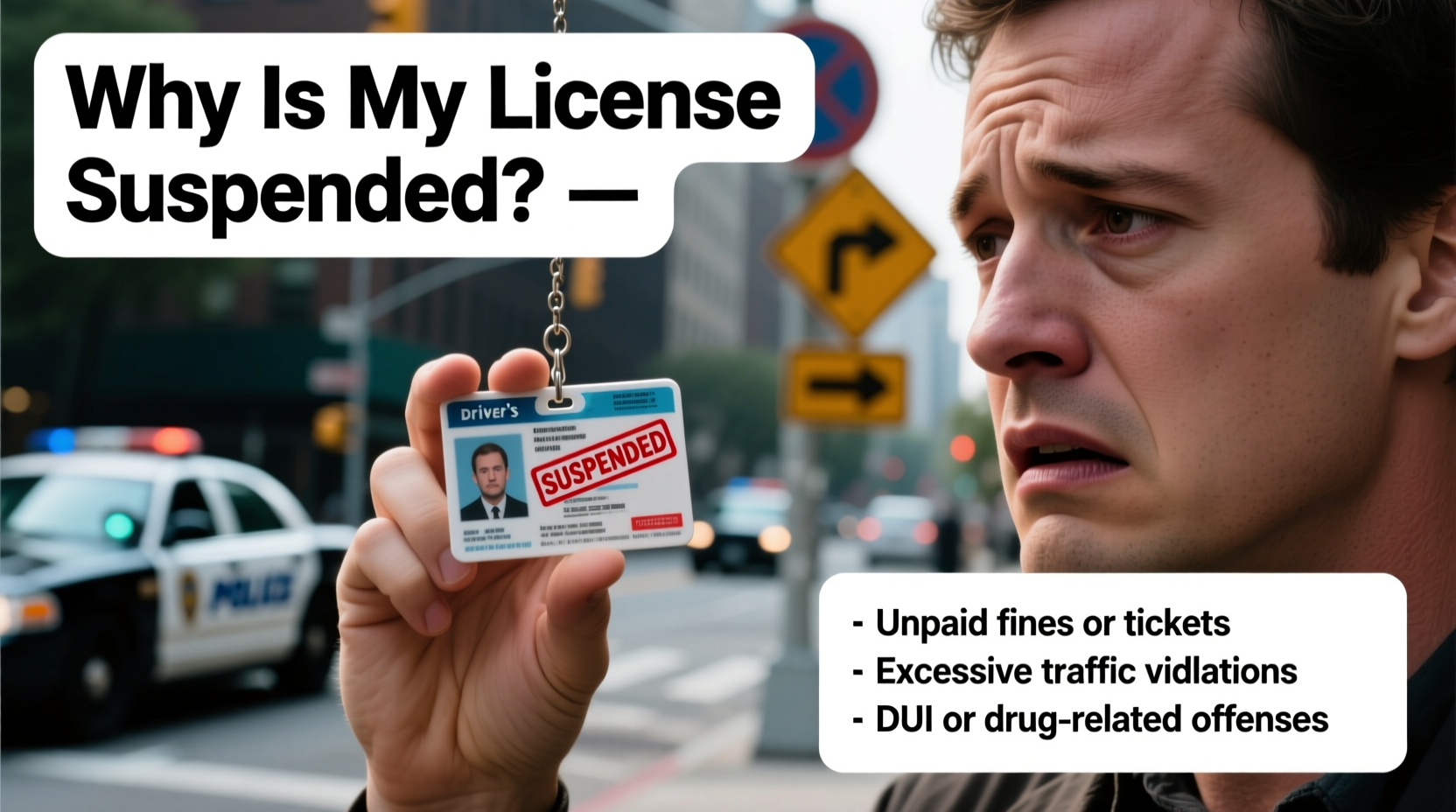
License suspensions are not random; they follow specific rules set by state or national transportation authorities. While regulations vary by jurisdiction, several key triggers appear consistently across regions.
- Traffic violations: Excessive speeding, reckless driving, or accumulating too many points on your driving record within a certain period can lead to automatic suspension.
- DUI/DWI convictions: Driving under the influence of alcohol or drugs remains one of the top reasons for immediate license suspension. Penalties often include mandatory suspension periods, even for first-time offenders.
- Unpaid traffic tickets: Failing to pay fines or appear in court for citations can result in a bench warrant and suspension until resolved.
- Failure to maintain insurance: Most states require proof of liability insurance. Driving without valid coverage—even unintentionally—can trigger a suspension.
- Medical conditions: In some cases, medical issues such as seizures, severe vision impairment, or untreated sleep disorders may prompt a temporary suspension pending evaluation.
- Child support delinquency: Certain states suspend licenses for individuals significantly behind on court-ordered child support payments.
- Failure to appear in court or respond to citations: Ignoring legal notices related to traffic incidents can lead to an automatic suspension.
- Drug offenses: Even non-driving drug convictions (e.g., possession) may impact your license in some jurisdictions.
How to Check Your License Status
The first step toward reinstatement is confirming whether your license is actually suspended and identifying the reason. You can usually do this online via your state’s Department of Motor Vehicles (DMV) or equivalent agency. Most official websites offer a portal where you can enter your driver’s license number and personal details to access your current status, any outstanding requirements, and suspension details.
If online access isn't available, call your local DMV office or visit in person with proper identification. Be prepared to provide your full name, date of birth, license number, and Social Security number.
Step-by-Step Guide to Reinstating Your License
Reinstating a suspended license involves more than just waiting out the suspension period. The process requires proactive effort, documentation, and often fees. Below is a general timeline applicable in most U.S. states:
- Confirm the reason for suspension. Use your DMV account or contact customer service to identify the exact cause.
- Fulfill legal obligations. This may include completing a DUI education program, attending traffic school, resolving unpaid tickets, or appearing in court.
- Pay all required fines and reinstatement fees. These vary widely—some states charge $100, others over $500. Late fees may also apply.
- Provide proof of insurance (SR-22). Many states require high-risk drivers to file an SR-22 form with the DMV, certifying active insurance coverage for 2–3 years.
- Pass a vision test or road exam (if required). Some suspensions require retesting before full privileges are restored.
- Apply for reinstatement formally. Submit forms either online, by mail, or in person depending on your state’s procedures.
- Receive confirmation and updated license. Processing times vary from a few days to several weeks.
Checklist: What You’ll Need to Reinstate Your License
- Valid government-issued ID
- Proof of completion of mandated programs (e.g., DUI school)
- Payment method for fees (credit card, money order, etc.)
- Signed SR-22 or insurance verification form
- Court documents showing resolution of legal matters
- Receipts for paid fines or restitution
- Application for reinstatement (available online or at DMV)
Do’s and Don’ts During Suspension
| Do’s | Don’ts |
|---|---|
| Use public transit, rideshares, or carpooling | Drive any vehicle, even on private property |
| Stay current on insurance and registration | Ignore DMV notices or deadlines |
| Enroll in required courses early | Assume suspension ends automatically after time expires |
| Keep copies of all submitted documents | Delay payment of fines due to financial hardship—seek assistance instead |
“Many people don’t realize that a license suspension stays on their record and affects future insurance rates—even after reinstatement.” — James Rutherford, Former DMV Compliance Officer
Real Example: Maria’s Path to Reinstatement
Maria, a 34-year-old nurse from Texas, had her license suspended after failing to pay three speeding tickets totaling $720. She wasn’t aware that ignoring the notices would lead to suspension. When she tried to renew her registration, she discovered the issue. Initially overwhelmed, she contacted the county court, set up a payment plan, and paid a $125 reinstatement fee. She also filed an SR-22 through her insurer. Within two weeks, her status was cleared, and she received her renewed license. Her experience highlights how unresolved small issues can escalate—and how timely action makes recovery possible.
Expert Advice: Avoiding Future Suspensions
Once your license is reinstated, protecting it should be a priority. Experts recommend setting up automatic reminders for license renewal, insurance payments, and traffic ticket deadlines. If you receive a citation, respond immediately—either by paying, contesting, or requesting a payment plan. For those with medical conditions affecting driving ability, regular check-ups and voluntary reporting can prevent unexpected suspensions.
Tip: Sign up for email alerts from your DMV—they often notify drivers of upcoming renewals, point balances, and policy changes.Frequently Asked Questions
Can I drive while waiting for reinstatement?
No. Driving with a suspended license can lead to additional penalties, including fines, jail time, and extended suspension periods. Some states offer restricted licenses for essential travel (like work or medical appointments), but these must be applied for separately.
How long does a suspension stay on my record?
In most states, suspensions remain on your driving record for 3 to 5 years. Insurance companies may consider them during that time when calculating premiums.
What if I can’t afford the reinstatement fees?
Some states offer payment plans or fee reductions based on income. Contact your DMV directly to inquire about financial hardship programs. Never skip the process entirely—unresolved suspensions often compound over time.
Conclusion: Take Action Now
A suspended license doesn’t have to be a permanent setback. With accurate information and a structured approach, most people can restore their driving privileges within weeks. The key is acting promptly, complying fully with legal requirements, and staying informed throughout the process. Whether your suspension resulted from a missed payment, a DUI, or lapsed insurance, the path forward exists—you just need to follow it carefully.
💬 Have questions about your specific case? Share your situation in the comments—we’ll help point you toward the right resources and next steps.