
As daylight shrinks and temperatures drop, many people find themselves struggling to get out of bed, let alone stay productive. The winter months often bring a quiet but persistent erosion of motivation—one that feels less like laziness and more like an invisible force pulling you toward hibernation. This isn’t just a matter of bad weather or seasonal mood dips; it’s rooted in biology, psychology, and behavioral patterns. Understanding why motivation wanes in winter—and how to counteract it with smart, science-backed strategies—can transform your experience of the season from one of stagnation to steady progress.
The Biological Roots of Winter Motivation Loss
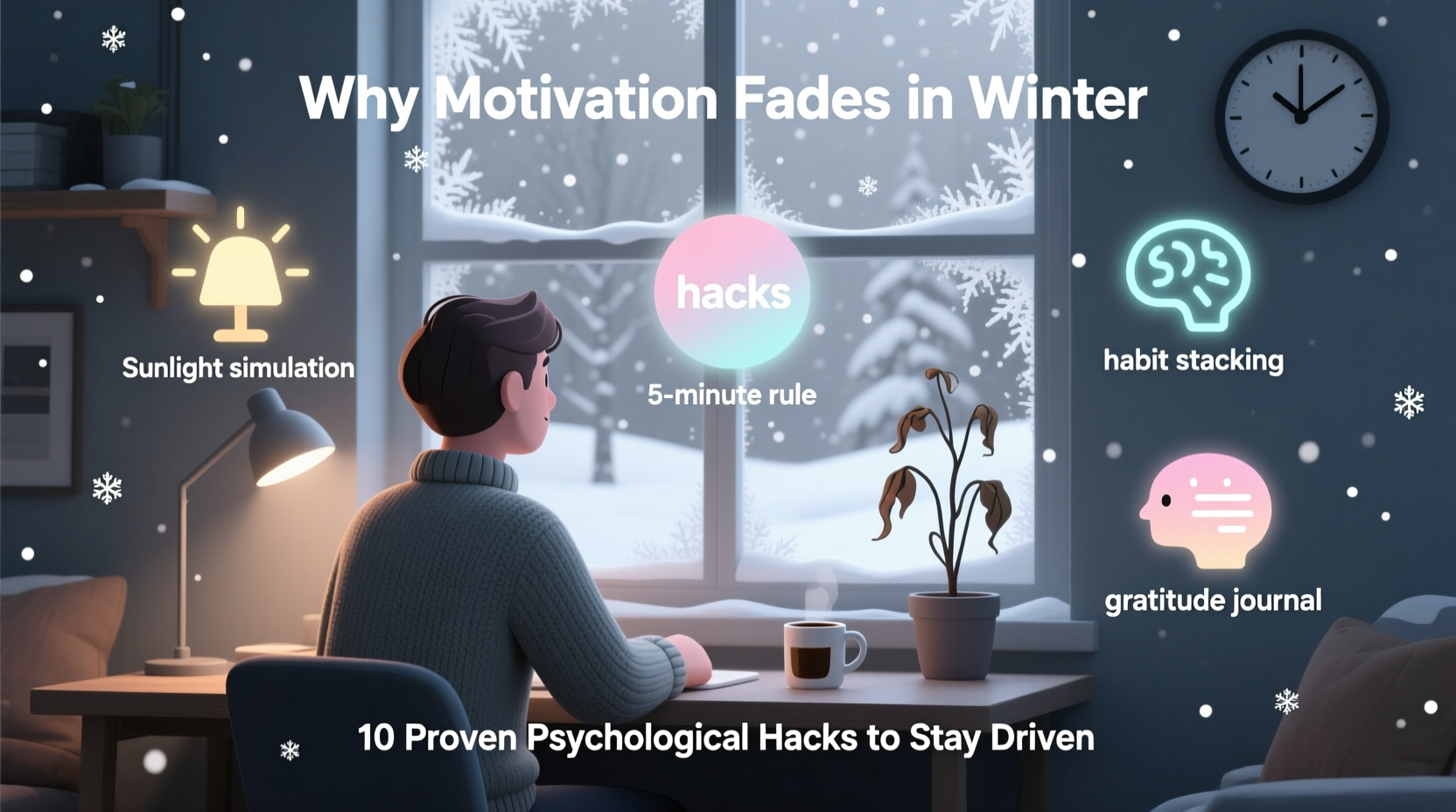
Human beings are deeply influenced by light. Our circadian rhythms—the internal clocks that regulate sleep, energy, and alertness—are synchronized primarily by exposure to natural sunlight. During winter, shorter days mean reduced light exposure, especially in higher latitudes. This shift triggers a cascade of physiological changes.
One key player is melatonin, the hormone responsible for regulating sleep. With earlier sunsets, melatonin production begins sooner in the evening, making people feel drowsy by 6 p.m. At the same time, serotonin—a neurotransmitter linked to mood, focus, and motivation—tends to decrease with less sunlight. Lower serotonin levels are associated with fatigue, low mood, and diminished drive.
These biological shifts aren't flaws—they’re evolutionary adaptations. In pre-industrial times, humans conserved energy during winter when food was scarcer and survival required strategic resource management. Today, however, our modern expectations don’t align with these ancient rhythms. We’re expected to perform at peak levels year-round, creating a mismatch between our biology and lifestyle.
“Winter doesn’t make us lazy—it makes us biologically inclined to slow down. The challenge isn’t willpower; it’s working *with* your body, not against it.” — Dr. Lena Peterson, Cognitive Behavioral Psychologist
Psychological Barriers That Drain Winter Motivation
Beyond biology, several psychological factors contribute to declining motivation in winter:
- Lack of visible rewards: Progress made indoors (e.g., learning a skill, writing, planning) lacks the immediate gratification of outdoor achievements like gardening or hiking.
- Reduced social reinforcement: Fewer spontaneous interactions and outdoor gatherings mean fewer opportunities for encouragement and accountability.
- Cognitive load from discomfort: Cold commutes, dark mornings, and seasonal stress increase mental fatigue, leaving less energy for goal pursuit.
- Negative self-talk: Phrases like “I’ll start again in spring” or “It’s too cold to exercise” become self-fulfilling prophecies.
These subtle forces erode motivation not through dramatic failure, but through slow attrition—small cancellations, postponed tasks, and unmet intentions that accumulate over weeks.
Tip: Reframe winter as a season of incubation, not inactivity. Use this time to build skills, deepen knowledge, and prepare for active seasons ahead.Psychological Hacks to Sustain Motivation All Winter
Motivation doesn’t have to be something you wait for. It can be cultivated deliberately using principles from behavioral psychology and neuroscience. Here are five evidence-based strategies to help you stay on track—even when the skies are gray.
1. Leverage Micro-Goals and the Progress Principle
The Progress Principle, identified by Harvard researchers, shows that small wins create momentum. When you complete even minor tasks, your brain releases dopamine, reinforcing motivation.
In winter, break large goals into micro-actions. Instead of “exercise more,” aim for “put on workout clothes after breakfast.” Success here builds confidence and primes further action.
2. Anchor Habits to Existing Routines (Habit Stacking)
Habits are easier to maintain when tied to existing behaviors. This technique, popularized by James Clear in *Atomic Habits*, uses neural pathways already in place.
For example: “After I pour my morning coffee, I will write three sentences of my journal.” This creates a reliable trigger, reducing reliance on fluctuating willpower.
3. Manipulate Your Environment for Success
Your surroundings shape behavior more than motivation does. In winter, design your space to reduce friction for desired actions.
If you want to read more, leave a book open on the couch. If you plan to exercise, lay out your gear the night before. These cues lower the activation energy needed to begin.
4. Use Light Strategically
Since light regulates circadian rhythm, intentional exposure can reset your internal clock. Spend 15–30 minutes outside within an hour of waking, even on cloudy days. Alternatively, use a 10,000-lux light therapy box for 20–30 minutes each morning.
Studies show consistent light therapy improves alertness, mood, and task persistence in winter months.
5. Practice Implementation Intentions
This strategy involves planning specific responses to anticipated obstacles. Instead of saying, “I’ll try to work out,” say, “If it’s below freezing, then I’ll do a 20-minute indoor yoga video at 7 p.m.”
Research shows people who use implementation intentions are up to 2–3 times more likely to follow through on goals.
Step-by-Step Guide: Building a Winter-Resilient Routine
Follow this seven-day process to restructure your habits for sustained winter motivation:
- Day 1: Audit Your Energy Patterns – Track when you feel most alert and drained over 24 hours. Note lighting, activity, and mood.
- Day 2: Define One Keystone Habit – Choose a small, high-leverage behavior (e.g., morning walk, daily planning) that supports multiple goals.
- Day 3: Design Your Environment – Remove distractions and add cues for your keystone habit (e.g., place shoes by the door).
- Day 4: Create an Implementation Plan – Write if-then statements for common obstacles (e.g., “If it’s snowing, then I’ll stretch for 10 minutes indoors.”)
- Day 5: Schedule Light Exposure – Block 20–30 minutes for morning light, either outdoors or via lamp.
- Day 6: Set Up Micro-Tracking – Use a calendar or app to mark daily completion. Visual progress fuels motivation.
- Day 7: Review and Adjust – Reflect on what worked. Tweak triggers, timing, or tasks for better fit.
Do’s and Don’ts of Winter Motivation
| Do’s | Don’ts |
|---|---|
| Break tasks into 5-minute starters to overcome inertia | Rely solely on willpower without environmental support |
| Use artificial light early in the day to regulate circadian rhythm | Sleep in late on weekends, disrupting your internal clock |
| Plan social accountability (e.g., weekly check-ins with a friend) | Isolate yourself during prolonged indoor periods |
| Celebrate small wins visibly (e.g., checklist, streak tracker) | Wait for motivation to strike before acting |
| Dress warmly and layer up to make outdoor time feasible | Assume lack of motivation means personal failure |
Real Example: How Sarah Regained Momentum in January
Sarah, a graphic designer in Minneapolis, used to dread winter. Each December, her productivity would plummet. Deadlines were missed, gym memberships went unused, and she felt increasingly guilty.
In January, she decided to experiment. Instead of setting vague goals like “be more creative,” she committed to a micro-habit: open her design software and sketch one idea every morning with her coffee. She placed her tablet next to the coffee maker as a visual cue.
She also bought a daylight-simulating lamp and used it during her first hour of work. Within two weeks, she noticed sharper focus and less afternoon fatigue. By February, she had completed three client proposals ahead of schedule and resumed weekend walks.
Her turning point wasn’t a sudden burst of inspiration—it was consistency built on tiny, sustainable actions aligned with her biology.
Frequently Asked Questions
Is low winter motivation a sign of depression?
Not necessarily. While many experience mild seasonal lethargy, clinically significant symptoms—such as persistent sadness, loss of interest, oversleeping, or weight changes—may indicate Seasonal Affective Disorder (SAD). If symptoms interfere with daily life, consult a healthcare provider.
Can exercise really help with winter motivation?
Yes. Physical activity boosts endorphins, increases blood flow to the brain, and enhances sleep quality. Even 10–15 minutes of movement daily can improve energy and focus. Indoor workouts, stair climbing, or dance videos are effective alternatives when going outside is difficult.
How do I stay motivated when everything feels harder?
Shift your mindset from “I should feel motivated” to “I act despite not feeling it.” Action often precedes motivation, not the other way around. Start with the smallest possible step—just opening a document, putting on shoes, or writing one sentence. Momentum builds from motion.
Checklist: Your Winter Motivation Maintenance Kit
- ☑ Assess your daily energy peaks and plan key tasks accordingly
- ☑ Choose one keystone habit to anchor your routine
- ☑ Introduce a light therapy lamp or commit to morning outdoor exposure
- ☑ Set up if-then plans for common winter obstacles
- ☑ Modify your environment to reduce friction for desired behaviors
- ☑ Track progress visually (calendar, app, or journal)
- ☑ Schedule one weekly social check-in for accountability
- ☑ Celebrate small wins with acknowledgment, not just outcomes
Conclusion: Rewire Your Winter, Not Just Endure It
Winter doesn’t have to be a season of lost momentum. By understanding the biological and psychological forces at play, you can design a lifestyle that works *with* your natural rhythms, not against them. Motivation isn’t a fixed trait—it’s a state you can influence through smart behavioral design, environmental tweaks, and compassionate self-awareness.
The goal isn’t to push through winter with gritted teeth, but to adapt, recalibrate, and use this quieter season as a foundation for stronger habits and deeper resilience. Start small. Act consistently. Let progress—not perfection—guide you.
🚀 Ready to reclaim your winter? Pick one psychological hack from this article and implement it tomorrow morning. Share your commitment in the comments or with a friend—accountability starts now.