
The \"bro code\" has long been a cultural shorthand for the unwritten rules governing male friendships—loyalty, silence in certain situations, defending your friends, and prioritizing camaraderie. But in recent years, it’s increasingly viewed with skepticism, even labeled as toxic or exclusionary. Why is something intended to strengthen bonds between men now seen as mean, outdated, or harmful? The answer lies not just in the rules themselves, but in how they’re applied, who they exclude, and the social context in which they operate.
Understanding the bro code requires looking beyond stereotypes. It's not simply about watching sports together or avoiding emotional conversations. At its core, it reflects deeper societal expectations of masculinity—expectations that can both support and undermine healthy relationships.
The Origins and Intent of the Bro Code
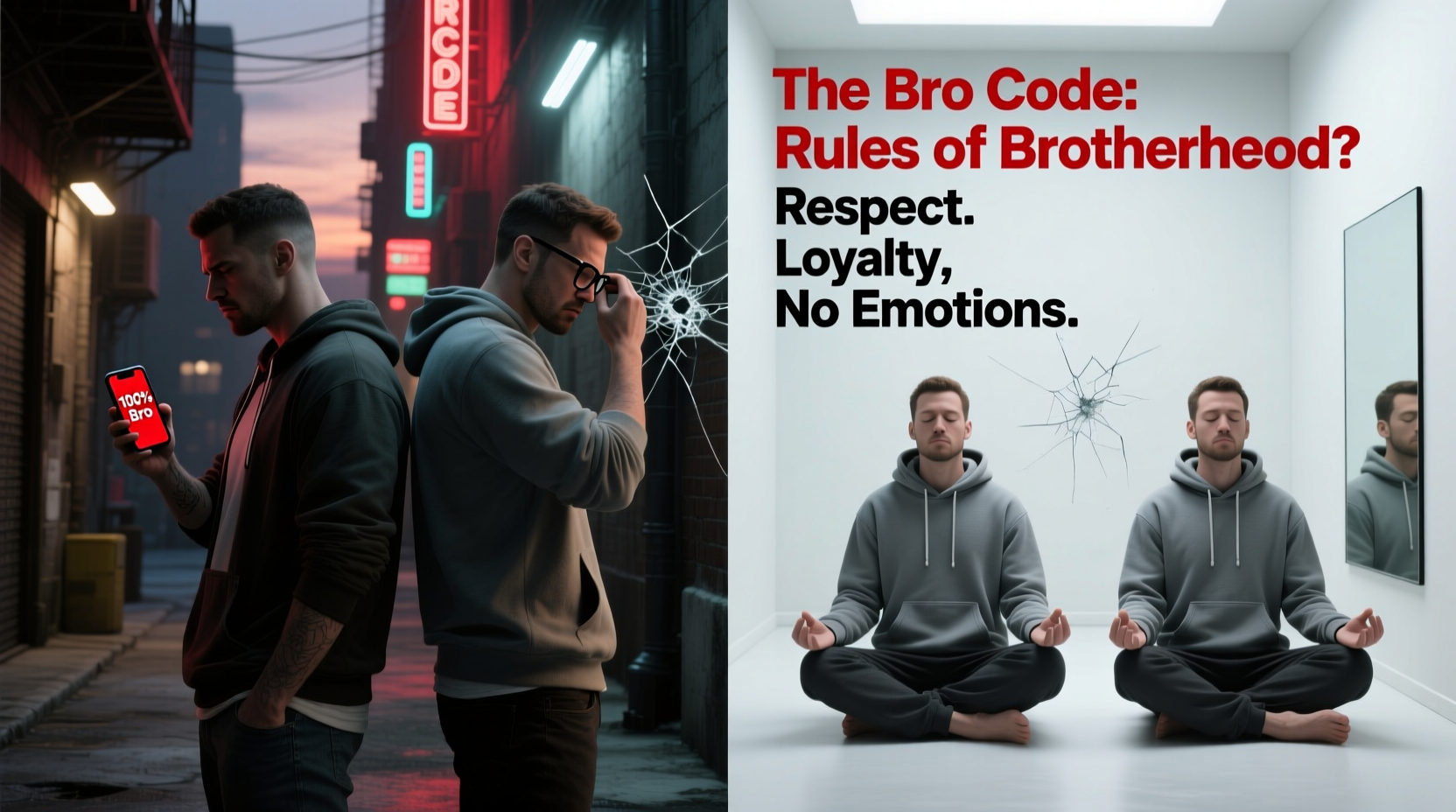
The term “bro code” gained mainstream attention through pop culture, notably the TV show *How I Met Your Mother*, where it was humorously portrayed as a strict set of guidelines for male behavior. In reality, the concept predates television tropes. It evolved from traditional ideas of male loyalty, honor among peers, and group cohesion—values historically emphasized in male-dominated environments like fraternities, sports teams, and military units.
The original intent was positive: to foster trust, protect privacy, and maintain solidarity. For example, not dating a friend’s ex-partner isn’t inherently malicious—it’s a boundary meant to prevent conflict and preserve friendship. Similarly, having each other’s backs during tough times is a sign of deep loyalty.
However, when these principles are enforced rigidly or used to justify poor behavior, the bro code shifts from protective to problematic.
Tip: Healthy loyalty doesn’t require blind allegiance—it means supporting your friends while holding them accountable.When Loyalty Crosses the Line into Complicity
The perception that the bro code is “mean” often stems from situations where it encourages silence or protection of harmful actions. Consider a common scenario: a man makes inappropriate comments about a woman at a party. His friends know it’s wrong but stay silent to avoid conflict or being labeled a “snitch.” This silence, justified under the bro code, becomes complicity.
In such cases, the rule “don’t rat out your bro” transforms from a gesture of loyalty into an enabler of misconduct. Over time, this pattern erodes trust within broader social circles and contributes to cultures where accountability is lacking.
“Loyalty without integrity is just tribalism. True friendship includes the courage to speak up when someone is crossing a line.” — Dr. Marcus Reed, Social Psychologist
This dynamic is especially visible in workplaces, schools, and online communities, where group loyalty can suppress reporting of harassment, bullying, or unethical behavior. The emotional cost isn’t limited to outsiders—it harms the men involved too, reinforcing emotional suppression and fear of vulnerability.
Bro Code vs. Modern Values: A Cultural Clash
The growing criticism of the bro code reflects broader shifts in social values. Today’s conversations around gender equality, consent, emotional intelligence, and inclusivity challenge many assumptions once taken for granted in male peer groups.
For instance, the idea that “bros don’t cry” or “you don’t talk about feelings” conflicts directly with mental health advocacy. Research consistently shows that men who lack emotional support networks are at higher risk for depression, substance abuse, and isolation. Yet the bro code often discourages open communication, equating emotional expression with weakness.
Likewise, exclusivity—another hallmark of traditional bro culture—clashes with modern ideals of diversity and inclusion. When social circles are tightly guarded by unspoken rules that favor certain behaviors (like aggression, competitiveness, or emotional detachment), others—especially those who don’t conform to stereotypical masculinity—are pushed out.
Do’s and Don’ts of a Healthy Male Friendship Framework
| Do’s | Don’ts |
|---|---|
| Support each other emotionally | Mock vulnerability or sensitivity |
| Call out disrespectful behavior | Stay silent to avoid confrontation |
| Respect boundaries, including romantic ones | Use “the code” to justify manipulation |
| Include others without gatekeeping | Exclude people based on rigid norms |
| Encourage personal growth | Enforce conformity to outdated ideals |
A Real-World Example: The Locker Room Incident
At a mid-sized tech company, a junior developer named Jordan overheard two senior team members making derogatory jokes about a female colleague during a post-meeting hangout. He reported the incident to HR, believing it was the right thing to do. Instead of being supported, he was ostracized by the team. One manager told him, “We look after our own. You broke the bro code.”
What followed was a decline in collaboration, subtle sabotage of Jordan’s projects, and increased stress. Meanwhile, the offenders faced minimal consequences. This case illustrates how the bro code, when weaponized, protects individuals over principles—and punishes ethical behavior.
It also highlights the hidden cost: innovation suffers in environments where speaking up is discouraged. Psychological safety, a key driver of high-performing teams, cannot coexist with rigid loyalty codes that prioritize image over integrity.
Rebuilding the Bro Code: A Healthier Model of Male Bonding
This doesn’t mean abandoning male friendships or dismissing the value of loyalty. Instead, it calls for redefining the bro code—not as a set of rigid, exclusionary rules, but as a flexible framework rooted in mutual respect, accountability, and emotional honesty.
Here’s how men can cultivate stronger, more meaningful connections without falling into toxic patterns:
- Prioritize integrity over loyalty – Stand by your friends, but not at the expense of ethics.
- Practice emotional reciprocity – Share your struggles and listen when others do the same.
- Challenge harmful norms – If a joke crosses a line, say so—even if it’s uncomfortable.
- Expand your circle – Build friendships across different backgrounds and expressions of masculinity.
- Model accountability – Admit when you’re wrong and encourage others to do the same.
Checklist: Is Your Male Friendship Culture Healthy?
- Can you express emotions without fear of ridicule?
- Do you feel safe calling out disrespectful behavior?
- Are people outside the “inner circle” welcomed, not judged?
- Is there room for disagreement without betrayal?
- Do your friendships support your personal values?
Frequently Asked Questions
Isn’t the bro code just harmless fun?
Some aspects can be lighthearted, like inside jokes or shared rituals. But when it excuses disrespect, silences dissent, or pressures conformity, it stops being harmless. Context and impact matter more than intent.
Can the bro code coexist with feminism and equality?
Only if it evolves. A modern version respects all individuals, promotes consent, and rejects double standards. Men can have strong bonds without excluding or diminishing others.
What if I want to change but my friends won’t?
Start small. Express your views respectfully, lead by example, and seek out friendships that align with your values. Change often begins with one person willing to speak up.
Conclusion: Redefining Brotherhood for a Healthier Future
The reason the bro code is seen as mean isn’t because male friendship is flawed—it’s because outdated rules have been used to justify silence, exclusion, and avoidance of responsibility. The solution isn’t to discard brotherhood, but to redefine it.
True loyalty means caring enough to challenge, not just cover up. Real strength includes empathy, not just endurance. And lasting friendships thrive on honesty, not hierarchy.
💬 What does healthy male friendship look like to you? Share your thoughts and help reshape the conversation around loyalty, respect, and growth.