
In today’s competitive marketplace, simply having a great product or service isn’t enough. Visibility, trust, and consistent engagement are what separate thriving businesses from those struggling to survive. Advertising plays a central role in achieving these goals. It’s not just about promoting a product—it’s about shaping perception, building relationships, and driving measurable results. For businesses of all sizes, effective advertising can be the catalyst that turns potential into profit.
1. Builds Brand Awareness and Recognition
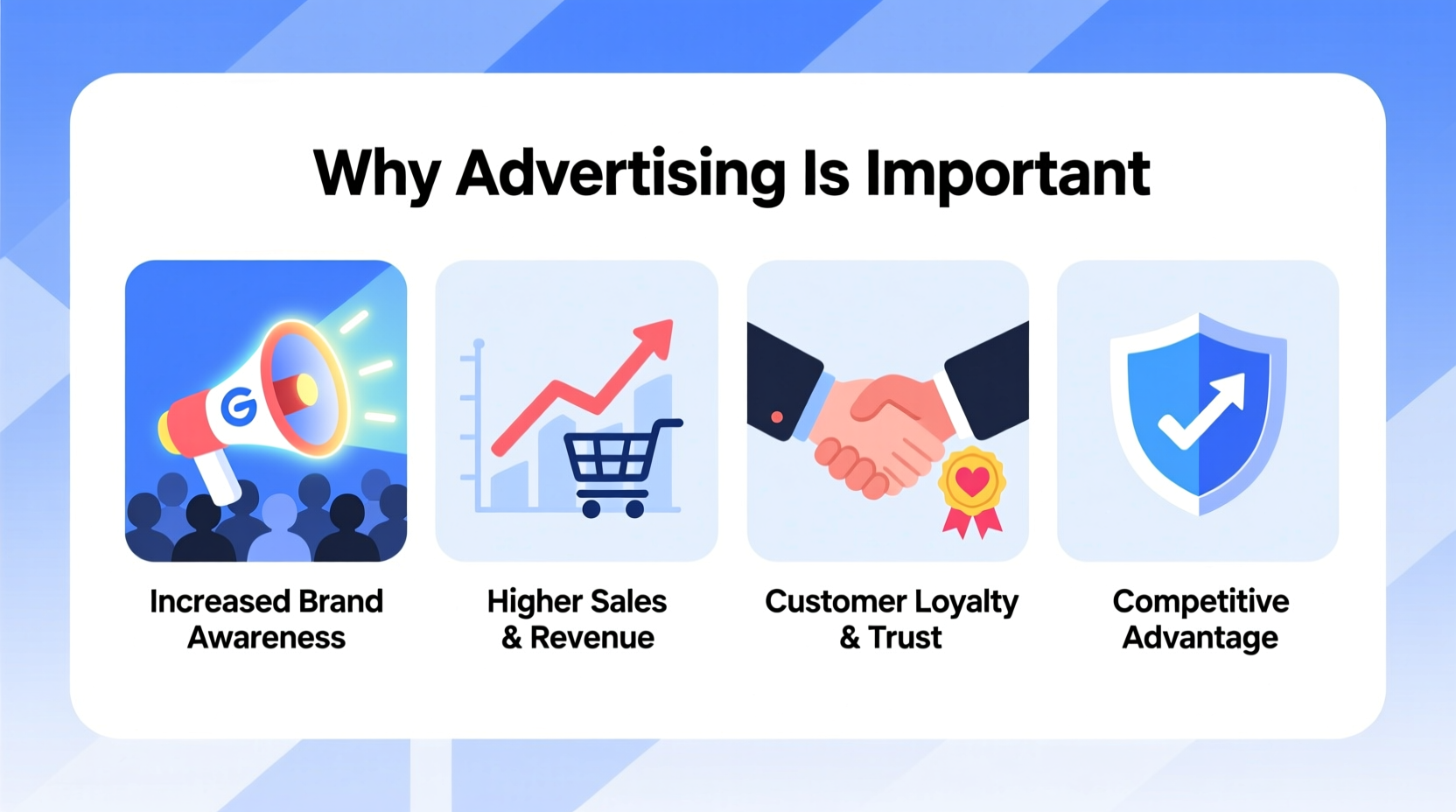
One of the most fundamental reasons advertising matters is its ability to introduce your brand to new audiences and reinforce presence among existing customers. Without consistent visibility, even high-quality offerings risk being overlooked. Advertising ensures your business stays top-of-mind when consumers are ready to make a purchase decision.
Through repeated exposure across platforms—whether digital, print, radio, or outdoor—consumers begin to recognize your logo, messaging, and values. This recognition fosters familiarity, which in turn builds trust. A 2023 Nielsen study found that brands with consistent advertising presence experienced up to 50% higher recall rates than those with irregular campaigns.
Tip: Use consistent visual branding (colors, fonts, tone) across all ads to strengthen recognition.2. Drives Customer Acquisition and Sales Growth
Advertising directly influences consumer behavior by guiding them through the purchasing funnel—from awareness to consideration, and finally to conversion. Targeted ad campaigns can reach specific demographics, interests, and geographic locations, ensuring your message reaches people most likely to become customers.
Paid search ads, for example, allow businesses to appear at the top of Google results when users search for related products. According to WordStream, businesses earn an average of $2 in revenue for every $1 spent on Google Ads. Similarly, social media advertising enables hyper-targeted outreach based on user behavior, increasing the likelihood of engagement and conversion.
Well-crafted calls-to-action (CTAs) in advertisements—such as “Shop Now,” “Get Your Free Quote,” or “Limited-Time Offer”—create urgency and prompt immediate responses, accelerating the sales cycle.
3. Establishes Credibility and Competitive Advantage
Consumers often equate visibility with legitimacy. When a brand appears frequently in trusted media channels or reputable websites, it signals stability and professionalism. This perceived credibility makes customers more comfortable choosing your business over lesser-known competitors.
Advertising also allows companies to highlight their unique selling propositions (USPs), such as superior quality, faster delivery, or exceptional customer service. By clearly communicating what sets them apart, businesses position themselves as leaders in their niche.
“Advertising doesn’t just sell products—it sells confidence. Customers buy from brands they believe in.” — Michael Tran, Marketing Strategist at BrandEdge Consulting
4. Supports Long-Term Business Growth and Market Expansion
Sustainable business growth requires more than short-term promotions. Strategic advertising supports long-term objectives like entering new markets, launching new products, or repositioning a brand. National campaigns help regional businesses scale beyond local boundaries, while digital targeting enables global reach without excessive costs.
For instance, a small artisan coffee roaster in Portland might use Instagram and Facebook ads to test demand in cities like Chicago or Austin before expanding distribution. Data collected from ad performance—click-through rates, conversions, audience insights—provides valuable feedback for refining offerings and strategies.
Additionally, retargeting ads keep past website visitors engaged, bringing them back to complete purchases they may have abandoned. This continuous nurturing increases customer lifetime value and strengthens brand loyalty over time.
Real Example: How a Local Gym Grew Through Targeted Ads
A boutique fitness studio in Denver struggled to attract members despite offering high-quality classes. After launching a targeted Facebook and Google Ads campaign focusing on local professionals aged 28–45 interested in wellness and work-life balance, enrollment increased by 65% within three months.
The campaign highlighted free trial classes, flexible membership options, and success stories from real clients. By using geotargeting and demographic filters, the gym minimized wasted spend and maximized ROI. The owner later noted that advertising didn’t just bring new clients—it helped refine their brand message based on what resonated most with audiences.
5. Provides Measurable Results and Optimizable Strategies
Unlike traditional word-of-mouth or passive marketing efforts, modern advertising offers precise tracking and analytics. Digital platforms provide real-time data on impressions, clicks, conversions, cost per acquisition (CPA), and return on ad spend (ROAS). This transparency empowers businesses to evaluate performance and adjust tactics quickly.
For example, if a video ad underperforms, marketers can tweak the script, visuals, or audience targeting within hours. A/B testing different headlines, images, or landing pages further improves effectiveness over time. This agility ensures budgets are used efficiently and campaigns evolve based on evidence, not guesswork.
| Advertising Metric | What It Measures | Why It Matters |
|---|---|---|
| Click-Through Rate (CTR) | Percentage of viewers who click on an ad | Indicates relevance and appeal of the ad |
| Conversion Rate | Percentage of clicks leading to desired action | Shows effectiveness in driving results |
| Cost Per Acquisition (CPA) | Average cost to gain one customer | Helps assess profitability and budget allocation |
| Return on Ad Spend (ROAS) | Revenue generated per dollar spent on ads | Key indicator of overall campaign success |
Actionable Checklist: Building an Effective Advertising Strategy
- Define clear marketing goals (e.g., increase sales by 20%, grow email list by 5,000)
- Identify your target audience and their preferred channels
- Create compelling ad copy and visuals aligned with brand identity
- Select appropriate platforms (Google Ads, Meta, LinkedIn, etc.)
- Set a realistic budget with room for testing and scaling
- Launch campaigns and monitor performance weekly
- Analyze data and optimize underperforming elements
- Scale successful ads and replicate winning strategies
Frequently Asked Questions
Is advertising worth it for small businesses?
Absolutely. Digital advertising platforms offer low entry costs and precise targeting, making them ideal for small businesses. With careful planning, even a $500 monthly budget can generate significant leads and sales. The key is consistency and optimization based on performance data.
How long does it take to see results from advertising?
Results vary by platform and objective. Paid search and social media ads can drive traffic and conversions within days. However, brand-building campaigns may require several weeks or months to show full impact. Patience and ongoing refinement are essential.
Can I advertise without a big budget?
Yes. Micro-targeting, organic content promotion, and strategic timing allow businesses to achieve strong returns on modest investments. Focus on high-intent keywords, engaging creatives, and retargeting warm audiences to maximize efficiency.
Conclusion: Take Action to Unlock Your Business Potential
Advertising remains one of the most powerful tools available for business growth. It builds awareness, drives sales, enhances credibility, and provides actionable insights—all critical components of long-term success. Whether you're launching a startup or scaling an established company, investing in thoughtful, data-driven advertising strategies pays dividends.
🚀 Ready to grow your business? Start by auditing your current marketing approach. Identify one channel where your audience spends time—and launch a small, measurable ad campaign this week. Track the results, learn from them, and build momentum toward scalable success.