
In today’s rapidly evolving business landscape, organizations that thrive are not just those with the most capital or the best technology—but those that invest in their people. Employee development has shifted from being a peripheral HR initiative to a strategic imperative. It’s no longer a “nice-to-have” but a core driver of performance, engagement, and long-term sustainability. Companies that prioritize learning and growth see higher productivity, lower turnover, and stronger adaptability in the face of change.
But what exactly makes employee development so critical? Beyond morale and satisfaction, structured development programs create tangible returns on investment. They align individual goals with organizational objectives, foster innovation, and build leadership pipelines. This article explores the compelling reasons behind employee development, outlines its key benefits, and provides actionable insights for leaders looking to strengthen their workforce.
The Strategic Value of Employee Development
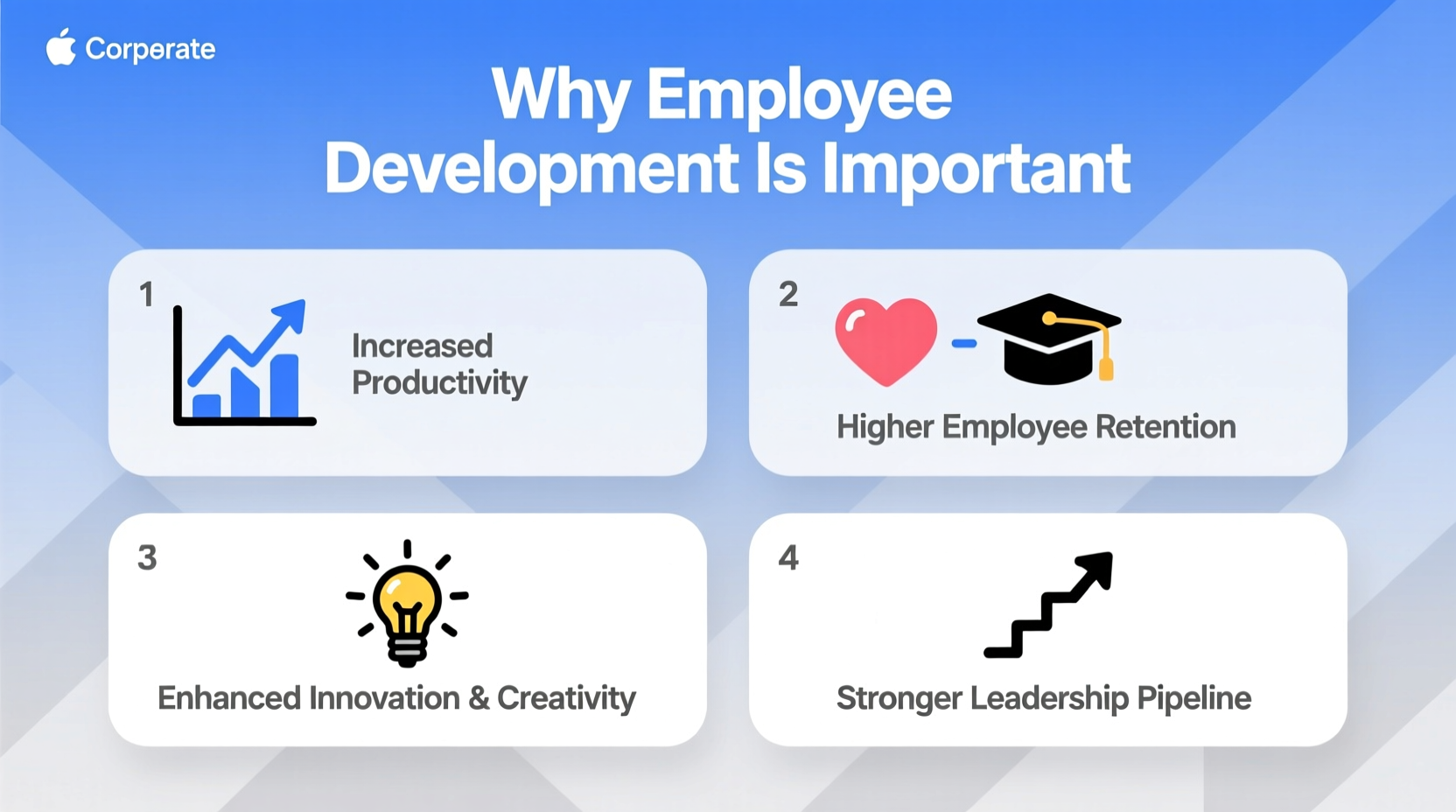
Employee development refers to the structured efforts an organization makes to enhance employees’ skills, knowledge, and competencies over time. This includes training programs, mentorship, career pathing, tuition reimbursement, leadership coaching, and cross-functional projects. When done effectively, it transforms static job roles into dynamic growth opportunities.
At its core, development addresses two fundamental truths: people want to grow, and businesses need capable talent. Ignoring either leads to stagnation. A 2023 Gallup report found that 59% of employees consider opportunities for learning and development a major factor in deciding whether to stay with an employer. Meanwhile, companies with strong development cultures are 30% more likely to outperform their peers in profitability.
Development isn’t just about upskilling for current roles—it’s about preparing employees for future challenges. In an era defined by automation, AI integration, and shifting market demands, the ability to learn quickly and adapt is the new competitive advantage.
“Investing in your employees' growth isn't just generous—it's intelligent business strategy. The ROI shows up in engagement, innovation, and resilience.” — Dr. Lena Patel, Organizational Psychologist & Workforce Development Consultant
Key Benefits of Employee Development
The impact of consistent employee development extends across multiple dimensions of an organization. Below are five primary benefits supported by research and real-world outcomes.
- Increased Employee Retention: Employees who feel they are growing are less likely to leave. LinkedIn’s Workplace Learning Report indicates that 94% of employees would stay longer at a company that invests in their career development.
- Higher Engagement and Morale: Development signals that the organization values its people. Engaged employees are more productive, collaborative, and customer-focused.
- Improved Performance and Productivity: Targeted training closes skill gaps, leading to faster task completion, fewer errors, and better decision-making.
- Stronger Leadership Pipeline: Internal development reduces reliance on external hires for leadership roles. Succession planning becomes proactive rather than reactive.
- Enhanced Innovation and Adaptability: Employees exposed to new ideas and cross-functional experiences bring fresh perspectives that drive innovation.
Real-World Impact: A Mini Case Study
Consider the case of TechNova Solutions, a mid-sized software firm facing high turnover among junior developers. Despite competitive salaries, many left within 18 months citing lack of growth opportunities. In response, HR partnered with department heads to launch a “Growth Track” program featuring bi-weekly skill workshops, quarterly rotation assignments, and personalized mentorship.
Within one year, voluntary turnover dropped by 42%. Internal promotion rates increased by 60%, and project delivery times improved due to better collaboration across teams. One participant, Maria Chen, moved from a backend developer to a tech lead role after completing a leadership module and leading a successful pilot project. Her story became a case study used in onboarding to illustrate internal mobility.
TechNova’s experience underscores a simple truth: when employees see a clear path forward, they commit more deeply to the organization’s mission.
Essential Components of Effective Development Programs
Not all development initiatives yield results. The most effective ones share common structural elements. Use the checklist below to evaluate or design your own program.
✅ Employee Development Checklist
- Conduct regular skills gap assessments
- Create individualized development plans (IDPs)
- Offer access to online courses, certifications, or workshops
- Implement mentorship or coaching programs
- Encourage cross-departmental projects
- Provide stretch assignments to build confidence
- Track progress with measurable goals and feedback loops
- Recognize and reward developmental milestones
Common Pitfalls to Avoid
| Do’s | Don’ts |
|---|---|
| Align development with business goals | Offer generic training with no application |
| Involve managers in development planning | Leave development solely to HR |
| Measure outcomes (e.g., promotion rate, engagement scores) | Assume participation equals impact |
| Support self-directed learning | Mandate rigid, one-size-fits-all programs |
Building a Culture of Continuous Growth
Sustainable employee development requires more than isolated training events—it demands cultural integration. Leaders must model lifelong learning, encourage curiosity, and normalize feedback. Here’s a step-by-step approach to embedding development into daily operations:
- Assess Needs: Survey employees and analyze performance data to identify skill gaps and interests.
- Set Clear Goals: Define what success looks like—for individuals and teams—over 6- to 12-month periods.
- Design Flexible Pathways: Offer blended options (online, peer-led, experiential) to accommodate different learning styles.
- Empower Managers: Train supervisors to have regular development conversations during one-on-ones.
- Review and Iterate: Collect feedback quarterly and adjust offerings based on participation and outcome metrics.
Google’s famous “20% time” policy—allowing engineers to spend one day a week on passion projects—originated as a development initiative. It led to innovations like Gmail and Google News, proving that giving employees autonomy to explore can yield unexpected value.
Frequently Asked Questions
How does employee development affect company culture?
It fosters a culture of trust, transparency, and mutual investment. When employees see that their growth matters, they are more likely to contribute ideas, support peers, and embrace change. Development becomes a symbol of organizational care, strengthening psychological safety.
Can small businesses afford employee development?
Absolutely. Development doesn’t require large budgets. Low-cost strategies include peer mentoring, lunch-and-learn sessions, shadowing opportunities, and free online resources (e.g., Coursera, edX). What matters most is consistency and intentionality—not scale.
What if employees leave after we invest in them?
This concern is valid but short-sighted. The greater risk is not developing them and having disengaged, under-skilled workers remain. As management expert Simon Sinek said, “If you don’t invest in your people, you’ll end up with people who aren’t invested in you.” Even if some leave, the majority stay—and those who do go often become brand ambassadors.
Conclusion: Make Development a Daily Practice
Employee development is not a one-time event or an annual review checkbox. It’s an ongoing commitment to human potential. Organizations that treat it as such gain a decisive edge: they attract top talent, retain institutional knowledge, and navigate disruption with agility.
The return isn’t always immediate, but it’s undeniable. Every workshop attended, every mentorship session held, every stretch assignment completed adds up to a more capable, confident, and connected workforce. Start small—launch a pilot program, train a few managers, gather feedback—but start now.
🚀 Ready to transform your team? Identify one employee who’s ready to grow—and create their first development plan this week. Progress begins with action.