
It starts with a simple text. A question, a meme, a check-in. Minutes pass. Then hours. No reply. You glance at your phone again. Still nothing. A knot forms in your stomach. Is something wrong? Did you say something off? Or worse—do they just not care?
If this scenario feels familiar, you're not alone. In an age where instant replies are normalized, unanswered messages can trigger anxiety, doubt, and conflict in even the strongest relationships. But before jumping to conclusions, it’s essential to understand that inconsistent texting isn’t always about disinterest. Often, it reflects deeper differences in communication styles, personality traits, and emotional processing.
This article explores why your partner might not respond to texts—and how to navigate these gaps with empathy, clarity, and mutual understanding.
The Hidden Psychology Behind Texting Habits
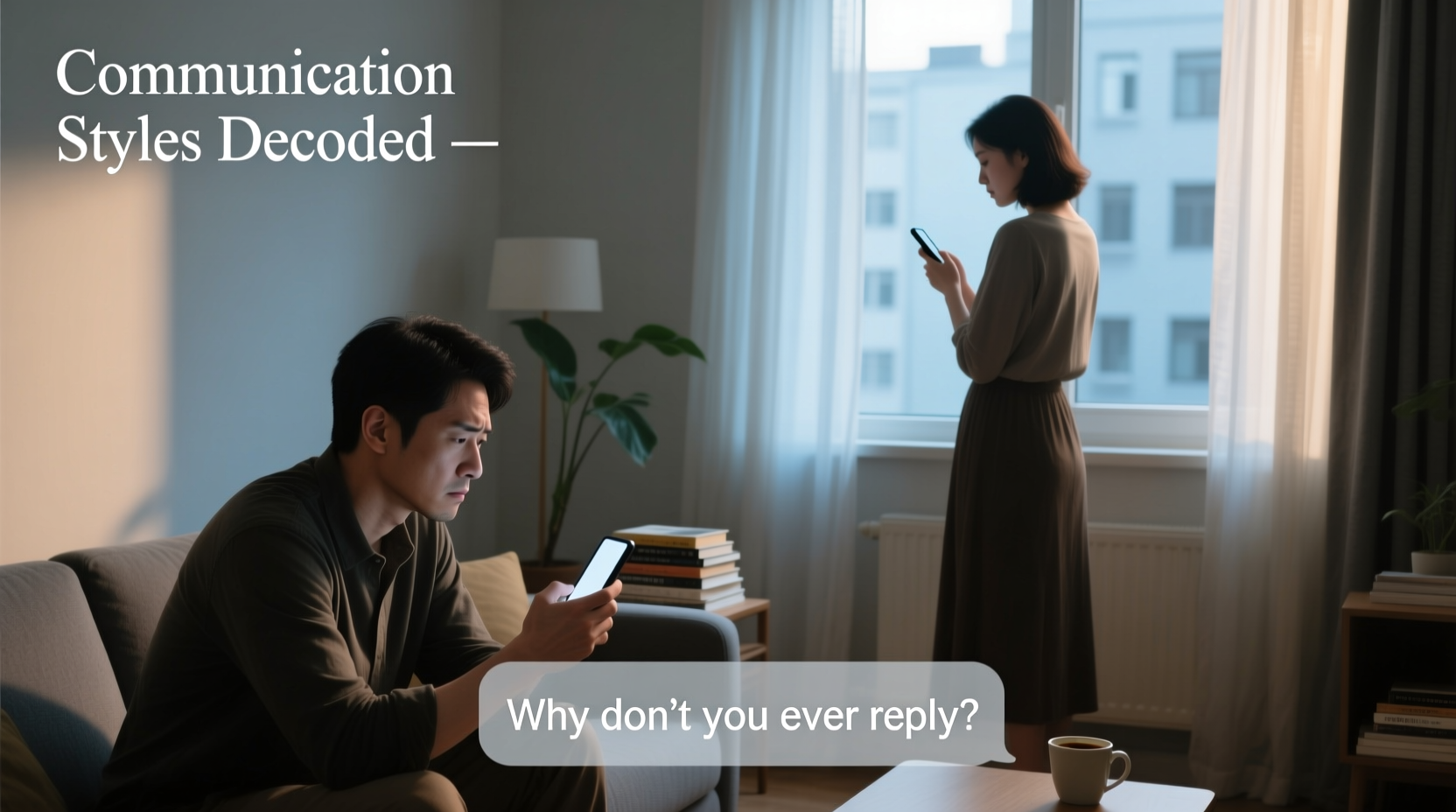
Text messaging has become the default mode of daily contact in modern relationships. Yet, unlike face-to-face conversations or phone calls, texting lacks tone, body language, and immediate feedback. This makes it especially vulnerable to misinterpretation.
When one partner expects prompt replies and the other doesn’t prioritize texting, tension builds. The sender may feel ignored or unimportant. The receiver might be unaware of the expectation—or simply process communication differently.
Psychologists emphasize that texting behavior often correlates with broader communication patterns shaped by personality, upbringing, and attachment style. For example:
- High-anxiety individuals may send frequent messages seeking reassurance.
- Avoidant types may delay responses to maintain emotional distance.
- Busy professionals may treat texts as low-priority tasks, replying in batches.
- Digital minimalists may intentionally limit screen time, including messaging.
Recognizing these underlying factors is the first step toward resolving frustration without blame.
Tip: Instead of assuming neglect, ask, “How do you prefer to stay in touch?”—it opens space for honest dialogue.Communication Styles: Why You and Your Partner May Be on Different Wavelengths
Not everyone experiences communication the same way. Researchers identify several primary communication styles that influence how people engage digitally:
| Style | Behavior in Texting | Common Misinterpretations |
|---|---|---|
| Expressive | Sends frequent messages, uses emojis, shares emotions quickly | May seem needy; others appear cold for not matching energy |
| Analytical | Replies thoughtfully, avoids small talk, values precision | Can come across as distant or unemotional |
| Supportive | Prioritizes harmony, responds kindly but slowly if stressed | Might be seen as passive or disengaged |
| Directive | Uses texts for logistics, brief replies, skips pleasantries | May seem blunt or uncaring despite strong commitment |
If you’re expressive and your partner is directive, mismatched expectations are inevitable. You may crave daily affirmations via text, while they reserve emotional intimacy for in-person moments. Neither approach is wrong—but without awareness, both partners can feel misunderstood.
“We often judge others by our own standards of connection. But love requires us to speak—and listen—in their language, not just ours.” — Dr. Lena Torres, Relationship Psychologist
Real-Life Scenario: Sarah and Mark’s Texting Tension
Sarah, a graphic designer, sends her husband Mark, a software engineer, three to five messages a day: photos from her walk, lunch updates, and occasional questions. She expects replies within a few hours.
Mark works in deep focus blocks. He silences his phone during coding sessions and checks messages once or twice a day. When he sees Sarah’s string of texts, he feels overwhelmed—not by her, but by the pressure to respond thoughtfully to each one.
One evening, Sarah says, “You never reply. Do you even care?” Mark is stunned. He replies, “I’m here every night. Isn’t that enough?”
Their conflict isn’t about love—it’s about mismatched rhythms. After couples counseling, they agree on a compromise: Sarah reduces non-urgent pings, and Mark sets a 10-minute window after work to acknowledge her messages—even with just a heart emoji. Over time, trust replaces resentment.
This case illustrates a common truth: unresolved texting issues are rarely about the texts themselves. They reflect deeper needs for validation, presence, and respect.
Step-by-Step Guide to Align Communication Expectations
Resolving texting disconnects requires intentional effort. Follow this five-step process to rebuild alignment:
- Reflect on your own needs. Ask yourself: Why do I want replies? Is it for connection, security, or control? Understanding your motivation prevents projection.
- Observe without judgment. Track your partner’s response patterns for a week. Are delays consistent? Do they reply when together? Look for patterns, not isolated incidents.
- Initiate a calm conversation. Choose a neutral time. Use “I” statements: “I feel anxious when I don’t hear back. Can we talk about how we both prefer to communicate?”
- Negotiate shared norms. Agree on realistic expectations. Examples: “We’ll reply to urgent texts within 3 hours,” or “Non-urgent messages get answered by end of day.”
- Re-evaluate monthly. Life changes—workload, stress, travel. Schedule brief check-ins to adjust agreements as needed.
This method shifts the dynamic from accusation to collaboration. It acknowledges that healthy communication isn’t about matching frequencies, but about mutual accommodation.
Do’s and Don’ts of Digital Relationship Communication
To prevent misunderstandings, follow these guidelines:
| Do | Don't |
|---|---|
| Clarify urgency: “No need to reply now, just sharing!” | Send accusatory follow-ups: “Still ignoring me?” |
| Use voice notes for complex emotions | Assume silence equals rejection |
| Respect focus time: Ask, “Is now a good time to chat?” | Expect 24/7 availability |
| Establish a signal for “I need space” (e.g., 🌿) | Over-text during known busy periods |
When Silence Signals Deeper Issues
While differing communication styles explain many texting gaps, persistent avoidance can indicate underlying problems:
- Emotional withdrawal: A sudden drop in responsiveness may reflect distancing due to unresolved conflict or fading interest.
- Stress or mental health struggles: Anxiety, depression, or burnout can impair focus and motivation to engage digitally.
- Infidelity concerns: Secretive phone use combined with delayed replies may warrant honest discussion—if patterns shift dramatically.
The key differentiator is consistency. If your partner has always been slow to text but remains warm and engaged offline, style is likely the cause. If their behavior changed recently alongside emotional detachment, further exploration is needed.
In such cases, professional support can help uncover root causes without escalation.
FAQ: Common Questions About Texting Gaps in Relationships
Is it normal for my partner to take days to reply?
Yes, if it aligns with their usual behavior and they’re responsive in person. What matters is consistency and whether both partners feel respected. If delays cause distress, discuss adjusting expectations together.
Should I stop texting if my partner never replies?
Instead of withdrawing entirely, express how you feel using non-blaming language. Example: “I enjoy sharing little things with you. When I don’t get a response, I wonder if you’d rather I didn’t send them.” Let them clarify their preference.
Could my partner’s lack of replies mean they’re losing interest?
Not necessarily. Interest should be evaluated holistically—how they treat you in person, make time, show affection. If those remain strong, texting habits are more likely a style difference than emotional decline.
Action Plan: Building a Healthier Digital Connection
Improving texting dynamics isn’t about forcing change—it’s about designing a system that honors both partners. Use this checklist to create alignment:
- ✅ Identify your primary communication style (expressive, analytical, etc.)
- ✅ Discuss each other’s texting preferences and pain points
- ✅ Set clear, realistic response expectations for urgent vs. casual messages
- ✅ Agree on a gentle signal for needing space or focus time
- ✅ Schedule a monthly 15-minute check-in to review what’s working
- ✅ Prioritize in-person quality time to strengthen emotional safety beyond texts
Remember: Technology should serve your relationship, not dictate its emotional rhythm. The goal isn’t constant contact—it’s consistent care.
Conclusion: Reconnect Beyond the Screen
The question “Why does my partner never answer texts?” often masks a deeper longing: to feel seen, valued, and connected. While digital communication plays a role, it’s only one thread in the fabric of intimacy.
By decoding communication styles, replacing assumptions with curiosity, and co-creating sustainable norms, you transform frustration into understanding. Whether your partner replies instantly or after a quiet reflection, what matters most is the intention behind their presence—online and off.
💬 Ready to improve your digital connection? Start today: Share this article with your partner and schedule a 20-minute talk about your texting rhythms. Small conversations can lead to lasting closeness.