The flickering flashlight. The distant creak of a floorboard. A whisper just behind you—only to turn and find nothing there. For millions, these are not nightmares but invitations: carefully crafted experiences in horror video games that thrill rather than terrify. Yet for just as many, even the thought of playing such a game triggers anxiety or outright refusal. Why? What separates those who dive into haunted mansions from those who unplug at the title screen?
The answer lies deep within human psychology—how we process fear, regulate emotions, and interpret threat. It’s not simply about courage or preference; it's a complex interplay of biology, personality, and learned behavior. Understanding this divide reveals not only why horror games captivate certain minds but also how fear itself can be transformed from a survival mechanism into a source of entertainment.
The Science of Fear: How the Brain Responds to Horror
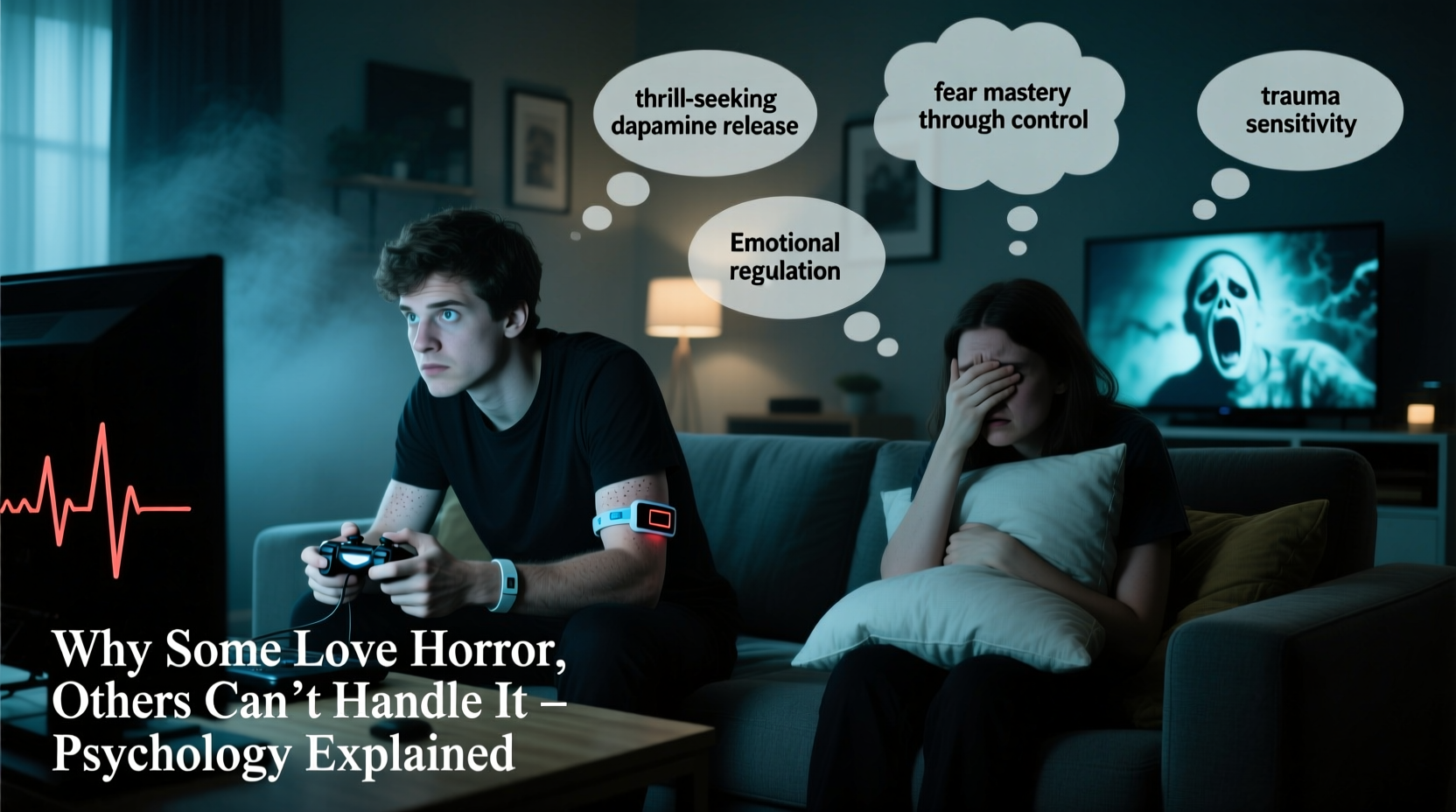
Fear is one of humanity’s oldest and most essential emotions. When faced with danger, the amygdala—a small almond-shaped structure in the brain—triggers the fight-or-flight response. Heart rate increases, muscles tense, and attention narrows to potential threats. This system evolved to keep us alive in genuinely dangerous environments.
But horror games operate in a unique psychological space: they simulate danger without real-world consequences. The brain still activates the fear circuitry, but higher cognitive functions recognize the safety of the situation. This creates what psychologists call \"delightful dread\"—a pleasurable form of fear because the individual knows they are not truly at risk.
“People don’t enjoy fear itself—they enjoy overcoming it. The relief after surviving a jump scare releases dopamine, reinforcing the experience.” — Dr. Mathew J. Facciani, Cognitive Anthropologist
This neurochemical reward loop explains part of the appeal. Successfully navigating a terrifying scenario—even virtually—can produce feelings of mastery and accomplishment. However, not everyone’s brain processes this simulation the same way.
Personality Traits That Predict Horror Enjoyment
Research consistently links certain personality traits to a greater likelihood of enjoying horror media. One of the most significant predictors is **sensation seeking**—a trait characterized by the pursuit of novel, intense, and complex experiences.
Individuals high in sensation seeking often report:
- Greater tolerance for uncertainty and ambiguity
- Higher enjoyment of adrenaline-inducing activities (e.g., roller coasters, extreme sports)
- More frequent consumption of horror films and games
A 2020 study published in Personality and Individual Differences found that participants who played survival horror games showed increased positive affect post-play—if they scored high on sensation seeking. Conversely, low sensation seekers reported lingering anxiety and discomfort.
Another key factor is **absorption**, the ability to become deeply immersed in imaginary scenarios. Those high in absorption are more likely to “lose themselves” in a narrative, making horror games feel vivid and engaging rather than overwhelming.
Tip: If you're curious about horror games but hesitant, start with titles rated 'psychological thriller' over 'survival horror'—they emphasize story and tension over constant threat.Cognitive Appraisal: Reinterpreting Fear as Fun
How we interpret fear determines whether we run from it or lean into it. Psychologists refer to this as **cognitive appraisal theory**: the idea that emotion arises not from an event itself, but from how we evaluate it.
Two players might face the same monster in a game like Resident Evil or Amnesia. One thinks: \"This is fake—I’m safe. I can learn its patterns and survive.\" The other thinks: \"This could happen in real life. What if I can’t escape?\"
The first player experiences excitement. The second, distress. The difference lies in appraisal.
Studies show that fans of horror often engage in **reappraisal strategies**—reframing fear as challenge, mystery, or suspense. They may focus on puzzle-solving mechanics, lore exploration, or the craftsmanship of sound design. In doing so, they shift attention away from helplessness and toward agency.
Non-fans, especially those with anxiety disorders or trauma histories, are more likely to appraise horror stimuli as personally threatening—even when consciously aware of their fictionality. For them, the boundary between simulation and reality blurs, triggering genuine stress responses.
Biological Sensitivity and Emotional Regulation
Not all brains regulate arousal equally. Some individuals have a lower threshold for sympathetic nervous system activation—meaning their bodies react more intensely to stimuli like loud noises, dark visuals, or sudden movements.
This sensitivity is partly genetic and observable early in life. Children labeled “high-reactive” in developmental studies tend to grow into adults more prone to anxiety and less likely to enjoy horror content.
Emotional regulation skills also play a critical role. People who can self-soothe, breathe through discomfort, or mentally detach from immersion are better equipped to handle horror. Those with poor regulation may become overwhelmed, leading to prolonged anxiety or avoidance behaviors.
| Factor | Likely to Enjoy Horror Games | Likely to Avoid Horror Games |
|---|---|---|
| Sensation Seeking | High levels | Low levels |
| Anxiety Sensitivity | Low fear of physical symptoms (e.g., racing heart) | High fear of bodily sensations |
| Immersion Tendency | High absorption in narratives | Prefers detached observation |
| Trauma History | No recent or unresolved trauma | History of PTSD or abuse |
| Coping Style | Uses reappraisal and problem-solving | Experiences rumination or panic |
Mini Case Study: Two Siblings, One Game
Consider siblings Maya and Leo, both in their mid-20s. Maya loves horror games. She streams Dead by Daylight weekly and recently completed The Medium in one sitting. Leo, however, turned off Bioshock Infinite after five minutes—despite no overt horror elements—because the atmosphere made him “feel watched.”
Both grew up in the same household, exposed to similar media. But differences emerged early. As kids, Maya sought out scary stories and dared herself to walk down dark hallways. Leo avoided thunderstorms, fearing they signaled something worse was coming.
Now, neuroscience helps explain their divergence. Functional MRI scans would likely show that Maya’s prefrontal cortex—the area responsible for executive control—activates strongly during fear exposure, helping her suppress panic and maintain perspective. Leo’s amygdala, meanwhile, may fire rapidly with minimal top-down regulation, making even simulated threats feel urgent.
Neither response is “wrong.” Their brains simply process uncertainty differently. Maya finds meaning in mastering fear. Leo prioritizes emotional safety. Both are valid.
When Horror Becomes Harmful: Boundaries Matter
While many use horror games therapeutically—to confront fears in controlled settings—others experience lasting negative effects. Symptoms like insomnia, intrusive thoughts, or heightened anxiety after gameplay should not be dismissed as “just being scared.”
Particularly vulnerable groups include:
- Children under 13, whose brains struggle to distinguish fantasy from reality
- Individuals with PTSD, OCD, or generalized anxiety disorder
- Those recovering from traumatic events involving violence or confinement
For these individuals, horror games aren’t just unpleasant—they can reactivate neural pathways associated with past trauma. The brain doesn’t always recognize the boundary between simulation and memory.
Tip: If a game leaves you feeling anxious days later, it’s not weakness—it’s a signal. Honor your limits and choose calmer genres without guilt.Step-by-Step Guide: Exploring Horror Games Safely (For the Curious)
If you’re intrigued by horror games but unsure where to start, follow this gradual approach:
- Assess Your Motivation: Are you seeking thrills, storytelling depth, or social connection (e.g., co-op streaming)? Clarity helps guide choices.
- Start with Light Entries: Try games like Oxenfree or Little Nightmares—creepy but not relentless. Avoid titles with permadeath or sanity mechanics initially.
- Play During Daylight: Natural light reduces perceived threat. Avoid late-night sessions when fatigue lowers emotional resilience.
- Use Safety Features: Enable brightness boost, subtitles, and skip options. Many modern games offer “casual modes” with reduced scares.
- Pause and Reflect: After 20–30 minutes, check in. Are you excited or drained? Adjust accordingly.
- Debrief Afterwards: Watch a funny YouTube video or talk to a friend to reset your mood.
Checklist: Is a Horror Game Right for You?
Answer these questions honestly before diving in:
- ☑ Do I generally enjoy suspenseful movies or books?
- ☑ Can I laugh at jump scares after the first shock?
- ☑ Am I currently under high stress or emotional strain?
- ☑ Have I had nightmares after watching horror films?
- ☑ Do I feel in control when facing challenges in games?
If most answers are “yes” to the positives and “no” to the warnings, you may be well-suited for horror gaming. If not, there’s no obligation—enjoyment should never come at the cost of mental peace.
Frequently Asked Questions
Can playing horror games desensitize me to real violence?
Current research does not support a direct link between horror game play and reduced empathy or increased aggression in adults. Most players maintain clear boundaries between fiction and reality. However, repeated exposure may reduce emotional reactivity to fictional violence—not real-life harm. Context and individual psychology matter greatly.
Why do I enjoy horror movies but not horror games?
Interactivity changes everything. Watching a character flee a monster engages passive empathy. Controlling that character introduces personal responsibility—if you fail, *you* caused the death. This agency intensifies immersion and stress. Many prefer observational horror because it allows emotional distance.
Are there benefits to playing horror games?
Yes—for the right person. Benefits include improved stress tolerance, enhanced problem-solving under pressure, and increased emotional regulation through repeated exposure in safe contexts. Some therapists even use controlled horror simulations in exposure therapy for anxiety.
Conclusion: Fear Is Personal—And That’s Okay
The divide between loving horror games and being unable to handle them isn’t about strength or weakness. It’s about neurology, personality, and personal history. One person’s thrilling chase through a zombie-infested city is another’s sleepless night. Neither experience is invalid.
What matters is self-awareness. Knowing your thresholds allows you to engage with media intentionally—whether that means embracing the shadows or stepping into the light. For fans, horror offers a rare chance to dance with fear and emerge empowered. For others, peace comes from choosing gentler worlds.
There’s no universal standard for what we should enjoy. Only what serves us, challenges us, and respects our inner landscape.
💬 Have you ever tried a horror game—did it thrill you or overwhelm you? Share your story in the comments. Your experience might help someone else understand their own relationship with fear.