
In an increasingly globalized world, names carry more than just personal identity—they reflect heritage, migration patterns, legal systems, and cultural evolution. One curious trend that has drawn attention is the appearance of “TC” before certain names. Whether seen on official documents, social media profiles, or international business cards, the prefix \"TC\" raises questions: Is it a title? A nationality marker? Or a bureaucratic convention? The answer lies at the intersection of language, law, and regional identity.
“TC” most commonly stands for *Türkiye Cumhuriyeti*, which translates to “Republic of Turkey” in Turkish. When attached before a personal name, particularly in digital or governmental contexts, it serves as a national identifier rather than a traditional part of the name itself. This practice is not unique to Turkey, but its visibility has increased due to online verification systems, data standardization, and digital identity protocols.
The Meaning Behind \"TC\": Türkiye Cumhuriyeti
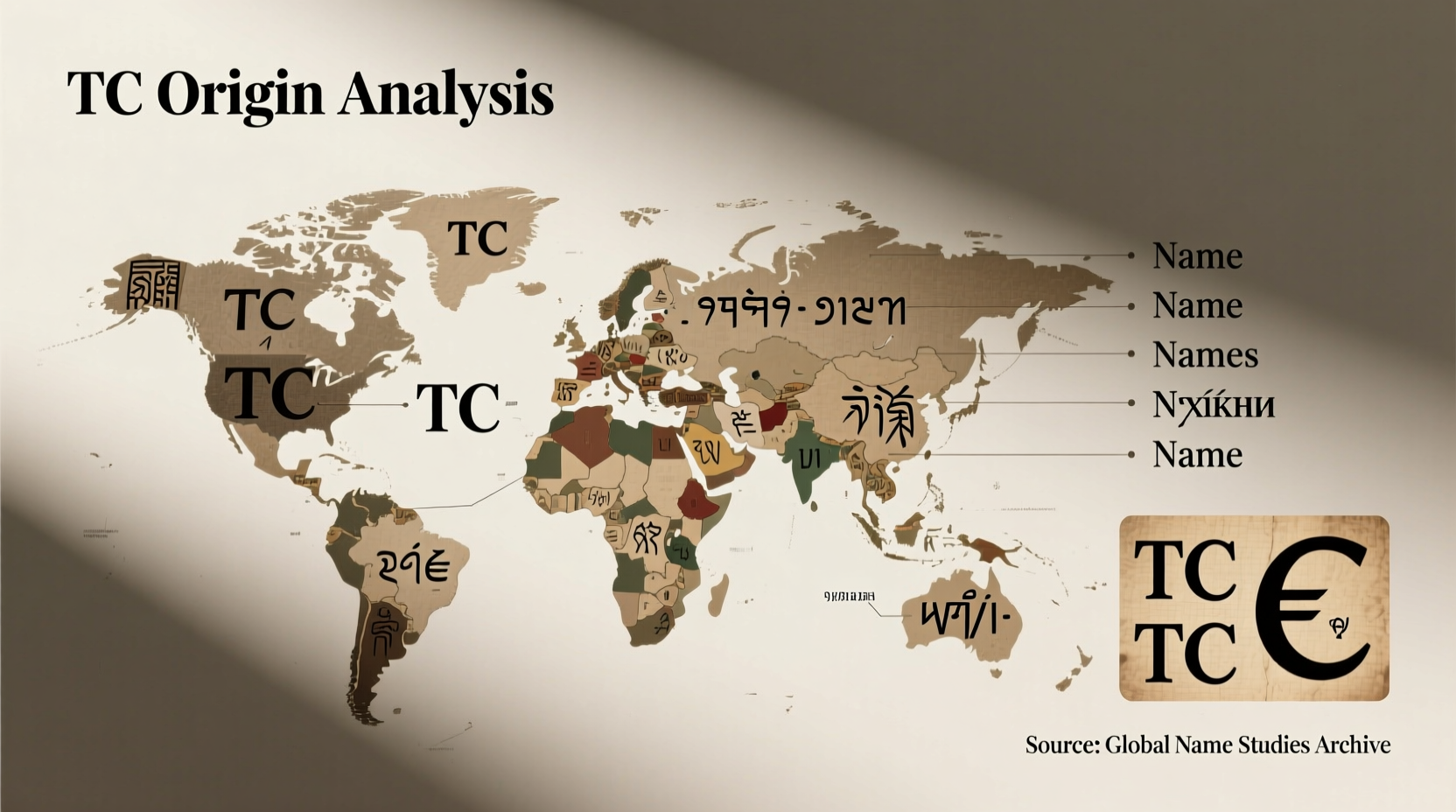
In Turkey, every citizen is assigned a unique 11-digit identification number known as the *TC Kimlik Numarası* (Turkish Republic Identity Number). This number is central to accessing healthcare, education, banking, voting, and legal services. While “TC” in this context refers to the state-issued ID system, it has gradually entered public consciousness as a symbolic prefix—especially in formal documentation and increasingly in digital spaces.
However, when people write “TC” directly in front of their names—such as “TC Ayşe Yılmaz”—they are often signaling one of two things:
- National Affiliation: Indicating Turkish citizenship, especially in multilingual or international environments where clarity about origin matters.
- Administrative Habit: Reflecting the influence of government forms and digital platforms where “TC” precedes personal information fields.
This usage does not alter the actual legal name but functions similarly to how someone might write “(UK)” or “Dr.” before a name to denote origin or title.
Tip: If you see \"TC\" before a name online, consider it a contextual marker—not a formal name component—unless specified otherwise by the individual.Cultural and Linguistic Origins of Name Prefixes
The use of prefixes before names is widespread across cultures. These markers serve various purposes: denoting respect, profession, lineage, or nationality. For example:
- In Japan, “San” (e.g., Tanaka-san) shows politeness.
- In Arabic-speaking countries, “Al” or “El” often indicates “the” or familial origin (e.g., Al-Farouq).
- In medieval Europe, patronymics like “Johnson” (son of John) were common.
Similarly, “TC” fits into this broader pattern—not as a linguistic tradition, but as a modern administrative symbol repurposed in informal communication. Unlike honorifics rooted in centuries of usage, “TC” emerged from 20th-century nation-state bureaucracy and gained prominence with the digitization of civil records in the 2000s.
How Digital Systems Reinforced the Practice
Turkey’s Ministry of Interior launched a centralized population registry in 2000, replacing older paper-based systems with a fully digital database. Every entry begins with “TC” followed by the identity number and then the citizen’s name. As more services moved online—from tax filing to university applications—users became accustomed to seeing “TC” as the default prefix in dropdown menus, login screens, and confirmation emails.
This repetition normalized the visual association between “TC” and personal identity. Over time, some individuals began including “TC” voluntarily in non-official settings to assert national identity or ensure consistency with official records.
Global Comparisons: National Identifiers in Names
Turkey is not alone in using national abbreviations in personal identification, though few integrate them so visibly into everyday naming habits. The table below compares similar practices worldwide:
| Country | Identifier System | Prefix Usage Example | Common Context |
|---|---|---|---|
| Turkey | TC Kimlik No | TC 12345678901 Ahmet Kaya | Government portals, ID cards |
| South Korea | Resident Registration Number | [Not used as prefix] | Internal only; privacy-protected |
| India | Aadhaar Number | Aadhaar: 1234-5678-9012 Raj Patel | Verification forms, subsidies |
| United States | Social Security Number (SSN) | SSN: XXX-XX-XXXX (never before name) | Legal/financial documents only |
| Germany | Steuer-ID | StIDNr: 12 345 678 901 | Tax filings, rarely public |
What sets Turkey apart is the extent to which “TC” has transitioned from backend administration to semi-public identity signaling—a phenomenon amplified by social media and cross-border interactions.
Real-World Use Case: Online Verification in International Communities
Consider the case of Elif Demir, a freelance graphic designer based in Istanbul who regularly works with clients in Germany and Canada. When joining a new project management platform, she noticed that her full name was displayed as “TC Elif Demir” after syncing her government-verified email through Turkey’s e-Devlet (e-Government) portal.
Initially confused, Elif realized the system automatically appended “TC” because her verified identity originated from the Turkish national database. Her German client asked if “TC” was a professional title. After explaining its meaning, they both agreed it added transparency about her location and regulatory jurisdiction—useful for invoicing and compliance.
Over time, Elif chose to keep “TC” in her professional profiles on certain platforms, finding it reduced confusion about her residency status and improved trust in transactions.
“Digital identity systems are reshaping how we present ourselves globally. ‘TC’ may start as a bureaucratic tag, but in transnational workspaces, it becomes a signal of authenticity.” — Dr. Murat Günel, Digital Sociology Researcher at Ankara University
Practical Guidance: How to Interpret or Use \"TC\" Correctly
Understanding whether “TC” should be used—or how to respond when encountering it—depends on context. Below is a checklist for navigating these situations appropriately.
Checklist: Responding to \"TC\" in Names
- ✅ Recognize “TC” as a likely reference to Turkish citizenship, not a name element.
- ✅ Avoid assuming it's a title or honorific unless confirmed by the person.
- ✅ In formal correspondence, follow the individual’s preferred format (ask if unsure).
- ✅ On digital platforms, check if the prefix was auto-generated by a verification system.
- ✅ Never remove or alter “TC” from official documents without understanding local requirements.
Frequently Asked Questions
Is \"TC\" part of a person’s legal name in Turkey?
No. “TC” is not a legal component of any Turkish citizen’s name. It is an abbreviation used in administrative systems to denote the Republic of Turkey and is associated with the national ID number, not the name itself.
Can non-Turkish citizens use \"TC\" before their names?
Generally, no. The TC identification system is exclusive to Turkish citizens. Foreign residents in Turkey receive different identifiers (like MERNIS numbers), which do not use the “TC” prefix.
Why do some people outside Turkey use \"TC\" before their names?
Rarely, members of the Turkish diaspora may use “TC” informally to express cultural pride or clarify nationality in multicultural environments. However, this remains a personal choice and is not standardized.
Conclusion: Understanding Identity in a Digital Age
The appearance of “TC” before names reflects a deeper shift in how identity is managed and communicated in the 21st century. What began as a functional label within a national bureaucracy has evolved into a subtle yet meaningful marker of origin in global discourse. Whether encountered on a document, profile, or email signature, “TC” invites recognition of both individual identity and the systems that shape it.
As digital platforms continue to blend administrative data with personal presentation, awareness of such conventions becomes essential for clear, respectful communication across borders.
💬 Have you encountered \"TC\" before a name? Share your experience or thoughts in the comments—your insight could help others navigate cross-cultural digital interactions.