In nearly every shonen anime—from *Dragon Ball* to *Naruto*, *One Piece* to *My Hero Academia*—there’s one consistent, unmistakable trait: characters scream the names of their attacks as they unleash them. “Kamehameha!” “Rasengan!” ���Gomu Gomu no Pistol!” This practice is so deeply embedded in anime culture that fans expect it. But why do characters do this? And where did it all begin?
The answer lies at the intersection of storytelling tradition, vocal performance, and cultural identity in Japanese media. Far from being a quirk or marketing gimmick, shouting attack names serves narrative, psychological, and even educational purposes. This article explores the roots, functions, and lasting impact of this now-iconic convention.
The Origins: From Kamishibai to Early Anime
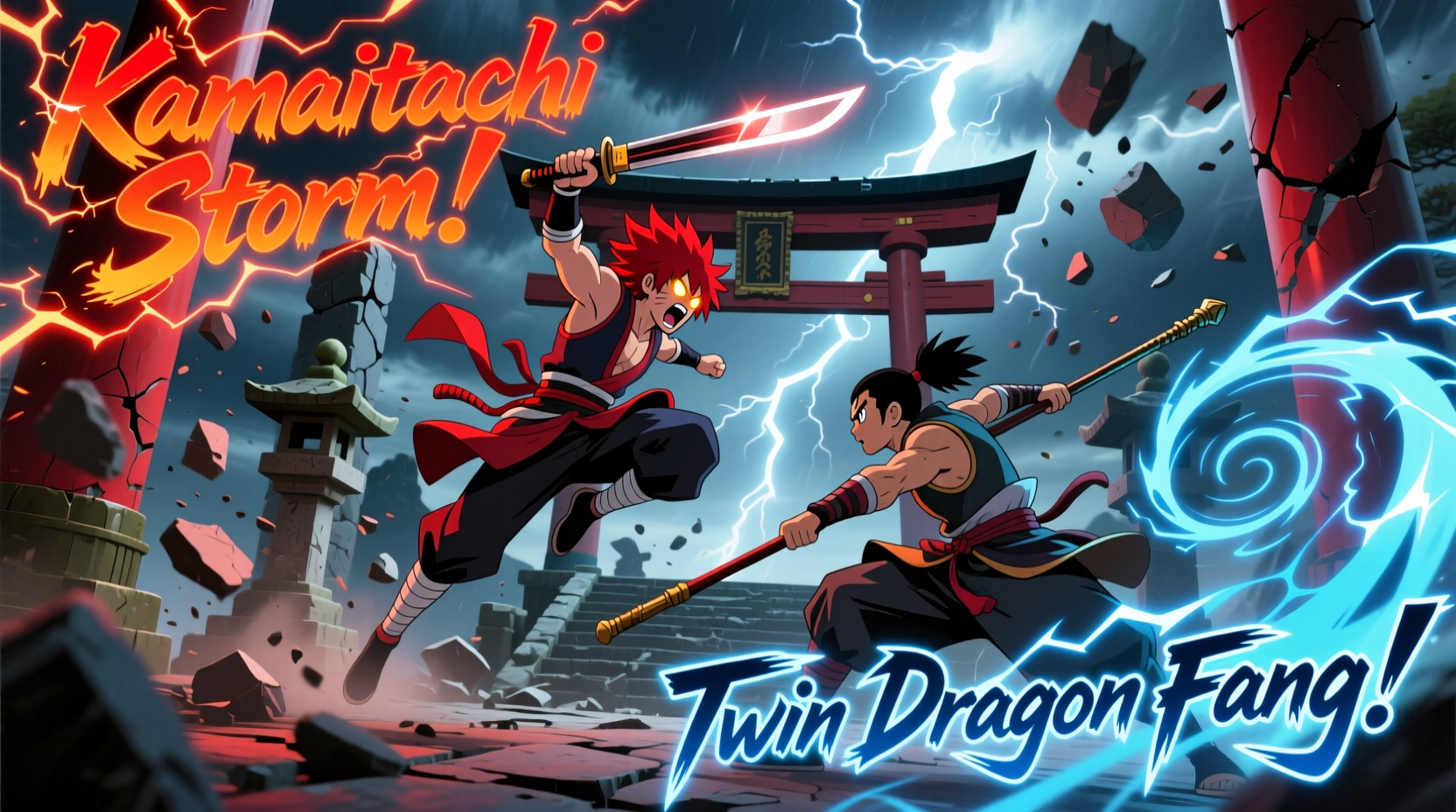
To understand the origin of shouted attack names, we must go back before television, before manga dominance—back to the street performers of post-war Japan. In the 1930s and 1940s, traveling storytellers known as kamishibai artists entertained children using illustrated boards and dramatic narration. These performances were loud, exaggerated, and highly interactive. The narrator would shout key moments—like a hero’s move—to capture attention and build excitement.
When manga and later anime emerged in the mid-20th century, many creators carried over these theatrical elements. Osamu Tezuka, often called the “God of Manga,” was influenced by Disney animation but also by traditional Japanese performance styles. His early works, like *Astro Boy* (1963), featured simple, direct actions with minimal dialogue during fights. However, as action-focused series gained popularity in the 1970s and 1980s, something shifted.
The real turning point came with the rise of martial arts-themed anime. Series like *Cutie Honey* (1973) and *Mazinger Z* (1972) introduced mecha and transformation sequences where heroes declared their power verbally. When the robot launched its primary weapon, the pilot would shout, “Rocket Punch!” or “Breast Fire!”—not just for effect, but to signal the moment of impact to viewers who couldn’t always see mechanical details on small, low-resolution screens.
“Verbal cues were essential in early animation. Without clear visuals, sound had to carry the action.” — Dr. Akira Tanaka, Media Historian, Tokyo University of the Arts
The Narrative Function of Attack Calls
Shouting an attack name isn’t just flair—it’s functional storytelling. In fast-paced battle scenes, visual clarity can be limited. By vocalizing the technique, the audience instantly knows what’s happening, even if the animation is simplistic or chaotic.
This verbal labeling serves several narrative roles:
- Clarity: Distinguishes one move from another, especially when powers evolve (e.g., Super Saiyan transformations).
- Dramatic emphasis: Builds tension before a powerful strike, giving the moment emotional weight.
- Characterization: Reflects personality—Goku shouts with raw energy; Sasuke uses cold, precise declarations.
- Memorability: Makes techniques easier to remember, fostering fan engagement and merchandise potential.
In serialized stories where battles last episodes or even arcs, named attacks become milestones. Saying “Final Flash” isn’t just about launching energy—it’s signaling a character’s commitment to finishing the fight.
Tip: Pay attention to how attack names change in intensity—“Kamehameha” vs. “Super Kamehameha”—to track character progression.Cultural Roots: The Influence of Martial Arts and Chanting
The practice of naming and shouting techniques has deep roots in Japanese martial culture. In disciplines like karate, kendo, and judo, practitioners use kiai—a sharp exhalation meant to focus energy, intimidate opponents, and synchronize movement with breath. While not always verbalized as full phrases, the principle is similar: voice amplifies action.
Additionally, in traditional theater forms like Noh and Kabuki, actors use stylized speech and rhythmic chants to convey emotion and intent. This performative tradition carries into modern media, where exaggerated expression is not seen as unrealistic, but as emotionally truthful.
Japanese language itself supports this. Words are often onomatopoeic and rhythmically structured, making attack names catchy and easy to pronounce. Compare “Hadouken” (Surge Fist) with its crisp syllables to a clunky English equivalent like “Energy Wave Punch.” The former rolls off the tongue and sticks in memory.
Moreover, in schoolyard games and children’s media, calling out moves is common. Think of *Pokémon*—where each attack (“Thunderbolt!”, “Hydro Pump!”) is announced aloud. This normalization starts young, reinforcing the idea that power must be declared to be real.
Evolution Through Key Anime Series
The use of attack names evolved significantly through landmark anime. Here’s a timeline showing how the convention matured:
- 1972 – Mazinger Z: Introduces named mechanical attacks (“Rocket Punch”), establishing the mecha precedent.
- 1984 – Fist of the North Star: Characters shout both attack names (“Hokuto Hyakuretsu Ken”) and philosophical lines mid-combat, blending violence with drama.
- 1986 – Dragon Ball: Begins with simple moves but evolves into complex, named energy attacks (“Kamehameha”), popularizing the trope globally.
- 1999 – Yu-Gi-Oh!: Even non-physical attacks are declared (“I summon Blue-Eyes White Dragon!”), extending the concept beyond physical combat.
- 2002 – Naruto: Techniques are tied to hand signs and verbal incantations (“Shadow Clone Jutsu”), mimicking ritualistic discipline.
- 2016 – My Hero Academia: Modernizes the trend with Quirk-based moves (“Detroit Smash!”), keeping the spirit alive in contemporary settings.
Each of these series contributed to the normalization of vocalized attacks, transforming it from a stylistic choice into a genre expectation.
Global Perception and Fan Engagement
Outside Japan, the habit of shouting attack names was initially met with confusion or mockery. Western audiences accustomed to silent punches in superhero films found it excessive. Yet, over time, the charm won people over. Fans began shouting “Kamehameha” at conventions, recreating poses, and even using attack calls in memes and social media.
The phenomenon became self-reinforcing: the more fans repeated the lines, the more essential they felt to the experience. Attack names turned into slogans, empowering viewers and creating shared cultural moments.
Merchandising capitalized on this. Action figures include sound chips that play iconic lines. Video games require players to press buttons while hearing the attack cry. The verbal component isn’t incidental—it’s central to the brand.
| Anime | Famous Attack | Cultural Impact |
|---|---|---|
| Dragon Ball Z | Kamehameha | Became a global meme; used in sports celebrations and pop music |
| Naruto | Rasengan | Popularized hand-sign rituals; widely imitated by fans |
| One Piece | Gomu Gomu no Gigant Rifle | Exemplifies comedic exaggeration in attack naming |
| Sailor Moon | Moon Tiara Magic | Helped normalize female-led attack declarations in magical girl genre |
Psychological and Cognitive Benefits
Interestingly, research in cognitive psychology suggests that verbalizing actions can enhance focus and motor performance. A 2017 study published in *Frontiers in Psychology* found that athletes who spoke their moves aloud showed improved coordination and timing. While not directly tested on anime viewers, the principle may explain part of the appeal.
When a character shouts “Bankai!”, they’re not just announcing—they’re committing. The act of naming creates a psychological threshold, marking the transition from preparation to execution. For viewers, this verbal cue triggers anticipation, releasing dopamine when the attack lands.
In educational contexts, Japanese schools sometimes use call-and-response methods where students shout answers together. This cultural comfort with collective vocalization makes shouted attacks feel natural rather than absurd.
Mini Case Study: The Legacy of \"Kamehameha\"
No discussion of attack names is complete without examining the most famous example: the Kamehameha from *Dragon Ball*. Created by Akira Toriyama, the name is said to reference King Kamehameha of Hawaii, symbolizing power and legacy. But its true genius lies in how it functions across decades of media.
In the original 1984 manga, Goku learns the technique from Master Roshi after weeks of training. The scene emphasizes breath control, discipline, and timing. When he finally shouts “Kamehameha!”, it’s a culmination—not just a move, but a rite of passage.
Over time, the attack evolves. It becomes stronger, faster, colored differently. Variants appear: Spirit Bomb, Ultra Instinct—but Kamehameha remains the signature. Fans worldwide recognize the stance, the charging glow, and the yell. It transcends language.
In 2023, a survey by Crunchyroll found that 89% of viewers could identify “Kamehameha” by sound alone. It’s been referenced in *Fortnite*, covered in orchestral concerts, and even used in fitness apps as a motivational audio cue. The attack name didn’t just define a character—it defined a genre.
Do’s and Don’ts of Attack Naming in Anime
While not all attack names succeed, certain patterns separate memorable ones from forgettable ones. Here’s a guide:
| Do | Don't |
|---|---|
| Use rhythmic, phonetic clarity (e.g., “Rasengan”) | Use overly long or awkward names (e.g., “Infinite Darkness Spiral Beam Strike”) |
| Tie the name to character or culture (e.g., “Bankai” in Bleach) | Make names too generic (“Power Punch 3000”) |
| Evolving names with power growth (e.g., “Big Bang Kamehameha”) | Introduce too many unnamed or inconsistently used moves |
| Pair names with unique visual effects | Let villains use the same attack names as heroes without distinction |
FAQ
Why don’t real fighters shout attack names?
In real combat, silence and speed are crucial. Shouting wastes breath and alerts opponents. Anime is symbolic, not realistic—attack names serve narrative and emotional purposes, not tactical ones.
Are there anime where characters don’t shout their attacks?
Yes. Many seinen or realistic-action series avoid the trope. In *Berserk*, Guts fights silently, emphasizing brutality over spectacle. Similarly, *Monster* and *Death Note* focus on psychological battles, where spoken names would feel out of place.
Do voice actors enjoy shouting attack lines?
Many do—but it’s physically demanding. Voice actor Masako Nozawa, who voices Goku, has mentioned straining her voice during intense recording sessions. Studios often schedule breaks during battle-heavy episodes to prevent injury.
Checklist: How to Appreciate Attack Names Like a Pro
- Listen for linguistic patterns—many names blend Japanese, English, and invented sounds.
- Notice when a character uses a new attack—it often marks a turning point.
- Watch for visual cues that sync with the shout (glowing aura, pose shift).
- Research the meaning behind names (e.g., “Bankai” means “final release”).
- Try saying them aloud—you’ll feel the rhythm and power they’re designed to convey.
Conclusion: More Than Just Noise
The tradition of shouting attack names in anime is far more than a stylistic quirk. It’s a fusion of performance art, cultural heritage, and narrative engineering. Born from kamishibai storytelling, refined through decades of animation, and embraced by fans worldwide, it turns abstract power into tangible, shareable moments.
These cries aren’t empty noise—they’re declarations of will, identity, and transformation. They invite viewers into the action, making us feel like we, too, can raise our hands and shout our own strength into existence.
🚀 Next time you watch an anime battle, listen closely to the attacks. Say them with the characters. Feel the rhythm. You’re not just watching a fight—you’re participating in a living tradition. Share your favorite attack call in the comments and keep the legacy alive!