
The presidential pardon power is one of the most unique and controversial tools in the U.S. executive branch. Rooted in the Constitution, it grants the president broad discretion to forgive federal crimes—but not without boundaries. Understanding why presidents can issue pardons, how the power originated, and where its limits lie is essential for grasping the balance of justice and mercy in American governance.
Constitutional Origins of the Pardon Power
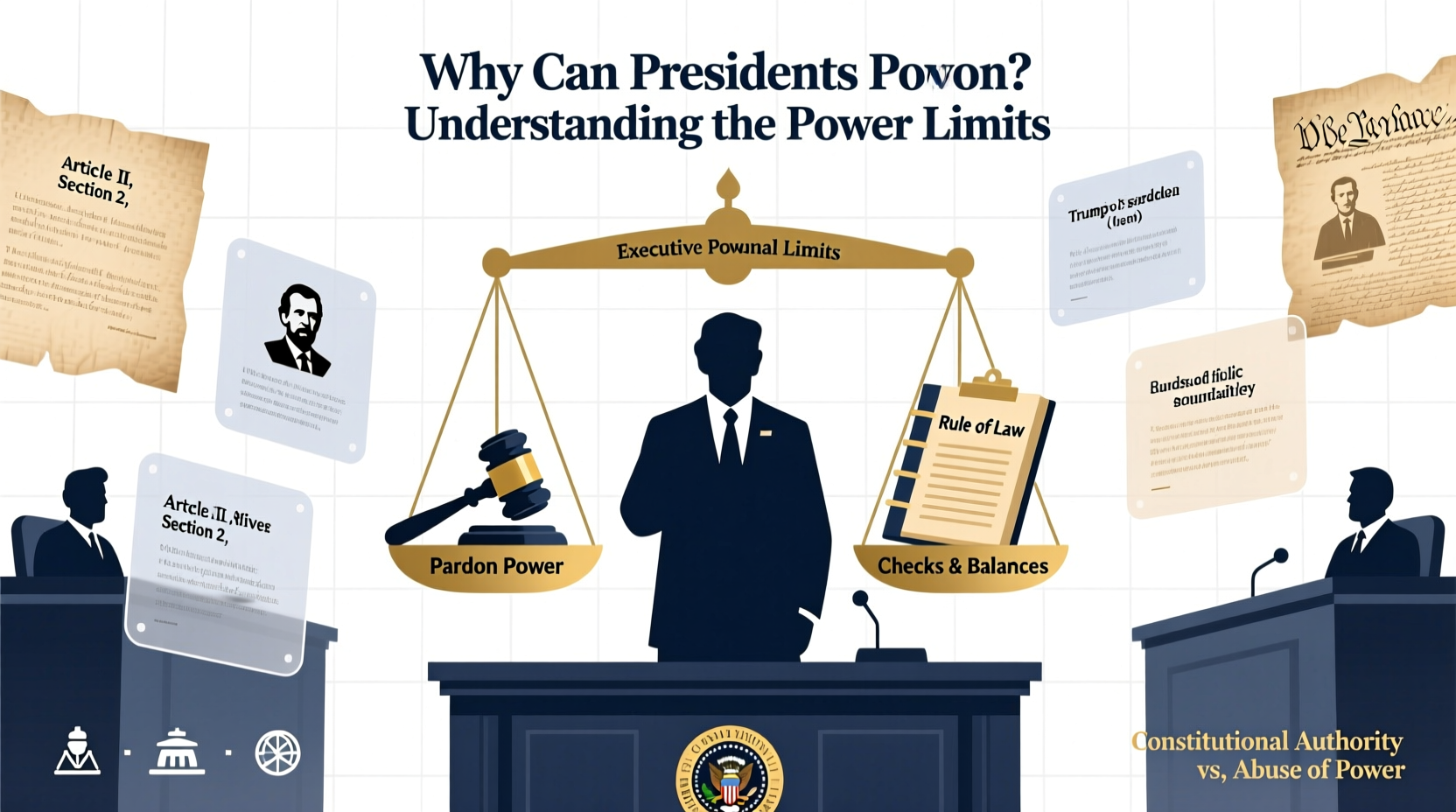
The authority to grant pardons stems from Article II, Section 2, Clause 1 of the U.S. Constitution, which states: “The President… shall have Power to grant Reprieves and Pardons for Offenses against the United States, except in Cases of Impeachment.” This clause gives the president unilateral power to commute sentences or fully pardon individuals convicted of federal crimes.
The Founding Fathers included this provision as a check on the rigidity of the legal system. They envisioned the president as a final arbiter capable of correcting judicial overreach, addressing injustices, or promoting national reconciliation after periods of turmoil. James Madison argued that such power was necessary to temper the severity of law with compassion, especially in politically charged cases.
Unlike many other executive powers, the pardon does not require congressional approval or judicial oversight. It is immediate and irrevocable once issued. However, its scope is strictly limited to federal offenses—state crimes fall outside presidential jurisdiction.
Tip: A presidential pardon forgives a federal conviction but does not erase the underlying facts of the crime or imply innocence.Types of Executive Clemency
The term “pardon” is often used broadly, but the executive branch recognizes several forms of clemency, each serving a distinct purpose:
- Pardon: Full forgiveness for a federal offense, restoring civil rights like voting or firearm ownership (if lost due to conviction).
- Commutation: Reduces a sentence but does not remove the conviction. For example, commuting a life sentence to 20 years.
- Reprieve: Temporarily delays the enforcement of a sentence, often to allow time for appeal or humanitarian reasons.
- Remission of Fine: Cancels all or part of a financial penalty associated with a conviction.
While all are forms of executive clemency, only a full pardon restores legal standing in the fullest sense. Commutations are more common, particularly in death penalty or long-term incarceration cases.
Key Limits of Presidential Pardons
Despite its sweeping nature, the pardon power is not absolute. Several well-established limitations define its reach:
- No authority over state crimes: A president cannot pardon someone convicted under state law, even if the conduct overlaps with federal violations.
- Cannot interfere with impeachment: The Constitution explicitly bars pardons in cases of impeachment. Once Congress impeaches an official, the president loses clemency power over related charges.
- Does not prevent future prosecution for separate crimes: A pardon for tax evasion, for instance, doesn’t shield the recipient from prosecution for unrelated fraud.
- No self-pardons: While untested in court, legal consensus holds that a president cannot pardon themselves. The Department of Justice has stated this would violate fundamental principles of impartial justice.
- Cannot undo civil liability: A pardon removes criminal penalties but does not bar civil lawsuits arising from the same conduct.
| Power | Allowed? | Notes |
|---|---|---|
| Pardon federal crimes | Yes | Covered under Article II |
| Pardon state crimes | No | Reserved for governors |
| Self-pardon | Unlikely / Unresolved | No precedent; widely considered unconstitutional |
| Pardon in impeachment cases | No | Explicitly prohibited by Constitution |
| Commuting death sentences | Yes | Within full clemency authority |
Historical Examples and Controversies
The use of presidential pardons has sparked debate throughout American history, particularly when perceived as politically motivated.
In 1974, President Gerald Ford pardoned former President Richard Nixon for any crimes he may have committed during the Watergate scandal. The move was intended to help the nation heal, but it drew fierce criticism and likely contributed to Ford’s loss in the next election. Still, some historians now view it as a courageous act of national unity.
“While the verdict of the public is still divided, I believe the decision to pardon Nixon spared the country a prolonged and divisive trial.” — Douglas Brinkley, Presidential Historian
A more recent case occurred in 2021 when President Donald Trump issued a pardon to Steve Bannon, who faced federal charges for allegedly misusing funds from a private border wall project. Critics argued the pardon undermined accountability, while supporters saw it as protection against political persecution.
These examples underscore a recurring tension: Is the pardon power a tool for justice or favoritism? The answer often depends on perspective, timing, and transparency.
How Pardons Are Requested and Processed
Although the president can issue pardons at their discretion, most formal requests go through the Office of the Pardon Attorney (OPA), a division of the U.S. Department of Justice. The process typically follows these steps:
- Eligibility Check: Applicants must wait at least five years after completing their sentence before applying for a pardon.
- Application Submission: Includes personal history, details of the offense, evidence of rehabilitation, and letters of support.
- Background Investigation: Conducted by the FBI and reviewed by the OPA.
- Recommendation: The Pardon Attorney submits a non-binding recommendation to the president.
- Presidential Decision: The president may accept, reject, or ignore the recommendation.
Notably, presidents are free to bypass this process entirely. Many high-profile pardons—especially those issued at the end of an administration—are granted without formal applications, raising concerns about transparency.
Tip: While the formal pardon process emphasizes rehabilitation and remorse, political allies often receive expedited or unsolicited pardons.Frequently Asked Questions
Can a president be prosecuted after leaving office?
Yes. A pardon does not apply unless charges are already filed or convictions obtained. Former officials can still face prosecution for federal crimes committed while in office unless specifically pardoned.
Does a pardon clear your criminal record?
No. A federal pardon forgives the punishment and restores certain rights, but the conviction remains on record. It does not expunge or seal the case.
Can Congress override a presidential pardon?
No. Once issued, a pardon cannot be reversed by Congress or the courts. It is final and binding under current constitutional interpretation.
Action Checklist: Understanding Pardon Implications
Whether you're a citizen concerned about executive power or someone exploring clemency options, consider these key actions:
- ✔️ Distinguish between federal and state-level offenses—only federal crimes are pardonable by the president.
- ✔️ Recognize that a pardon does not equate to exoneration; guilt is assumed, not erased.
- ✔️ Monitor late-term pardons, which often spark scrutiny due to potential abuse of power.
- ✔️ Understand that commutations are more common than full pardons and serve different purposes.
- ✔️ Advocate for transparency in clemency decisions, especially in politically sensitive cases.
Conclusion
The presidential pardon power reflects a delicate balance between mercy and accountability. Designed to correct injustices and unify a divided nation, it remains one of the most potent yet scrutinized authorities in the executive arsenal. While it offers hope for redemption, its misuse risks eroding public trust in the rule of law.
As citizens, understanding the origins, limits, and real-world impact of this power enables informed civic engagement. Whether evaluating past decisions or anticipating future ones, staying aware ensures that the pardon remains a tool of justice—not privilege.
💬 What do you think about recent presidential pardons? Share your views and join the conversation on executive power and accountability.