The term “dive bar” evokes a certain image: dim lighting, sticky floors, mismatched stools, and a jukebox playing classics from decades past. These unpretentious neighborhood spots are beloved for their authenticity, affordability, and no-frills atmosphere. But why are they called “dive” bars? The name might sound derogatory, but its roots run deep through American social and legal history. Understanding the origin of the term reveals not just linguistic quirks, but also the evolution of urban life, class dynamics, and drinking culture in the United States.
The Etymology of \"Dive\"
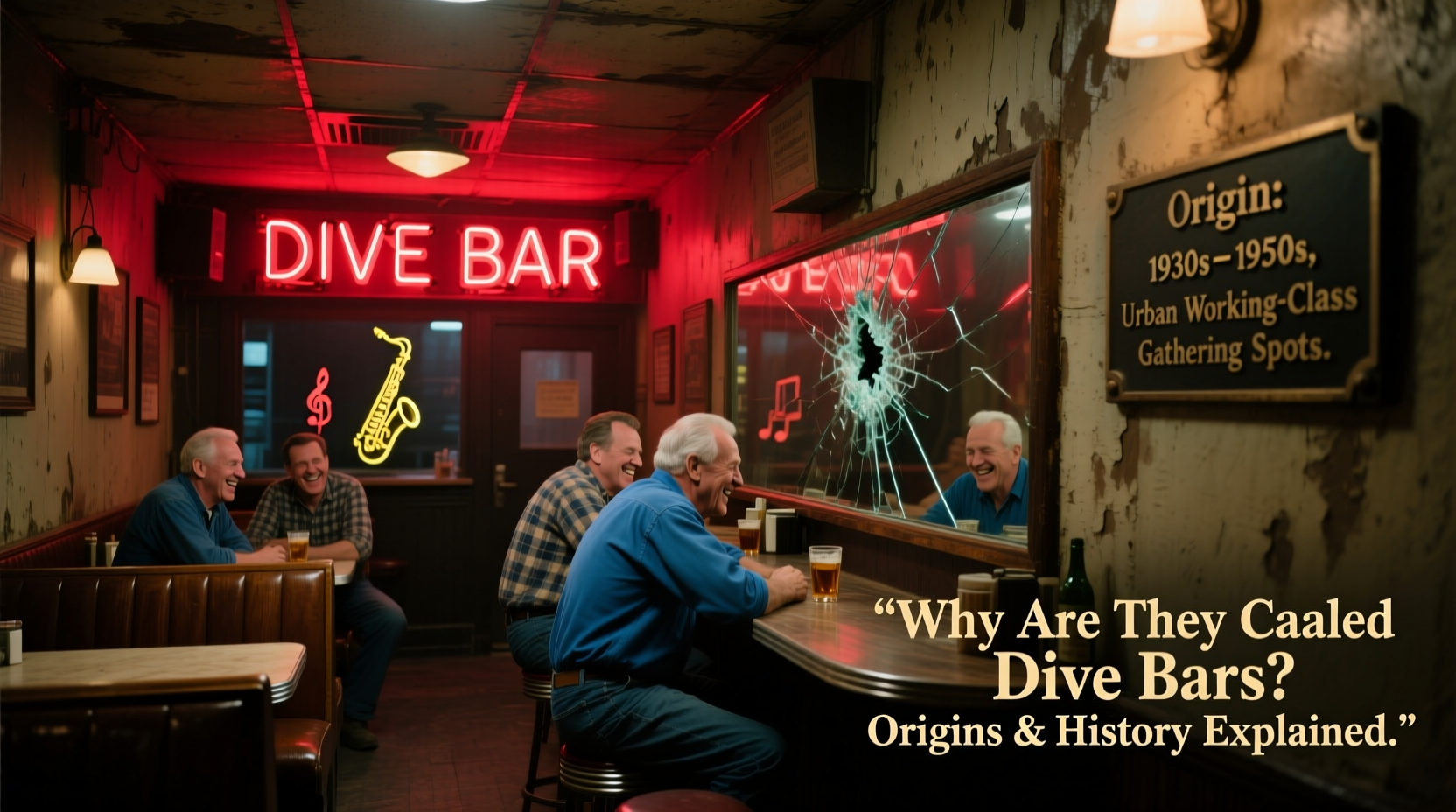
The word “dive” as slang for an undesirable or disreputable establishment dates back to the late 19th century. Originally, it was used to describe illicit gambling dens, brothels, or opium parlors—places considered morally or legally suspect. By the 1880s, newspapers and police reports began referring to low-end saloons as “dives,” emphasizing their seedy reputation and association with crime, vice, and poverty.
Lexicographers believe the term likely stems from the idea of “diving” into a hidden or underground world—physically descending into basements or back-alley entrances where these bars were often located. Many early dive bars operated below street level, both to avoid attention and due to cheaper rent. This literal descent reinforced the metaphorical notion of “diving” into society’s underbelly.
“Calling a place a ‘dive’ was never just about location—it was a social judgment wrapped in architectural reality.” — Dr. Helen Marrow, Urban Historian, Columbia University
Prohibition and the Rise of Underground Drinking
No discussion of dive bars is complete without examining the impact of Prohibition (1920–1933). When the 18th Amendment outlawed alcohol, legitimate saloons shuttered overnight. In their place emerged speakeasies—clandestine drinking spots accessible only by password or connection. While some were glamorous, many operated in basements, back rooms, or disguised storefronts, catering to working-class patrons who couldn’t afford upscale alternatives.
These covert venues laid the groundwork for what we now recognize as dive bars. They were often cramped, poorly lit, and operated outside legal scrutiny. After Prohibition ended, many of these establishments reemerged as legal bars, retaining their rough-around-the-edges character. Their survival depended on loyalty from local customers, not ambiance or decor.
In cities like Chicago, New York, and San Francisco, former speakeasies evolved into long-standing neighborhood institutions. Their histories were passed down through generations, preserving a sense of continuity and grit that defines the modern dive bar experience.
Timeline: Key Moments in Dive Bar History
- 1880s: Term “dive” enters common usage for disreputable bars and brothels.
- 1920–1933: Prohibition forces drinking underground; speakeasies proliferate.
- 1934: Repeal of Prohibition allows surviving speakeasies to operate legally.
- 1950s–60s: Urban renewal displaces many small bars; others adapt as community hubs.
- 1990s–2000s: Gentrification threatens dive bars; some gain cult status and survive.
- 2020s: Pandemic closures accelerate loss of dives; renewed appreciation sparks preservation efforts.
What Defines a True Dive Bar?
Despite the nostalgic charm, there’s no official checklist for what makes a dive bar. However, certain characteristics consistently appear across regions and eras:
- Minimal decor—often unchanged for decades
- Low prices on beer and well drinks
- Regular clientele, sometimes with nicknames known to staff
- Limited food offerings (if any)
- A jukebox, dartboard, or video poker machine
- No pretense or dress code
Crucially, dive bars are not defined by cleanliness or safety, though stereotypes often paint them as dirty or dangerous. In reality, many are meticulously maintained by owners who take pride in their role as community anchors. The distinction lies in intentionality: a dive bar doesn’t try to be trendy or Instagram-worthy. Its value is in consistency, accessibility, and emotional refuge.
Tip: If a bar markets itself as a “cool dive bar” with craft cocktails and $14 beers, it’s probably not a real dive. Authenticity can’t be curated.Dive Bars vs. Craft Cocktail Lounges: A Cultural Shift
The rise of the craft cocktail movement in the 2000s created a stark contrast between high-end mixology bars and traditional dives. Where one charges $18 for a meticulously garnished Manhattan made with house-infused bitters, the other offers a $3 PBR and a shot of well whiskey with a side of conversation.
This divergence reflects broader socioeconomic changes. As neighborhoods gentrify, longtime dive bars face pressure from rising rents and shifting demographics. Some close; others adapt by rebranding. But those that remain true to form often become symbols of resistance against homogenization.
| Feature | Dive Bar | Craft Cocktail Lounge |
|---|---|---|
| Price Range | $2–$6 drinks | $12–$20+ drinks |
| Atmosphere | Casual, unpolished, lived-in | Stylized, curated, quiet |
| Music | Jukebox, classic rock, local bands | Lo-fi, ambient, playlist-driven |
| Service Style | Friendly, familiar, no tipping pressure | Formal, knowledgeable, expected gratuity |
| Clientele | Locals, regulars, blue-collar workers | Trend-seekers, tourists, professionals |
Real Example: The White Horse Tavern, New York City
Founded in 1930, the White Horse Tavern in Manhattan’s West Village began as a working-class Irish pub. During Prohibition, it allegedly served alcohol under the guise of a restaurant. Over the decades, it became a haunt for writers like Dylan Thomas, who reportedly drank his final shots there in 1953.
Despite being surrounded by upscale restaurants and boutiques today, the White Horse has resisted change. It still features sawdust on the floor, cash-only policy, and bartenders who remember your usual. It’s been called a dive, a landmark, and a literary shrine—all accurate in different ways. Its survival illustrates how a bar can embody multiple identities while staying rooted in its original purpose: serving drinks to people who want to feel at home.
Preserving the Legacy: Are Dive Bars Disappearing?
Yes—and no. Many iconic dive bars have closed due to rising rents, changing ownership, or pandemic-related losses. Cities like San Francisco and Portland have seen significant turnover, with dives replaced by artisanal coffee shops or wine bars.
Yet there’s also a growing counter-movement. Organizations like the Dive Bar Preservation Society and local advocacy groups are documenting and defending these spaces. Some cities now offer grants or zoning protections for long-standing small bars. Social media campaigns celebrate dives not as relics, but as vital cultural infrastructure.
Checklist: How to Support Your Local Dive Bar
- Visit regularly—even if just for one drink
- Pay in cash to reduce fees for the owner
- Respect the regulars and the unwritten rules
- Leave a generous tip, especially on slow nights
- Encourage friends to go—without treating it like a novelty
- Advocate against unjust zoning or tax increases
Frequently Asked Questions
Is a dive bar the same as a sports bar or tavern?
No. While there can be overlap, sports bars focus on televised games and group viewing, often with large screens and themed promotions. Taverns may be more polished and family-friendly. Dive bars prioritize intimacy, affordability, and minimal distractions.
Can a dive bar be clean?
Absolutely. Cleanliness isn’t the defining trait. Many dive bars are impeccably maintained despite worn furniture or peeling paint. The key is function over form—clean enough to be safe and welcoming, not sterile or showy.
Why do people romanticize dive bars?
Dive bars represent authenticity in an increasingly commercialized world. They offer a space free from algorithms, branding, and performance. For many, they symbolize a simpler time—or at least a place where you can be exactly who you are, without explanation.
Conclusion: More Than Just a Place to Drink
The name “dive bar” may have begun as a slur, but it has been reclaimed as a badge of honor. These spaces are more than cheap drinks and dim lighting—they’re repositories of memory, resilience, and community. From their shadowed beginnings in Prohibition-era basements to their current status as endangered cultural landmarks, dive bars remind us that value isn’t always measured in polish or profit.
Next time you step into a dimly lit bar with a flickering neon sign and a bartender who nods instead of greets, remember: you’re not just having a drink. You’re participating in a living piece of American history.
💬 Know a dive bar worth saving? Share its story online, visit often, and help keep these irreplaceable spaces alive for future generations.