Snapping, streaks, and stories—Snapchat has evolved from a disappearing-message app into a full-fledged social platform where connection dynamics are both subtle and powerful. If you've ever paused mid-scroll and asked yourself, \"Why am I even following this person?\" you're not alone. Millions of users accumulate followings passively, often without conscious intent. Understanding the motivations behind these digital relationships is the first step toward reclaiming control over your online experience.
This article explores the psychological, social, and behavioral drivers that lead us to follow others on Snapchat. More importantly, it offers actionable strategies to evaluate, refine, and align your following list with your real-life values and digital well-being.
The Psychology Behind Following on Snapchat
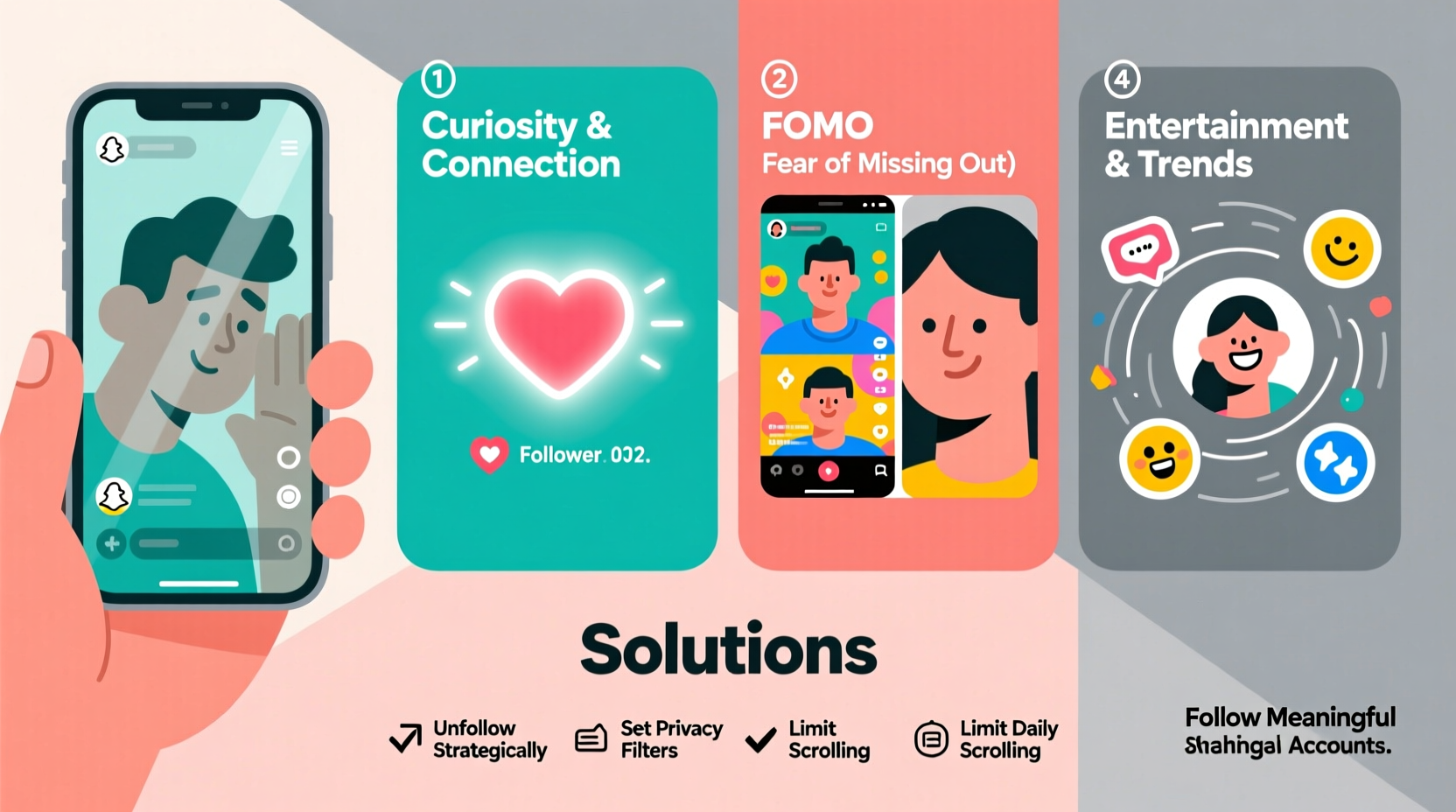
Following someone on Snapchat isn’t always a deliberate decision. Often, it happens through social osmosis—someone adds you, you accept out of politeness, or you follow back because they’re part of your extended circle. Unlike platforms like Instagram, where curated feeds encourage intentional curation, Snapchat’s emphasis on ephemeral content and real-time interaction fosters impulsive behavior.
Psychologists point to several cognitive biases at play:
- Social reciprocity: We feel obligated to follow back when someone follows us, even if we don’t know them well.
- Fear of missing out (FOMO): The idea that someone might share something interesting later keeps us connected to marginal contacts.
- Low-effort engagement: Tapping “Follow” takes less than a second, making it easy to accumulate connections without reflection.
These behaviors compound over time. What starts as a small network of close friends can grow into hundreds of followings, many of whom you haven’t interacted with in months—or ever.
Tip: Regularly audit your following list. If you wouldn’t start a conversation with someone, ask yourself why you’re still following them.Common Reasons People Follow Others on Snapchat
Understanding your own motivations is key to managing your digital footprint. Here are the most common reasons people follow others—some healthy, others worth reevaluating.
- Maintaining friendships: Close friends use Snapchat daily to share moments, sustain streaks, and stay emotionally connected.
- Work or school connections: Colleagues, classmates, or teammates may add each other for casual updates or group coordination.
- Crushes or romantic interest: Many follow potential partners to monitor their activity, hoping for engagement or insight into their life.
- Social obligation: Acquaintances, distant relatives, or coworkers add you during events, and you follow back to avoid seeming rude.
- Content consumption: Some users follow influencers, celebrities, or niche creators for entertainment or inspiration.
- Habitual acceptance: Notifications pop up; you tap “Accept” without thinking. This passive behavior leads to digital clutter.
Not all reasons are problematic. But when following becomes automatic rather than intentional, it can contribute to anxiety, distraction, and emotional fatigue.
When Following Becomes a Problem: Signs You Need a Reset
Your following list should enhance your experience—not drain it. Watch for these red flags:
- You feel anxious checking certain profiles regularly.
- You compare your life to others’ highlight reels.
- You spend more time observing than interacting meaningfully.
- You recognize fewer than half the people in your Stories feed.
- You’ve blocked or unfriended someone elsewhere but still follow them on Snapchat.
If multiple signs apply, it may be time to reassess your digital relationships.
Step-by-Step Guide to Cleaning Up Your Snapchat Following List
Taking control doesn’t mean going offline—it means curating an environment that supports your mental health and authentic connections. Follow this five-step process:
- Open your Friends page: Tap your profile icon, then “My Friends” to see everyone you’re following.
- Categorize your connections: Mentally sort them into groups: Close Friends, Casual Contacts, Obligation Follows, and Unknowns.
- Review recent activity: Check whose stories you actually watch. Snapchat shows last viewed timestamps—use them.
- Unfollow strategically: Remove accounts that cause stress, trigger comparison, or add no value. Note: Unfollowing doesn’t notify the person.
- Set boundaries: Decide on a personal rule—e.g., only follow people you’ve spoken to in the last 30 days.
This process can take 20–30 minutes initially but pays long-term dividends in focus and peace of mind.
Do’s and Don’ts of Managing Snapchat Connections
| Do | Don’t |
|---|---|
| Follow people who uplift or genuinely engage with you | Keep following ex-partners or toxic influences |
| Use lists or Best Friends to prioritize important contacts | Feel guilty about unfollowing someone you don’t connect with |
| Reconnect before refollowing after a break | Automatically accept every follow request |
| Review your following list quarterly | Compare your follower count to others as a measure of worth |
Real Example: How Sarah Regained Control of Her Snapchat Use
Sarah, a 24-year-old graphic designer, noticed she was spending over 45 minutes a day scrolling through Snapchat stories—many from people she hadn’t spoken to in over a year. She followed 217 accounts, including former coworkers, high school acquaintances, and influencers she didn’t particularly enjoy.
After feeling increasingly drained, she decided to clean house. Over one weekend, she reviewed each profile, unfollowed 132 accounts, and muted another 30. She kept only those she actively communicated with or found genuinely entertaining.
The result? Her daily app usage dropped by 60%, her mood improved, and she began initiating more real conversations. “I realized I wasn’t missing anything,” she said. “I was just feeding a habit, not a relationship.”
“Digital minimalism isn’t about isolation—it’s about intentionality. Every follow should serve a purpose, whether emotional, professional, or recreational.” — Dr. Lena Torres, Digital Wellbeing Researcher, Stanford University
Checklist: Building a Healthier Snapchat Experience
- ☐ Audit your current following list
- ☐ Unfollow at least 20% of inactive or negative-influence accounts
- ☐ Organize your Best Friends list based on actual interaction
- ☐ Turn off notifications for non-essential accounts
- ☐ Set a monthly reminder to review new followings
- ☐ Replace passive scrolling with active messaging for 3 people weekly
Frequently Asked Questions
Does unfollowing someone on Snapchat notify them?
No. Unlike blocking, unfollowing is silent. The person won’t receive any alert. However, they may notice they can no longer view your public Stories unless you’re mutual followers.
Can I follow someone again after unfollowing them?
Yes. Simply search their username and tap “Follow.” If their profile is set to private, they’ll need to approve your request. There’s no limit to how often you can follow/unfollow, though frequent toggling may trigger temporary restrictions.
Is it normal to have a small following on Snapchat?
Absolutely. Quality matters more than quantity. Many users maintain tight circles of 10–30 close contacts and report higher satisfaction. Snapchat’s strength lies in intimacy, not reach.
Take Back Control of Your Digital Space
Your Snapchat feed should reflect your life—not distort it. By understanding why you follow people and taking deliberate steps to refine your network, you transform the app from a source of distraction into a tool for meaningful connection. It’s not about cutting people out; it’s about making room for what truly matters.
Start today. Open the app, scroll through your friends list, and ask: “Does this person add value?” If the answer isn’t a clear yes, it’s okay to let go. A cleaner, calmer, more intentional Snapchat experience awaits.
💬 Ready to reset your Snapchat habits? Share your experience or tag a friend who needs this reminder. Your digital well-being starts with one tap.