When Samsung released the Galaxy S9 Plus in 2018, many owners of the Galaxy Note 8 faced a dilemma: was it time to upgrade? The Note 8, launched just months earlier in 2017, was already a powerhouse with its stylus functionality, dual cameras, and premium build. But the S9 Plus brought new features—improved audio, variable aperture cameras, and faster performance. Two years later, with both devices now well beyond their prime support windows, the question remains relevant for users still relying on either phone or considering a secondhand purchase. Is the S9 Plus truly a meaningful upgrade over the Note 8, or can the older flagship still hold its own in 2024?
Design and Display: Subtle Shifts, Same Premium Feel
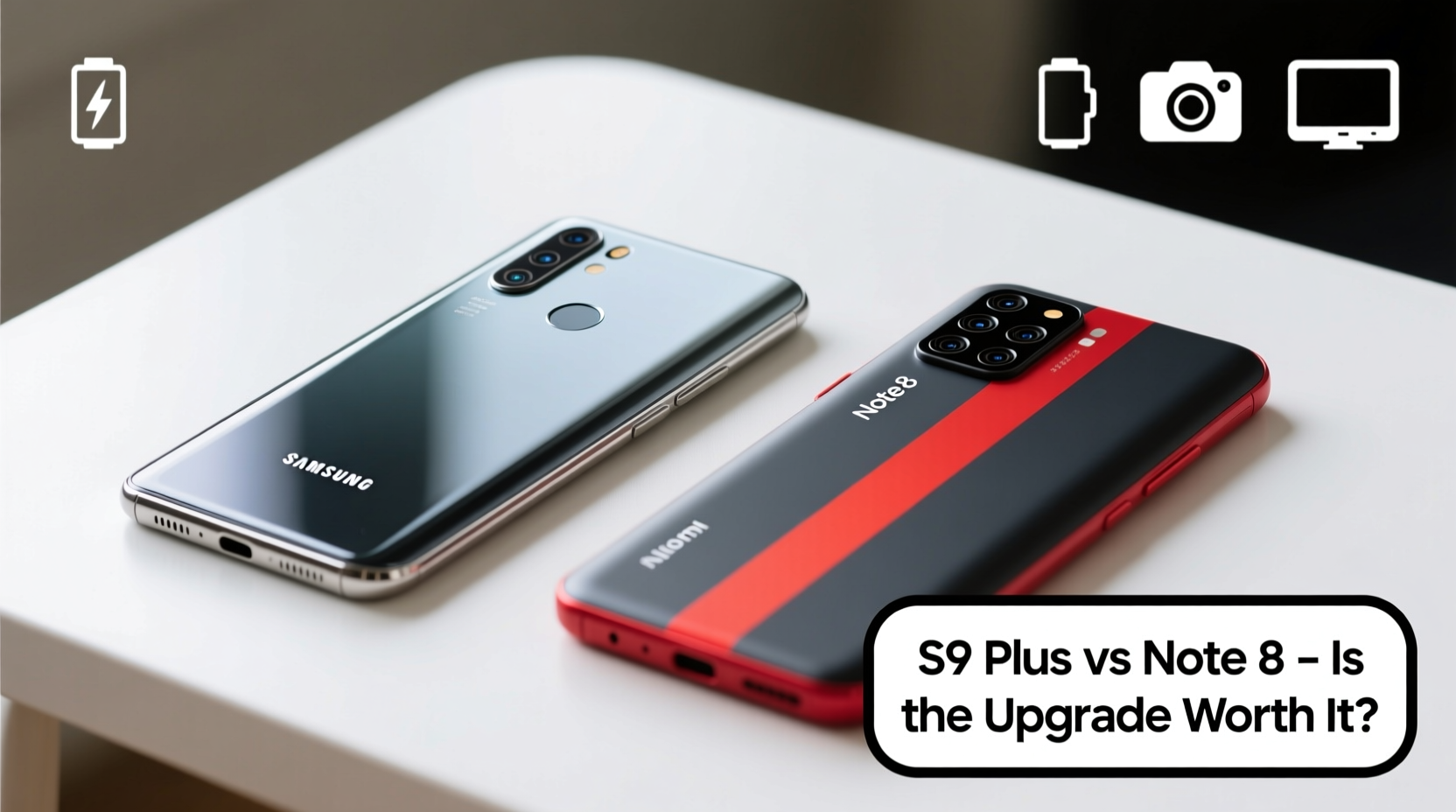
Both phones share Samsung’s high-end design language from that era: glass backs, aluminum frames, and curved AMOLED displays. The Note 8 sports a 6.3-inch Quad HD+ display, while the S9 Plus uses a slightly larger 6.2-inch panel—though the difference is negligible in real-world use. Both deliver vibrant colors, deep blacks, and excellent viewing angles.
The key distinction lies in ergonomics. The S9 Plus is shorter and wider, making it slightly easier to handle despite the similar screen size. The Note 8, with its taller aspect ratio, feels more stretched and can be harder to use one-handed. However, the S Pen integration gives the Note 8 a functional edge for note-takers, artists, and productivity-focused users.
Tip: If you rely on handwriting, sketching, or quick notes, the Note 8's S Pen offers unique utility the S9 Plus lacks.Performance and Software: Close Race, But S9 Plus Pulls Ahead
Under the hood, both phones launched with top-tier hardware—either the Exynos 9810 or Snapdragon 835 depending on region. While nearly identical in CPU architecture, the S9 Plus benefits from refined software optimization and higher RAM configurations in some markets (up to 6GB). More importantly, the S9 Plus received Android 10, while the Note 8 topped out at Android 9. This means better app compatibility, security patches, and access to newer features like dark mode and improved gesture navigation on the S9 Plus.
Benchmarks show only marginal differences in day-to-day performance. Both handle multitasking, gaming, and streaming without issue. However, long-term usability favors the S9 Plus due to extended software support and smoother updates.
Software Support Timeline
| Device | Main OS Updates | Security Updates | Last Supported OS |
|---|---|---|---|
| Galaxy Note 8 | 2 major versions | 3 years | Android 9 |
| Galaxy S9 Plus | 3 major versions | 4 years | Android 10 |
“Even small improvements in update cycles can significantly extend a device’s usable lifespan.” — David Kim, Mobile Analyst at TechInsight Asia
Camera Comparison: Innovation vs Consistency
The camera is where the S9 Plus makes its strongest case for an upgrade. The Note 8 featured a capable dual-camera system: 12MP wide and telephoto lenses, both with optical image stabilization (OIS). It produced sharp, natural-looking photos in daylight and solid low-light shots thanks to large pixels.
The S9 Plus upgraded this formula with a revolutionary feature: dual aperture. Its primary sensor could switch between f/1.5 and f/2.4, letting more light in during nighttime scenes. In practical terms, night shots on the S9 Plus are noticeably brighter and less grainy than those from the Note 8, especially in very dark environments.
- Note 8: Excellent color accuracy, reliable zoom via 2x telephoto lens
- S9 Plus: Better low-light performance, adjustable aperture, superior HDR processing
Video recording also improved. The S9 Plus introduced Super Slow-mo at 960fps (compared to 240fps on the Note 8) and added stereo audio recording with tuned AKG speakers. For content creators or casual videographers, these upgrades add tangible value.
Real-World Example: Night Photography Test
A user in Seoul regularly walks home through poorly lit alleys. On the Note 8, indoor and night shots required flash or post-processing to reveal details. After switching to the S9 Plus, they noticed immediate improvement—the phone automatically detected low light and shifted to f/1.5, capturing clear images without flash. While not DSLR quality, the convenience made a difference in daily documentation and social sharing.
Battery and Longevity: Where the Note 8 Still Shines
The Note 8 packs a 3,300mAh battery; the S9 Plus has a slightly smaller 3,500mAh unit. Despite the minor capacity increase, real-world usage shows comparable endurance—around 5–6 hours of screen-on time with moderate use.
However, battery health after years of use tells a different story. Many original Note 8 units today suffer from degraded batteries, but replacements are widely available and affordable. The S9 Plus, being newer, may have better-preserved cells in used models, but replacement costs are often higher due to demand.
Tip: Replace your battery every 2–3 years to restore near-original performance and extend device life.Checklist: Is Your Old Flagship Still Viable in 2024?
- Can it run essential apps (WhatsApp, Google Maps, banking) smoothly?
- Is the battery holding charge for at least a full day?
- Are critical security updates still available?
- Does the camera meet your current needs?
- Is storage sufficient, or can it be expanded via microSD?
If you answered “yes” to most, your device—whether Note 8 or S9 Plus—might still serve you well, especially as a secondary phone or for limited use.
Should You Upgrade? A Practical Decision Framework
Upgrading isn’t always about raw specs—it’s about fit. Consider these factors before deciding:
- You should upgrade if: You want better night photos, enjoy slow-motion video, need longer software support, or notice lag in newer apps.
- You can stay on Note 8 if: You love the S Pen, don’t shoot much at night, and mainly use basic apps. With a battery replacement, it remains functional.
- The S9 Plus wins on future-proofing, but the Note 8 wins on niche productivity.
Frequently Asked Questions
Can the Note 8 still run modern apps in 2024?
Yes, but with caveats. Most mainstream apps like WhatsApp, Gmail, and YouTube still work, though some newer versions may run slowly or lack features. Banking and shopping apps may drop support soon due to API limitations.
Is the S9 Plus waterproof like the Note 8?
Yes, both have IP68 rating—submersible up to 1.5 meters for 30 minutes. However, water resistance degrades over time, especially on older devices. Avoid intentional submersion.
Does the S9 Plus support wireless charging?
Yes, both phones support Qi wireless charging and even reverse charging via accessories (though not officially marketed).
Final Verdict: Worth It for Some, Not All
The upgrade from Note 8 to S9 Plus wasn’t revolutionary, but it was thoughtful. Samsung refined what worked: better cameras, louder speakers, smarter software, and longer support. For photographers, audiophiles, or those who value staying current, the S9 Plus was—and still is—a worthwhile step up.
Yet, the Note 8 remains impressively capable. If you depend on the S Pen or aren’t chasing the latest features, there’s no urgent need to replace it. With proper care—a fresh battery, regular cache cleaning, and conservative app usage—it can continue serving reliably.
“The best phone is the one that fits your life, not the one with the highest specs.” — Lena Patel, Digital Minimalism Advocate
Take Action Today
Whether you keep your Note 8, upgrade to an S9 Plus, or move to a newer model, assess your actual needs—not marketing hype. Test your current device: take a night photo, open five apps at once, check battery health. Let real performance guide your decision. And if you’ve held onto either phone this long, consider how much value you’ve already gotten from a device that once cost over $900.
💬 Still using a Note 8 or S9 Plus? Share your experience—what keeps you loyal, or what finally pushed you to upgrade? Join the conversation below.