
Taking time off work is a normal part of professional life. Whether it's due to health concerns, personal obligations, or unexpected circumstances, knowing how to communicate your absence effectively can preserve trust, maintain productivity, and support long-term career growth. The key isn’t in crafting elaborate stories, but in choosing credible, respectful, and situationally appropriate reasons that align with workplace culture and company policy.
This guide explores reliable, realistic, and responsible approaches to explaining work absences—focusing not on deception, but on strategic communication that protects your well-being while upholding professionalism.
Understanding the Purpose of a Work Absence Excuse
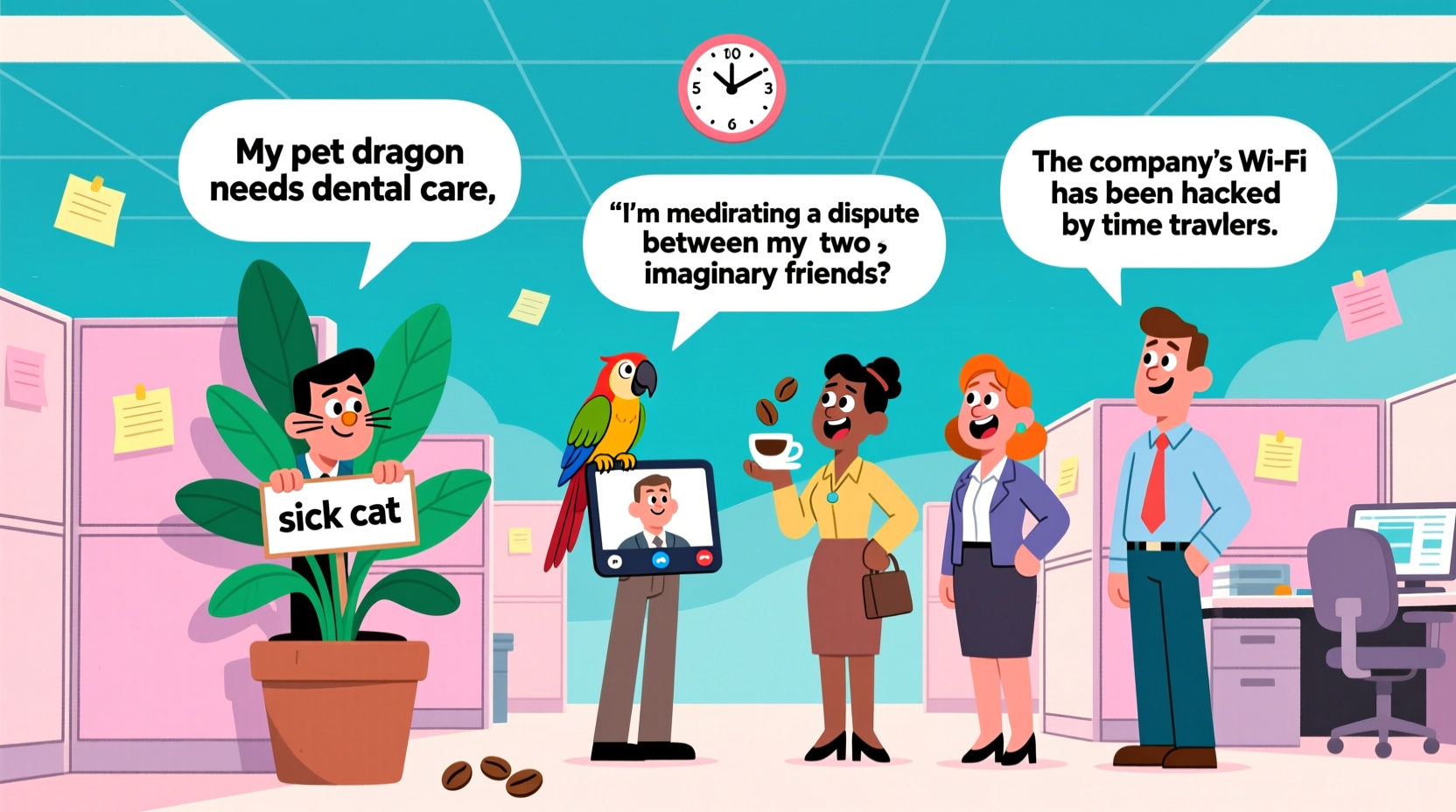
An excuse for missing work isn’t just about justification—it’s about maintaining transparency and accountability. Employers value honesty and advance notice far more than dramatic explanations. A well-delivered reason demonstrates respect for team dynamics, project timelines, and organizational expectations.
That said, not every personal issue needs full disclosure. The goal is to provide enough information to satisfy workplace protocols without oversharing or inviting unnecessary scrutiny.
“Employees who communicate proactively about absences tend to have higher levels of trust and engagement.” — Dr. Lena Peterson, Organizational Psychologist at Workplace Dynamics Institute
Top 5 Reliable Work Absence Reasons (With Realistic Scenarios)
The most effective excuses are rooted in truth, supported by common experience, and delivered with confidence. Below are five dependable categories, each paired with a mini case study to illustrate practical application.
1. Short-Term Illness or Recovery
A mild fever, stomach bug, or lingering cold are universally accepted reasons for a one- to two-day absence. These conditions are temporary, contagious, and justify staying home to avoid spreading illness.
Tip: Always mention you’re feeling better upon return and express appreciation for team coverage.Mini Case Study: Sarah, a marketing coordinator, woke up with a sudden fever and nausea. She emailed her manager before 8 a.m., stating: “I’m unwell this morning with flu-like symptoms and won’t be able to log in today. I’ve paused non-urgent tasks and will check in tomorrow if cleared to return.” Her team adjusted deadlines, and she returned the next day fully recovered. No work was lost, and trust increased due to her prompt communication.
2. Family Emergency or Caregiving Duty
Caring for a sick child, elderly parent, or managing an urgent household issue (e.g., burst pipe, power outage) provides a strong, empathetic basis for absence.
This category works best when used sparingly and supported by context. For example, mentioning school closures or a doctor’s appointment adds credibility.
3. Mental Health Day
More workplaces now recognize mental wellness as valid grounds for leave. Burnout, anxiety spikes, or emotional exhaustion can impair performance just like physical illness.
When using this reason, frame it positively: “I need a day to reset and return focused,” rather than “I can’t handle my workload.”
4. Medical Appointment (Non-Elective)
Dental procedures, specialist visits, vaccinations, or follow-ups are legitimate and often require proof only if requested. Scheduling these outside work hours isn’t always possible.
Use phrasing like: “I have a required medical appointment that couldn’t be scheduled after hours.” Avoid over-explaining the nature of the visit unless necessary.
5. Transportation or Weather-Related Disruption
Severe weather, public transit delays, car trouble, or flight cancellations are external factors beyond control. These are especially credible during winter months or in urban areas with unreliable infrastructure.
Example: “Due to a snowstorm and road closures, local authorities advised against travel. I’ll be unable to commute safely today.”
Do’s and Don’ts: Navigating Absence Communication
| Do | Don’t |
|---|---|
| Notify your supervisor early in the day (or night before if possible) | Wait until midday to inform your team |
| Keep the message concise and professional | Provide excessive personal details |
| Offer to delegate urgent tasks if feasible | Promise availability while absent |
| Follow up upon return with a brief update | Disappear without closure |
| Use company-approved channels (email, Slack, HR portal) | Text your boss casually unless permitted |
How to Prepare for Future Absences: A Step-by-Step Guide
Being ready for unplanned leave reduces stress and minimizes disruption. Follow this timeline to build resilience into your work routine.
- Week 1: Document ongoing projects, including contact points, deadlines, and file locations. Share access securely with your manager or colleague.
- Week 2: Set up an out-of-office email template with a neutral tone: “I am currently away from the office due to unforeseen circumstances and will respond upon return.”
- Month 1: Establish a trusted coworker for task handover. Build rapport so they feel comfortable stepping in.
- Ongoing: Use calendar blocks to mark potential conflict dates (e.g., annual checkups, family events).
- Before Any Leave: Send a pre-absence summary: “Here’s what’s pending, where things stand, and who to contact if needed.”
FAQ: Common Questions About Work Absences
Can I take a personal day without giving a specific reason?
Yes, in many modern workplaces—especially those offering PTO (Paid Time Off)—you are not obligated to explain. Simply state: “I’ll be using a personal day and will return tomorrow.” However, policies vary; consult your employee handbook.
What if my employer asks for proof of illness?
Unless mandated by company policy or extended leave duration, employers typically cannot demand medical documentation for a single day. If pressed, offer to provide a note upon request—but only if legally required or contractually agreed.
Is it okay to use the same excuse multiple times?
Repetition reduces credibility. Using “car trouble” three times in two months raises suspicion. Rotate valid reasons thoughtfully and prioritize honesty. Better yet, use vacation days when no emergency exists.
Checklist: Preparing for a Professional Absence
- ☑ Notify supervisor before start of workday
- ☑ Briefly state reason without oversharing
- ☑ Pause or delegate urgent tasks
- ☑ Update calendar and status on communication tools
- ☑ Save draft return message to send first thing back
- ☑ Express gratitude for team flexibility upon return
When Honesty Works Better Than an \"Excuse\"
In progressive work environments, directness often outperforms evasion. Saying, “I’m having a tough mental health day and need to recharge to perform well tomorrow,” can strengthen relationships when delivered respectfully.
One tech startup CEO shared: “We had an engineer say he needed a day off because he was overwhelmed. He came back refreshed, fixed a critical bug, and improved team morale by normalizing self-care. That honesty was worth more than any excuse.”
Tip: If your workplace supports wellness initiatives, use official leave types (e.g., mental health day, personal wellness leave) instead of inventing reasons.Conclusion: Building Trust Through Responsible Absence Management
The best work absence excuse isn’t clever—it’s believable, timely, and aligned with your actual needs. Relying on truthful, low-drama explanations fosters a culture of mutual respect. Over time, consistent behavior builds credibility, making future absences easier to manage without scrutiny.
Instead of searching for the “perfect lie,” invest in systems that make honest communication safe and efficient. Plan ahead, document responsibilities, and normalize taking necessary breaks. Your well-being—and your reputation—will benefit in the long run.
💬 Have a proven strategy for handling work absences? Share your experience in the comments and help others navigate this universal workplace challenge with integrity and confidence.