Accessing your money should be convenient, but never at the cost of security. Whether you're planning a large withdrawal, managing daily expenses, or traveling abroad, knowing how to withdraw funds safely is essential for protecting your financial well-being. With rising digital threats, ATM skimming, and fraud attempts, it's crucial to adopt smart, tested methods that balance accessibility with protection.
This guide walks through proven strategies for withdrawing cash and transferring funds securely across different scenarios—bank branches, ATMs, mobile apps, peer-to-peer platforms, and international travel. You'll learn not only the safest techniques but also how to avoid common pitfalls that could compromise your account or personal information.
1. Use Trusted ATMs with Security in Mind
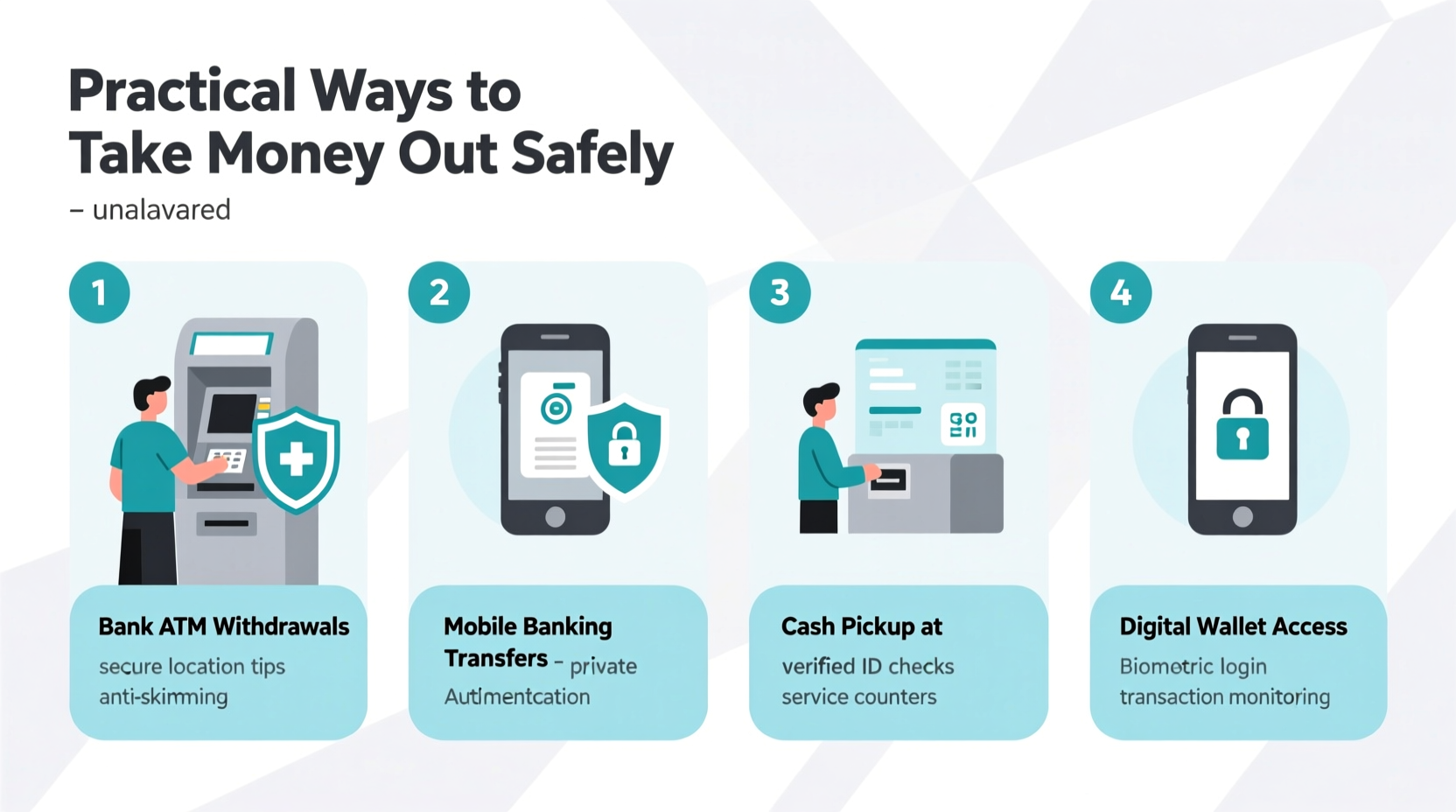
ATMs remain one of the most common ways to access cash, but not all machines are equally safe. Criminals often install skimming devices on unmonitored or poorly lit ATMs to capture card data and PINs. To minimize risk, always choose ATMs located inside bank branches or secure retail environments such as pharmacies or grocery stores.
Tip: Cover your hand when entering your PIN—even if no one appears nearby. Hidden cameras can still record keystrokes.Avoid standalone ATMs in isolated areas like gas stations or parking lots, especially at night. These are more likely to be tampered with. Before inserting your card, inspect the machine for signs of tampering—loose components, mismatched colors, or unusual attachments around the card slot or keypad.
“Over 70% of ATM fraud cases occur at non-bank-owned machines,” says James Lin, Senior Fraud Analyst at National Financial Security Group. “Stick to your own bank’s network whenever possible.”
2. Withdraw Through Your Bank Branch for Maximum Control
When handling large sums or sensitive transactions, visiting a physical bank branch offers the highest level of security and oversight. Teller-assisted withdrawals allow you to verify identity in person, confirm transaction details immediately, and receive a printed receipt for your records.
For amounts exceeding $1,000, some banks require advance notice due to cash availability and anti-money laundering regulations. Calling ahead ensures a smooth experience and prevents unnecessary trips. Always bring valid government-issued ID and know your account number or have your debit card ready.
| Withdrawal Method | Max Daily Limit (Typical) | Security Level | Best For |
|---|---|---|---|
| In-branch teller | $5,000+ (with notice) | ★★★★★ | Large or urgent needs |
| Bank-affiliated ATM | $500–$1,000 | ★★★★☆ | Daily cash needs |
| Third-party ATM | $300–$500 | ★★☆☆☆ | Emergency use only |
| Cashback at point-of-sale | $100–$200 | ★★★★☆ | Combining purchase + cash |
3. Leverage Mobile Banking Safely
Modern banking apps offer features like instant transfers, mobile check deposits, and even cash withdrawal via QR codes at select ATMs—eliminating the need to insert your card. This reduces exposure to skimmers and enhances control over your session.
To use mobile withdrawal features safely:
- Ensure your device has up-to-date operating system and antivirus software.
- Only access your app over secure Wi-Fi or cellular networks—never public hotspots.
- Enable biometric login (fingerprint or face recognition) and two-factor authentication.
- Log out after each session and disable auto-login features.
4. Step-by-Step Guide: How to Make a Secure Cash Withdrawal
Follow this sequence every time you withdraw money to ensure consistency and safety:
- Plan Ahead: Know how much you need and where you’ll withdraw it. Avoid last-minute decisions that lead to risky locations.
- Choose Location Wisely: Select an ATM within a bank or busy store during daylight hours.
- Inspect the Machine: Check for loose parts, glue residue, or misaligned panels that suggest tampering.
- Shield Your PIN: Use your body or free hand to block the keypad completely.
- Take Receipts: Keep them for tracking; never leave them behind at the machine.
- Check Balance After: Review your account online shortly after to confirm correct amount withdrawn.
- Report Suspicious Activity Immediately: Call your bank if you notice unauthorized transactions.
5. Real-World Scenario: Avoiding a Skimming Trap
Sophia, a small business owner, needed $600 in cash for weekend market sales. She drove to a convenience store late Friday evening and approached an ATM near the entrance. As she inserted her card, she noticed the card reader felt unusually thick and wobbled slightly when she tugged it.
Instead of proceeding, she stepped back, took a photo of the machine, and called her bank’s fraud line. The representative confirmed it was a known skimmer location and advised her to use the bank’s downtown branch instead. By acting cautiously, Sophia avoided having her card cloned and potentially losing thousands.
This example shows how simple observation and hesitation can prevent major financial loss.
6. Alternative Methods for Safe Fund Access
Beyond traditional ATMs and branches, several modern tools provide secure access to funds without exposing your card:
- Cashback at Retail Stores: When making a debit purchase, request extra cash. Since no ATM is involved, there’s zero risk of skimming.
- Peer-to-Peer Apps: Services like Zelle, Venmo, or Cash App let you send money directly to trusted contacts who can repay in cash.
- Prepaid Travel Cards: Load funds before trips and use them like debit cards abroad, limiting exposure of primary accounts.
- Mobile Wallet Withdrawals: Some banks support NFC-based ATM withdrawals using Apple Pay or Google Pay—your actual card number is never shared.
“Using contactless methods like mobile wallets adds a layer of tokenization that makes stolen data useless,” explains Maria Chen, Cybersecurity Advisor at FinTrust Solutions.
7. Common Mistakes That Compromise Safety
Even experienced users make errors that increase vulnerability. Watch out for these frequent missteps:
- Leaving receipts with account details in public bins.
- Using the same PIN across multiple cards.
- Failing to monitor accounts weekly for unauthorized activity.
- Withdrawing cash while distracted (e.g., talking on the phone).
- Allowing others to handle your card during transactions.
8. Frequently Asked Questions
Can I increase my daily ATM withdrawal limit?
Yes, most banks allow temporary or permanent increases upon request. Contact customer service or visit a branch with identification. Approval depends on your account history and security verification.
What should I do if my card is swallowed by an ATM?
First, note the time, location, and machine ID. Then call your bank immediately. If it's a bank-owned ATM, they may be able to release it the same day. Otherwise, expect a replacement card within 3–7 business days.
Is it safer to withdraw larger amounts less frequently?
It depends. Larger withdrawals reduce exposure to ATMs but increase physical risk if cash is lost or stolen. A balanced approach—moderate amounts from secure locations—is generally best.
Final Thoughts: Stay Proactive, Stay Protected
Accessing your money doesn’t have to mean compromising your security. By combining awareness, technology, and disciplined habits, you can confidently withdraw funds in any situation. Whether you're pulling out $20 or $2,000, the principles remain the same: verify the environment, protect your information, and stay alert.
Financial safety isn't just about passwords and encryption—it starts the moment you decide where and how to get cash. Make smart choices today to safeguard your tomorrow.
💬 Have a tip or experience with safe withdrawals? Share your story in the comments and help others build better financial habits!