
In an age where smartphones are nearly extensions of our bodies, concerns about long-term exposure to radiofrequency (RF) radiation have grown. While the scientific community continues to study potential health effects, regulatory agencies like the World Health Organization’s International Agency for Research on Cancer (IARC) classify RF radiation as \"possibly carcinogenic to humans.\" This doesn’t mean panic is warranted—but it does justify a cautious approach. The good news: you don’t need to ditch your phone to reduce exposure. With practical, everyday adjustments, you can significantly lower your RF radiation intake while staying connected.
Understanding Cell Phone Radiation
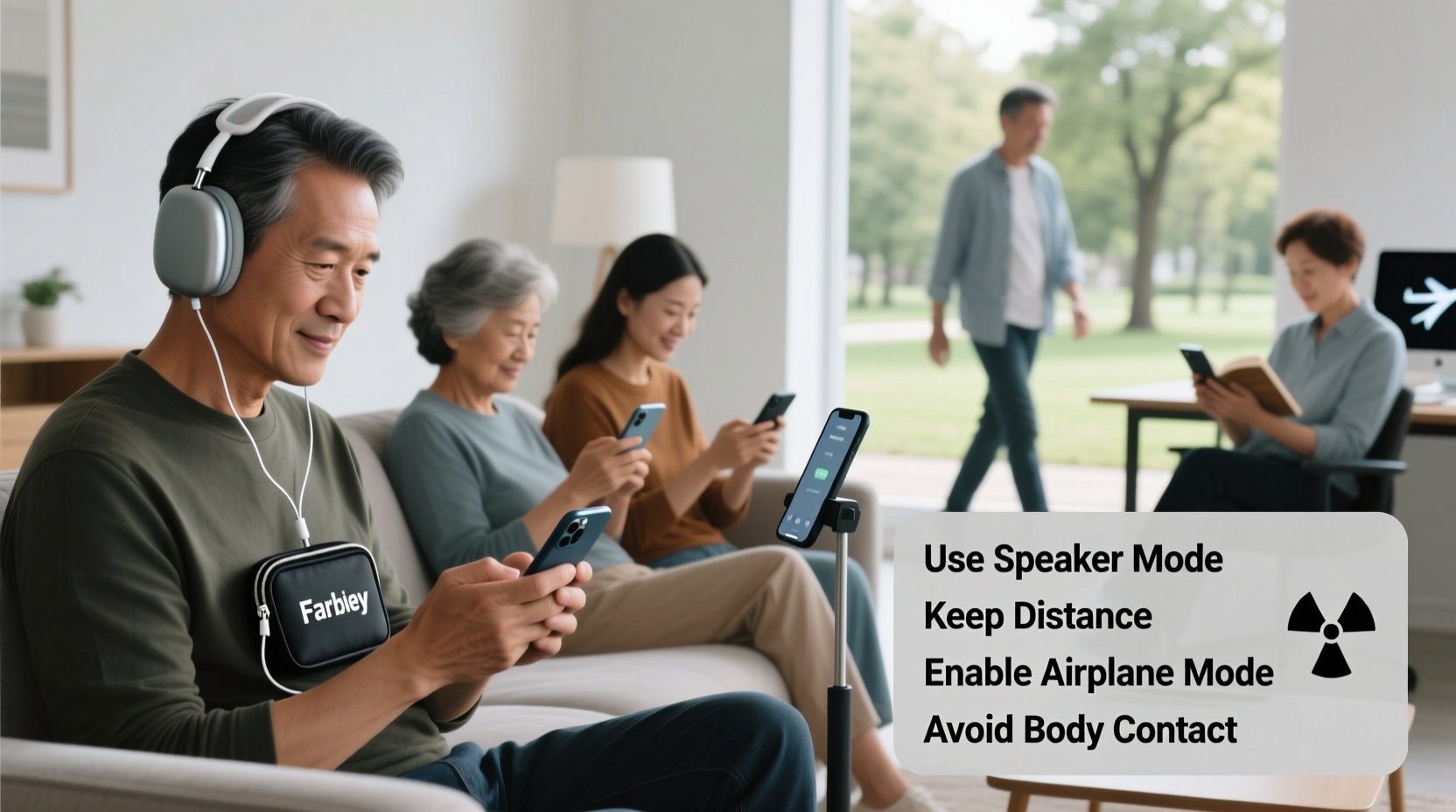
Cell phones emit non-ionizing radiation in the form of radiofrequency (RF) energy when transmitting signals to cell towers. Unlike ionizing radiation (such as X-rays), RF radiation lacks enough energy to directly damage DNA. However, prolonged or intense exposure may lead to biological effects, including tissue heating and possible oxidative stress.
The amount of radiation emitted depends on signal strength: weaker signals force phones to boost power, increasing emissions. Distance from the body also plays a crucial role—the closer the device, the higher the absorption. The Specific Absorption Rate (SAR) measures how much RF energy the human body absorbs, but even SAR-compliant phones can expose users to unnecessary levels if used improperly.
“While no direct causal link has been established between cell phone use and cancer, reducing unnecessary exposure is a prudent public health measure.” — Dr. John Moulder, Professor Emeritus of Radiation Biology, Medical College of Wisconsin
Effective Strategies to Reduce Exposure
Minimizing radiation doesn’t require drastic lifestyle changes. Small, consistent habits can yield meaningful reductions in daily exposure.
1. Increase Distance Between You and Your Phone
Distance is your most powerful tool. RF energy decreases dramatically with distance due to the inverse-square law—doubling the distance reduces exposure to one-fourth.
Tip: Use speakerphone or wired headphones instead of holding the phone to your ear during calls.2. Text Instead of Calling When Possible
Texting keeps the phone away from your head and typically involves shorter transmission bursts than voice calls. It’s especially useful in areas with poor reception, where phones ramp up power.
3. Limit Use in Low-Signal Areas
In elevators, basements, or rural zones, phones work harder to maintain connection, emitting more radiation. Avoid making calls in these environments or enable airplane mode when not actively using connectivity.
4. Avoid Carrying Phones Directly on the Body
Pockets, bras, or waistbands place the phone in close contact with sensitive tissues. Use a bag, backpack, or keep it on a desk whenever feasible.
5. Use Airplane Mode at Night or During Inactivity
When sleeping or not expecting calls, switch to airplane mode. This stops all RF transmissions. If you need the alarm, rest assured—it still works in airplane mode.
Do’s and Don’ts: A Quick Reference Table
| Do’s | Don’ts |
|---|---|
| Use speakerphone or wired headsets | Hold the phone against your ear for long calls |
| Carry phone in a bag or briefcase | Keep phone in pants or shirt pocket |
| Enable airplane mode when not in use | Sleep with phone under pillow or next to head |
| Text instead of calling in weak signal zones | Make calls in elevators, subways, or moving vehicles |
| Use Wi-Fi instead of cellular data when available | Rely on Bluetooth headsets for long durations (they emit low-level radiation too) |
Step-by-Step Guide to a Lower-Radiation Daily Routine
Integrating radiation-reduction habits into your day is simple with this structured approach:
- Morning: Start the day by checking messages in airplane mode, then disable it only when needed. Avoid scrolling in bed with the phone near your face.
- Commute: If using public transit, keep the phone in a bag. Disable mobile data if Wi-Fi isn’t required.
- Workday: Place the phone on a desk, not your lap. Use a landline or VoIP app on a computer for long calls.
- Evening: After dinner, switch to airplane mode or turn off the phone. Charge it in another room overnight.
- Night: Replace bedtime scrolling with reading. If using the phone as an alarm, ensure it’s at least 3 feet from your bed.
Real-Life Example: Sarah’s Safer Phone Habits
Sarah, a 34-year-old project manager, used to carry her phone in her back pocket and sleep with it under her pillow. After reading about RF exposure risks, she made gradual changes. She now uses a small crossbody bag during commutes, texts colleagues instead of calling unless necessary, and keeps her phone on a nightstand across the room. Within weeks, she noticed less neck tension and improved sleep quality—likely due to reduced screen time, but possibly influenced by lower RF exposure. “I didn’t realize how attached I was,” she said. “Now I feel more in control of my tech use.”
Checklist: Daily Radiation Reduction Actions
- ✅ Keep phone at least 6 inches from your body when in use
- ✅ Use speakerphone, wired headset, or text for communication
- ✅ Avoid making calls in low-signal areas (elevators, parking garages)
- ✅ Carry phone in a bag, not in pockets or against skin
- ✅ Enable airplane mode at night or during extended offline periods
- ✅ Charge phone away from your bed or workspace
- ✅ Limit children’s phone use and encourage texting over calling
Frequently Asked Questions
Is cell phone radiation really dangerous?
Current evidence does not confirm that typical cell phone use causes harm, but research is ongoing. Some studies suggest a possible link between heavy, long-term use and certain brain tumors. As a precaution, health experts recommend minimizing exposure, especially for children whose skulls are thinner and brains still developing.
Do radiation-blocking cases actually work?
Many “anti-radiation” phone cases claim to shield users, but independent testing shows mixed results. Some may block signals, forcing the phone to increase transmission power—which could raise radiation output. Cases that cover the front or sides often interfere with antenna performance without providing meaningful protection. Distance remains more effective than any shielding product.
Can Wi-Fi reduce my radiation exposure?
Yes. Using Wi-Fi for calls (VoIP) or messaging apps reduces reliance on cellular networks, which generally emit stronger RF signals. Wi-Fi routers emit radiation too, but exposure levels are far lower due to greater distance and lower power output. Prioritize Wi-Fi over 4G/5G when possible, especially for streaming or large downloads.
Conclusion: Small Changes, Meaningful Protection
You don’t need to abandon your smartphone to protect yourself from radiation. By understanding how and when your phone emits the most RF energy, you can make informed choices that reduce exposure without sacrificing convenience. Simple actions—like keeping your phone out of your pocket, using speaker mode, and switching to airplane mode at night—add up to significant long-term benefits. These habits are especially important for children and pregnant women, who may be more vulnerable to environmental exposures.
💬 Start today: Pick two strategies from this article and commit to them for one week. Share your experience in the comments—your insight could help others build safer digital habits.