Sophistication in wine service isn’t about price or prestige—it’s about precision. It’s the quiet confidence of pouring a 20-year tawny port after a rich duck confit, not before; it’s knowing that a dry, bone-chilled fino sherry belongs at the beginning of a meal, not the end. Port and sherry are among the world’s most nuanced fortified wines—each shaped by centuries of tradition, terroir, and meticulous oxidative or biological aging. Yet confusion persists: Are they interchangeable? Can you serve sherry with cheese and port with dessert—and call it done? Not quite. True sophistication lies in understanding *why* one works where it does, how serving conditions recalibrate its character, and what subtle signals—from the weight of the glass to the ambient temperature—invite deeper appreciation. This isn’t about rigid rules. It’s about intentionality.
The Fundamental Divide: Oxidative vs Biological Aging
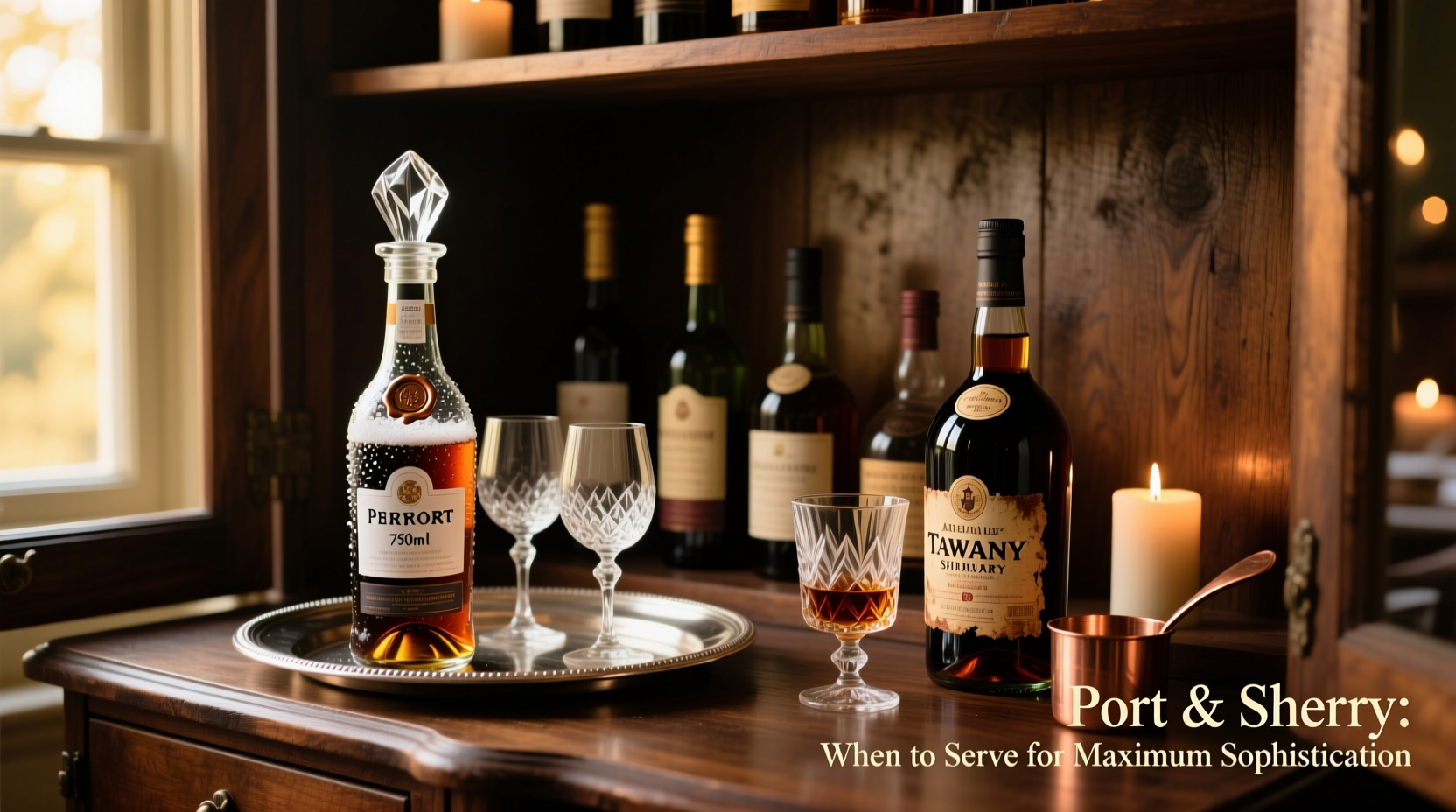
Before discussing when to serve port or sherry, grasp their core divergence—not in origin (both are regionally protected), but in philosophy of aging.
Sherry, from Spain’s Jerez triangle, is defined by biological aging under a living layer of yeast called flor. This veil protects the wine from oxygen, yielding crisp, saline, almond-kissed styles like fino and manzanilla. When flor dies or is intentionally removed, the wine transitions to oxidative aging—producing amontillado, oloroso, and PX. Even then, the initial biological phase imprints structure and finesse.
Port, from Portugal’s Douro Valley, is inherently oxidative—fortified early to preserve fruit intensity, then aged in large oak casks or bottles, depending on style. Ruby ports see minimal oxidation; tawnies undergo years of gradual, controlled exposure, developing caramel, walnut, and dried fig notes. Vintage port ages reductively in bottle, only revealing oxidative complexity after decades.
This distinction governs everything that follows: temperature sensitivity, food compatibility, and even the psychological rhythm of a meal.
Tip: Never serve fino or manzanilla above 10°C (50°F)—warmth kills its delicate flor-derived freshness. Conversely, never serve vintage port below 16°C (61°F); cold mutes its layered fruit and tannic architecture.When to Serve Sherry: The Aperitif Imperative
Sherry’s place is almost always at the start—not as an afterthought, but as a deliberate palate-awakening act. Its high acidity, saline minerality, and volatile acidity (in well-made examples) cut through richness and stimulate salivation. This is especially vital in modern dining, where meals often begin with fatty, umami-laden small plates.
Fino and manzanilla excel with salt-cured foods: jamón ibérico, marcona almonds, olives, and fried seafood. Their razor-sharp acidity cleanses the palate between bites, preventing fatigue. Amontillado bridges the gap—dry enough for appetizers, complex enough for roasted poultry or mushroom risotto. Oloroso, richer and nuttier, pairs beautifully with game terrines or aged sheep’s milk cheeses like manchego—but still functions as a pre-dinner wine, not a digestif.
A real-world example illustrates this: At Taberna Palo Cortado in Seville, sommelier Rafael Mora routinely opens a flight of three sherries before dinner service. Guests receive a chilled fino first, followed by a slightly warmer amontillado, then a nutty oloroso—all within 20 minutes. “It’s not about drinking more,” he explains. “It’s about calibrating attention. The fino wakes them up. The amontillado teaches them to taste depth. The oloroso prepares them for the main course’s weight.” No dessert wine appears until the final course—and it’s never sherry.
“Sherry is the ultimate ‘before’ wine—not because it’s light, but because it’s structurally alert. It doesn’t soothe; it focuses.” — Sarah Jane Evans MW, Master of Wine and co-chair of the Decanter World Wine Awards
When to Serve Port: The Digestif Discipline
Port belongs after the meal—not as a sugary conclusion, but as a resonant, contemplative finale. Its role is to harmonize with residual sweetness, fat, and spice while offering structural counterpoint. But not all ports serve the same purpose.
Ruby and LBV (Late Bottled Vintage) ports retain vibrant blackberry and plum fruit, moderate tannins, and noticeable alcohol warmth. They pair best with dark chocolate (70%+ cocoa), blue cheeses like stilton, or spiced desserts such as ginger cake. Serve slightly cool (15–16°C / 59–61°F) to keep fruit bright and alcohol integrated.
Tawny ports, especially those labeled with age indications (10, 20, 30 years), are oxidative masterclasses. Their caramel, toasted hazelnut, and orange-zest notes evolve slowly on the palate. They shine with nut-based desserts (walnut tart, praline), crème brûlée, or even a simple slice of mature cheddar. Serve at 13–14°C (55–57°F)—cooler than ruby, warmer than sherry—to let oxidative complexity unfold without heaviness.
Vintage port is the rarest and most demanding. Unfiltered and tannic in youth, it requires decanting and 2–3 hours of air to soften. It demands silence, not chatter—best served alone or with very mild accompaniments: a sliver of 36-month-aged gouda, a few Marcona almonds, or nothing at all. Serve at 16–18°C (61–64°F) to express its full aromatic spectrum.
| Port Style | Ideal Serving Temp | Best Pairings | Decanting Required? |
|---|---|---|---|
| Ruby / LBV | 15–16°C (59–61°F) | Dark chocolate, stilton, spiced cake | No (LBV may benefit from brief decant if young) |
| Tawny (10–20 yr) | 13–14°C (55–57°F) | Caramel tart, walnuts, crème brûlée | No |
| Vintage | 16–18°C (61–64°F) | Mature gouda, almonds, silence | Yes—2–4 hours before serving |
| White Port (dry) | 8–10°C (46–50°F) | Oysters, grilled sardines, citrus salads | No |
The Critical Role of Glassware and Temperature Control
Even perfect timing fails without precise delivery. Glassware and temperature aren’t details—they’re essential variables that reshape perception.
Sherry demands small, narrow glasses: the traditional copita (a tulip-shaped sherry glass) or a white wine glass with a tapered rim. Why? To concentrate volatile aromas—especially the delicate acetaldehyde note that defines fino—while minimizing ethanol burn. A wide Bordeaux glass disperses these nuances and amplifies alcohol, flattening the wine’s tension.
Port benefits from a larger bowl—but not oversized. A classic port glass (slightly smaller than a standard red wine glass, with a gentle inward curve) allows controlled aeration without overwhelming volatility. Over-aerating vintage port in a large glass too early can exhaust its primary fruit before tertiary notes emerge.
Temperature control is non-negotiable. A study published in the Journal of Sensory Studies confirmed that fino sherry served at 12°C instead of 8°C showed a 40% reduction in perceived salinity and a 25% increase in perceived alcohol harshness. Similarly, tawny port served at 12°C tasted “closed and stewed”; at 14°C, its nutty complexity and glycerol texture emerged fully.
Step-by-Step: Building a Sophisticated Fortified Sequence
Here’s how to integrate port and sherry thoughtfully across a multi-course dinner—without overwhelming guests or disrupting flow:
- Pre-dinner (15 min before seating): Chill fino sherry to 8°C (46°F). Pour 60ml into copitas. Serve with Marcona almonds and thinly sliced jamón ibérico.
- Between courses (after appetizer, before main): If serving amontillado or dry oloroso, bring to 12°C (54°F). Pour 50ml. Pair with roasted quail or mushroom crostini.
- With cheese course (optional, pre-dessert): Serve dry oloroso or young tawny at 13°C (55°F) alongside manchego or aged gouda. Avoid pairing with blue cheese here—save that for port.
- Dessert course: Serve ruby or LBV port at 15°C (59°F) with dark chocolate or spiced cake. Or serve 20-year tawny at 14°C (57°F) with crème brûlée.
- Post-dessert (final 10 minutes): For vintage port, decant 2–3 hours prior. Serve 75ml at 17°C (63°F) in port glasses. Offer no food—only quiet reflection.
This sequence respects physiological pacing: sherry stimulates, mid-course sherries bridge, port resolves. It avoids overlapping oxidative profiles (e.g., oloroso before tawny) and prevents palate fatigue through careful temperature staging.
FAQ: Clarifying Common Misconceptions
Can I serve sherry with dessert?
Only specific styles—and rarely. Sweet Pedro Ximénez (PX) or Moscatel sherry *can* accompany intensely rich desserts like chocolate fondant or sticky toffee pudding. However, its syrupy texture and raisin intensity often compete rather than complement. Far more sophisticated is pairing dry oloroso with aged cheese before dessert, then transitioning to port for the sweet course. Reserve PX for occasions where its unapologetic opulence is the star—not a supporting player.
Is white port just a cocktail ingredient?
No. Dry white port, especially from reputable producers like Poças or Cálem, is a serious aperitif wine—crisp, floral, and saline, with subtle stone-fruit notes. Serve it chilled (8°C / 46°F) straight, with a twist of lemon, or over ice with tonic. Its role is identical to fino: awakening the palate. Using it solely in cocktails (e.g., white port & tonic) risks overlooking its elegance and regional authenticity.
Why does vintage port need so much decanting?
Vintage port is bottled unfiltered, with robust tannins and sediment that bind volatile compounds. Decanting separates sediment and exposes the wine to oxygen, softening tannins and unlocking layers masked in youth—violet, cedar, black tea. Without decanting, it tastes monolithic and alcoholic. With proper aeration, it reveals why it’s considered one of the world’s longest-lived wines.
Conclusion: Sophistication Is a Practice, Not a Pose
Serving port and sherry with intention doesn’t require a cellar full of rarities or a sommelier’s diploma. It begins with listening—to the wine’s temperature, to the meal’s rhythm, to your guests’ pace. It means choosing a fino not because it’s “light,” but because its saline lift will make the first bite of jamón sing. It means holding back vintage port until the last possible moment—not out of formality, but because its power deserves reverence. True sophistication emerges when technique dissolves into grace: when the clink of a copita signals anticipation, when the deep ruby gleam of port in a dim room invites pause, and when every pour feels like a quiet affirmation of care.
Start tonight. Open a bottle of chilled fino. Serve it with nothing but almonds and attention. Then, next week, decant a 10-year tawny an hour before dessert. Notice how the caramel deepens, how the finish lingers longer, how the conversation slows. That’s not ritual—that’s resonance. Share your observations below. What surprised you about the timing? Which pairing shifted your understanding? Your experience becomes part of the living tradition—refined, shared, and deeply human.
💬 Your turn: Try one intentional pairing this week—sherry before or port after—and tell us what changed. Real insights, not reviews, help everyone taste deeper.