
In an era where academic performance is increasingly tied to future success, parents, educators, and policymakers have turned to unconventional strategies to boost student motivation. One of the most debated tactics is offering cash rewards for good grades. While some hail it as a practical way to encourage effort and responsibility, others argue it undermines intrinsic motivation and turns learning into a transaction. The truth lies somewhere in between—depending on how it's implemented, who benefits, and what long-term outcomes are expected.
This article examines the real-world impact of paying students for academic achievement, unpacks psychological and educational research, and offers a balanced perspective on whether financial incentives truly support—or sabotage—student development.
The Psychology Behind Incentives and Learning
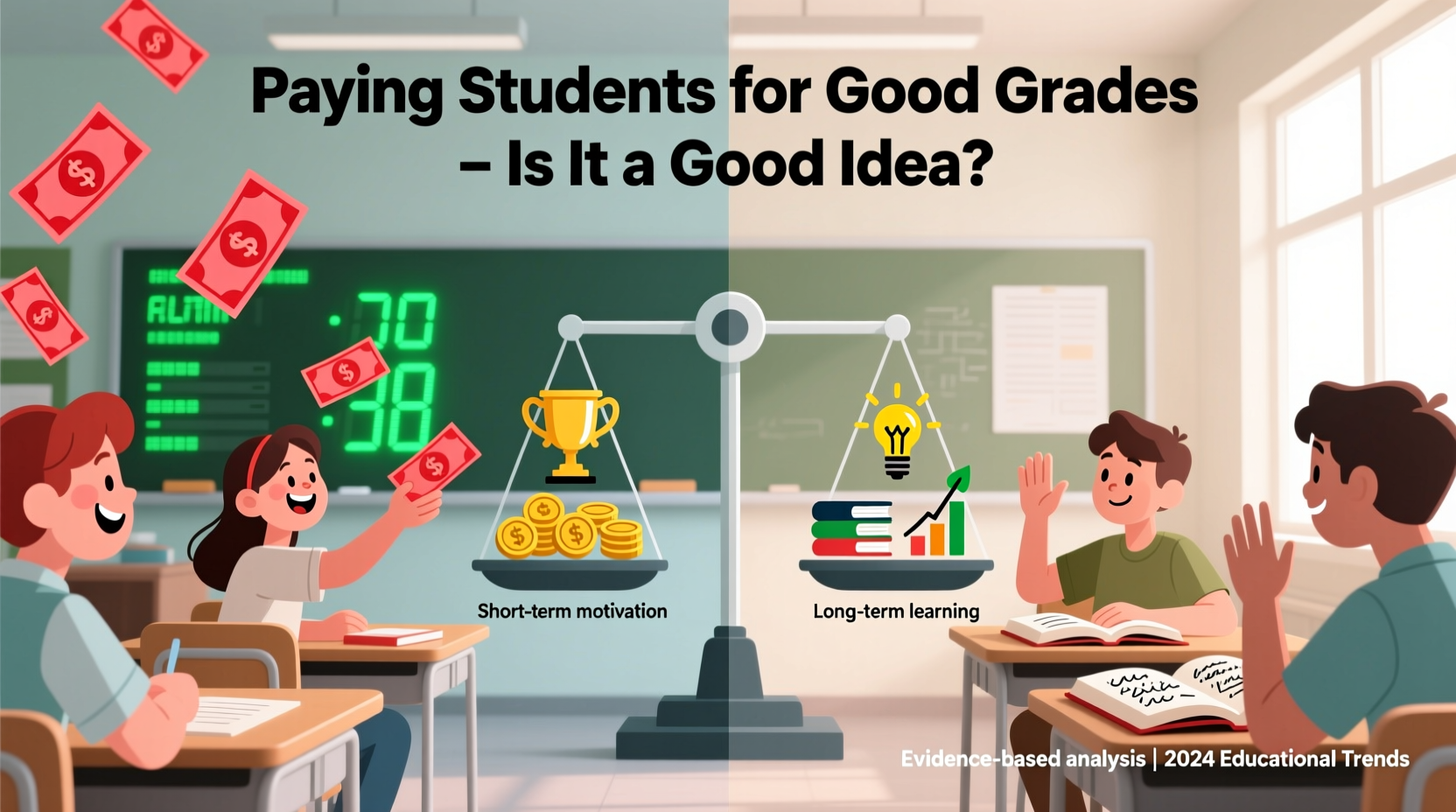
At its core, the debate over paying students hinges on human motivation. Psychologists distinguish between intrinsic motivation (doing something because it’s inherently rewarding) and extrinsic motivation (doing something for external rewards like money or praise). Education traditionally aims to cultivate intrinsic motivation—fostering curiosity, a love of learning, and personal growth.
However, many students, especially those facing socioeconomic challenges, may not see school as personally relevant or immediately beneficial. For them, tangible rewards can serve as a bridge to engagement. Studies from Harvard’s John F. Kennedy School of Government show that short-term financial incentives can improve attendance, test scores, and homework completion—particularly in underperforming schools.
“Monetary rewards aren’t about buying intelligence—they’re about creating a reason to try when other motivators are missing.” — Dr. Roland Fryer, Economist and Education Researcher
Still, critics warn that over-reliance on external rewards can erode internal drive. Once the money stops, so does the effort. This phenomenon, known as the \"overjustification effect,\" suggests that when people are paid to do something they already enjoy, they may begin to attribute their behavior to the reward rather than personal interest—diminishing enjoyment over time.
Pros and Cons of Paying Students: A Balanced View
Before adopting or dismissing the practice, it’s essential to weigh both sides with nuance. Below is a structured comparison of key advantages and drawbacks.
| Pros | Cons |
|---|---|
| Immediate Motivation Boost: Students often respond quickly to financial incentives, leading to improved study habits and grade increases. | Short-Term Focus: Rewards may lead to cramming or cheating rather than deep understanding. |
| Equity Tool: Can help level the playing field for low-income students by providing resources they lack at home. | Undermines Intrinsic Motivation: Risk of conditioning students to only work for payment. |
| Teaches Financial Literacy: Earning money encourages budgeting and goal-setting skills. | Unfair Advantage: Wealthier families may use larger payouts, increasing disparities. |
| Parental Engagement: Families discussing grades and rewards fosters communication about academics. | Grade Inflation Pressure: Teachers may face indirect pressure to inflate marks to keep programs “successful.” |
Designing an Effective Reward System: A Step-by-Step Guide
If a family or school chooses to implement a pay-for-grades program, structure matters. Poorly designed systems risk encouraging gaming the system or resentment. A thoughtful approach focuses on effort, progress, and long-term goals—not just final letter grades.
- Define Clear Objectives: Decide whether the goal is improving GPA, passing a difficult subject, or developing consistent study habits.
- Reward Effort, Not Just Outcomes: Offer partial payments for completing assignments, attending tutoring, or showing improvement—even if top grades aren’t achieved yet.
- Set Incremental Milestones: Break goals into manageable steps (e.g., $10 for each B+ or higher, $25 for all As).
- Tie Rewards to Responsibility: Require students to save a portion (e.g., 50%) in a savings account or spend part on school supplies.
- Review and Adjust Monthly: Meet with the student to discuss progress, challenges, and whether the system is still motivating.
- Phase Out Over Time: Gradually reduce payments as intrinsic motivation strengthens, replacing cash with privileges or recognition.
Real-World Example: The Dallas Experiment
In 2007, economist Roland Fryer launched a pilot program in Dallas, Texas, offering fourth graders $2 per book read. The results were striking: participating students read significantly more books and scored higher on standardized reading tests compared to peers in control groups. Unlike broader grade-based rewards, this program focused on measurable input (books completed), reducing the risk of grade manipulation.
The Dallas model succeeded because it rewarded behavior within the student’s control—reading—rather than outcomes influenced by teacher bias or test anxiety. It also kept the stakes modest and immediate, aligning with behavioral economics principles that small, frequent rewards are more effective than large, delayed ones.
This case illustrates that when financial incentives are carefully targeted and behavior-specific, they can produce meaningful academic gains without distorting the learning process.
Expert Recommendations and Alternatives
While some experts cautiously endorse well-structured incentive programs, most agree that money should not replace foundational support like engaged teaching, parental involvement, and access to resources. According to Dr. Kathy Hirsh-Pasek, developmental psychologist and author of *How Play Shapes Minds*, “We need to be careful not to buy compliance at the cost of creativity and curiosity.”
Alternatives to direct cash payments include:
- Privilege-based rewards: Extra screen time, later curfew, or choosing a family activity.
- Experience incentives: Trips to museums, concerts, or college campuses to connect learning with real-world opportunities.
- Recognition programs: Certificates, public acknowledgment, or leadership roles in school projects.
- Savings matching: Parents match earned money toward college funds, blending motivation with long-term planning.
“If we must use money, let it be a stepping stone—not the destination.” — Dr. Susan Engel, Senior Lecturer in Psychology, Williams College
Frequently Asked Questions
Does paying students for grades work in high school?
Results vary. Older students may respond better to incentives tied to long-term goals like college preparation or career readiness. However, by high school, patterns of motivation are more established, making it harder to shift attitudes with short-term rewards alone.
Can financial incentives lead to cheating?
Potentially, yes. When rewards are tied solely to outcomes like test scores or GPAs, some students may be tempted to cheat or take easier courses to maximize earnings. To reduce this risk, reward behaviors such as studying, participation, and improvement rather than just final grades.
How much should I pay my child for good grades?
There’s no standard amount. Some families offer $10–$20 per A, while others tie payments to overall GPA. More important than the amount is consistency and clarity. Ensure the system feels fair and is aligned with your child’s age, maturity, and financial understanding.
Conclusion: A Tool, Not a Solution
Paying students for good grades isn’t inherently good or bad—it’s a tool whose effectiveness depends on context, design, and intent. For some students, especially those disengaged or disadvantaged, a modest financial incentive can spark renewed interest in schoolwork and build confidence. For others, it may feel transactional or unnecessary.
The goal shouldn’t be to buy better grades, but to use incentives as a catalyst for developing habits, accountability, and a sense of agency. When paired with emotional support, clear expectations, and opportunities for autonomy, monetary rewards can play a supportive role in a broader strategy for academic success.
💬 Have you tried paying your child for grades? Did it help—or backfire? Share your experience in the comments and help others navigate this complex decision with real insight.