In an age where a single TikTok video can make someone a household name overnight, millions of people report feeling deeply connected to digital personalities they’ve never met. These aren’t friendships in the traditional sense—they’re something else entirely. What we’re witnessing is the rise of parasocial relationships: one-sided emotional bonds formed between audiences and public figures, especially influencers. From YouTubers who share their morning routines to Instagrammers who document personal struggles, these creators cultivate intimacy through consistency, vulnerability, and accessibility. And for many viewers, that curated connection feels real.
The phenomenon isn’t new—scholars first identified parasocial interactions in the 1950s when television began entering homes en masse. But social media has amplified the effect exponentially. Unlike TV hosts or radio personalities of the past, today’s influencers don’t just broadcast; they respond. They comment back, host live streams, share behind-the-scenes footage, and use direct address (“Hey guys!”) as if speaking right to you. This illusion of reciprocity makes the bond feel mutual, even though it’s fundamentally asymmetric. Understanding this dynamic is essential—not just for media literacy, but for emotional well-being in a world where digital intimacy increasingly shapes our sense of belonging.
The Psychology Behind One-Sided Bonds
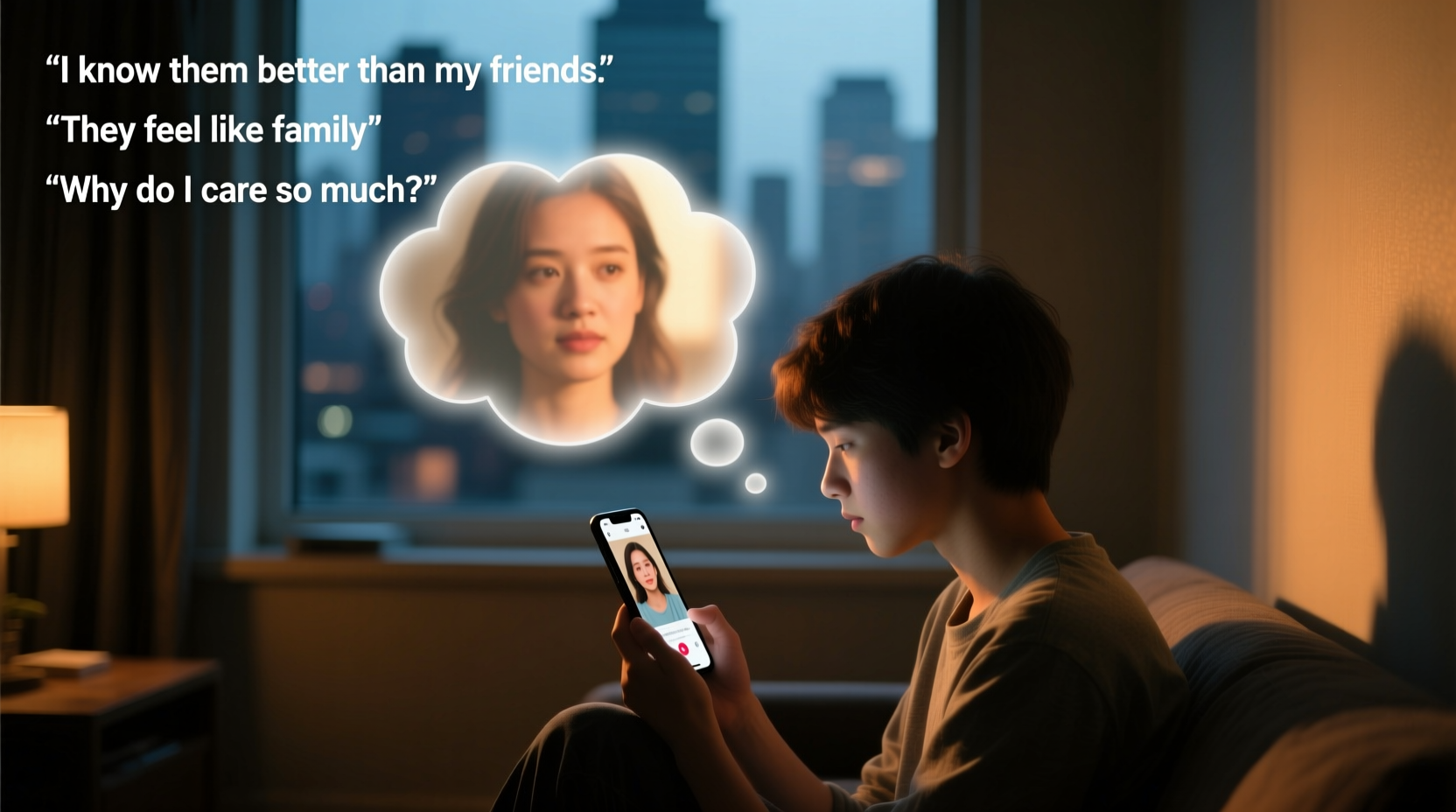
At its core, a parasocial relationship is a psychological attachment formed without mutual interaction. The viewer invests time, emotion, and attention into a persona who may not even know they exist. Yet the brain doesn’t always distinguish between real and perceived closeness. Neurological studies show that when people watch familiar media figures, areas of the brain associated with social processing—such as the medial prefrontal cortex—light up similarly to how they would during actual interpersonal exchanges.
This response is rooted in evolutionary psychology. Humans are hardwired to seek connection, recognize faces, and interpret tone and expression. When influencers maintain consistent visual and vocal patterns—same camera angle, catchphrases, facial expressions—the brain begins to treat them like members of an extended social group. Anthropologist Robin Dunbar’s research on social group size suggests humans can only maintain about 150 stable relationships at once. But online, we “know” thousands. Parasocial ties help fill gaps left by shrinking real-world communities, loneliness, or geographic isolation.
Dr. Lynn McCutcheon, a psychologist specializing in celebrity worship, notes:
“We’re not designed to handle constant exposure to people who seem so accessible yet remain unreachable. The brain gets tricked into thinking there’s a relationship because the cues mimic real-life bonding.”
How Influencers Cultivate Emotional Intimacy
Influencers don’t accidentally create strong audience attachments—they often do so deliberately, using strategies that simulate friendship or familial closeness. These techniques include:
- Consistency: Posting on a regular schedule trains the audience to expect and anticipate their presence, creating rhythm and reliability.
- Vulnerability: Sharing personal stories—breakups, mental health challenges, financial setbacks—builds trust and emotional resonance.
- Direct Address: Using phrases like “I’m talking to YOU” or “You already know…” fosters inclusion and individualized attention.
- Interactive Features: Polls, Q&As, and replies to comments reinforce the illusion of two-way communication.
- Narrative Continuity: Ongoing story arcs (e.g., weight loss journeys, home renovations) encourage long-term investment from followers.
Take the example of a fitness influencer who documents her postpartum recovery over six months. She shares unfiltered photos, talks about sleepless nights, and responds to supportive DMs. Followers celebrate her progress as if they were friends cheering her on in person. Over time, some may feel genuine concern when she skips a post or appears distressed in a video. That emotional reaction is the hallmark of a developed parasocial bond.
Tip: Be mindful of how much emotional energy you invest in influencers. Ask yourself: Would I feel this way about a friend who never calls me back?When Connection Turns Unhealthy: Signs of Over-Involvement
Not all parasocial relationships are harmful. For many, they provide comfort, motivation, or inspiration. A teenager struggling with anxiety might find solace in a mental health advocate’s videos. An isolated senior might look forward to a daily vlog as a form of companionship. In moderation, these connections can be beneficial.
But problems arise when the relationship becomes central to one’s identity or emotional regulation. Warning signs include:
- Feeling personally betrayed when an influencer changes content direction or takes a break.
- Experiencing jealousy or anger toward other fans or the influencer’s partner.
- Spending excessive time monitoring their activity across platforms.
- Defending the influencer aggressively against criticism, even when evidence suggests wrongdoing.
- Letting admiration cross ethical boundaries, such as sending unsolicited gifts or messages.
In extreme cases, parasocial dynamics have contributed to stalking behaviors or online harassment campaigns. A 2023 study published in *Cyberpsychology, Behavior, and Social Networking* found that individuals with high levels of attachment to influencers were more likely to engage in digital vigilantism—rushing to defend the influencer’s reputation in comment sections or forums, often without verifying facts.
| Healthy Parasocial Engagement | Unhealthy Parasocial Engagement |
|---|---|
| Enjoying content without needing constant updates | Checking profiles obsessively throughout the day |
| Appreciating advice but making independent decisions | Following recommendations blindly, even against better judgment |
| Respecting the influencer’s boundaries and privacy | Sending repeated DMs or showing up at public appearances uninvited |
| Recognizing the curated nature of online personas | Believing the influencer truly knows or cares about you personally |
A Real-Life Example: The Case of \"Maya,\" the Lifestyle Blogger
Consider Maya, a popular lifestyle YouTuber with 1.2 million subscribers. Her content focuses on minimalist living, sustainable fashion, and mindfulness. She films in soft lighting, speaks in a calm tone, and frequently uses phrases like “I hope this helps you feel more grounded today.” Many fans describe her videos as “therapeutic” or “like talking to a best friend.”
Jenna, a 28-year-old graphic designer, watches Maya’s videos every evening after work. She follows her clothing brand, buys products from her affiliate links, and comments on nearly every post. When Maya announced she was stepping away from YouTube due to burnout, Jenna felt devastated. “It felt like I lost someone close,” she admitted in an interview. “I cried. I didn’t realize how much I relied on her voice to get through the week.”
Jenna’s experience illustrates how parasocial bonds can become functional coping mechanisms. However, it also highlights a risk: when the source of comfort disappears, the emotional fallout can be significant. With support from a therapist, Jenna began exploring why she depended so heavily on digital figures for emotional stability—and started building offline connections to balance her media consumption.
Managing Your Digital Relationships: A Practical Checklist
To maintain a healthy balance between appreciation and over-attachment, consider the following actions:
- ✅ Audit your screen time: Which influencers do you spend the most time watching? Why?
- ✅ Reflect on emotional triggers: Do certain creators make you feel inadequate or overly attached?
- ✅ Diversify your input: Follow accounts that challenge your views, not just those that affirm them.
- ✅ Set boundaries: Designate times when you won’t check social media, especially before bed.
- ✅ Invest in reciprocal relationships: Prioritize face-to-face or two-way digital conversations with people who know you.
- ✅ Practice critical viewing: Remind yourself that even authentic-seeming content is edited and curated.
The Role of Algorithms in Deepening Bonds
It’s not just creator behavior that fuels parasocial relationships—platform algorithms play a crucial role. Social media systems are designed to maximize engagement, often by promoting content that evokes strong emotions. If you linger on a video of an influencer sharing a heartfelt story, the algorithm learns you respond to vulnerability. It then surfaces similar content, reinforcing the connection.
Over time, users are funneled into personalized “digital ecosystems” where a handful of creators dominate their feed. This repetition strengthens familiarity and perceived intimacy. As researcher Dr. Tanya Chartrand explains:
“The more frequently we see someone, the more we like them—a principle known as the mere exposure effect. Platforms exploit this by keeping certain faces constantly in front of us.”
Worse, recommendation engines often prioritize emotionally charged content, which means influencers who share dramatic life events—breakups, illnesses, controversies—gain more visibility. This creates a feedback loop: vulnerability drives engagement, engagement boosts reach, and increased reach deepens parasocial bonds, sometimes beyond what’s psychologically sustainable for either party.
Frequently Asked Questions
Are parasocial relationships always unhealthy?
No. Mild parasocial bonds can be comforting and motivating. They become problematic only when they interfere with real-world relationships, distort reality, or lead to obsessive behavior.
Can influencers know they’re forming parasocial relationships with fans?
Many are aware of the dynamic and may even refer to their audience as “family” or “my community.” Ethical creators acknowledge the imbalance and encourage fans to seek support in real life when needed.
Do children and teens experience parasocial relationships differently?
Yes. Younger audiences are more impressionable and may struggle to distinguish between curated personas and real-life behavior. Parents should discuss media literacy early and model balanced usage.
Building Awareness and Moving Forward
The rise of parasocial relationships reflects deeper societal shifts: declining community ties, rising loneliness, and the normalization of digital interaction as a substitute for physical presence. Rather than dismissing these bonds as trivial or delusional, we should recognize them as symptoms of broader human needs—for connection, meaning, and guidance.
The goal isn’t to eliminate parasocial relationships but to approach them with awareness. Recognize when a favorite influencer brings joy versus when they trigger anxiety or comparison. Understand that behind the screen is a person managing a brand, not a confidant. And remember: no amount of likes, comments, or watch time will ever turn a one-sided connection into a true friendship.
Tip: Once a month, unfollow or mute accounts that drain your energy—even if you admire the creator. Make space for content that uplifts without demanding emotional labor.Conclusion: Reclaiming Real Connection
Parasocial relationships aren’t going away. As long as we consume personalized media, we’ll form attachments to the voices and faces that accompany us through our days. But we can choose how deeply we let them shape our inner world. By cultivating self-awareness, setting boundaries, and investing in reciprocal relationships, we protect our emotional well-being while still enjoying the benefits of digital culture.
If you found yourself nodding along to parts of this article—if you’ve ever felt a pang of sadness when an influencer deactivated their account or caught yourself defending someone you’ve never met—take that as a signal. Not of weakness, but of your innate desire to belong. Now is the time to channel that longing into real conversations, real support networks, and real moments of shared humanity. The internet will always be there. But the people around you? They’re irreplaceable.
🚀 Ready to rebalance your digital life? Start today: pick one influencer you follow intensely and reflect on what they fulfill for you. Then, reach out to a real friend or loved one with the same energy. Notice the difference.