
Anime has long been a mirror reflecting Japan’s evolving cultural attitudes—sometimes subtly, sometimes boldly. In recent years, audiences have noticed a growing number of characters who exhibit traits associated with neurodivergence: autism, ADHD, sensory sensitivities, social anxiety, and atypical communication styles. From quiet geniuses to socially awkward prodigies, these portrayals spark both celebration and skepticism. Are they meaningful steps toward inclusion, or are they simply repackaged tropes designed for aesthetic appeal and narrative convenience?
The conversation around neurodivergent representation in anime is layered. On one hand, increased visibility can foster empathy and understanding. On the other, shallow or stereotypical depictions risk reducing complex identities to quirks or plot devices. As global awareness of neurodiversity grows, so does scrutiny of how media shapes public perception. This article examines the trajectory of neurodivergent characters in anime, analyzes key examples, and questions whether current portrayals reflect genuine progress or performative tokenism.
The Rise of Neurodivergent Tropes in Popular Anime
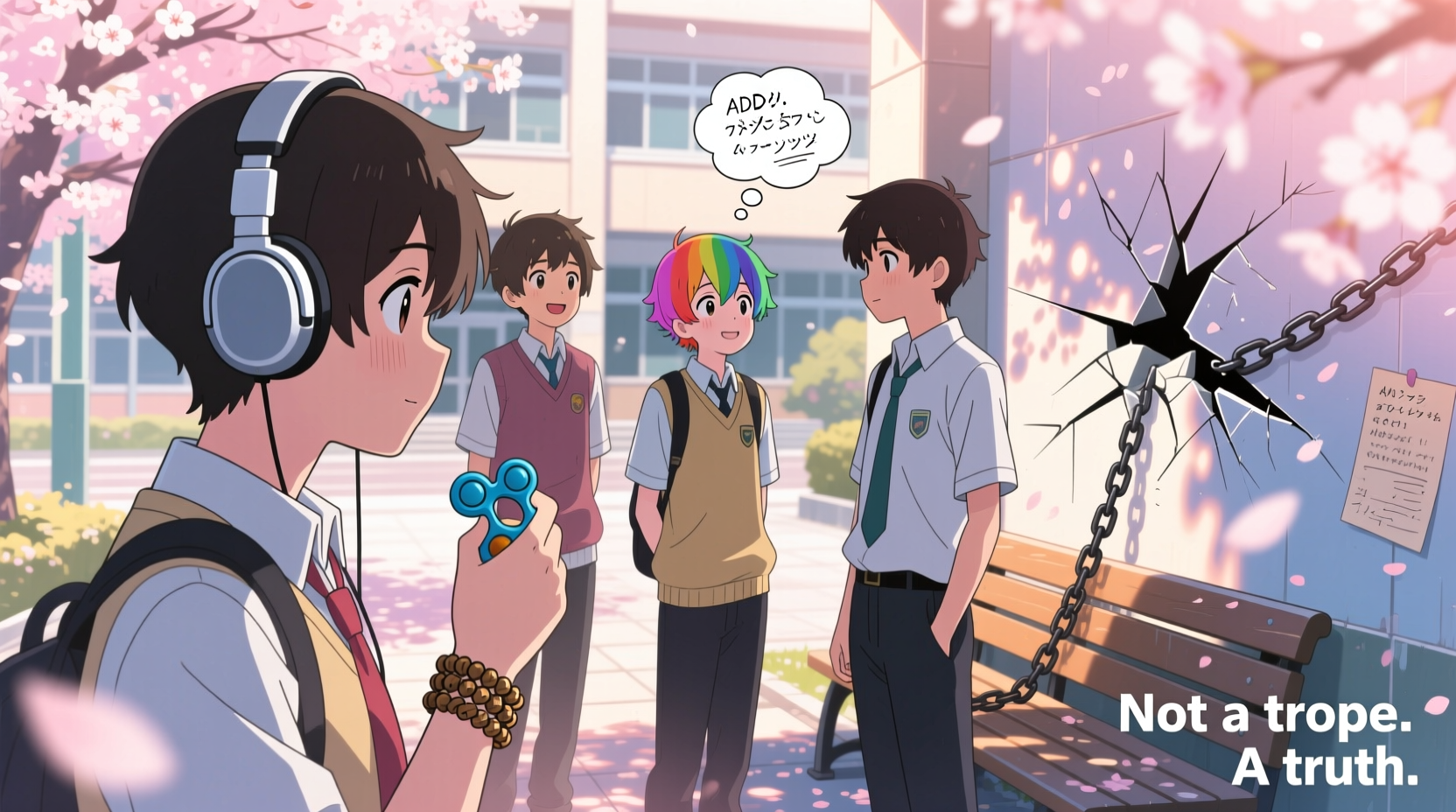
Neurodivergent-coded characters are not new to anime. For decades, creators have used social isolation, obsessive focus, and emotional detachment as narrative tools to craft \"genius\" or \"outsider\" archetypes. Consider Shinji Ikari from *Neon Genesis Evangelion* (1995)—a withdrawn teenager struggling with self-worth, emotional regulation, and interpersonal connection. While never explicitly labeled autistic, his behavior resonates deeply with many neurodivergent viewers.
In more recent years, such traits have become more pronounced and frequent. Characters like Shōya Ishida (*A Silent Voice*), Raiha Kurosawa (*Given*), and Megumi Fushiguro (*Jujutsu Kaisen*) display patterns consistent with autism or ADHD: difficulty reading social cues, intense focus on specific interests, aversion to eye contact, and internalized emotional struggles. Even comedic figures like Konata Izumi (*Lucky Star*) embody hyperfixation and social nonconformity, albeit in exaggerated form.
What’s changed is not just frequency, but framing. Where earlier characters were often tragic or broken, newer narratives increasingly position neurodivergence as a facet of identity—not a flaw to be cured, but a lens through which the world is experienced differently.
Tip: When analyzing a character's neurodivergence, focus on behavior and lived experience rather than diagnosis. Canon labels are rare; interpretation matters more.Progress: Nuanced Portrayals and Audience Resonance
Some anime have made significant strides in portraying neurodivergent experiences with authenticity and sensitivity. *A Silent Voice* stands out as a landmark example. The film centers on Shōko Nishimiya, a deaf girl who is also implied to be on the autism spectrum. Her communication challenges, sensory overload in crowded spaces, and reliance on written notes are depicted without caricature. The story doesn’t romanticize her struggles nor reduce her to them—she is fully realized, with desires, flaws, and growth.
Likewise, *Wandering Son* (2011) features transgender and neurodivergent youth navigating adolescence with emotional honesty. One character, Yoshino Takatsuki, exhibits traits commonly associated with autism, including routine dependence and discomfort with physical touch. The series treats these aspects matter-of-factly, integrating them into a broader exploration of identity rather than isolating them as “symptoms.”
These works succeed because they prioritize internal experience over external spectacle. They show what it feels like to be overwhelmed by sound, misunderstood by peers, or trapped in a body that doesn’t respond as expected. This shift—from observing neurodivergence as a curiosity to empathizing with it as a lived reality—marks real progress.
“Representation isn’t about slapping a label on a character. It’s about showing the texture of their inner world—their pain, joy, and resilience in a society not built for them.” — Dr. Lena Matsuda, Cultural Anthropologist & Media Critic
Tokenism: When Quirks Replace Depth
Despite promising examples, many anime still fall into the trap of tokenism—using neurodivergent traits as flavor rather than foundation. Characters may exhibit stimming behaviors, speak in monotone, or obsess over data, but these traits often serve the plot or humor rather than character development.
Take the “chuunibyou” (eight-grader syndrome) archetype—a teenager who acts delusionally dramatic, claiming to wield supernatural powers. While not inherently linked to neurodivergence, some chuunibyou characters overlap with autistic traits: social withdrawal, intense imagination, and rejection of social norms. However, they are typically framed as immature or comical, destined to “grow out of it” by adulthood. This undermines the permanence and validity of neurodivergent identities.
Another common pitfall is the “autistic savant” trope: the genius with no social skills but unparalleled intellect. Think of L from *Death Note*, whose eccentricities—crouching on chairs, avoiding direct speech, consuming copious sugar—are played for intrigue and mystery. While compelling, L’s portrayal lacks introspection. His differences are fetishized, not explored. He exists to solve crimes, not to model authentic neurodivergent life.
When neurodivergence is reduced to a set of quirks that make a character “cool” or “mysterious,” it becomes costume rather than character. This kind of representation may increase visibility, but it doesn’t promote understanding.
Checklist: Evaluating Authentic Neurodivergent Representation
- Does the character have agency and personal goals beyond their neurodivergent traits?
- Are their challenges portrayed with empathy, not mockery?
- Do they experience growth that respects their identity rather than “overcoming” it?
- Is their perspective centered, or are they only seen through neurotypical characters’ eyes?
- Are support systems (like therapy, accommodations, or community) shown realistically?
Industry Realities: Why Tokenism Persists
To understand why tokenism remains prevalent, it’s essential to examine the anime industry’s creative and cultural context. Many writers and directors lack direct experience with neurodivergence. Research is often minimal, and consultation with neurodivergent individuals is rare. Instead, creators draw from existing media tropes, pop psychology, or personal assumptions.
Cultural attitudes in Japan also play a role. Open discussion of mental health and neurodiversity has historically been stigmatized. While younger generations are pushing for change, mainstream media often defaults to silence or simplification. Explicit diagnoses are almost never given in anime—characters are “weird,” “shy,” or “genius,” but rarely named as autistic or ADHD.
Moreover, marketability influences portrayal. Neurodivergent-coded characters are popular in merchandising and fan culture precisely because of their distinctiveness. Their quirks become branding: L’s pose, Konata’s otaku obsession, or Shiro’s doll-like demeanor in *No Game No Life*. This commercial incentive risks prioritizing aesthetics over authenticity.
| Character | Neurodivergent Traits | Authenticity Level | Risk of Tokenism |
|---|---|---|---|
| Shōko Nishimiya (A Silent Voice) | Sensory sensitivity, communication barriers, social anxiety | High – central to narrative, handled with care | Low |
| L (Death Note) | Atypical posture, monotone speech, obsessive focus | Low – traits serve mystery, not depth | High |
| Raiha Kurosawa (Given) | Emotional reserve, delayed processing, loyalty to routine | Moderate – subtle but consistent portrayal | Moderate |
| Konata Izumi (Lucky Star) | Hyperfixation, pop-culture immersion, low social conformity | Moderate – played for comedy, but relatable to fans | Moderate |
Real Impact: A Viewer’s Perspective
For many neurodivergent fans, seeing oneself reflected—even obliquely—in anime can be transformative. Take the case of Alex, a 24-year-old autistic viewer from Canada. After watching *A Silent Voice*, they shared online: “I cried during the scene where Shōko covers her ears in the hallway. That happens to me every day at work. For the first time, I didn’t feel broken. I felt seen.”
This kind of resonance underscores the power of thoughtful representation. It validates internal experiences and reduces isolation. Conversely, when portrayals are reductive, the harm is equally real. “Every time I see another ‘weird genius’ who magically fixes himself by falling in love,” says Maya, an ADHD advocate, “it tells me my struggles aren’t valid unless they’re solved by romance.”
These responses highlight a crucial truth: representation isn’t just about accuracy—it’s about dignity. When neurodivergent characters are allowed to exist without being fixed, cured, or explained, they affirm the worth of real people.
Toward Better Representation: A Path Forward
Improvement is possible—but it requires intention. Here’s how creators and consumers can push for more authentic portrayals:
- Involve neurodivergent voices in writing, consulting, and voice acting roles.
- Move beyond stereotypes by showing diverse expressions of neurodivergence across genders, cultures, and classes.
- Show support systems, such as therapy, assistive tools, or peer communities, without framing them as “fixes.”
- Normalize neurodivergent joy—not just struggle. Show characters thriving, bonding, and finding fulfillment on their own terms.
- Allow ambiguity. Not every character needs a diagnosis. What matters is respectful, consistent portrayal.
Streaming platforms and international distribution have amplified global feedback. Western audiences, in particular, are calling for greater accountability. Social media campaigns, fan essays, and review aggregators now influence how anime is received—and sometimes, reshaped in later seasons.
Frequently Asked Questions
Is there any anime with an officially diagnosed autistic character?
As of now, no major anime features a character with an explicit autism diagnosis within the canon. Most portrayals are implicit, based on behavioral cues. This reflects broader cultural hesitancy in Japan to medicalize identity in fiction. However, manga adaptations and supplementary materials occasionally provide more context.
Can a character be neurodivergent without a diagnosis?
Absolutely. Diagnosis is a medical process, but identity and experience are personal. Many real neurodivergent people are undiagnosed due to age, gender, or access barriers. Similarly, fictional characters can authentically reflect neurodivergent experiences without formal labels—provided their portrayal is grounded and respectful.
Does positive representation really make a difference?
Yes. Studies in media psychology show that nuanced portrayals reduce stigma and increase empathy. For neurodivergent viewers, seeing themselves represented can improve self-esteem and reduce feelings of alienation. For neurotypical audiences, it fosters understanding and allyship.
Conclusion: Beyond Visibility to Validation
The presence of neurodivergent characters in anime is no longer exceptional—it’s expected. But presence alone is not enough. The critical question isn’t whether these characters exist, but how they exist. Are they full human beings with complexity and dignity, or are they narrative accessories designed to entertain?
True progress means moving beyond tokenism toward validation. It means telling stories where neurodivergent characters aren’t just included, but centered. Where their differences aren’t obstacles to overcome, but dimensions of a rich inner life. And where audiences—neurotypical and neurodivergent alike—walk away not just entertained, but transformed.
💬 Have you seen an anime character that made you feel truly seen? Share your thoughts in the comments and help build a more inclusive conversation around representation.