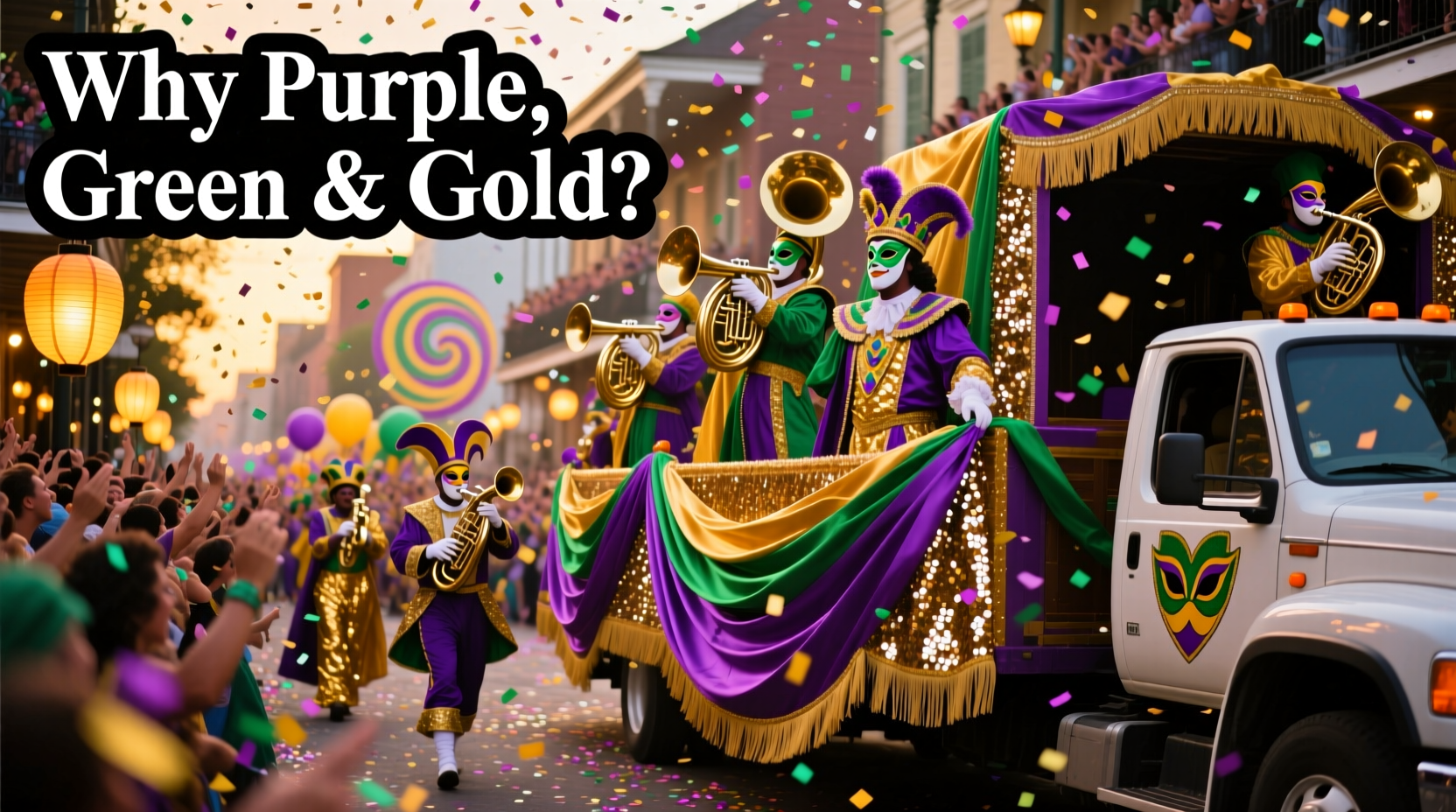
The vibrant spectacle of Mardi Gras is defined by music, masks, parades, and above all, color. Streets across New Orleans and other Carnival cities come alive with a dazzling display of purple, green, and gold. These are not random choices—they are intentional symbols rooted in history, meaning, and civic pride. Understanding why these three colors dominate the festivities adds depth to one of America’s most colorful cultural events.
Long before beads were tossed from floats or king cakes sliced at breakfast tables, the leaders of the first organized Mardi Gras parade established a visual identity for the celebration. That identity was built on a triad of colors: purple for justice, green for faith, and gold for power. Together, they form more than just a festive palette—they carry a message that continues to resonate over a century later.
The Historical Origins of Mardi Gras Colors
The official designation of purple, green, and gold as Mardi Gras colors dates back to 1872, during the formation of the first Rex Organization—the self-proclaimed “King of Carnival.” When planning their inaugural parade, the founders sought a regal theme befitting the pageantry they envisioned. They chose colors inspired by those of Russian Grand Duke Alexis Romanoff, who visited New Orleans that year. Though the visit may have been the spark, the symbolism was deliberately crafted to reflect enduring values.
In 1892, the Rex Organization published its official parade theme, *“Symbolism of Colors,”* which formally assigned meaning to each hue:
- Purple: Justice
- Green: Faith
- Gold: Power
These meanings were not arbitrary. They reflected ideals the organizers believed should guide both the Carnival season and civic life. Over time, the colors became inseparable from Mardi Gras itself, appearing on costumes, banners, street decorations, and countless strands of glass beads flung into cheering crowds.
Tip: When designing Mardi Gras décor or costumes, use all three colors together to honor tradition—omitting one diminishes the symbolic balance.What Each Color Represents in Depth
Purple: The Color of Justice
Purple has long been associated with royalty, nobility, and dignity. In ancient Rome and Byzantium, only emperors wore purple robes dyed with rare Tyrian purple, extracted from sea snails. This exclusivity made it a natural choice to represent authority and fairness.
In the context of Mardi Gras, purple stands for justice—not just legal equity, but moral integrity and social responsibility. It serves as a reminder that even amid revelry, there is a place for reflection and ethical conduct. During the Carnival season, when societal norms are playfully inverted, the presence of purple subtly calls for balance and accountability.
Green: A Symbol of Faith
Green is deeply tied to growth, renewal, and the natural world. In many cultures, it represents hope and continuity. For Mardi Gras, green specifically symbolizes faith—not necessarily religious doctrine, but a broader belief in community, resilience, and shared destiny.
This meaning resonates particularly in New Orleans, a city shaped by centuries of cultural blending, adversity, and rebirth. Green reflects the enduring spirit of its people. Whether worn on a mask or woven into a float’s design, it speaks to trust in the future and the strength found in unity.
Gold: Embodying Power
Gold evokes wealth, excellence, and brilliance. Historically linked to the sun, divinity, and imperial rule, it was a fitting choice to represent power. In the Mardi Gras context, this doesn’t imply dominance or control, but rather influence, leadership, and the radiant energy of celebration.
The glittering gold throws, lamé fabrics, and gilded masks seen throughout the season are more than decorative—they’re affirmations of vitality and collective strength. Power here is communal: the power to transform a city into a stage, to bring strangers together in dance, and to sustain a tradition against all odds.
“The colors of Mardi Gras are not merely festive—they are a civic creed in chromatic form.” — Dr. Lila Bouchet, Cultural Historian, Tulane University
How the Colors Are Used Today
Over 150 years since their adoption, purple, green, and gold remain central to every aspect of Mardi Gras. Their use follows both aesthetic and symbolic principles:
- Beads are typically layered in all three colors, often in equal proportions.
- Carnival krewes incorporate the triad into their insignias, invitations, and float designs.
- Citywide decorations during Carnival season feature the colors in banners, lights, and public art installations.
- Even non-parade events, like church services or school projects, use the colors to mark the season.
Avoiding misrepresentation matters. While modern variations sometimes introduce pink or blue for novelty, purists emphasize that true Mardi Gras spirit lies in honoring the original tricolor. Deviating from the trio risks diluting the historical and cultural weight behind the celebration.
Do’s and Don’ts of Using Mardi Gras Colors
| Action | Do | Don't |
|---|---|---|
| Color Combination | Use all three colors together | Mix with unrelated colors like neon pink |
| Proportions | Balance the hues equally | Overemphasize one (e.g., mostly gold) |
| Context | Use in decor, attire, crafts | Use disrespectfully (e.g., as Halloween costume) |
| Authenticity | Choose deep, rich tones | Use washed-out or pastel versions |
Real Example: The Krewe of Proteus and Color Tradition
In 2018, the historic Krewe of Proteus faced criticism when early promotional materials featured silver instead of gold. Founded in 1882, Proteus is one of the oldest krewes and a guardian of traditional Mardi Gras aesthetics. Fans and historians quickly voiced concern online, noting that substituting gold undermined the symbolic integrity of the event.
Within days, the krewe issued a public statement reaffirming its commitment to the original colors and corrected the designs. “We recognize that our colors are more than decoration—they are heritage,” the statement read. The incident highlighted how seriously New Orleanians take the symbolism of purple, green, and gold, even in minor details.
Step-by-Step Guide to Honoring Mardi Gras Colors in Your Celebration
Whether you're hosting a party, crafting costumes, or decorating your home, follow these steps to authentically incorporate the colors:
- Research the meanings: Understand that purple = justice, green = faith, gold = power.
- Gather authentic materials: Choose beads, fabrics, and paints in deep royal purple, emerald green, and metallic gold.
- Balance the palette: Aim for equal visual weight—no single color should dominate.
- Incorporate symbolism: Add small notes or signs explaining the colors’ meanings for guests.
- Respect the tradition: Avoid using the colors outside of Carnival context in ways that trivialize them.
FAQ
Why aren’t the Mardi Gras colors the same as Lenten colors?
Mardi Gras precedes Lent, but its colors are distinct from the liturgical purple of Lent. While both use purple, Mardi Gras purple symbolizes justice, not penance. The full triad (purple, green, gold) is unique to Carnival and predates widespread use of Lenten color codes in popular culture.
Can I wear the colors at other times of year?
You can, but be mindful of context. Wearing them in New Orleans during Carnival season is celebratory; doing so at a somber event or in a way that mocks the culture may be seen as insensitive. Many locals reserve full displays for February and March.
Are there any rules about who can wear the colors?
No formal restrictions exist. The colors are for everyone to enjoy during Carnival season. However, certain krewes have exclusive attire for members, so avoid replicating official regalia unless invited.
Conclusion: Wear the Colors, Honor the Meaning
Purple, green, and gold are far more than a festive combination—they are a legacy in color form. Chosen with intention over a century ago, they continue to unite millions in celebration, reminding us of timeless values: justice, faith, and power. As you prepare for Mardi Gras, whether in New Orleans or your own backyard, let these colors do more than decorate. Let them inspire.
💬 How do you incorporate Mardi Gras colors in your celebrations? Share your traditions and ideas with others to keep the spirit—and the symbolism—alive!