The diamond market has undergone a seismic shift in the past decade. Once, the only option for an engagement ring or luxury jewelry was a naturally mined diamond—rare, expensive, and steeped in tradition. Today, lab-grown diamonds offer a nearly identical alternative at a fraction of the price. As consumers become more informed and values evolve, a pressing question emerges: Are natural diamonds still worth it?
This isn't just about sparkle or sentimentality. It's about value retention, environmental impact, emotional significance, and long-term investment. The answer depends on what you prioritize—beauty, budget, sustainability, or legacy.
Understanding the Science: What Makes a Diamond “Real”?
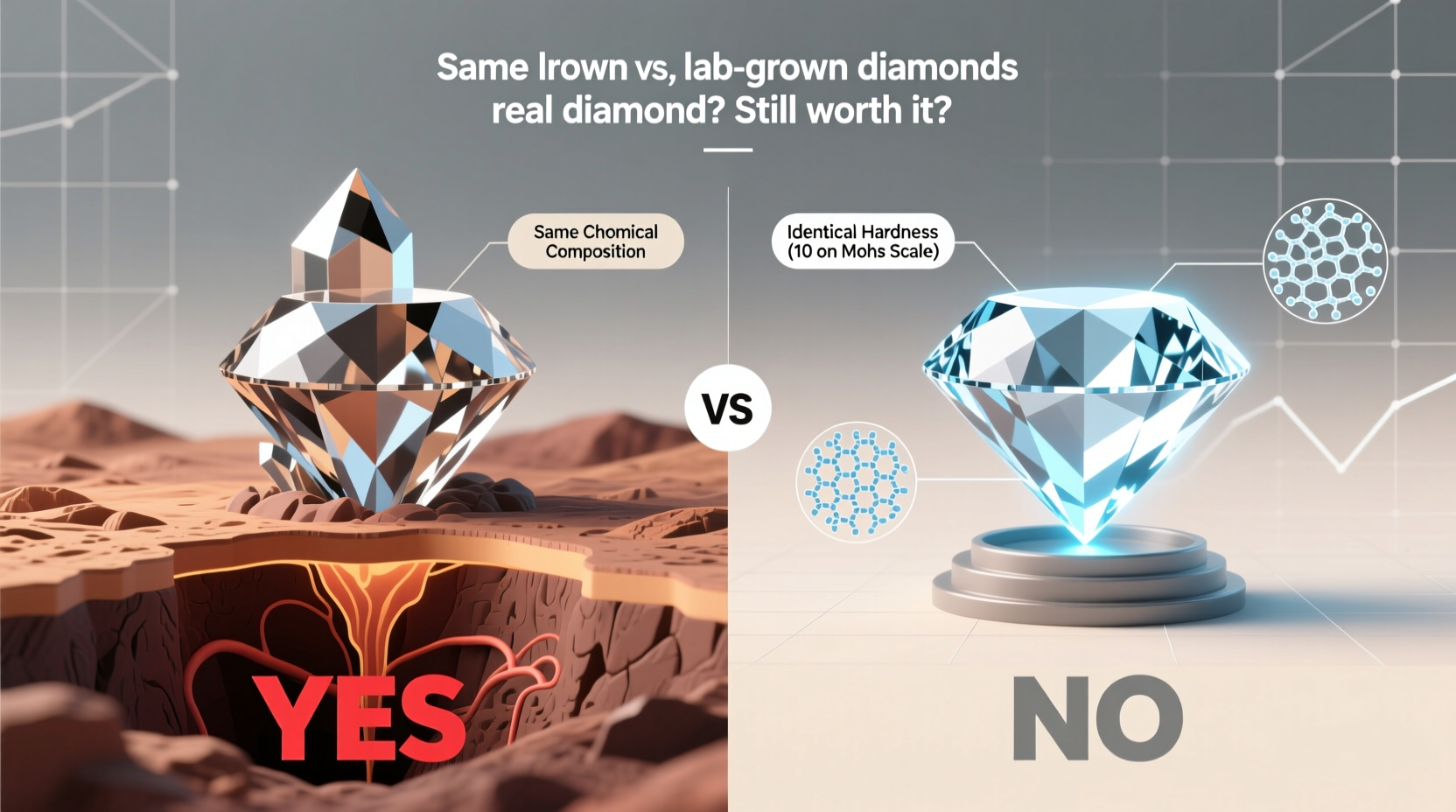
A common misconception is that lab-grown diamonds are “fake.” In reality, both lab-grown and natural diamonds are composed of pure carbon arranged in a cubic crystal structure. They share the same physical, chemical, and optical properties. Under a microscope, even trained gemologists struggle to distinguish between the two without specialized equipment.
The key difference lies in origin:
- Natural diamonds form deep within the Earth’s mantle over billions of years under extreme heat and pressure.
- Lab-grown diamonds are created in controlled environments using either High Pressure High Temperature (HPHT) or Chemical Vapor Deposition (CVD) methods, replicating those natural conditions in weeks or months.
“From a scientific standpoint, there is no distinction between a natural and a lab-grown diamond. Both are real diamonds. The debate is not about authenticity—it’s about origin and perception.” — Dr. Laura Simmons, Gemologist & Director of Research, International Gem Society
Cost Comparison: Short-Term Savings vs Long-Term Value
Lab-grown diamonds typically cost 30% to 50% less than their natural counterparts of similar size and quality. This makes them an attractive option for budget-conscious buyers seeking larger stones or higher clarity grades.
However, this affordability comes with trade-offs in long-term value. Natural diamonds have historically held or appreciated in value, especially rare colors and high-clarity stones. Lab-grown diamonds, while beautiful, do not retain resale value. In fact, many jewelers won’t buy back lab-grown stones, and secondhand markets are saturated and declining.
Tip: If you plan to pass the piece down as heirloom jewelry, natural diamonds are more likely to maintain emotional and financial significance over generations.Diamond Price Comparison (1 Carat, G Color, VS1 Clarity)
| Type | Average Retail Price | Resale Value (Est.) | Price Trend (2020–2024) |
|---|---|---|---|
| Natural Diamond | $8,000 – $10,000 | 40%–60% of original price | Stable to slight increase |
| Lab-Grown Diamond | $3,000 – $4,500 | 10%–20% of original price | Consistent decline |
Environmental and Ethical Considerations
One of the strongest arguments in favor of lab-grown diamonds is their lower environmental footprint. Mining natural diamonds involves moving hundreds of tons of earth per carat and can disrupt ecosystems. However, advancements in ethical mining practices—such as those by members of the Kimberley Process—have reduced conflict diamond risks significantly.
On the other hand, lab-grown production is energy-intensive. CVD and HPHT methods require substantial electricity, often sourced from non-renewable grids. A 2023 study by the Trucost division of S&P Global found that while lab-grown diamonds produce fewer direct emissions than mining, their carbon footprint per carat is not negligible—especially when powered by fossil fuels.
That said, some lab-grown producers now use renewable energy, offering a genuinely sustainable option. For eco-conscious buyers, verifying the source and energy mix is essential.
Ethical Trade-Offs at a Glance
- Natural Diamonds: Support jobs in developing nations but carry historical baggage of conflict zones (largely mitigated today).
- Lab-Grown Diamonds: Avoid land disruption but rely on manufacturing with variable transparency in labor and energy sourcing.
Real-Life Scenario: Choosing Between Two Rings
Sophia, a 28-year-old graphic designer in Portland, was engaged last year and faced a tough decision. Her partner offered a $7,000 budget for an engagement ring. She loved the idea of a 1.5-carat round brilliant stone but quickly realized a natural diamond of that size would stretch the budget thin, compromising on cut or clarity.
After researching, she opted for a lab-grown diamond: a 1.5-carat, D-color, VVS1 clarity stone for $4,200. The remaining funds allowed her to choose a custom platinum setting and add a small sapphire accent—a personal touch reflecting her birthstone.
“I wanted something beautiful and meaningful,” Sophia said. “But I also didn’t want to go into debt. Knowing the diamond was real, just made differently, gave me peace of mind. And honestly, no one can tell the difference.”
Her choice reflects a growing trend: younger consumers prioritizing customization, affordability, and modern values over traditional notions of rarity.
When Natural Diamonds Still Make Sense
Despite the rise of lab-grown alternatives, natural diamonds remain relevant—for specific reasons:
- Investment Potential: Rare natural diamonds (fancy colors, large sizes, flawless clarity) continue to appreciate. Auction records are consistently set for exceptional stones.
- Emotional Legacy: Many view natural diamonds as symbols of enduring love—formed over eons, much like lasting relationships.
- Market Confidence: Natural diamonds have centuries of established grading, trading, and consumer trust. Lab-grown markets are still maturing and face challenges with oversupply and devaluation.
- Heirloom Quality: Families often prefer passing down natural stones, valuing their geological history and scarcity.
FAQ: Common Questions About Diamond Choices
Can jewelers tell if a diamond is lab-grown?
Yes, but not with the naked eye. Specialized equipment is required to detect subtle growth patterns or trace elements. Most retail jewelers can identify them using in-house tools, and all certified diamonds disclose their origin.
Do lab-grown diamonds get cloudy over time?
No. High-quality lab-grown diamonds do not cloud with age. Like natural diamonds, they are highly resistant to scratching and wear. Any haziness is usually due to surface buildup, which cleaning can resolve.
Will natural diamonds become obsolete?
Unlikely. While lab-grown diamonds dominate the mid-market segment, natural diamonds retain cultural significance, investment appeal, and desirability among collectors and luxury buyers. The two markets are diverging rather than replacing each other.
How to Decide: A Practical Checklist
Choosing between lab-grown and natural diamonds isn’t one-size-fits-all. Use this checklist to guide your decision:
- ✅ Budget-Friendly Option Needed? → Lab-grown offers better size/quality per dollar.
- ✅ Concerned About Resale or Inheritance? → Natural diamonds hold value better.
- ✅ Prioritizing Sustainability? → Look for lab-grown diamonds powered by renewable energy or ethically mined naturals with full traceability.
- ✅ Seeking the Largest Visual Impact? → Lab-grown allows bigger stones within the same budget.
- ✅ Want a Timeless Symbol? → Natural diamonds carry deeper historical and emotional weight for many.
Conclusion: Real Diamonds—Still Worth It?
The answer is nuanced. Lab-grown diamonds are undeniably real, beautiful, and a smart choice for many modern consumers. They reflect technological progress and shifting values around cost and ethics. But natural diamonds are not obsolete—they’ve simply evolved into a premium category, valued for their rarity, legacy, and enduring worth.
Ultimately, “worth it” depends on what you value most. If you seek maximum sparkle on a budget, lab-grown is a compelling option. If you desire a lifelong investment, a family heirloom, or a connection to Earth’s ancient forces, natural diamonds still reign supreme.
💬 Your diamond should reflect your values—not someone else’s expectations. Whether you choose above-ground or below-ground origins, make your decision with confidence, clarity, and care.