The battle between Itachi and Sasuke in *Naruto Shippuden* remains one of the most emotionally charged and philosophically layered confrontations in anime history. On the surface, it’s a clash of brother against brother—genius Uchiha versus prodigy sibling. But beneath the jutsu and bloodshed lies a deeper question: Was this fight truly fair? Or was it predetermined by narrative necessity, emotional manipulation, and hidden agendas? More importantly, did Sasuke genuinely have a chance to win—or was he simply allowed to?
To answer this, we must dissect not just the mechanics of the fight, but the characters’ motivations, physical conditions, and the broader context of their relationship. The outcome wasn’t merely about strength—it was shaped by sacrifice, illness, and long-term planning.
The Physical and Emotional State of Itachi
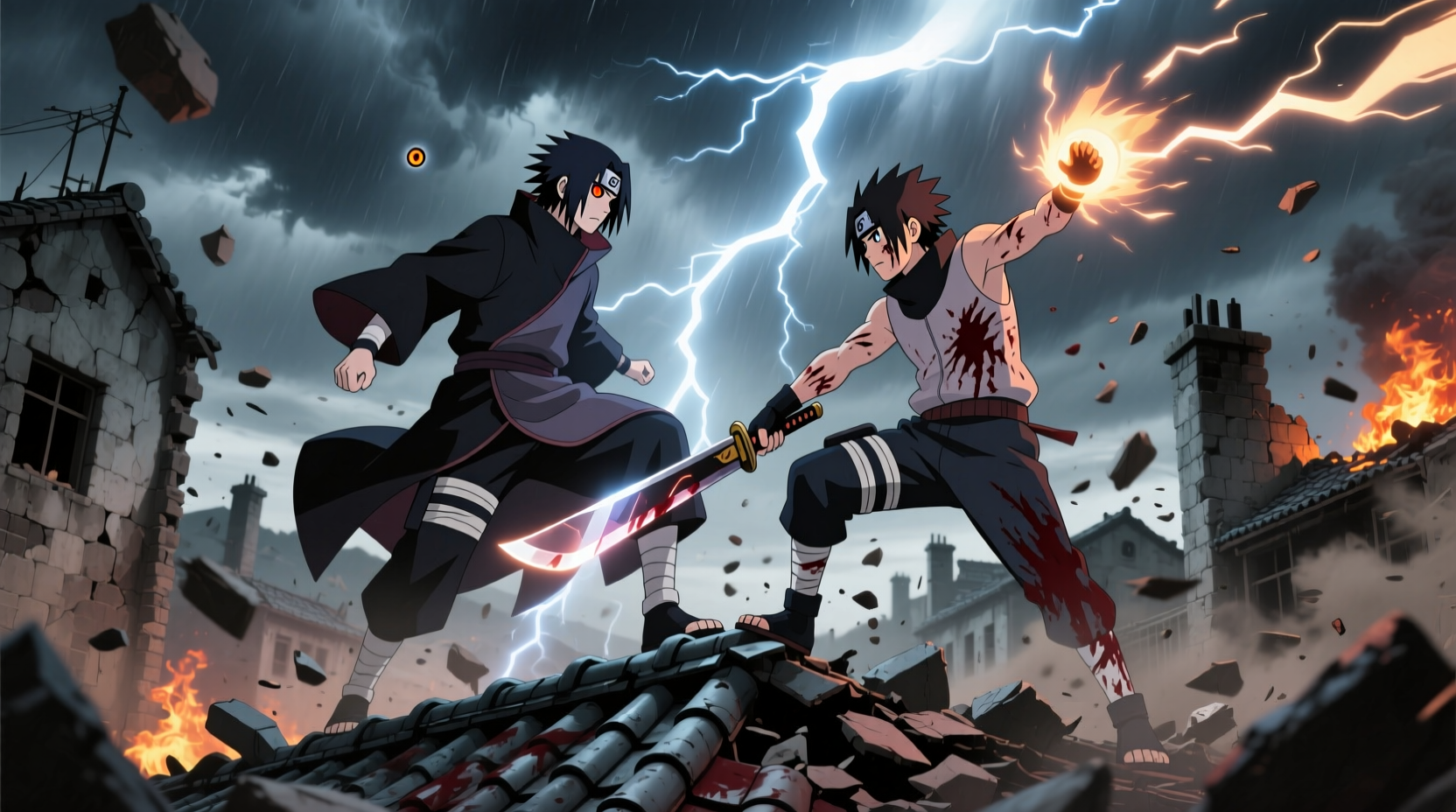
At the time of the fight, Itachi was severely weakened—both physically and spiritually. Years of chronic illness, likely tuberculosis or a similar degenerative disease, had ravaged his body. He coughed blood throughout the battle, moved with visible fatigue, and relied heavily on stimulants to maintain combat effectiveness. This isn’t speculative; it’s confirmed in supplementary materials and dialogue from Pain and Konan after Itachi’s death.
Furthermore, Itachi carried immense psychological weight. His entire life had been dedicated to protecting Konoha and, paradoxically, guiding Sasuke toward strength—even if through hatred. Every action leading up to the fight was calculated to push Sasuke to evolve. This raises a critical point: Itachi didn’t just want to test Sasuke—he wanted him to survive.
Tip: When analyzing anime battles, always consider off-screen factors like health, chakra reserves, and emotional state—they often outweigh raw power.The Role of the Mangekyō Sharingan and Genjutsu Superiority
Itachi possessed one of the most refined genjutsu abilities in the series. Tsukuyomi, Izanami, and Amaterasu were all tools he could deploy with near-perfect precision. Against nearly any opponent, these would be instant-win abilities. Yet, during the fight, he used them sparingly—and often in ways that tested rather than destroyed Sasuke.
For example, he placed Sasuke under Tsukuyomi early in the battle, subjecting him to 72 hours of torture in mere seconds. But instead of breaking him completely, the experience served as a psychological checkpoint—a way to gauge Sasuke’s resolve. Similarly, Amaterasu was used defensively (to counter Kirin) rather than offensively until the very end.
This restraint suggests Itachi was fighting at a fraction of his potential. Even with his deteriorating health, a fully committed Itachi could have ended the fight quickly using genjutsu alone—especially since Sasuke hadn’t yet developed full resistance.
Did Sasuke Ever Land a Meaningful Hit?
A close analysis of the fight sequence reveals that Sasuke’s victories were situational. He managed to wound Itachi with Chidori variants and surprise attacks, but never overwhelmed him outright. In fact, many of Sasuke’s “successes” came because Itachi allowed openings—either to assess Sasuke’s growth or to pass vital information (like the crow in Sasuke’s eye).
The final blow—the punch to Itachi’s chest—was symbolic more than tactical. Itachi collapsed not from injury, but from exhaustion and pre-existing illness. Moments later, he died standing up, placing his hand on Sasuke’s forehead—the same gesture from their childhood. This wasn’t defeat in battle; it was the completion of a mission.
“Strength isn’t just about winning. It’s about enduring what must be endured for those you love.” — Itachi Uchiha, Naruto Shippuden
Was the Fight Rigged? A Breakdown
Calling the fight “rigged” may sound dramatic, but it’s not inaccurate. Several elements indicate Itachi never fought to win:
- Pre-fight manipulation: Itachi implanted a crow with the Sharingan ability inside young Sasuke, which activated during the fight to reveal the truth about the Uchiha massacre.
- Self-sabotage: He used Susanoo only briefly and avoided fatal techniques until the very end, when he unleashed Amaterasu to protect Sasuke from Tobi.
- Emotional goals over victory: His aim wasn’t to kill Sasuke but to ensure his survival and eventual enlightenment.
In essence, Itachi treated the battle like a final exam—one where passing meant Sasuke lived and grew stronger, not that he defeated his brother in combat.
Comparison: Itachi at Full Strength vs. Sasuke Post-Fight
| Factor | Itachi (During Fight) | Sasuke (During Fight) | Verdict |
|---|---|---|---|
| Health | Critically ill, low stamina | Peak physical condition | Advantage: Sasuke |
| Chakra Reserves | Depleted, reliant on medicine | Fully replenished | Advantage: Sasuke |
| Genjutsu Mastery | Unmatched (Tsukuyomi, Izanami) | Limited resistance | Advantage: Itachi |
| Combat Experience | Anbu-level, S-Rank rogue | Mission experience, no major wars | Advantage: Itachi |
| Mental State | Determined, accepting death | Rage-driven, emotionally unstable | Advantage: Itachi (control) |
Even with Sasuke’s physical advantages, a healthy Itachi would likely dominate in a straight fight. But this wasn’t a straight fight—it was a performance designed to achieve multiple objectives beyond victory.
Could Sasuke Have Won Against a Healthy Itachi?
Hypothetically, yes—but not at this stage. Later in the series, after absorbing Hagoromo’s chakra and gaining the Rinnegan, Sasuke reaches a level where he might challenge a prime Itachi. However, during their confrontation, Sasuke lacked:
- Full mastery of the Mangekyō Sharingan
- Resistance to high-level genjutsu
- Strategic depth beyond revenge-driven tactics
He won because Itachi let him—not because he outclassed him. As Masashi Kishimoto, the creator of *Naruto*, stated in interviews, the fight was meant to be emotionally cathartic, not a true measure of power disparity.
Tip: In storytelling, especially in shonen anime, emotional payoff often trumps logical consistency. Consider character arcs before judging battle outcomes.Mini Case Study: The Crow Technique and Hidden Intentions
One of the most telling moments in the fight occurs when a crow emerges from Sasuke’s eye after Itachi’s death. This wasn’t a posthumous trick—it was part of a years-long plan. Itachi had implanted the crow during their last peaceful moment, knowing that one day Sasuke would face truths too painful to accept without guidance.
In real narrative terms, this device ensured that even in “defeat,” Itachi maintained control over the situation. He manipulated events beyond death, steering Sasuke away from total darkness. This isn’t the behavior of someone who lost a fair fight—it’s the final move of a strategist who had already won the war.
FAQ: Common Questions About the Fight
Did Itachi really lose, or did he die from illness?
Itachi didn’t lose in the traditional sense. He succumbed to his illness and chakra exhaustion. The fight accelerated his decline, but he was already dying. His collapse was less about Sasuke’s blows and more about his body giving out.
Why didn’t Itachi use Izanami on Sasuke?
Izanami requires physical contact and is designed to trap someone in a loop until they accept reality. Itachi likely avoided it because he wanted Sasuke to reach enlightenment through experience, not forced realization. He believed in Sasuke’s capacity to choose the right path eventually.
Could Sasuke beat Itachi in a rematch today?
If we consider post-war Sasuke—with Rinnegan, Six Paths chakra, and matured philosophy—then possibly. But even then, Itachi with full health, Susanoo, and intelligence network would be an extremely difficult opponent. Most experts agree Itachi’s tactical mind gives him the edge, even against evolved Sasuke.
Conclusion: Victory Beyond Combat
The fight between Itachi and Sasuke was never about who was stronger. It was about legacy, love disguised as cruelty, and the lengths one will go to protect family and peace. To ask whether it was “rigged” misses the point—it was orchestrated. Every wound, every word, every genjutsu was part of a larger design.
Sasuke stood a chance only because Itachi made sure he would. Not due to weakness, but out of profound strength—the kind that sacrifices reputation, relationships, and life itself for a greater good.
If anything, the fight proves that in *Naruto*, true power isn’t measured in jutsu or wins. It’s measured in sacrifice.
💬 What do you think—was this fight fair, or was Sasuke handed the victory? Share your thoughts and join the debate in the comments below.