Stepping off a plane into a tropical paradise or checking into a mountain cabin should signal the start of deep rest and joy. Yet for many, the first days of vacation bring not peace, but tension—racing thoughts, irritability, even panic. You��re not broken. You’re not ungrateful. What you're experiencing is far more common than advertised in glossy travel brochures.
Anxiety on vacation isn’t a personal failing. It’s a reflection of how modern minds operate under constant pressure. The expectation that we should instantly switch from \"productivity mode\" to \"total relaxation\" overlooks the complexity of our nervous systems. In truth, disengaging from stress requires skill, awareness, and preparation—just like any other transition worth doing well.
The Myth of Instant Relaxation
We assume relaxation happens automatically when we stop working. But the mind doesn’t shut off like a machine. After months or years of operating in high-alert mode—responding to emails, managing deadlines, juggling responsibilities—the nervous system becomes conditioned to remain vigilant. Removing external tasks doesn’t reset internal patterns.
Dr. Elena Torres, a clinical psychologist specializing in stress recovery, explains:
“Vacations don’t erase chronic stress; they expose it. When people finally pause, their bodies and minds begin processing what was suppressed during busy periods. That often surfaces as anxiety, insomnia, or emotional sensitivity.”
This delayed reaction is known as “post-stress letdown.” It’s similar to athletes crashing after competition or parents feeling tearful once their child leaves for college. The relief of completion opens space for previously ignored emotions to surface.
Tip: Don’t expect immediate calm. Allow the first 48 hours of vacation as an adjustment period—like acclimatizing to altitude.Why Your Brain Resists Downtime
Modern life rewards busyness. We associate productivity with value, and stillness with laziness or guilt. This mindset follows us into leisure time. Even on vacation, many subconsciously monitor their usefulness: Did I reply to that last email? Am I maximizing this experience? Shouldn’t I be doing something more meaningful?
Neuroscience shows that idle time activates the brain’s default mode network (DMN), which processes memories, self-reflection, and unresolved concerns. For those avoiding introspection, this mental shift can feel uncomfortable—like sitting with a buzzing static. Instead of rest, the DMN delivers rumination.
Additionally, novelty itself can trigger low-grade anxiety. New environments, languages, food, and routines demand cognitive energy. While exciting, these changes keep the sympathetic nervous system mildly activated—preventing full parasympathetic engagement, the state needed for deep relaxation.
Common Triggers of Vacation Anxiety
- Over-scheduling: Packed itineraries mimic work rhythms, leaving no room for spontaneity or recovery.
- Guilt about taking time off: Especially among caregivers and high achievers who equate worth with output.
- Financial pressure: Knowing the trip is expensive can create performance expectations—“I must enjoy this fully.”
- Digital tethering: Checking work messages or social media keeps the brain in alert mode.
- Relationship dynamics: Being with family or partners in close quarters can amplify existing tensions.
Case Study: Maria’s Beach Getaway That Felt Like Work
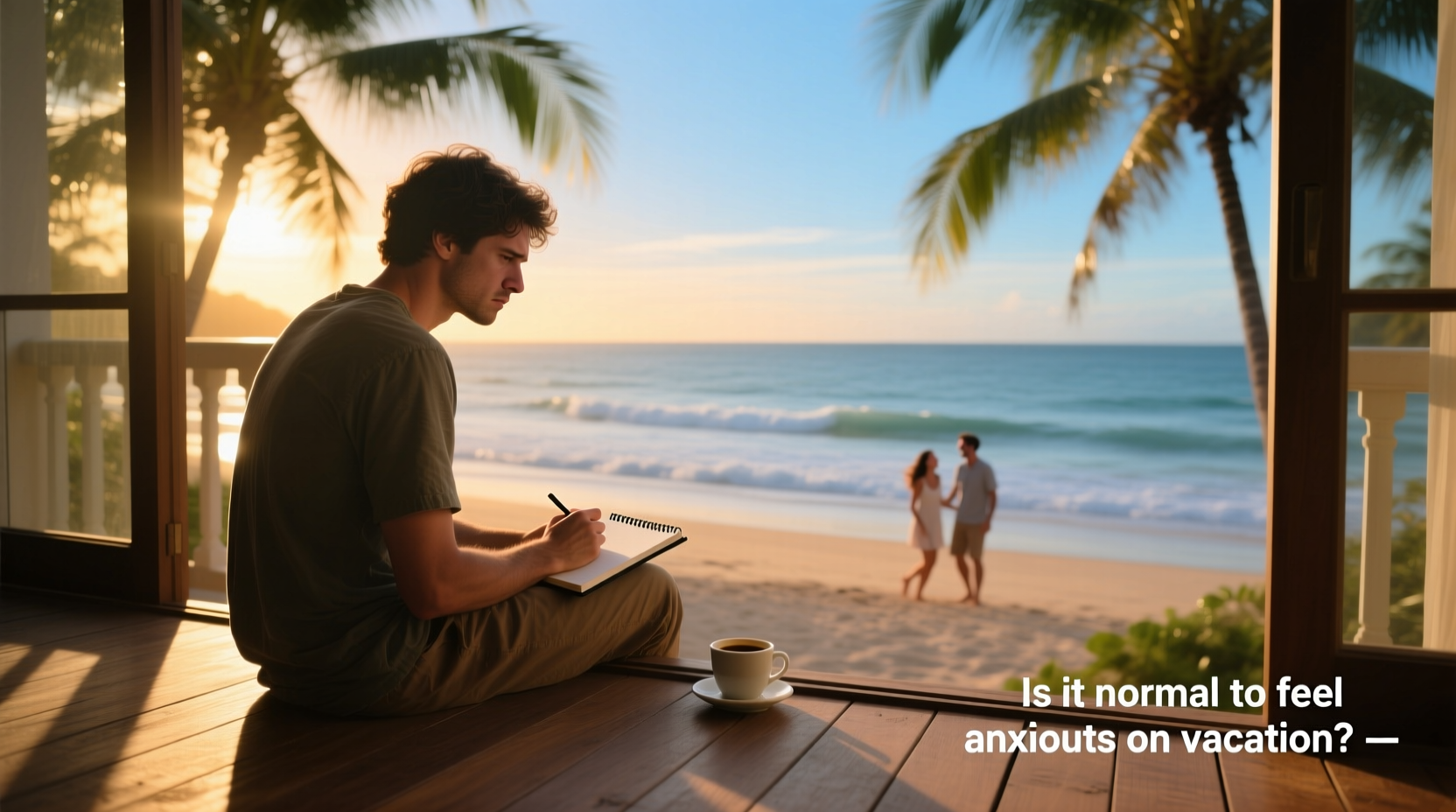
Maria, a 38-year-old project manager and mother of two, planned a week-long beach vacation as a reward for surviving a brutal quarter at work. She envisioned reading novels, walking barefoot, and sleeping late. Instead, she woke each morning at 6:15 a.m., checked her company email, felt tense during breakfast, and snapped at her husband over trivial things.
By day three, she was crying on the balcony, convinced she was “broken” because she couldn’t relax. Only after speaking with a therapist friend did she realize: her body hadn’t received permission to stop. Her vacation lacked transition rituals. She’d flown straight from a presentation on Friday afternoon into a flight, arriving exhausted and mentally engaged.
With guidance, Maria redesigned her next trip. She blocked off two days before departure for winding down—no new tasks, light exercise, and journaling. She informed her team she’d be offline and delegated urgent matters. On arrival, she spent the first evening unpacking slowly, walking the shore at sunset, and writing intentions for the week. This time, relaxation came gradually—but authentically.
How to Prepare Your Mind for Vacation (Not Just Your Suitcase)
Just as you pack sunscreen and chargers, your mind needs preparation for downtime. True relaxation is not passive—it’s an active process of releasing accumulated tension. Consider the following steps in the week leading up to your trip:
- Gradually reduce workload: Avoid finishing major projects the day before departure. Aim to wrap up key tasks 48 hours prior.
- Create closure rituals: Write a “handover note” even if no one is using it. List pending items to contain mental clutter.
- Set communication boundaries: Inform colleagues and family of your availability—or lack thereof. Use auto-replies with realistic return dates.
- Practice short mindfulness sessions: Start with 5 minutes daily of focused breathing to train attention away from rumination.
- Visualize the rhythm of rest: Imagine yourself moving slowly, pausing often, and saying “not now” to urgency.
Do’s and Don’ts During Your Trip
| Do | Don’t |
|---|---|
| Build in buffer time between activities | Fill every hour with plans |
| Allow mornings to unfold naturally | Set alarms unless absolutely necessary |
| Limit screen time, especially work-related apps | Check email “just once” each day |
| Engage in gentle movement (walking, stretching, swimming) | Use physical exhaustion as a substitute for mental rest |
| Notice small sensory pleasures—sunlight, breeze, taste | Chase “perfect” experiences or photo opportunities |
Reframing Relaxation: It’s Not About Doing Nothing
Relaxation isn’t the absence of activity. It’s the presence of safety. When your nervous system believes you are protected and supported, it shifts from survival mode to restoration mode. That transition doesn’t happen because you’re on a beach—it happens because your habits, environment, and mindset signal safety.
Some find calm through stillness. Others through rhythmic activities like gardening, knitting, or swimming. The key is engagement without pressure. Flow states—where time dissolves and effort feels natural—are often more restorative than forced idleness.
Author Cal Newport, who studies digital minimalism and attention, notes:
“The ability to relax is a skill eroded by constant connectivity. Like playing an instrument, it requires practice. Those who struggle aren’t weak—they’ve simply never been taught how to be still.”
When Anxiety Persists: Knowing When to Seek Support
Occasional vacation anxiety is normal. But if you consistently experience dread, panic attacks, or emotional numbness while trying to rest, it may indicate deeper issues such as burnout, generalized anxiety disorder, or trauma-related hypervigilance.
Warning signs include:
- Inability to sleep despite exhaustion
- Physical symptoms like chest tightness or nausea without medical cause
- Feeling detached from enjoyable experiences (derealization)
- Intense irritability or conflict with travel companions
If these patterns persist across multiple trips, consider consulting a mental health professional. Cognitive behavioral therapy (CBT) and somatic therapies can help retrain the nervous system’s response to downtime.
Practical Checklist: Preparing for a Mentally Restful Vacation
Use this checklist in the 7 days before your trip to support genuine relaxation:
- ✅ Finalize all urgent work tasks at least 2 days before departure
- ✅ Set clear out-of-office messages with emergency contact info
- ✅ Pack a journal or notebook for thoughts and reflections
- ✅ Delete work apps from your phone or place them in a folder labeled “Post-Vacation”
- ✅ Schedule a wind-down evening before leaving (light dinner, no screens, calming music)
- ✅ Plan a simple first day at your destination—no tours, no rushing
- ✅ Identify one daily anchor ritual (morning coffee outside, evening walk, gratitude list)
Frequently Asked Questions
Isn’t feeling anxious on vacation a sign of ingratitude?
No. Emotions are not moral judgments. Feeling anxious doesn’t mean you don’t appreciate the opportunity. It means your nervous system is responding to underlying stress. Acknowledging discomfort is part of healing—not a rejection of joy.
Can vacation anxiety get worse over time?
Yes, if unaddressed. Repeatedly pushing through stress without recovery can deepen neural pathways associated with hyperarousal. Over time, even restful settings may fail to trigger relaxation. Early intervention—through mindfulness, therapy, or lifestyle changes—can prevent escalation.
What if I’m traveling with others who don’t understand my need to slow down?
Communicate your needs kindly but clearly. Say, “I’m really looking forward to unwinding. I might spend some time alone reading or walking quietly.” Suggest shared activities that align with slower pacing. Healthy relationships respect different rhythms of rest.
Conclusion: Rethinking Rest as a Practice, Not a Prize
Relaxation should not be a luxury earned only after exhaustion. It’s a vital function, as essential as sleep or nutrition. The difficulty many face in truly resting—even on vacation—reveals how deeply our culture misunderstands recovery.
Instead of seeing vacation as a reward for suffering, view it as maintenance for sustained well-being. And just as you wouldn’t expect a car to run smoothly without regular tune-ups, don’t expect your mind to shift into neutral without preparation.
Start small. Build rituals. Give yourself permission to move slowly, think less, and simply be. The goal isn’t to eliminate anxiety entirely—that’s neither possible nor necessary. The goal is to create enough inner space so that when worry arises, it doesn’t drown out the sound of waves, laughter, or your own breath.
🚀 Your next vacation doesn’t have to be perfect—just intentional. Share this article with someone who needs permission to rest, or leave a comment with your own tip for finding calm amidst the chaos.